The Best Books on Software Testing and QA, In Order
This curriculum takes an intermediate developer or tester from solid testing fundamentals through advanced test automation, strategy, and quality engineering practices. Each stage builds on the last — first sharpening core mental models, then mastering automation craft, then elevating to system-wide quality strategy and engineering culture.
Sharpening the Foundations
BeginnerEstablish a rigorous mental model of what testing is, why it fails, and how to think about quality systematically — even for an intermediate learner, these classics fill critical gaps.
▸ Study plan for this stage
Pace: 8–10 weeks, ~40–50 pages/day (mix of reading and reflection)
- Testing is not quality assurance—it is information gathering about product risk, not a guarantee of correctness
- The oracle problem: how to recognize a bug when you see one, and why this is harder than it appears
- Risk-based testing: prioritizing what to test based on likelihood and severity of failure, not coverage metrics
- Test design heuristics and mental models: exploratory testing, scenario-based testing, and boundary analysis as practical alternatives to exhaustive testing
- The role of context in testing: different projects, teams, and constraints demand different testing strategies
- Google's testing pyramid and test distribution: unit tests as the foundation, integration tests in the middle, end-to-end tests at the top
- Automation vs. manual testing trade-offs: when to automate, what to automate, and the hidden costs of test maintenance
- Quality is a team responsibility: developers, testers, and product managers must collaborate to define and achieve quality
- What is the fundamental difference between testing and quality assurance, and why does this distinction matter for how you approach your work?
- Explain the oracle problem with a concrete example: how would you know if a test result is correct or incorrect?
- How would you design a test strategy for a new feature using risk-based thinking rather than trying to achieve 100% code coverage?
- What are the key differences between unit tests, integration tests, and end-to-end tests, and when should each be used according to Google's testing pyramid?
- Describe a scenario where manual exploratory testing is more valuable than automated testing, and explain your reasoning.
- How does context (team size, project timeline, product criticality) influence the testing approach you would recommend?
- Read Chapter 1–3 of 'Lessons Learned in Software Testing' and write a one-page reflection on how the authors' definition of testing differs from what you previously thought testing was.
- Choose a simple application (e.g., a calculator, to-do list, or login form) and perform 30 minutes of exploratory testing without a test plan. Document what you discover and reflect on how you decided what to test next.
- Map out a risk-based test strategy for a hypothetical feature (e.g., 'add payment processing to an e-commerce site'). Identify high-risk areas, medium-risk areas, and low-risk areas, then justify your prioritization.
- Read the Google testing pyramid section in 'How Google Tests Software' and sketch out a test distribution (unit/integration/E2E ratio) for a real project you know. Explain why you chose that distribution.
- Identify three test cases from your own work (or a public project) and for each one, articulate the oracle: how do you know if the test passed or failed? Where is the ambiguity?
- Conduct a 'test strategy retrospective': review a test suite you've written or worked with. Identify tests that are brittle, redundant, or low-value. Propose which ones could be removed or consolidated without losing meaningful coverage.
Next up: This stage establishes the *why* and *how to think* about testing; the next stage will move into *specific techniques and tools* for implementing these principles at scale across different testing levels and contexts.

A practitioner's bible of 293 concrete lessons covering test design, management, and common pitfalls. Reading this first resets bad habits and builds the vocabulary used throughout the rest of the curriculum.
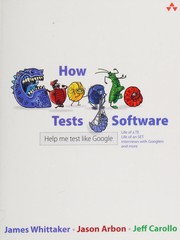
Reveals how a world-class engineering organization structures roles (SWE, SET, TE) and testing at scale. Bridges the gap between theory and real industrial practice before diving into automation specifics.
Test Automation Craft
IntermediateWrite clean, maintainable, and trustworthy automated tests at the unit, integration, and end-to-end levels using proven patterns and principles.
▸ Study plan for this stage
Pace: 12–14 weeks, ~40–50 pages/day (with 2–3 days per week for hands-on practice). Allocate 4–5 weeks to GOOS, 4–5 weeks to xUnit Test Patterns, and 3–4 weeks to The Art of Unit Testing.
- Test-driven development (TDD) as a design tool: writing tests first to drive object-oriented design and emergent architecture
- Mock objects and test doubles (stubs, mocks, fakes, spies): when and how to use them to isolate units and manage dependencies
- xUnit patterns and anti-patterns: fixtures, test organization, assertion strategies, and common pitfalls in test structure
- Trustworthy tests: minimizing false positives/negatives, reducing brittleness, and building confidence in test suites
- Test layers and scope: unit, integration, and end-to-end testing strategies; choosing the right tool and granularity for each level
- Refactoring tests as first-class code: treating test maintenance with the same rigor as production code
- Characterization tests and legacy code: techniques for adding tests to untested systems without major rewrites
- Test readability and intent: naming, arrangement, and clarity so tests serve as living documentation
- How does test-driven development influence object-oriented design, and what is the relationship between writing tests first and emergent architecture?
- What are the key differences between stubs, mocks, fakes, and spies, and when should you use each in your test doubles strategy?
- What are the most common xUnit anti-patterns (e.g., shared fixtures, test interdependencies, unclear assertions), and how do you avoid them?
- How do you decide whether a test should be unit, integration, or end-to-end, and what are the trade-offs in test pyramid design?
- What makes a test trustworthy, and how do you minimize false positives and brittle tests that break on unrelated changes?
- How do you approach adding tests to legacy code without major refactoring, and what role do characterization tests play?
- Work through the TDD kata exercises from GOOS (e.g., the Auction Sniper example): implement a small feature entirely test-first, focusing on how tests drive design decisions and object interactions.
- Refactor a small existing codebase using TDD: identify a module with poor testability, write characterization tests to understand current behavior, then incrementally improve design using test-driven refactoring.
- Build a test double library: implement stubs, mocks, fakes, and spies for a realistic domain object; practice deciding which double to use for different scenarios (e.g., database, external API, time-dependent logic).
- Audit an existing test suite for xUnit anti-patterns: identify shared fixtures, test interdependencies, unclear assertions, and missing setup/teardown; refactor tests to follow patterns from xUnit Test Patterns.
- Design a test strategy for a multi-layer feature: write unit tests with mocks, integration tests with real collaborators, and an end-to-end test; document your reasoning for test scope and double choices.
- Write a characterization test suite for a legacy function: capture current behavior without understanding the code, then use those tests as a safety net while refactoring for testability.
Next up: This stage equips you with the craft and discipline to write tests that are maintainable, trustworthy, and architecturally sound; the next stage will apply these skills to testing strategies at scale—managing large test suites, continuous integration, and quality metrics across teams and systems.

The definitive book on TDD done right — teaches you to let tests drive design, not just verify it. Must be read before broader automation patterns because it establishes why test structure mirrors good software structure.
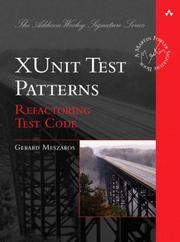
The comprehensive catalog of test automation patterns (mocks, stubs, fixtures, smells). Read after Freeman to name and systematize the patterns you've started using intuitively.
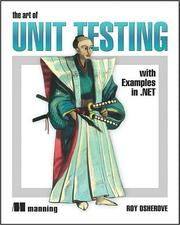
Translates the abstract patterns of the previous books into concrete, language-agnostic guidance on writing readable, maintainable unit tests — a practical bridge to daily work.
Test Strategy & Design
IntermediateDesign a coherent test strategy across an entire product — choosing what to test, at which level, with which techniques — rather than writing tests ad hoc.
▸ Study plan for this stage
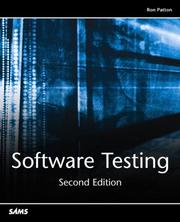
Pace: 8–10 weeks, ~40–50 pages/day (mix of reading and reflection). Start with "Agile Testing" (2 weeks), then "Explore It!" (2–3 weeks), then "Software Testing" (3–4 weeks) to build from practical agile mindset through exploratory techniques to formal design methodologies.
- Test strategy as a coherent plan: aligning testing activities with product risk, business goals, and development approach rather than testing ad hoc
- The testing pyramid and level distribution: understanding when to use unit, integration, system, and acceptance tests and in what proportions
- Risk-based testing: identifying what matters most to test based on product criticality, user impact, and likelihood of failure
- Exploratory testing as a structured approach: using test charters, time-boxing, and session-based testing to discover defects while learning the product
- Test design techniques: applying systematic methods like boundary value analysis, equivalence partitioning, state-based testing, and decision tables to create effective test cases
- Agile testing practices: adapting test strategy to iterative development, including continuous testing, test automation priorities, and cross-functional collaboration
- Test coverage and metrics: defining meaningful coverage goals (code, requirements, risk) and using metrics to guide strategy rather than drive it
- Traceability and requirements-based testing: linking tests to requirements and business objectives to ensure nothing critical is missed
- How would you design a test strategy for a new feature in an agile sprint? What factors would you consider, and how would you decide what to test at each level?
- Explain the testing pyramid. Why is it important to have more unit tests than end-to-end tests, and when might you deviate from this structure?
- What is risk-based testing, and how would you identify the highest-risk areas of a product to focus your testing effort?
- Describe the difference between exploratory testing and scripted testing. When would you use each, and how can you structure exploratory testing to be systematic?
- You have limited time to test a complex system. How would you use test design techniques (boundary value analysis, equivalence partitioning, state-based testing) to maximize defect detection?
- How do you balance test automation with manual testing in an agile environment? What types of tests should be automated first, and why?
- Read 'Agile Testing' and map its test quadrants to a real product you know. Identify which quadrants are under-tested and propose a rebalancing strategy.
- Choose a feature from a product you use regularly. Design a test charter (from 'Explore It!') and conduct a 90-minute exploratory testing session, documenting findings and insights.
- Take a moderately complex user story. Apply equivalence partitioning and boundary value analysis (from 'Software Testing') to design a comprehensive test case set, then estimate how many tests you'd need to automate vs. run manually.
- Create a risk matrix for a product (real or fictional). Identify 5–10 key risks, rate them by likelihood and impact, then design a test strategy that allocates effort proportionally to risk.
- Write a one-page test strategy document for a sprint or feature, including: test levels, techniques, automation priorities, and success criteria. Have a peer review it against the principles from all three books.
- Conduct a test design technique comparison: take the same set of requirements and design test cases using (a) decision tables, (b) state-based testing, and (c) exploratory testing. Compare coverage and defect-finding potential.
Next up: This stage equips you with the strategic and tactical mindset to design coherent testing plans; the next stage will deepen your ability to execute these plans through advanced automation frameworks, continuous integration practices, and scaling testing across large teams and codebases.
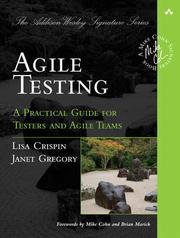
Introduces the Agile Testing Quadrants model and whole-team quality ownership. Establishes the strategic vocabulary (exploratory, acceptance, performance testing) needed for the books that follow.
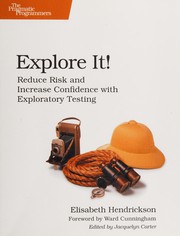
The best practical guide to exploratory testing as a disciplined, structured skill. Complements automation strategy by showing what automation cannot replace and how to find bugs machines miss.
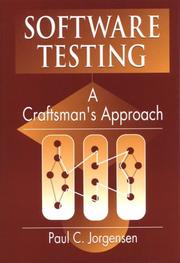
Provides rigorous, technique-level coverage of boundary value analysis, equivalence partitioning, and path testing — the analytical backbone of any serious test design strategy.
Quality Engineering at Scale
ExpertThink and operate as a quality engineer — embedding quality into CI/CD pipelines, influencing architecture, and leading organizational quality culture.
▸ Study plan for this stage
Pace: 8–10 weeks, ~25–30 pages/day (mix of dense technical content and case studies; allow extra time for reflection and hands-on exercises)
- Deployment pipeline architecture: automating build, test, and deployment stages to enable frequent, low-risk releases
- Testing as a first-class citizen in CI/CD: shifting left with unit, integration, and acceptance tests to catch defects early
- Organizational metrics that matter: lead time, deployment frequency, mean time to recovery (MTTR), and change failure rate as drivers of software delivery performance
- Infrastructure as Code and configuration management: treating infrastructure provisioning and environment setup as code to reduce manual error and enable repeatability
- Feedback loops and observability: embedding monitoring, logging, and alerting to detect issues in production and inform future development
- Cultural and organizational enablers: psychological safety, trust, and communication patterns that allow teams to move fast without sacrificing quality
- Risk management in continuous delivery: using deployment techniques (blue-green, canary, feature toggles) to reduce blast radius and enable safe experimentation
- Measuring and improving delivery performance: using data-driven insights to identify bottlenecks and drive continuous improvement in the delivery pipeline
- What are the stages of a deployment pipeline, and how do automated tests fit into each stage to reduce risk?
- How do the four key metrics (lead time, deployment frequency, MTTR, change failure rate) correlate with organizational performance, and why does each matter?
- What organizational and cultural factors enable high-performing teams to deliver frequently without sacrificing stability?
- How can you use feature toggles, blue-green deployments, or canary releases to reduce the risk of pushing changes to production?
- What is the relationship between testing strategy, infrastructure automation, and deployment frequency in a continuous delivery model?
- How would you design a feedback loop (monitoring, alerting, logging) to detect and respond to production issues in a high-frequency release environment?
- Map your current delivery pipeline: document every stage from code commit to production, identify manual steps, and list where automated tests exist. Identify 2–3 bottlenecks and propose automation solutions.
- Design a deployment pipeline for a sample application: define stages (build, unit test, integration test, acceptance test, deploy to staging, deploy to production), specify what tests run at each stage, and explain the risk reduction at each gate.
- Implement a simple feature toggle system in a codebase you control: deploy a feature behind a toggle, toggle it on/off in production without redeploying, and document how this reduces deployment risk.
- Measure your team's delivery metrics for 2–4 weeks: track lead time (code commit to production), deployment frequency, MTTR for incidents, and change failure rate. Analyze trends and identify one metric to improve.
- Set up Infrastructure as Code for a test environment: use Terraform, CloudFormation, or similar to define and provision a complete environment (compute, database, networking) from code. Document how this reduces manual error.
- Design a monitoring and alerting strategy for a production system: define key metrics to observe, set alert thresholds, and create a runbook for responding to common alerts. Test the feedback loop with a simulated incident.
Next up: This stage establishes you as a systems thinker who can architect quality into organizational processes and measure its impact; the next stage will likely deepen your ability to lead quality transformation at scale, mentor others, and navigate the human and technical complexity of embedding quality culture across large, distributed teams.

The foundational text on deployment pipelines and automated quality gates. Shows exactly where and how testing fits into a modern delivery system — essential context for any quality engineer.

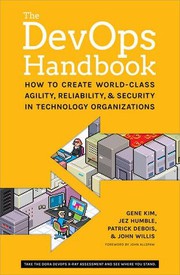
Research-backed evidence linking testing practices (test automation, TDD, trunk-based development) to organizational performance. Gives you the data to advocate for quality investment at a leadership level.
Discussion
Keep reading
Paths that share books, cover the same subject, or open a related topic.