Assembly language is not really one language; it is a thin veneer over a specific processor, and it makes no sense without knowing that processor. Beginners who memorize instructions without understanding registers, memory, and how the CPU executes end up copying incantations they cannot reason about. Assembly rewards understanding the machine first and the mnemonics second, which is the reverse of how most people try to learn it.
The path starts with architecture, moves into writing real assembly, then reframes everything from a programmer's systems perspective, and finally shows how assembled programs are linked, loaded, and taken apart. Each step makes the low level less mysterious.
Understand the machine
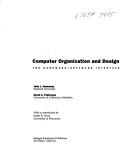
Before any mnemonics, you need the reference and the model. Intel 64 and IA-32 Architectures Software Developer's Manual is the authoritative source for what x86 instructions actually do, best used as a reference you dip into rather than read cover to cover. For the conceptual foundation, Computer Organization and Design teaches how processors, memory, and instruction execution really work, and it is the book that makes assembly comprehensible.
Write real assembly
With the model in place, start coding. Professional assembly language by Richard Blum is a practical, hands-on introduction that gets you writing and running code. The art of Assembly language by Randall Hyde goes deeper and teaches assembly as a way of thinking, and Modern X86 Assembly Language Programming focuses on current x86 and its vector extensions, keeping you close to the hardware developers actually target today.
See it as a systems programmer
Assembly is most useful when you understand how it fits into whole programs. Computer Systems: A Programmer's Perspective is the pivotal book here, connecting C, assembly, memory, and performance into one coherent picture that transforms how you read compiled code. Then Linkers and loaders demystifies what happens after assembly: how object files become running programs, a step most developers never examine.
Take programs apart
The payoff of assembly fluency is being able to analyze binaries. Practical Binary Analysis teaches modern techniques for examining compiled code programmatically, and Hacking by Jon Erickson grounds it all in security, showing how assembly and memory knowledge translate into understanding exploitation. The shellcoder's handbook pushes furthest into low-level security research, a fitting deep end once the fundamentals are solid.
Follow the full path and assembly stops being an arcane wall of mnemonics. You end able to read what a compiler produces, understand how programs run at the metal, and reason about the machine beneath every high-level line you write.
Follow the full reading path →
Ready to learn something deeply?
Build a reading path — free