The Best Books to Learn PyTorch, In Order
This curriculum takes an intermediate learner — someone comfortable with Python and basic ML concepts — from PyTorch fundamentals through production-grade deep learning. Each stage builds directly on the last: first establishing PyTorch's core mechanics, then mastering modern architectures and training techniques, and finally tackling advanced deployment and research-level topics.
PyTorch Foundations
BeginnerUnderstand PyTorch's core abstractions — tensors, autograd, nn.Module, and the training loop — well enough to build and train simple neural networks from scratch.
▸ Study plan for this stage
Pace: 4–5 weeks, ~40–50 pages/day (Chapters 1–6 of "Deep Learning with PyTorch")
- Tensor fundamentals: creation, indexing, reshaping, and device placement (CPU/GPU)
- Autograd and automatic differentiation: how PyTorch tracks computation graphs and computes gradients
- Building neural networks with nn.Module: layers, parameters, and forward passes
- The training loop: forward pass, loss computation, backward pass, and optimizer steps
- Loss functions and optimization algorithms (SGD, Adam) for model training
- Data loading and batching with DataLoader for efficient training
- Debugging and inspecting tensors and gradients during training
- How do you create tensors in PyTorch and move them between devices (CPU/GPU)?
- Explain how autograd works: what is a computation graph and how does backward() compute gradients?
- What is nn.Module and why is it the foundation for building neural networks in PyTorch?
- Walk through a complete training loop: what happens in each step (forward, loss, backward, optimizer)?
- How do DataLoader and batching improve training efficiency and why do they matter?
- What are the differences between common optimizers (SGD, Adam) and when would you use each?
- How do you debug a neural network by inspecting tensor shapes, gradients, and loss values?
- Create tensors of various shapes and dtypes; practice indexing, slicing, and reshaping operations
- Build a simple linear regression model from scratch using nn.Module and train it on synthetic data
- Implement a 2-layer fully connected network to classify the MNIST dataset
- Manually compute gradients for a simple function, then verify them using autograd
- Write a training loop from scratch: forward pass, loss, backward, optimizer step, and validation
- Experiment with different optimizers (SGD, Adam) on the same problem and compare convergence
- Create a custom Dataset and DataLoader to load batches of data efficiently
- Debug a broken training loop by inspecting tensor shapes, gradients, and loss curves
Next up: This foundation in tensors, autograd, and the training loop equips you to understand more advanced architectures (CNNs, RNNs, Transformers) and training techniques (regularization, batch normalization, learning rate scheduling) in the next stage.

The official PyTorch-endorsed book. It builds intuition for tensors, autograd, and the full training pipeline step by step, making it the ideal first read for any serious PyTorch learner.
Core Deep Learning Architectures
IntermediateImplement and train CNNs, RNNs, and Transformers in PyTorch, and understand the design decisions behind each architecture.
▸ Study plan for this stage
Pace: 8–10 weeks, ~40–50 pages/day from "Dive into Deep Learning" (weeks 1–5), then ~30–40 pages/day from "Natural Language Processing with Transformers" (weeks 6–10)
- CNN architecture fundamentals: convolutional layers, pooling, feature maps, and how they extract spatial hierarchies from images
- RNN and LSTM design: recurrent connections, vanishing/exploding gradients, cell state, and why LSTMs solve gradient flow problems
- Transformer architecture: self-attention mechanism, multi-head attention, positional encoding, and the encoder-decoder structure
- Training dynamics: loss functions, optimization strategies, batch normalization, and regularization techniques for deep networks
- PyTorch implementation patterns: building custom modules with nn.Module, forward passes, parameter initialization, and debugging training loops
- Transfer learning and fine-tuning: leveraging pre-trained models and adapting them to new tasks with minimal data
- NLP-specific considerations: tokenization, embedding layers, sequence padding, and handling variable-length inputs in Transformers
- Explain how convolutional layers extract features from images and why pooling reduces spatial dimensions while preserving important information
- Why do vanilla RNNs suffer from vanishing gradients, and how do LSTM cell gates (input, forget, output) address this problem?
- Describe the self-attention mechanism: how queries, keys, and values interact, and why multi-head attention is more expressive than single-head
- Walk through the complete forward pass of a Transformer encoder: from token embeddings through positional encoding to multi-head attention and feed-forward layers
- How would you fine-tune a pre-trained Transformer model from Hugging Face for a custom NLP task, and what are the key hyperparameters to adjust?
- Compare the inductive biases of CNNs, RNNs, and Transformers: what assumptions does each architecture make about data, and when is each most appropriate?
- Implement a CNN from scratch in PyTorch for CIFAR-10 classification: define convolutional blocks, add batch normalization, and train end-to-end; visualize learned filters
- Build an LSTM for sequence classification (e.g., sentiment analysis on a text dataset): handle variable-length sequences with padding, implement custom collate functions
- Code a Transformer encoder block manually: implement scaled dot-product attention, multi-head attention, and position-wise feed-forward networks without using high-level APIs
- Train a full Transformer model on a toy sequence-to-sequence task (e.g., simple arithmetic or character-level translation) to internalize encoder-decoder mechanics
- Fine-tune a pre-trained BERT or DistilBERT model from Hugging Face on a custom text classification task; compare performance with and without freezing early layers
- Implement a hybrid architecture (e.g., CNN feature extractor + Transformer decoder) for image captioning or visual question answering; debug attention weights
Next up: Mastering these three foundational architectures and their PyTorch implementations prepares you to explore advanced topics like efficient Transformers, multi-modal models, and production deployment strategies in the next stage.

A rigorous, math-grounded textbook with full PyTorch code for every concept — CNNs, sequence models, attention, and Transformers — bridging theory and implementation cleanly.

Focuses on the Transformer architecture and the Hugging Face ecosystem built on PyTorch, giving deep practical coverage of the model family dominating modern NLP and beyond.
Training at Scale & Best Practices
IntermediateMaster the full model-development lifecycle: experiment tracking, transfer learning, regularization, mixed-precision training, and debugging models effectively.
▸ Study plan for this stage
Pace: 6–8 weeks, ~40–50 pages/day (mix of reading and hands-on coding)
- Experiment tracking and hyperparameter logging with tools like TensorBoard and Weights & Biases
- Transfer learning: fine-tuning pretrained models and adapting them to new domains
- Regularization techniques (L1/L2, dropout, batch normalization, early stopping) to prevent overfitting
- Mixed-precision training (FP16/FP32) for memory efficiency and speed on modern hardware
- Debugging and profiling PyTorch models: identifying bottlenecks, memory leaks, and training instabilities
- Distributed training fundamentals: data parallelism and multi-GPU workflows
- Model checkpointing, saving, and loading best practices for production pipelines
- Evaluating model performance: validation strategies, cross-validation, and proper test set handling
- How do you set up experiment tracking in PyTorch, and what information should you log during training?
- Explain the transfer learning workflow: when and how to freeze/unfreeze layers, and how to adapt a pretrained model to a new task.
- What are the main regularization techniques in PyTorch, and how do you choose which ones to apply to your model?
- How does mixed-precision training work, and what are the trade-offs between speed, memory, and numerical stability?
- Describe a systematic approach to debugging a PyTorch model that trains slowly or produces poor results.
- What is the difference between data parallelism and model parallelism, and when would you use each?
- Implement a complete training loop with TensorBoard logging: track loss, accuracy, learning rate, and gradient norms across epochs.
- Fine-tune a pretrained ResNet or BERT model on a custom dataset (e.g., CIFAR-10 or a text classification task); experiment with freezing different layers and compare results.
- Build a model with multiple regularization techniques (dropout, L2 penalty, batch normalization, early stopping) and measure their individual impact on validation performance.
- Convert a standard training script to use mixed-precision training with PyTorch's autocast and GradScaler; benchmark memory usage and training time.
- Profile a training loop using PyTorch Profiler to identify the slowest operations; optimize at least one bottleneck (e.g., data loading, forward pass, backward pass).
- Implement a checkpoint system that saves the best model based on validation loss and resumes training from a checkpoint; verify that loss curves are continuous.
- Set up distributed training on multiple GPUs using torch.nn.DataParallel or DistributedDataParallel; compare single-GPU vs. multi-GPU training time and scaling efficiency.
Next up: This stage equips you with production-ready practices and scalability skills, preparing you to tackle advanced topics like custom architectures, reinforcement learning, or deploying models in real-world systems.

Covers the end-to-end ML workflow with PyTorch at its center, including best practices for training, evaluation, and combining classical ML with deep learning.

A dense, practical reference for PyTorch's full API — ideal at this stage to consolidate knowledge of utilities, data loading, and training tricks used daily by practitioners.
Advanced Topics & Production
ExpertDeploy PyTorch models to production, optimize inference, and apply deep learning to specialized domains including computer vision and generative models.
▸ Study plan for this stage
Pace: 10–12 weeks, ~40–50 pages/day (with practical coding sessions 3–4 times per week)
- GPU architecture, parallel processing fundamentals, and CUDA programming for PyTorch optimization
- Memory hierarchy, thread organization, and kernel design for efficient deep learning computations
- Transfer learning, fine-tuning pre-trained models, and domain-specific architectures in fastai
- Computer vision applications: image classification, object detection, and segmentation workflows
- Generative models: GANs, VAEs, and diffusion models for creative and synthetic data generation
- Production deployment: model serving, inference optimization, quantization, and containerization
- Debugging, profiling, and performance tuning for real-world PyTorch applications
- Data augmentation, regularization techniques, and best practices for training robust models at scale
- How do GPU memory hierarchies (registers, shared memory, global memory) impact PyTorch kernel performance, and how do you optimize for them?
- What are the key differences between data parallelism and model parallelism, and when should you use each for large-scale training?
- How do you implement transfer learning with fastai, and what are the best practices for fine-tuning pre-trained models on custom datasets?
- Describe the end-to-end workflow for deploying a PyTorch computer vision model to production, including optimization and serving strategies.
- What are the architectural differences between GANs and VAEs, and how do you train generative models effectively in PyTorch?
- How do quantization, pruning, and knowledge distillation reduce model size and latency for inference without significant accuracy loss?
- Write a custom CUDA kernel in PyTorch to implement a specialized operation (e.g., fused batch normalization or attention mechanism) and benchmark against PyTorch's built-in versions.
- Build and train a computer vision model (ResNet, EfficientNet, or Vision Transformer) using fastai on a custom dataset; implement data augmentation and learning rate scheduling.
- Implement transfer learning: fine-tune a pre-trained ImageNet model on a domain-specific dataset (medical imaging, satellite imagery, etc.) and evaluate performance.
- Create a generative model (GAN or VAE) from scratch in PyTorch; train it on a dataset and generate synthetic samples; analyze mode collapse or training instability.
- Deploy a trained PyTorch model to production using TorchServe or ONNX; set up a REST API endpoint and measure inference latency and throughput.
- Profile a PyTorch training loop using PyTorch Profiler; identify bottlenecks (GPU memory, compute, I/O) and optimize using mixed precision, gradient accumulation, or distributed training.
Next up: This stage equips you with the deep technical knowledge to optimize PyTorch at the hardware level and deploy production-grade models across specialized domains, preparing you to architect scalable, efficient systems and contribute to cutting-edge research or industry applications.
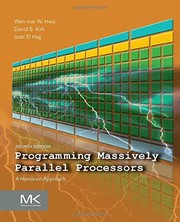
Provides the GPU and CUDA foundations needed to understand how PyTorch executes computations under the hood — essential for serious performance optimization.
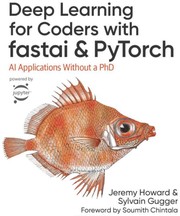
Covers advanced training techniques, data augmentation, and model interpretation through the fastai library built on PyTorch, exposing cutting-edge practices used in competitions and research.
Discussion
Keep reading
Paths that share books, cover the same subject, or open a related topic.