The Best Books on Test-Driven Development, In Order
This curriculum builds deep TDD mastery across three tightly sequenced stages, starting from the canonical principles and mechanics of TDD, moving through design-level thinking and real-world application, and finishing with advanced architectural and craft-level perspectives. Because the learner starts at an intermediate level, the first stage moves quickly through foundational practice before diving into the nuanced design and refactoring thinking that separates competent TDD practitioners from experts.
Core TDD Practice
BeginnerInternalize the red-green-refactor cycle, understand why TDD works, and write your first complete test-driven features with confidence.
▸ Study plan for this stage
Pace: 6–8 weeks, ~40–50 pages/day (approximately 2–3 hours of focused reading and note-taking)
- The red-green-refactor cycle: write a failing test, write minimal code to pass it, then refactor for clarity and design
- Why TDD works: how testing first drives better design, encourages loose coupling, and reduces defects
- Test structure and naming: arrange-act-assert pattern and descriptive test names that document intent
- Growing object-oriented design through tests: using tests as a design tool to discover objects and their responsibilities
- Mocking and test doubles: when and how to use mocks, stubs, and fakes to isolate units under test
- Refactoring with confidence: how a comprehensive test suite enables safe refactoring and emergent design
- Incremental feature development: building features test-by-test in small, verifiable steps
- Test-driven debugging: using tests to pinpoint and fix bugs systematically
- Describe the red-green-refactor cycle and explain why each phase is essential to TDD
- Why does writing tests first lead to better object-oriented design compared to writing tests after code?
- How do you structure a unit test using the arrange-act-assert pattern, and why is this structure important?
- When should you use mocks or test doubles, and what problems do they solve in test-driven development?
- Walk through a complete feature: how would you use TDD to build a new capability from a failing test to a refactored, working implementation?
- How does a comprehensive test suite enable safe refactoring, and what does 'emergent design' mean in the context of TDD?
- Implement a simple calculator or string utility class entirely test-first: write a failing test, make it pass with minimal code, then refactor. Repeat for at least 5–10 small features.
- Refactor a piece of legacy code (or code you wrote without TDD) by first writing tests around it, then improving the design incrementally. Document how the tests gave you confidence.
- Build a small object-oriented model (e.g., a shopping cart, bank account, or game entity) using TDD, focusing on discovering objects and their responsibilities through test interactions.
- Practice mocking: write tests for a class that depends on an external service (e.g., a database or API), using test doubles to isolate the unit under test.
- Pair-program or code-review a TDD session with a peer: take turns writing tests and implementation, and discuss design decisions as they emerge.
- Refactor a test suite itself: identify brittle or unclear tests, and improve their names, structure, and assertions to make intent clearer.
Next up: This stage grounds you in the mechanics and mindset of TDD, preparing you to tackle advanced topics like test architecture, scaling TDD across larger codebases, and integrating TDD with continuous integration and deployment practices.

The definitive origin text of TDD, written by its creator. Reading it first gives you the canonical vocabulary, the exact rhythm of the cycle, and the mindset behind every other book on this list.

Extends Beck's foundation into a full object-oriented design methodology, showing how TDD shapes architecture from the outside in — a critical bridge from mechanics to design thinking.
Refactoring & Design Intuition
IntermediateMaster the refactoring skills that make the 'refactor' step of TDD meaningful, and learn to write code that is inherently easy to test.
▸ Study plan for this stage
Pace: 8–10 weeks, ~40–50 pages/day, with 2–3 days per week dedicated to hands-on refactoring exercises
- Refactoring as a disciplined, incremental process: small, safe transformations that preserve behavior while improving structure
- The catalog of refactoring patterns (Extract Method, Introduce Parameter Object, Move Method, etc.) and when to apply each
- Characterization tests and approval tests as tools to establish a safety net when refactoring legacy code without existing tests
- The Seams Model: identifying and exploiting seams to break dependencies and inject test doubles into legacy systems
- Design intuition: recognizing code smells (long methods, duplicate code, feature envy, etc.) and understanding the design principles they violate
- Unit test structure and clarity: Arrange-Act-Assert pattern, test naming conventions, and isolation of units under test
- Testability as a design goal: writing code that is inherently modular, loosely coupled, and easy to verify in isolation
- The relationship between refactoring and testing: how safe refactoring depends on a comprehensive test suite, and how good design emerges from the refactoring cycle
- What is the core principle of refactoring, and why is preserving behavior while changing structure essential to the TDD cycle?
- Describe three refactoring patterns from Fowler's catalog and explain the code smell each one addresses.
- How do characterization tests help you refactor legacy code that has no existing test coverage, and what are their limitations?
- What is the Seams Model, and how can you use it to inject dependencies into tightly coupled legacy code for testing?
- How do you recognize when code is difficult to test, and what design changes make code inherently more testable?
- What makes a unit test effective? Explain the Arrange-Act-Assert pattern and why test isolation matters.
- How does the refactoring step in TDD differ from refactoring legacy code, and what additional challenges does legacy code present?
- Work through Fowler's refactoring examples: pick 5 refactoring patterns (e.g., Extract Method, Introduce Parameter Object, Replace Temp with Query) and apply each to a small legacy codebase or your own past project
- Write characterization tests for a piece of untested legacy code (aim for 10–15 tests that document current behavior), then safely refactor it using those tests as a safety net
- Identify and break a circular dependency or tightly coupled module using the Seams Model: introduce a seam, write tests that exploit it, and inject a test double
- Refactor a long method (200+ lines) by repeatedly applying Extract Method, ensuring tests pass after each extraction
- Take a class with multiple responsibilities and apply Move Method and Extract Class to separate concerns, writing tests to verify behavior is preserved
- Write a test suite for a 'hard-to-test' legacy function (one with hidden dependencies, global state, or tight coupling), then refactor the function to be testable without changing its public interface
Next up: This stage equips you with the refactoring discipline and design intuition to write code that is inherently testable, setting the foundation for the next stage where you'll apply these skills in real-world TDD workflows and learn to drive design decisions from tests themselves.

TDD without strong refactoring skills produces test-covered bad code. Fowler's catalog of named refactorings gives you the precise moves needed to keep code clean after every green bar.
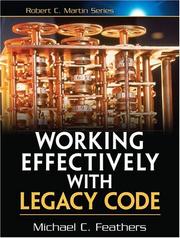
Real codebases are rarely greenfield. Feathers teaches seam-based techniques to get untested code under test, making TDD applicable in the messy environments most developers actually work in.
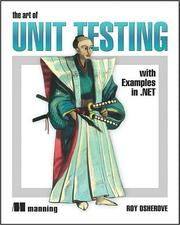
Provides a structured, language-agnostic framework for writing maintainable, readable, and trustworthy unit tests — filling in the craft details that Beck and Freeman leave implicit.
Advanced Craft & Architecture
ExpertApply TDD at the architectural level, understand its relationship to software design principles, and develop the judgment of an expert practitioner.
▸ Study plan for this stage
Pace: 12–14 weeks, ~40–50 pages/day (with 2–3 days per week for exercises and reflection). Week 1–3: Clean Code; Week 4–8: xUnit Test Patterns; Week 9–12: Clean Architecture; Week 13–14: Integration project and review.
- Meaningful naming and code clarity as prerequisites for testable, maintainable design
- Functions and classes designed for single responsibility and composability, enabling effective unit testing
- Test doubles (mocks, stubs, fakes) and their strategic use to isolate units and manage dependencies
- Test patterns and refactoring patterns that emerge from sustained TDD practice
- Architectural boundaries and dependency inversion as enablers of testability at system scale
- The relationship between clean code principles, SOLID design, and test-driven development
- Judgment: when to apply TDD rigorously, when to use different testing strategies, and how to balance pragmatism with craft
- Why does Clean Code emphasize naming, function size, and error handling, and how do these practices directly enable TDD?
- What are the core test patterns (Setup-Teardown, Assertion, Test Fixture, etc.) described in xUnit Test Patterns, and when should each be applied?
- How do test doubles (mocks, stubs, fakes) differ, and what are the trade-offs in using them to manage dependencies?
- What is the relationship between architectural boundaries (as described in Clean Architecture) and the ability to test components in isolation?
- How do the SOLID principles (Single Responsibility, Open/Closed, Liskov Substitution, Interface Segregation, Dependency Inversion) support both clean code and effective TDD?
- What is the difference between testing behavior and testing implementation, and how does this distinction affect your choice of test strategy?
- Refactor a legacy codebase module using Clean Code principles (naming, function extraction, error handling) and measure how testability improves; document the before/after.
- Implement a medium-sized feature (e.g., a payment processor or order validator) using strict TDD, then identify and apply test patterns from xUnit Test Patterns (e.g., Setup-Teardown, Assertion Message, Test Fixture) to improve test clarity and maintainability.
- Write a test suite for a module with hard-to-test dependencies; experiment with different test doubles (stubs, mocks, fakes) and refactor the production code to use dependency injection, documenting the trade-offs.
- Design a small system (e.g., a user authentication service) with clear architectural boundaries following Clean Architecture principles; write tests that respect those boundaries and verify that components remain loosely coupled.
- Conduct a code review of a peer's test suite using Clean Code and xUnit Test Patterns criteria; identify violations and propose refactorings that improve test readability and maintainability.
- Build a multi-layer application (presentation, business logic, persistence) using TDD; ensure each layer is testable in isolation and verify that the SOLID principles are reflected in your design and test structure.
Next up: This stage equips you with the craft knowledge, design judgment, and architectural perspective to lead TDD adoption in teams and systems—preparing you to mentor others, make principled trade-offs in real-world constraints, and evolve your practice as technology and team needs change.
Establishes the code-quality standards that make TDD sustainable at scale; reading it here reinforces why the discipline of TDD and clean code are inseparable in professional practice.
The most comprehensive reference on test design patterns — smells, fixtures, mocks, stubs, and more. At this stage it serves as both a deep-dive and an authoritative reference for expert-level test architecture.

Ties TDD to large-scale system design, showing how testability drives architectural decisions like dependency rules and boundary separation — the capstone perspective for an expert practitioner.
Discussion
Keep reading
Paths that share books, cover the same subject, or open a related topic.