Malware analysis is reverse engineering with an adversary who is actively trying to stop you. The code is deliberately obscured, watches for analysts, and sometimes fights back. That makes it unforgiving for anyone who dives in without the fundamentals: you need to read disassembly, understand how the operating system works, and set up a lab that will not infect your own network. Learned out of order, it is dangerous as well as confusing.
The path gives you a strong core first, then the memory and detection skills that modern threats require, then the specialized corners of evasion, rootkits, and response. Throughout, this is defensive work: analyze only in a controlled lab, on samples you are authorized to handle.
Master the core workflow
Start with Practical Malware Analysis, the field's standard textbook. It covers safe lab setup, both static and dynamic analysis, and the essential tools, and it is the book nearly every analyst learns from. Reinforce your reversing skills with Reversing by Eldad Eilam for the concepts and The IDA Pro book for fluency in the disassembler you will live in. Add Practical Binary Analysis to bring automated, programmatic techniques into your toolkit.
Read memory and defeat evasion
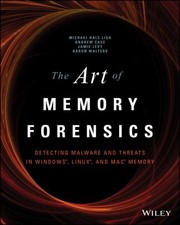
Much modern malware never touches disk in obvious ways, so The Art of Memory Forensics is essential: it teaches how to find and analyze malicious code in a system's memory, where fileless threats hide. Then Evasive Malware tackles the arms race directly, covering anti-analysis, anti-VM, and obfuscation tricks and how to get past them.
For a broad, practical toolbox, Malware analyst's cookbook and dvd collects recipes and techniques for common analysis tasks, useful to keep nearby once you have the fundamentals.
Handle stealth, internals, and response
The advanced threats demand deeper knowledge. Rootkits explains the stealth techniques used to hide deep in a system, and Windows Internals, Part 2 supplies the operating-system depth needed to understand and counter them. The Antivirus Hacker's Handbook offers the revealing perspective of how detection tools themselves can be attacked, which sharpens your understanding of both offense and defense.
Finally, analysis serves a larger goal, and Intelligence-Driven Incident Response places it in the context of detecting, responding to, and learning from real intrusions. It is the capstone that turns a lab skill into an operational one.
Follow the full path and malware analysis becomes a methodical craft rather than a risky gamble. You end able to take a hostile sample apart, understand its behavior, and feed that understanding into defense. Always work in isolation, ethically, and within your authorization.
Follow the full reading path →
Ready to learn something deeply?
Build a reading path — free