How to Become a QA Engineer: Best Books on Software Testing, in Order
This curriculum takes a beginner from zero QA knowledge to a confident, job-ready software tester across four progressive stages. It starts with the mindset and vocabulary of testing, builds into structured test design and processes, then advances into automation engineering and modern quality practices — each stage's books deliberately preparing the reader for the next.
Testing Mindset & Foundations
BeginnerUnderstand what software testing really is, why it matters, and develop the critical thinking mindset every QA professional needs before writing a single test case.
▸ Study plan for this stage
Pace: 4–5 weeks, ~25–30 pages/day (approximately 150–180 pages total across both books)
- Testing is not just bug-finding—it's about gathering information to reduce risk and inform decisions about software quality
- The heuristic mindset: using patterns, experience, and context-driven approaches rather than rigid test scripts or checklists
- Test design principles: equivalence partitioning, boundary value analysis, and risk-based prioritization of what to test
- The role of the tester as a critical thinker and communicator who challenges assumptions and asks 'why?'
- Google's testing philosophy: balancing unit tests, integration tests, and end-to-end tests across the testing pyramid
- Oracles and testability: understanding what 'correct' means and how to design software that is easier to test
- The relationship between testing and development: collaboration over gatekeeping, and shifting quality left
- What is the difference between testing as 'bug-finding' and testing as 'information gathering'? Why does this distinction matter?
- Explain the concept of an 'oracle' in software testing. What are the challenges in determining whether a test result is a pass or fail?
- What is a heuristic in testing, and how does using heuristics differ from following a rigid test plan?
- Describe Google's testing pyramid. Why does Google emphasize unit tests over end-to-end tests, and what trade-offs exist?
- How should a QA professional approach testing a feature they don't fully understand? What questions should they ask?
- What does it mean to 'shift quality left,' and how can testers collaborate with developers earlier in the development cycle?
- Read and annotate Chapter 1 of 'Lessons Learned in Software Testing' (the 99 lessons overview). For 3 lessons that resonate, write a one-paragraph reflection on how each applies to your own experience or a project you know.
- Pick a simple application you use daily (e.g., a calculator, note-taking app, or website). Identify 5 test cases using equivalence partitioning and boundary value analysis. Document what the 'oracle' is for each test (how you know if it passed).
- Read the Google testing pyramid section in 'How Google Tests Software.' Sketch out a testing pyramid for a hypothetical feature (e.g., a login system). Justify why you placed each test type at its level.
- Conduct a 'testing interview' with a developer or QA colleague. Ask them: What is the hardest thing to test in your current project? What assumptions do you make about quality? Summarize their answers and reflect on what you learned.
- Write a 1–2 page 'testing charter' for a fictional product (e.g., a mobile banking app). Include: what you're testing, why it matters, what risks you're concerned about, and what you won't test (and why).
- Review a test case or test plan from a real project (yours or a colleague's). Critique it using the heuristic mindset: Is it too rigid? Does it ask the right questions? Rewrite one section to be more exploratory and context-aware.
Next up: This stage establishes the philosophical and conceptual foundation—understanding *why* we test and *how* to think like a tester—which is essential before moving into the next stage where you'll learn the practical mechanics of writing test cases, designing test scenarios, and executing tests in real-world workflows.

A landmark book written as practical, digestible lessons — perfect for beginners to absorb real-world testing wisdom without being overwhelmed by theory. It builds the mental models that underpin everything else in this curriculum.
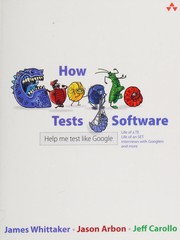
Gives a vivid, concrete picture of how testing works inside a world-class engineering organization, making abstract QA roles and responsibilities feel real and motivating for someone starting their career.
Test Design & Manual Testing Skills
BeginnerLearn how to systematically design test cases, write bug reports, and apply core black-box and exploratory testing techniques used daily in QA roles.
▸ Study plan for this stage
Pace: 8–10 weeks, ~40–50 pages/day (mix of reading and hands-on practice)
- Test case design fundamentals: inputs, expected outputs, preconditions, and postconditions
- Black-box testing techniques (equivalence partitioning, boundary value analysis, decision tables) from Patton
- Bug reporting best practices: clear reproduction steps, severity/priority classification, and actionable descriptions
- Exploratory testing mindset and charter-based exploration from Hendrickson
- Test coverage strategies and risk-based testing prioritization
- Session-based testing and time-boxed exploration techniques
- Defect lifecycle and communication with developers
- Practical application of testing heuristics and patterns in real scenarios
- What are the key components of a well-written test case, and how do equivalence partitioning and boundary value analysis improve test design?
- How do you write a bug report that a developer can immediately understand and reproduce, and what information is essential?
- What is the difference between black-box testing and exploratory testing, and when would you use each approach?
- How do you design an exploratory testing charter, and what is a session-based testing approach?
- What testing heuristics and patterns help you identify high-risk areas and prioritize test effort?
- How do you balance systematic test case design with adaptive, exploratory testing in a real QA workflow?
- Design 10–15 test cases for a simple feature (e.g., login form, calculator, search function) using equivalence partitioning and boundary value analysis; document preconditions, inputs, expected outputs, and postconditions
- Write 5 realistic bug reports for intentional defects in a test application (web or mobile); include title, steps to reproduce, actual vs. expected behavior, environment details, and severity/priority justification
- Create a test case decision table for a feature with multiple conditions (e.g., discount eligibility based on customer type, purchase amount, and membership status); execute and document results
- Conduct a 90-minute exploratory testing session on a real or mock application; write a session report including charter, test notes, observations, and bugs found
- Practice session-based testing: design 3 different testing charters (e.g., 'Find edge cases in date handling,' 'Explore error messages'), execute each in a time-boxed session, and document findings
- Analyze a poorly written test case or bug report; rewrite it to be clear, actionable, and reproducible; explain the improvements
Next up: This stage equips you with the foundational skills to design, execute, and document tests systematically and adaptively—preparing you to advance to test automation, continuous integration, and specialized testing domains where these core practices become the basis for scaling QA efforts.
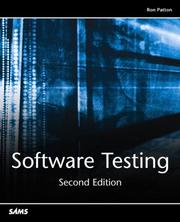
The most accessible and widely recommended entry-level textbook on manual testing — covers equivalence partitioning, boundary analysis, and test planning in plain language, building essential vocabulary for the rest of the path.
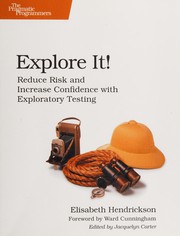
Teaches exploratory testing as a disciplined, structured skill rather than random clicking — read after Patton so you can contrast structured test cases with charter-based exploration, a technique prized in modern Agile teams.
Agile Quality & Testing Processes
IntermediateUnderstand how QA fits into Agile and DevOps workflows, collaborate effectively with developers and product managers, and shift quality thinking left across the whole team.
▸ Study plan for this stage
Pace: 8–10 weeks, ~40–50 pages/day (mix of dense technical content and practical examples; allow extra time for reflection on Agile Testing's frameworks)
- The Agile testing quadrant and how different test types map to Agile iterations
- Shift-left testing: embedding QA early in development cycles rather than at the end
- Whole-team quality ownership: QA as facilitator, not gatekeeper; developers and product owners as quality stakeholders
- Test-driven development (TDD) and acceptance test-driven development (ATDD) as Agile practices
- Continuous integration and continuous delivery (CI/CD) pipelines and QA's role in automation
- Risk-based testing and prioritization in time-boxed sprints
- Fundamental testing principles from Myers: designing tests to find bugs, test case design techniques, and the psychology of testing
- Collaboration patterns: daily standups, sprint planning, retrospectives, and how QA influences product decisions
- What is the Agile testing quadrant, and how do you decide which tests belong in which quadrant for a given sprint?
- How does shift-left testing change the role of QA compared to traditional waterfall testing, and what are the practical benefits?
- Describe a scenario where a developer, QA engineer, and product manager collaborate on acceptance criteria—what does effective collaboration look like?
- What is the difference between TDD and ATDD, and when would you use each in an Agile sprint?
- How do you prioritize testing activities in a 2-week sprint when you cannot test everything, and what does risk-based testing mean in practice?
- According to Myers, what are the key principles for designing effective test cases, and how do you apply them in an Agile context where requirements evolve?
- Map a real or hypothetical user story to the Agile testing quadrant: identify which tests (unit, integration, system, exploratory) are needed and when in the sprint they should run.
- Write acceptance criteria for a feature using ATDD format (Given-When-Then), then design 3–5 test cases that verify those criteria; reflect on how this differs from traditional test case design.
- Simulate a sprint planning meeting: take a backlog item, identify risks and quality concerns, and create a testing strategy that fits a 2-week timebox.
- Conduct a 30-minute exploratory testing session on a real or demo application; document findings using a session-based testing charter and report bugs in a way that informs the team.
- Pair with a developer (or role-play) to implement a small feature using TDD: write a failing test, implement code, and refactor—then reflect on how this shifts quality thinking.
- Review a CI/CD pipeline configuration (or a description of one) and identify where QA gates, automated tests, and manual checks should fit; propose improvements based on Agile principles.
Next up: This stage establishes QA as a collaborative, proactive discipline embedded in iterative delivery; the next stage will deepen technical testing skills—test automation frameworks, performance testing, security testing—and advanced strategies for scaling QA in large or complex systems.
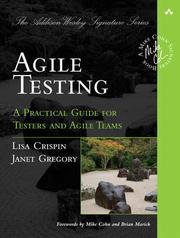
The definitive guide to the QA role in Agile teams — introduces the Agile Testing Quadrants and whole-team quality ownership, concepts that are now industry standard and expected knowledge in most QA job interviews.

A timeless classic that formalizes test design principles (code coverage, logic-driven testing) at an intermediate level — reading it after Agile Testing grounds the process thinking in rigorous, proven technique.
Test Automation Engineering
IntermediateDesign and build maintainable automated test suites, understand automation architecture patterns, and know when and what to automate — the skill set that unlocks senior QA and SDET roles.
▸ Study plan for this stage
Pace: 12–14 weeks, ~40–50 pages/day (accounting for dense technical content and hands-on practice). Week 1–4: "Test Automation in the Real World" (4 weeks); Week 5–8: "Growing Object-Oriented Software, Guided by Tests" (4 weeks); Week 9–14: "Continuous Delivery" (6 weeks, slower pace due to breadth and de
- Automation pyramid and test strategy: understanding what to automate (unit, integration, end-to-end) and why, avoiding the inverted pyramid trap
- Test maintainability and cost: designing tests to be resilient to change, reducing brittle tests, and calculating ROI of automation
- Object-oriented design in test code: applying SOLID principles, page objects, and abstraction layers to keep test suites DRY and scalable
- Test-driven development (TDD) as a design tool: using tests to drive architecture, not just verify behavior; red-green-refactor cycle
- Continuous integration and deployment pipelines: integrating automated tests into CI/CD, feedback loops, and deployment gates
- Automation architecture patterns: fixture management, test data strategies, mocking/stubbing, and decoupling tests from implementation
- Risk-based testing and coverage decisions: knowing when automation adds value vs. when manual testing or exploratory testing is more effective
- Refactoring test code: recognizing test smells, improving readability, and evolving test suites as systems change
- What is the testing pyramid, and why is an inverted pyramid (many end-to-end tests, few unit tests) a common pitfall? How would you restructure a test suite that has this problem?
- How do you design a test automation strategy that minimizes maintenance cost and brittleness? What specific techniques from the books would you apply?
- Explain how object-oriented principles (encapsulation, abstraction, DRY) improve test code. Give a concrete example of a page object or test fixture that demonstrates this.
- What is the relationship between TDD and test automation architecture? How does writing tests first change the design of both your production code and test code?
- How do automated tests fit into a continuous delivery pipeline? What role do they play in deployment gates, and how do you balance test speed with confidence?
- Describe a scenario where you would *not* automate a test. What factors determine whether a test should be automated, manual, or exploratory?
- Build a small web application (e.g., a todo app or login system) and write an automated test suite following the pyramid strategy: 10+ unit tests, 3–5 integration tests, 2–3 end-to-end tests. Measure and report the ratio.
- Refactor an existing brittle test suite (or create one intentionally): identify test smells (hard-coded data, tight coupling to UI, flaky waits), then apply page objects, fixtures, and abstraction layers. Document the before/after.
- Practice TDD: pick a small feature and write failing tests first, then implement the feature. Reflect on how the tests influenced your design decisions compared to writing code first.
- Design a test data strategy for a multi-tier application: define how you'll handle setup/teardown, mock external dependencies, and keep tests isolated. Implement it in code.
- Set up a basic CI/CD pipeline (using GitHub Actions, Jenkins, or similar) that runs your automated test suite on every commit. Configure deployment gates based on test results.
- Write a test automation strategy document for a hypothetical project: define the pyramid, justify what will and won't be automated, estimate maintenance cost, and explain the ROI.
Next up: This stage equips you with the architectural thinking and hands-on patterns needed to lead test automation at scale—preparing you to tackle advanced topics like test infrastructure, performance testing, and strategic quality metrics that define senior SDET and QA leadership roles.

A pragmatic, no-hype guide to automation that addresses the common pitfalls beginners face — read first in this stage to set realistic expectations and sound architectural instincts before diving into patterns.

The gold standard for understanding test-driven development and writing tests that actually drive good design — elevates automation from 'scripts that click buttons' to engineering discipline, preparing readers for senior roles.

Closes the curriculum by showing how automated testing fits into CI/CD pipelines and the full software delivery lifecycle — essential reading for any QA engineer who wants to be a valued partner in a modern DevOps organization.
Discussion
Keep reading
Paths that share books, cover the same subject, or open a related topic.