Simon Schama Reading Order: Where to Start
Simon Schama's books split into three kinds — the huge narrative histories, the art writing, and the formal experiments — and they do not need to be read in publication order, but they do need to be read in order of difficulty. Start with the shorter, more propulsive books that show what his storytelling can do, then take on the two enormous early histories that made his reputation, then the art writing, and finally the Jewish history project and the odder experiments. Nothing here is a series except The Story of the Jews, which is strictly sequential.
The Best Entry Points
IntermediateGet Schama's narrative voice in the two most readable books before committing to a nine-hundred-page history.
▸ Study plan for this stage
Pace: 6-8 weeks for about 930 pages (Rough Crossings 478, The Power of Art 448). Both are much faster than their page counts suggest, because Schama writes in scenes and neither book requires you to hold a large structure in mind. Rough Crossings is a narrative with a chronology and can be read in three w
- Schama's central instinct: history told as narrative with people in it, against the structural and statistical traditions he was trained beside
- Rough Crossings follows enslaved Americans who sided with the British for a promise of freedom, and what actually happened to them after the war
- The book's moral complication is deliberate - the empire is the liberator and the revolutionaries are the slaveholders, which scrambles the usual American story
- Nova Scotia and Sierra Leone as the unhappy afterlives of that promise, and the gap between an emancipation proclaimed and one delivered
- The Power of Art takes eight artists at a single decisive moment each, which is a dramatist's structure rather than an art historian's
- Reading a painting as evidence about a society is the method Schama uses in every book, and this is where you see it isolated
- These two books show the storyteller and the art critic separately; the rest of the shelf keeps combining them
- Both began life alongside television work, which is part of why they are so propulsive and part of why academic historians are wary of him
- What did the British actually promise, and how much of it did they deliver?
- How does Rough Crossings change the standard account of the American Revolution, and what does it leave intact?
- In The Power of Art, what is Schama's justification for organising a life around one moment? Where does it distort?
- Which of the eight chapters made you want to look at the paintings longest, and what did the prose do to cause that?
- What does Schama think a painting can tell a historian that a document cannot?
- Have the paintings on screen while reading each Power of Art chapter. Schama is describing specific pictures and the chapters are close to unusable without them.
- Trace one individual through Rough Crossings from enslavement to Sierra Leone. The book has a large cast and following one person makes the arc legible.
- Note three places where Schama uses a scene rather than an argument to make a historical point. That substitution is the thing his critics object to and his readers love.
- After The Power of Art, pick a painting you know well and write 400 words placing it at a decisive moment. You will find out immediately how much invention the form requires.
Next up: You now know what Schama's storytelling does at 450 pages, which is the only honest preparation for the two enormous books that made his reputation.
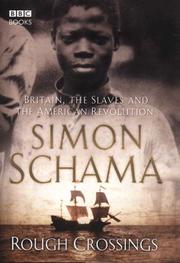
Enslaved Americans who sided with the British for a promise of freedom, and what happened to them afterwards. Compact, morally complicated and the most gripping short entry into his work.
Eight artists, each caught at a single decisive moment. It shows the storyteller and the art critic in the same book, which is the combination the rest of the shelf keeps returning to.
The Great Histories
IntermediateRead the two vast early works that established him, both of which argue against the accepted account of their period.
▸ Study plan for this stage
Pace: 14-18 weeks for about 1,650 pages (Citizens 948, The Embarrassment of Riches 698). This is the heaviest stage in the path and should be planned as a season rather than a month. Citizens is a chronological narrative and, despite its size, reads steadily at 30 pages a sitting - eight weeks or so. The
- Citizens tells the French Revolution as narrative rather than structure, and argues that violence was present from the beginning rather than arriving with the Terror
- That argument is genuinely contested - it cuts against the social-historical tradition and Schama was attacked for it by historians who see the Revolution's causes as structural
- Reading Citizens well means holding the counter-argument in view: that a narrative of individuals cannot settle a question about social forces
- The 1989 bicentenary context matters - the book was published into an anniversary and read as a political intervention
- The Embarrassment of Riches reads the Dutch Golden Age through its anxiety about its own wealth: a Calvinist republic uneasy at being rich
- Paintings, still lifes, household objects and conduct manuals used as primary evidence, which is where Schama's method is worked out in full
- The moral geography of a whole culture assembled from small objects, which is the most ambitious thing he attempts anywhere
- Together these two books are the reason he matters, and everything later in the path assumes them
- What is Schama's causal account of the Revolution's violence, and what would a structural historian say against it?
- How does narrating a revolution through individuals change what can be concluded about it?
- Where in Citizens does Schama's sympathy for particular figures shape the reader's judgement, and is that legitimate?
- What is the embarrassment in The Embarrassment of Riches, and what evidence establishes that it was widely felt rather than merely available?
- Can you build a cultural history out of objects and paintings? What are the failure modes, and does Schama avoid them?
- Read a short summary of the social-historical account of the French Revolution before or alongside Citizens. A contested book is far more interesting when you know what it is contesting.
- Keep a timeline for Citizens. Nine hundred pages of narrative covering five years is easy to lose track of, and the book does not supply a spine.
- For The Embarrassment of Riches, look up each painting as it is discussed. The argument is built on images and reading the descriptions alone is reading a summary.
- Pick one everyday object Schama analyses and write down the chain of inference from object to cultural claim. It is the clearest test of whether the method holds.
- After both books, write 500 words on whether narrative history can answer causal questions. You will have earned an opinion by then.
Next up: Having watched him read a culture off its images, the next stage is where the seeing itself becomes the subject rather than the method.

The French Revolution told as narrative rather than structure, with violence present from the beginning rather than arriving with the Terror. Long, contested by other historians, and the book he is most argued about.
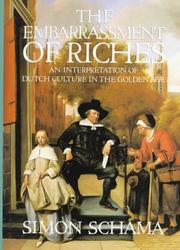
The Dutch Golden Age read through its anxiety about its own wealth, using paintings and household objects as evidence. It is where his method of reading culture off images is worked out in full.
Landscape And Art
IntermediateFollow the strand where the subject becomes the way people see, rather than what they did.
▸ Study plan for this stage
Pace: 12-15 weeks for about 1,400 pages (Landscape and Memory 652, Rembrandt's Eyes 750). Landscape and Memory is his most digressive big book and the one readers most often abandon; it moves between forests, rivers and mountains with long detours into myth and family memory, and it needs patience the ear
- Landscape and Memory argues that forests, rivers and mountains are constructed by imagination as much as by geology, and that landscape is a cultural artefact
- The book is organised by element - wood, water, rock - rather than by chronology, which is why it feels digressive
- German forest myth, the Polish woods of his own family history and the American wilderness idea sit in the same book, and the personal thread is unusual for him
- The ugliest material - how landscape myth served nationalism, including Nazi forest ideology - is faced directly and is the book's hardest section
- Rembrandt's Eyes is a double life of Rembrandt and Rubens, structured as a contrast between two models of what a painter's career could be
- Rubens as the successful courtier and Rembrandt as the bankrupt experimenter is the frame, and it is a Schama dramatisation as much as a thesis
- The Dutch context from The Embarrassment of Riches is assumed throughout, which is precisely why that book came first
- This stage is Schama at his most personal and his most art-historical, and it is where his admirers and detractors disagree most sharply
- What does Schama mean by saying a landscape is made by memory? What would it take to falsify that claim?
- How does the book handle the use of landscape myth by nationalist and fascist movements, and does it draw the right conclusion?
- Where does Landscape and Memory become autobiography, and does the personal material strengthen or dilute it?
- What is the Rubens-Rembrandt contrast for, and is it a real historical relationship or a narrative device?
- How much does Rembrandt's Eyes depend on The Embarrassment of Riches? Name three things it assumes.
- Read Landscape and Memory in its three elemental sections with a break between each. Treating it as three books rather than one is the standard cure for stalling in it.
- Look at the specific paintings and photographs reproduced as you reach them. The whole argument is visual and the plates are not decoration.
- For Rembrandt's Eyes, view a Rubens and a Rembrandt side by side at the point where Schama compares them. The contrast is immediate and the book is much clearer afterwards.
- Note every place Schama's own family enters Landscape and Memory. It is a deliberate methodological choice and worth judging on its own terms.
- Write a paragraph on a landscape near you and what has been imagined onto it. That is the book's method reduced to one exercise.
Next up: Schama has now spent 3,000 pages reading cultures through their images, and his late project turns that technique on a three-thousand-year history that left very few images at all.
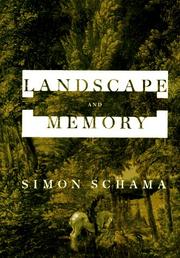
Forests, rivers and mountains as things built by imagination as much as geology. His most personal and most digressive big book, and it presumes patience the earlier stages build.
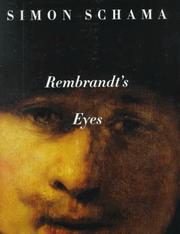
A double life of Rembrandt and Rubens, and the fullest version of Schama as art historian. It is far richer if The Embarrassment of Riches has already given you the Dutch context.
The Story Of The Jews
IntermediateRead his late multi-volume project, which is genuinely sequential and covers three thousand years.
▸ Study plan for this stage
Pace: 10-13 weeks. The first volume is 512 pages and covers antiquity to 1492; the second is the largest of the set and covers 1492 to 1900, so budget notably more time for it. This project is genuinely sequential - unlike everything else on this shelf - so read them in order and consecutively. Both are b
- A history built from ordinary lives and surviving documents rather than from a chronicle of persecutions, which is the project's defining choice
- The first volume runs from antiquity to the Spanish expulsion of 1492, and insists on the ordinariness and variety of Jewish life across that span
- Papyri, letters, contracts and inscriptions as primary material - Schama's object-reading method applied where paintings are scarce
- Diaspora treated as a normal condition with its own institutions rather than as a permanent emergency
- The second volume covers 1492 to 1900 and is the largest of the set, taking in the Ottoman and European dispersals, emancipation and its backlash
- The project is explicitly a corrective to a lachrymose history - the argument is that persecution is not the whole story and should not be the frame
- Schama's own position as a Jewish historian is present in the text, which is a departure from the earlier books and a deliberate one
- The later volumes assume the first: the cast of ordinary lives established in volume one recurs as a set of reference points
- What does Schama gain by building the history from documents of ordinary life rather than from a narrative of events?
- How does the first volume handle the relationship between Jewish communities and the states they lived in?
- What is the lachrymose conception of Jewish history, and how successfully does Schama write against it?
- How does the emancipation material in the second volume complicate the idea of progress?
- Does Schama's own presence in the text strengthen the history or compromise it?
- Keep a simple geographic list as you read volume one - which communities, where, when. Three thousand years across several continents is a lot to hold and the book moves fast.
- Pick one document Schama quotes at length and reread it after finishing the chapter. His method is to make a single letter carry a world, and testing that on one example is instructive.
- Note where the second volume picks up figures or communities from the first. The continuity is real and it is the reason to read them in order.
- Compare a chapter here with a chapter of The Embarrassment of Riches. Twenty-five years apart, the object-reading technique is the same and the confidence is different.
Next up: With the conventional work behind you, the last stage is where Schama deliberately breaks the rules of his own form - which is only interesting once you know exactly what the rules were.
The first volume, from antiquity to 1492, built out of documents, letters and objects rather than a march of events. Start the project here; the later volumes assume it.

The second volume, 1492 to 1900, and the largest of the set. It continues directly and reads much better with the first volume's cast of ordinary lives in mind.
The Experiments
IntermediateFinish with the books where Schama deliberately breaks the rules of the form.
▸ Study plan for this stage
Pace: 5-6 weeks. Dead Certainties is 333 pages of two loosely linked historical episodes and reads quickly - a week or two - but repays a slow second look at the passages where the invention happens. Foreign Bodies is his most recent large book, on vaccination, pandemics and the scientists who fought them
- Dead Certainties tells two historical episodes with acknowledged invention - interior monologue, imagined scenes - and admits it in an afterword
- The book caused a genuine methodological row about where history stops and fiction begins, and the row is the reason to read it
- Schama's defence is that all narrative history involves construction and that making it visible is more honest than hiding it
- The counter-case is that a reader cannot separate the invented from the evidenced, which damages the authority of everything else on this shelf
- Foreign Bodies covers vaccination and epidemic disease across centuries, with the scientists who fought them as its cast
- Written after Covid, it is his storytelling applied to science and public health, which is a subject he had never taken on at length
- Both books are late-career risks in different directions - one formal, one topical - and reading them last lets you judge them against the body of work
- Nothing here should be a first Schama, and Dead Certainties in particular is meaningless without the conventional histories behind it
- What exactly is invented in Dead Certainties, and how do you know?
- Is Schama's defence of acknowledged invention persuasive? What is the strongest objection?
- Having read Citizens, does Dead Certainties make you trust it more or less?
- What does Foreign Bodies argue about the relationship between scientific knowledge and public resistance to it?
- Across the whole shelf, what is Schama's consistent belief about what history is for?
- Read the afterword of Dead Certainties before the narratives, not after. Knowing the rules of the game changes the experience and is the fairer test of the experiment.
- Mark passages in Dead Certainties where you cannot tell whether something is evidenced. That list is the objection to the book in concrete form.
- In Foreign Bodies, note where Schama's sympathies lie in each historical controversy, and check whether he tells you or shows you.
- Write your own reading order for Schama for someone who has read none of him. Having covered roughly 5,300 pages you can defend an entry point that no review will give you.
Next up: The shelf closes here; the natural continuations are the historians who argue with him about the French Revolution, or the Dutch painters The Embarrassment of Riches taught you to read.
Two historical episodes told with acknowledged invention, which caused a real methodological row about where history stops. Only interesting once you know his conventional work well enough to see what he is testing.

Vaccination, pandemics and the scientists who fought them, written after Covid. His most recent large book and a good closing note, since it shows the same storytelling applied to science.
Discussion
Keep reading
Paths that share books, cover the same subject, or open a related topic.