The French Revolution & Napoleon, in order
This four-stage curriculum takes a beginner from vivid narrative history all the way to sophisticated political and military analysis, building vocabulary and context at each step. The path moves from accessible storytelling, through social and ideological depth, into Napoleon's world, and finally to the long legacy that still echoes in modern politics.
Foundations: The Story Before the Storm
BeginnerGrasp the basic chronology, key figures, and causes of the Revolution — from the Ancien Régime's crisis through the fall of the monarchy — with enough narrative momentum to stay hooked.
▸ Study plan for this stage
Pace: 10–12 weeks total: Weeks 1–5 on Doyle's "The Oxford History of the French Revolution" (~25–30 pages/day, 5 days/week); Weeks 6–12 on Schama's "Citizens" (~20–25 pages/day, 5 days/week — slower pace to absorb its dense narrative detail). Reserve one day per week for review, note consolidation, and ex
- The Ancien Régime: the three Estates, structural inequalities, and why the system was fiscally and socially unsustainable — as laid out in Doyle's opening chapters
- The financial crisis of the French state: war debts (especially from American independence), failed tax reform, and the convening of the Estates-General as the breaking point Doyle traces in detail
- Enlightenment ideologies as accelerants: how ideas of popular sovereignty, natural rights, and rational governance (discussed by both Doyle and Schama) gave revolutionaries a vocabulary and a justification
- The shift from reform to revolution: the Tennis Court Oath, the storming of the Bastille, and the Great Fear — Schama's 'Citizens' renders these as vivid human events, while Doyle provides the structural scaffolding
- Key figures and their roles: Louis XVI's indecisiveness, Marie Antoinette as a symbol of royal excess, Necker's political significance, and early revolutionary leaders like Mirabeau and Lafayette — all profiled across both books
- The Declaration of the Rights of Man and Citizen (1789): its content, its contradictions (who was excluded?), and its lasting ideological weight, examined by Doyle analytically and Schama narratively
- The constitutional monarchy experiment (1789–1792): why it failed — the flight to Varennes, the king's loss of credibility, and the radicalization of the political clubs (Jacobins, Girondins)
- The fall of the monarchy (August 1792) and the logic of escalation: how each crisis produced a more radical response, a pattern both Doyle and Schama use to explain why moderate revolution proved impossible
- According to Doyle, what were the three most critical structural weaknesses of the Ancien Régime, and how did each contribute to making revolution likely rather than merely possible?
- Schama's 'Citizens' opens well before 1789 — what does his pre-revolutionary narrative reveal about French culture and society that a purely political account would miss?
- How do Doyle and Schama each explain the significance of the Bastille's fall on July 14, 1789? Where do their interpretations align, and where do they diverge in emphasis?
- What role did Louis XVI's personality and decision-making — particularly the flight to Varennes — play in destroying the constitutional monarchy, based on both authors' accounts?
- How did the Declaration of the Rights of Man and Citizen both embody Enlightenment ideals and contain the seeds of future conflict (over who counted as a 'citizen')?
- By the time the monarchy falls in August 1792, what chain of events and decisions — as reconstructed across both books — made that outcome feel, in retrospect, almost inevitable?
- Build a dual-column timeline: as you read each book, log the same events in parallel columns — one for Doyle's framing (structural/analytical) and one for Schama's (narrative/cultural). By the end, you'll have a vivid map of how the same history can be told two ways.
- Create a 'Key Figures Index Card' for each major person encountered (Louis XVI, Marie Antoinette, Necker, Mirabeau, Lafayette, Robespierre when he appears). On each card: role, motivations, one decision that changed events, and how each author portrays them — note any differences in sympathy or emphasis.
- After finishing Doyle's structural account of the Ancien Régime's crisis, write a one-page 'prosecutor's brief': argue that revolution was inevitable given the fiscal, social, and political conditions he describes. Then, after reading Schama, write a one-page 'defense brief' using his human-scale details to argue that different choices by key individuals could have changed the outcome.
- Map the Estates-General → National Assembly → Constitutional Monarchy → Republic transformation as a flowchart, annotating each transition with the single triggering event and the underlying pressure that made that event decisive (draw from both books).
- Select one iconic event covered by both authors — the storming of the Bastille or the Women's March on Versailles — and write a 300-word comparative paragraph: How does Doyle explain it? How does Schama narrate it? What does each approach make you feel and understand that the other doesn't?
- End-of-stage reflection journal: Write 400–500 words answering 'What surprised me most, and what do I now understand about the French Revolution that I didn't before?' Identify one question each book left unanswered — these become your personal reading goals for the next stage.
Next up: Having established the chronological skeleton and human drama of 1789–1792 through Doyle's analysis and Schama's narrative, the reader is now primed to confront the Revolution's darkest and most contested phase — the Terror, the wars, and Napoleon's rise — with the contextual grounding needed to understand why radicalization happened and what it cost.
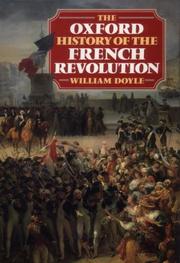
The single best one-volume scholarly overview written in clear, accessible prose. Reading it first gives the beginner a reliable factual skeleton — dates, phases, and actors — onto which everything else will attach.

A sweeping, brilliantly written narrative that brings the Revolution to life through vivid portraits of individuals. Reading it second lets the beginner flesh out Doyle's framework with human drama and cultural texture.
Into the Terror: Ideology, Violence & the Republic
IntermediateUnderstand why the Revolution radicalized into the Terror, how revolutionary ideology worked, and what the experience meant for ordinary people — moving beyond events into causes and meaning.
▸ Study plan for this stage
Pace: 8–10 weeks total: Weeks 1–4 cover "Twelve Who Ruled" (~25–30 pages/day, ~320 pages); Weeks 5–9 cover "Revolutionary Ideas" (~20–25 pages/day, ~850 pages); Week 10 is reserved for synthesis, review, and completing exercises. Read both books with a dedicated notebook for cross-referencing themes.
- The Committee of Public Safety as a governing body: how twelve men concentrated executive, military, and judicial power during Year II and used emergency rule to hold the Republic together
- The logic of Terror as policy: Palmer's argument that the Terror was not mere chaos but a calculated, if brutal, response to civil war, foreign invasion, and internal conspiracy — 'terror as the order of the day'
- Robespierrist virtue and republican ideology: the Rousseauian idea that the Republic required morally pure citizens, and how this fused political loyalty with personal virtue in ways that made dissent tantamount to treason
- Factionalism and the devouring of revolutionaries: the elimination of the Hébertists (too radical) and Dantonists (too lenient) as Palmer shows the Committee steering between extremes — and ultimately consuming itself
- Israel's Radical Enlightenment thesis: the argument that the Revolution's driving ideology descended from a minority radical-democratic tradition (Spinoza, Bayle, d'Holbach, Condorcet) rather than from moderate Enlightenment thinkers like Voltaire or Montesquieu
- The battle of ideas inside the Revolution: Israel's distinction between the radical-democratic republicans (Brissot, Condorcet, Paine) and the authoritarian-populist Montagnards (Robespierre, Saint-Just), reframing the Terror as a counter-Enlightenment coup within the Revolution
- Popular experience and the social geography of the Terror: drawing on Palmer for the lived texture — représentants en mission, the revolutionary tribunals, the fate of suspects in the provinces — to understand how ideology translated into everyday violence and surveillance
- Legacy and contested memory: how both books, written decades apart, interpret the Revolution's radicalization differently — Palmer through a political/institutional lens, Israel through an intellectual/ideological one — and what those differences reveal about historiography
- According to Palmer, what were the three or four principal external and internal pressures that drove the Committee of Public Safety to adopt Terror as official policy, and how did the Committee justify this to itself and to the Convention?
- Palmer traces the Committee's destruction of both the Hébertists and the Dantonists. What does this double elimination reveal about the ideological and political logic holding the twelve together — and what ultimately caused that logic to collapse in Thermidor?
- Israel argues that Robespierre and the Montagnards represented a betrayal, not a fulfillment, of Enlightenment ideals. What specific intellectual lineage does Israel use to support this claim, and how does it challenge older interpretations that blamed the Enlightenment for the Terror?
- How do Palmer and Israel differently explain the role of ideology in producing violence? Where do their interpretations complement each other, and where do they genuinely conflict?
- Using evidence from both books, how did the Terror affect people who were neither leaders nor famous victims — provincial administrators, ordinary suspects, soldiers, women — and what does this reveal about the gap between revolutionary rhetoric and revolutionary reality?
- By the end of both books, how would you define 'the radical republic' that the Revolution briefly created? Was it a coherent political project, a utopian fantasy, or something else — and what does each author's answer tell you about their broader historical argument?
- Dual-column notebook: As you read, maintain two columns — 'Palmer's evidence' and 'Israel's interpretation' — for each major episode (the Law of Suspects, the trial of the Girondins, Thermidor, etc.). At the end of each week, write a one-paragraph synthesis of where the two accounts agree, diverge, or talk past each other.
- Character study — one of the Twelve: Choose one member of the Committee of Public Safety (e.g., Saint-Just, Carnot, or Billaud-Varenne) as Palmer presents them. Write a 400–600 word profile explaining their ideological commitments using Israel's Radical Enlightenment framework as an analytical lens. Does Israel's framework illuminate or distort Palmer's portrait?
- Primary source pairing: Find and read one short primary source connected to each book — for Palmer, the Law of 22 Prairial (June 1794); for Israel, Condorcet's 'Sketch for a Historical Picture of the Progress of the Human Mind' (excerpts). Annotate each: what assumptions about human nature, citizenship, and legitimate violence do they reveal?
- Concept map — 'Why did the Terror happen?': Draw a visual map with 'The Terror' at the center. Populate it with causal arrows from at least six factors drawn from both books (e.g., foreign war, Rousseauian virtue-politics, Girondin–Montagnard split, economic crisis, radical vs. moderate Enlightenment). Label each arrow with the book and page range that supports it.
- Historiographical comparison essay (500–700 words): Palmer published 'Twelve Who Ruled' in 1941; Israel published 'Revolutionary Ideas' in 2014. Write a short essay arguing how the historical moment of each author — World War II emergency governance for Palmer, post-Cold War democratic theory for Israel — may have shaped the questions they asked and the answers they found.
- Thermidor post-mortem debate: Imagine you are a surviving member of the Convention in August 1794. Using arguments drawn from both books, write a short speech (300–400 words) either defending or condemning the Terror — then write a 150-word rebuttal from the opposing position. This forces you to inhabit the ideological tensions both authors describe.
Next up: By mastering how the Terror's ideology functioned and ultimately imploded, the reader is now equipped to follow the post-Thermidorian vacuum of authority that made Napoleon's rise not just possible but, to many contemporaries, welcome — the natural next stage of the curriculum.
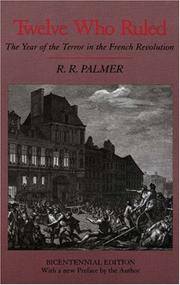
A masterful study of the Committee of Public Safety that humanizes the men who ran the Terror without excusing them. It bridges narrative and analysis, making the leap to intermediate thinking feel natural.

Argues that Enlightenment radical philosophy was the true engine of the Revolution. Reading it here deepens ideological understanding and explains why the Revolution was a world-historical rupture, not just a French crisis.
Napoleon: The Man, the Soldier, the Emperor
IntermediateUnderstand Napoleon as a product of the Revolution, trace his rise and the nature of his empire, and grasp his military genius and political system — seeing continuity as well as rupture with 1789.
▸ Study plan for this stage
Pace: 16–20 weeks total, divided across three books: Roberts' "Napoleon" (~900 pp.) at ~35–40 pages/day over 6–7 weeks; Chandler's "The Campaigns of Napoleon" (~1,200 pp.) at ~35–40 pages/day over 7–8 weeks (treat operational chapters as reference — read narrative sections linearly, use campaign maps acti
- Napoleon as a child of the Revolution: how the upheaval of 1789–1799 created the social and institutional vacuum that made his rise possible (Roberts)
- The Consulate and Empire as a synthesis: which Revolutionary gains Napoleon preserved (meritocracy, Napoleonic Code, administrative centralization) versus which he reversed (representative government, press freedom) — the continuity-vs-rupture tension
- Military genius deconstructed: the corps system, the strategy of the central position, speed of concentration, and the decisive battle doctrine as analyzed in detail by Chandler
- The Grande Armée as a social and political institution: conscription, promotion by merit, the role of the marshals, and army culture as an extension of Revolutionary ideology
- The Continental System and economic warfare: Napoleon's attempt to strangle Britain and its unintended consequences for French allies and satellites (Esdaile)
- Imperial overstretch and coalition warfare: why repeated military victories failed to produce lasting political settlements, and how Britain, Russia, Austria, and Prussia adapted to Napoleonic methods (Esdaile)
- The Napoleonic Empire as a European project: the satellite kingdoms, the imposition of the Code, and the dialectic between French hegemony and the nationalist reactions it provoked (Esdaile)
- Generalship vs. statesmanship: the growing divergence between Napoleon's battlefield brilliance and his strategic-political miscalculations, especially in Spain and Russia (Chandler and Esdaile together)
- According to Roberts, in what specific ways did Napoleon's Corsican origins, Revolutionary-era education, and early military career shape his personality and ambitions — and how does Roberts distinguish myth from documented biography?
- Using Chandler's operational analysis, explain the 'strategy of the central position' with reference to at least two specific campaigns: what were its strengths, and under what conditions did it fail?
- How does Esdaile's interpretation of Napoleonic warfare challenge the 'great man' narrative presented by Roberts? Where do the two authors most sharply disagree, and whose argument do you find more persuasive and why?
- What does Esdaile argue were the root causes of Napoleon's ultimate defeat — military, economic, political, or some combination — and how does his evidence from the Continental System and the Peninsular War support that argument?
- Trace the arc of Napoleon's relationship with the Revolutionary legacy: which institutions and principles did he codify and export, which did he dismantle, and what does this tell us about the nature of his regime?
- Drawing on all three books, construct a comparative assessment of Napoleon's three greatest military disasters (e.g., Trafalgar, the Peninsular War, the Russian campaign): what common strategic or political errors, if any, link them?
- Mapping exercise (Chandler): For each major campaign covered (Austerlitz, Jena-Auerstedt, Wagram, Leipzig, Waterloo), sketch the troop positions and movements from memory after reading, then compare with Chandler's maps. Annotate what Napoleon's intended 'decisive point' was and whether he achieved it.
- Comparative timeline: Build a two-column timeline running from 1799 to 1815 — one column for military events (using Chandler), one for political/diplomatic events (using Roberts and Esdaile). Look for patterns: does military success correlate with political consolidation, or do they diverge over time?
- Argument-mapping debate: After finishing all three books, write a one-page 'steelman' of Esdaile's structural/systemic critique of Napoleon, then a one-page rebuttal using Roberts' biographical evidence. Conclude with your own verdict on which explanatory framework better accounts for Napoleon's fall.
- Institutional audit: Make a two-column table listing Revolutionary principles from 1789 (liberty, equality, popular sovereignty, etc.) and, for each, note whether Napoleon's regime preserved, modified, or abolished it — citing specific evidence from Roberts (e.g., the Concordat, the Napoleonic Code, the Legion of Honour, the plebiscites).
- Operational critique (Chandler): Choose one campaign Chandler judges as a near-run or flawed victory (e.g., Wagram or Borodino). Write a 400-word 'after-action report' from the perspective of a critical staff officer: what decision points were mishandled, and what alternative course of action was available?
- Esdaile response essay: Esdaile argues that Napoleon's wars were fundamentally destructive to the European order and that resistance to them was legitimate and inevitable. Write a 500-word response either defending or refuting this thesis, drawing on specific evidence from all three books.
Next up: By establishing Napoleon as both the culmination and the betrayal of the Revolution — and by tracing how his empire simultaneously spread and distorted Revolutionary ideas across Europe — this stage sets up the next logical inquiry into the post-Napoleonic settlement: how the Congress of Vienna tried to contain the forces Napoleon unleashed, and why nationalism and liberalism, the twin children of

The definitive modern one-volume biography, drawing on Napoleon's own letters. It is the essential starting point for the Napoleonic stage, providing the same foundational role Doyle played for the Revolution.
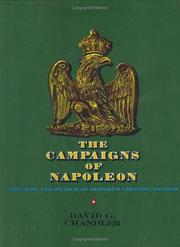
The canonical military history of Napoleon's wars, detailed yet readable. Reading it after Roberts gives the campaigns strategic and operational depth that a biography alone cannot supply.

Shifts the lens from Napoleon to Europe as a whole, showing how his empire looked from Spain, Prussia, and Russia. This corrective perspective is essential before moving to legacy and long-term impact.
Legacy & Long View: Why It Still Matters
ExpertSynthesize the entire period into a coherent argument about its political, social, and global legacy — understanding why the Revolution and Napoleon permanently reshaped the modern world and continue to shape political thought today.
▸ Study plan for this stage
Pace: 6–8 weeks total: ~3 weeks on Carlyle (his prose is dense and rhetorical — aim for 20–25 pages/day, pausing to annotate key passages); ~3 weeks on Furet (more analytical but philosophically demanding — 15–20 pages/day with note-taking on historiographical arguments); reserve the final 1–2 weeks for c
- Carlyle's 'Great Man' theory of history and how it shapes his interpretation of figures like Mirabeau, Danton, and Napoleon as volcanic forces of nature rather than ideological actors
- Carlyle's concept of the Revolution as a cosmic, almost biblical reckoning — the inevitable eruption of a society built on 'shams' and injustice, and what this moralistic framework reveals and obscures
- Furet's foundational argument that the Revolution must be 'thought' rather than merely 'celebrated or execrated' — his call to end the political liturgy surrounding 1789
- Furet's critique of the 'Jacobin-Marxist' historiographical tradition (especially Mathiez and Soboul) and his argument that the Terror was not an accidental deviation but was encoded in the Revolution's own political culture from the start
- The concept of 'revolutionary ideology' in Furet: how the logic of popular sovereignty and the 'will of the people' created a political dynamic that made radical escalation structurally inevitable
- The tension between Romantic/literary history (Carlyle) and structural/analytical history (Furet) as two legitimate but fundamentally different ways of making meaning from the same events
- The Revolution's long-term legacy as a template for modern political ideologies — liberalism, nationalism, socialism, and totalitarianism — as illuminated by reading both authors together
- How each author's own historical moment (Carlyle writing in 1837 amid industrialization and Chartism; Furet writing in the 1970s–80s amid Cold War debates and the Soviet experience) shapes their interpretation of the Revolution's meaning
- According to Carlyle, what fundamental moral and social failures made the French Revolution not merely possible but inevitable, and how does his prophetic, rhetorical style itself function as an argument about historical causation?
- Furet argues that the Terror was not a betrayal of the Revolution's ideals but a fulfillment of its internal logic — what specific features of revolutionary political culture does he identify as producing this outcome, and do you find his case convincing?
- How do Carlyle and Furet each treat the role of individual agency versus structural/ideological forces in driving the Revolution? Where do they most sharply disagree, and what does that disagreement reveal about the philosophy of history each holds?
- Furet was writing in explicit dialogue with — and against — a dominant Marxist historiographical tradition. How does understanding that polemical context change how you read his analytical claims? Which of his critiques hold up independently of that debate?
- Both books were themselves historically influential texts that shaped how later generations understood the Revolution. In what ways did Carlyle's Romantic vision and Furet's revisionist thesis each become part of the Revolution's own ongoing legacy?
- Having read both books, construct your own answer: Did the French Revolution permanently change the political DNA of the modern world, or did it primarily accelerate and dramatize changes that were already underway? Use specific arguments from Carlyle and Furet to support and complicate your position.
- **Rhetorical Autopsy (Carlyle):** Select three extended passages from Carlyle — one each on Mirabeau, the storming of the Bastille, and the Terror — and write a 1-page analysis of each. Identify his rhetorical devices (apostrophe, biblical allusion, irony), then ask: what historical argument is being smuggled inside the literary style? What does the style make it harder to question?
- **Furet's Thesis in Your Own Words:** Without looking at the book, write a 500-word summary of Furet's central argument in 'Interpreting the French Revolution.' Then re-read his introduction and conclusion and write a 200-word correction/refinement. This gap between your paraphrase and his actual argument is your learning edge.
- **Historiographical Debate Simulation:** Write a structured, two-page imaginary dialogue between Carlyle and Furet debating the question: 'Was the Terror inevitable?' Give each author arguments drawn strictly from their actual texts, then write a one-paragraph verdict as yourself, citing where you think the evidence is strongest.
- **Legacy Mapping Exercise:** Create a visual or written 'legacy map' branching from 1799 (Napoleon's coup) forward to the present. For each major branch (nationalism, human rights law, civil codes, revolutionary socialism, modern dictatorship), write 2–3 sentences explaining how Carlyle and/or Furet would interpret that legacy — and where they would disagree about its meaning.
- **Comparative Book Review:** Write a 750–1,000 word critical review as if for an academic journal, reviewing both books together as a pair. Your review must: summarize each book's thesis, identify the single most important point of agreement, the single sharpest disagreement, and conclude with a judgment about which book a student of modern political thought should read first and why.
- **Personal Synthesis Essay:** Draft a 1,200–1,500 word argumentative essay answering: 'Is the French Revolution best understood as a political event, an ideological event, or a cultural event?' Use Carlyle as your primary source for one dimension and Furet for another, and build toward a synthesis that neither author fully achieves alone.
Next up: By learning to hold Carlyle's visceral, moralistic narrative and Furet's cool structural analysis in productive tension, the reader has developed the historiographical self-awareness needed to engage any future study of revolutionary politics, modern ideology, or the philosophy of history — equipped not just with knowledge of the French Revolution, but with a critical method for interrogating how

The great 19th-century literary reckoning with the Revolution, read here not as history but as a primary document of how the events were mythologized. It shows why the Revolution became a political touchstone for all subsequent ideologies.
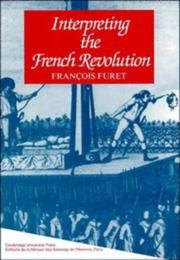
The most influential revisionist essay of the 20th century, arguing the Revolution must be understood on its own ideological terms. Reading Furet last crystallizes every earlier book into a single, sophisticated analytical framework.
Discussion
Keep reading
Paths that share books, cover the same subject, or open a related topic.