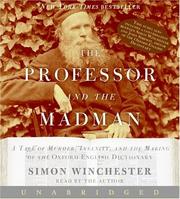
Start with The Professor and the Madman. It is around 240 pages, it is the most tightly built thing Winchester has written, and most readers finish it in two sittings. The obvious alternative is Krakatoa, which sold better and has a volcano in it — but Krakatoa is 400 pages with long geological preambles, and it is the book that teaches you Winchester's habits rather than the one that makes you want them.
Two buying notes before you order anything. The book was published in Britain as The Surgeon of Crowthorne, so the two titles are one book and you do not need both. And the edition our catalogue happens to hold is an audio release, which is why the record here carries a CD on the end; the text is identical and any print copy will do.
Why this one first
It is the template for almost everything that follows: one enormous project, one man who cannot stop, and an establishment that either absorbs him or destroys him. Here the project is the Oxford English Dictionary and the man is William Chester Minor, a murderer confined to Broadmoor whose confinement gave him the hours, the library and the fixed address the work required. Read it and you have the shape of the whole career in miniature.
One thing worth knowing as you read: the famous first meeting between the dictionary's editor and its most prolific contributor is the most-disputed passage in the book, and Winchester flags the doubt himself. A Winchester set piece can be too good to be entirely true, and knowing that early is the right frame for everything after it.
The obsessive and the monument
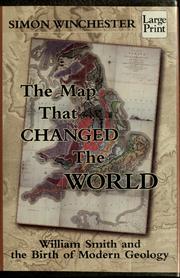
Next take The meaning of everything, then The map that changed the world, in that order and not the reverse — read the OED institutional history first and the smaller, stranger book becomes repetitive.
The meaning of everything is the dictionary told as a seventy-year institutional achievement rather than a personal one. The map that changed the world moves to geology and William Smith, the canal surveyor who worked out that strata occur in a fixed order and can be identified by their fossils, was robbed by the Geological Society, and went to debtors' prison. Winchester has a geology degree and the writing visibly gains confidence when he is on technical ground.
When the ground moves
Krakatoa and A crack in the edge of the world belong together: the 1883 eruption and the 1906 San Francisco earthquake, both organised around plate tectonics. Both are baggier than anything before them. Do not fight the digressions — they are what these books are, and if you find yourself skipping ahead to the eruption, that is useful information about the rest of the path.
Krakatoa contains his most contested argument, that the eruption and its aftermath fed the rise of a militant Islam in the Dutch East Indies. Specialists have called it overreach; Winchester defends it. Read it as a claim under dispute rather than a finding.
The late concept books
The Perfectionists is the strongest of the three and should be read first regardless of what you do next. Its spine is tolerance itself, shrinking from cannon-boring in thousandths to the Hubble mirror in nanometres, and the argument that precision rather than steam is what made mass manufacture possible.
Land and Knowing What We Know are longer and looser. Reviewers have found the late books digressive and have caught occasional factual slips; other readers value exactly the associative wandering that produces the complaint. Both positions are defensible. If you are a hundred pages into Land and checking how much is left, that is a fair verdict — skip ahead, because nothing later depends on these two.
The travel writer underneath
Finish with the reportage: The River at the Center of the World, then The man who loved China, then Atlantic. The Yangtze book was written before the Three Gorges Dam filled and preserves towns that no longer exist. The man who loved China is about Joseph Needham, the ultimate Winchester subject — an obsessive with a monumental unfinished project. Atlantic is the longest here and the right one to end on.
Where to stop
After A crack in the edge of the world you have the writer entire. Everything past that is preference. If you want more narrative history built the same way, Simon Schama is the closest neighbour.
Follow the full ordered path here: Simon Winchester Reading Order: Where to Start.