The History of France: The Best Books to Read, in Order
This curriculum takes you from the very origins of France — Celtic Gaul, Roman conquest, and the Frankish kingdoms — all the way through the monarchy, Revolution, Napoleon, and the birth of the modern republic. Each stage builds on the last: you first gain a broad chronological map of French history, then zoom into its most dramatic turning points, and finally engage with deeper analytical and thematic works that reveal how France became the nation it is today.
The Big Picture: A Panoramic Foundation
BeginnerGain a confident, chronological overview of French history from Gaul to the present day, building the mental map and vocabulary needed for deeper study.
▸ Study plan for this stage
Pace: 8–10 weeks, ~40–50 pages/day (approximately 3–4 hours of focused reading)
- France as a geographical and cultural construct: how regional diversity, isolation, and terrain shaped the nation's fragmentation and eventual unity
- The long arc of French political development: from feudal fragmentation through absolute monarchy to revolution and modern republicanism
- The role of key dynasties and figures: Charlemagne, the Capetians, Louis XIV, Napoleon, and the revolutionary leaders who fundamentally transformed French society
- Religion as a defining force: the Christianization of Gaul, the Catholic Church's power, and the Wars of Religion as a turning point in French identity
- The relationship between French culture and power: how language, law, and intellectual tradition became tools of national consolidation and European influence
- Pivotal ruptures and continuities: the Norman Conquest, the Hundred Years' War, the Revolution, and industrialization as moments that redefined what 'France' meant
- The emergence of French exceptionalism: the distinctive path France took compared to other European nations, particularly regarding centralization and cultural dominance
- How did the geography and regional diversity of France (as explored in Robb) both hinder and eventually facilitate the creation of a unified nation-state?
- What were the major turning points in French political history, and how did each one reshape French society and governance?
- How did the French monarchy consolidate power from the medieval period through Louis XIV, and what were the consequences of absolute rule?
- What role did the French Revolution play in transforming France's political, social, and cultural identity, and how did it differ from earlier periods of change?
- How did language, law, and cultural production become instruments of French national identity and European dominance?
- What patterns of continuity and rupture do you see across French history, and how do they explain France's distinctive position in European history?
- Create a detailed chronological timeline with 25–30 major events from Gaul to the present, noting which ones represent continuity and which represent rupture; annotate each with one sentence explaining its significance
- Draw a series of 4–5 maps showing France's territorial evolution: Roman Gaul, the Frankish kingdoms, medieval feudal fragmentation, Louis XIV's France, and modern France; label key regions and note how geography influenced political boundaries
- Write character sketches (300–400 words each) of 5–6 pivotal figures (e.g., Charlemagne, Louis XIV, Napoleon, Robespierre) that explain their impact on French history and how they are portrayed differently in Robb versus Norwich
- Construct a comparison chart tracking how three key institutions evolved across French history: the monarchy, the Catholic Church, and the legal system (from feudal law to the Code Napoleon to modern law)
- Read Robb's opening sections on regional France alongside Norwich's political narrative, then write a 500-word reflection on how geography and politics interact in shaping national identity
- Create a glossary of 40–50 essential French historical terms (e.g., feudalism, absolutism, parlements, sans-culottes, Jacobins, republicanism) with definitions grounded in specific examples from the books
Next up: This stage equips you with a coherent chronological scaffold and shared vocabulary, enabling the next stage to zoom in on specific periods, themes, or debates with confidence that you understand how each piece fits into the larger French historical narrative.
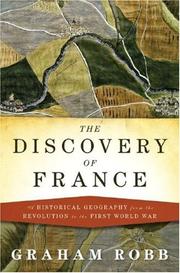
A wonderfully readable and surprising portrait of France's land and people across the centuries — the perfect first book to fall in love with the subject and understand what 'France' actually meant to those who lived in it.

A clear, chronological narrative from the earliest times to the late 20th century by a master popular historian; it gives beginners the essential timeline — Gaul, Franks, Capetians, Valois, Bourbons, Revolution, and beyond — in one accessible volume.
Roots: Gaul, the Franks, and the Monarchy
BeginnerUnderstand the deep roots of France — Roman Gaul, the Frankish kingdom, the medieval monarchy, and the long arc of royal France up to the eve of the Revolution.
▸ Study plan for this stage
Pace: 8–10 weeks, approximately 40–50 pages per day. Start with James (2–3 weeks), move to Duby (3–4 weeks), then Mitford (2–3 weeks). Allow 1 week for review and synthesis.
- The transformation of Roman Gaul into Frankish kingdoms and the role of Germanic tribes in reshaping Western Europe
- The Merovingian and Carolingian dynasties as foundational to French political identity, particularly Charlemagne's empire and its fragmentation
- The feudal system and the rise of the Capetian dynasty (987 CE) as the stabilizing force that created medieval France
- The consolidation of royal power through the High and Late Middle Ages, including the expansion of royal domains and the subordination of feudal lords
- The role of the Church as both spiritual authority and political player in shaping medieval French society and kingship
- The cultural and institutional developments (law, administration, chivalry) that distinguished medieval France and prepared it for the early modern state
- Louis XIV as the apotheosis of absolute monarchy and the culmination of centuries of royal centralization
- The tension between royal absolutism and aristocratic privilege that would eventually lead to revolutionary crisis
- How did the collapse of Roman authority in Gaul and the arrival of Frankish tribes fundamentally reshape the political, social, and cultural landscape of the region?
- What were the key differences between Merovingian and Carolingian rule, and why did the Carolingian empire fragment into what would eventually become France?
- How did the establishment of the Capetian dynasty in 987 CE mark a turning point in French history, and what strategies did early Capetian kings use to expand and consolidate their power?
- What role did feudalism, the Church, and the concept of chivalry play in organizing medieval French society and legitimizing royal authority?
- How did medieval French kings gradually transform themselves from feudal lords into absolute monarchs, and what were the major milestones in this process?
- What made Louis XIV's reign the culmination of centuries of royal centralization, and how did his model of absolute monarchy reflect the entire arc from Frankish kingdoms to early modern France?
- Create a timeline spanning from the fall of Roman Gaul (5th century) to the death of Louis XIV (1715), marking major dynasties, key rulers, territorial expansions, and institutional innovations. Annotate each entry with which book(s) it comes from.
- Write a 2–3 page essay comparing the sources of legitimacy for a Merovingian king, a Capetian king (e.g., Louis IX), and Louis XIV. Use specific examples from James, Duby, and Mitford to support your argument.
- Map the territorial growth of the French crown from 987 CE to 1715, using Duby's account of feudal fragmentation and Mitford's portrait of Louis XIV's centralization. Identify which regions were hardest to integrate and why.
- Create character sketches of 4–5 pivotal figures (e.g., Charlemagne, Hugh Capet, Louis IX, Louis XIV) based on the three books, noting how each advanced royal power and how their reigns built on their predecessors.
- Debate or write a dialogue between a medieval feudal lord and Louis XIV's court official, using specific details from Duby and Mitford to illustrate the shift from decentralized feudalism to absolute monarchy.
- Identify and analyze 3–4 key institutions or practices (e.g., the Church's role, feudal homage, royal administration, court culture) that appear across all three books and explain how they evolved from the Frankish period to Louis XIV's reign.
Next up: This stage establishes the institutional, cultural, and political foundations of the French state at its apex; the next stage will examine how the contradictions and rigidities of absolute monarchy—revealed through this deep historical lens—led to the intellectual and social ferment of the Enlightenment and ultimately to revolution.

A scholarly yet accessible account of the Frankish peoples who gave France its name and its first royal dynasty; reading this first grounds you in the origins before the medieval kingdom takes shape.
By one of France's greatest historians, this book traces the rise of the Capetian monarchy and medieval French society — essential for understanding the feudal and royal structures that defined France for centuries.

A sparkling, vivid portrait of Louis XIV and the court of Versailles — the pinnacle of French royal absolutism — that makes the ancien régime feel alive and sets the stage perfectly for understanding why it eventually collapsed.
Revolution and Empire: The World Turned Upside Down
IntermediateDeeply understand the French Revolution and the Napoleonic era — their causes, their radical ruptures with the past, and their lasting consequences for France and the world.
▸ Study plan for this stage
Pace: 8–10 weeks, ~40–50 pages/day. "Citizens" (800+ pages) takes 4–5 weeks; "Napoleon" (900+ pages) takes 4–5 weeks. Build in 1–2 weeks for review and synthesis.
- The structural contradictions of the Old Regime (fiscal crisis, rigid estates system, Enlightenment ideals vs. absolutist practice) that made revolution inevitable
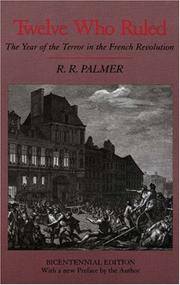
- The radicalization of the Revolution: from constitutional monarchy (1789–1791) through the Terror (1793–1794) and the Directory's instability, and why each phase emerged from the previous
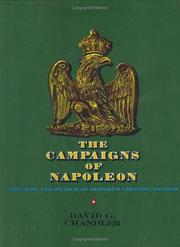
- How Napoleon exploited revolutionary chaos to consolidate power, presenting himself as both revolutionary heir and restorer of order
- The Napoleonic Code and administrative reforms: how Napoleon institutionalized revolutionary principles (legal equality, meritocracy) while dismantling democratic participation
- The Napoleonic Wars and their dual legacy: spreading revolutionary ideals across Europe while creating nationalist backlash and ultimately isolating France
- The tension between revolutionary universalism and national interest, and how this shaped both domestic policy and foreign conquest
- How the Revolution and Empire permanently transformed French society, governance, and national identity—and why restoration of the ancien régime became impossible
- What were the primary fiscal, social, and ideological crises of the Old Regime, and why did they make the Revolution inevitable rather than avoidable?
- How and why did the French Revolution radicalize from a constitutional monarchy into the Terror? What role did war, ideology, and contingency play?
- How did Napoleon present himself as both a revolutionary and a restorer of order, and what was the basis of his popular support?
- What were the key reforms of the Napoleonic Code and administrative system, and how did they both fulfill and betray revolutionary ideals?
- What were the consequences of the Napoleonic Wars for France, Europe, and the spread of revolutionary principles?
- Why did the restoration of the Bourbon monarchy after 1815 ultimately fail to undo the Revolution and Empire?
- Create a detailed timeline of the Revolution's phases (1789–1799) using Schama's narrative, marking key turning points (storming of the Bastille, Declaration of Rights, royal flight, September Massacres, Reign of Terror, Thermidor) and explaining what triggered each escalation
- Write a comparative character study of three key figures from 'Citizens' (e.g., Mirabeau, Robespierre, Danton), analyzing how their ideals and choices shaped the Revolution's trajectory
- Map the structural contradictions of the Old Regime (using Schama's opening chapters) and trace how each one contributed to the outbreak of revolution—create a visual diagram showing cause-and-effect chains
- Read Roberts's account of Napoleon's rise (Chapters 1–10) and write a 2–3 page essay: 'How did Napoleon exploit the Revolution's failures to seize power? What made him seem like a solution rather than a tyrant?'
- Compare Napoleon's stated ideals (from his own words in Roberts) with his actual policies (Code, Concordat, Empire): where did he fulfill revolutionary promises, and where did he betray them?
- Create an annotated map of Napoleonic Europe showing the extent of French control, allied states, and conquered territories at Napoleon's height (c. 1812), then write brief notes on how each conquest spread or distorted revolutionary ideals
Next up: This stage establishes the revolutionary rupture and the Napoleonic synthesis—the permanent transformation of French state, law, and society—which sets up the next stage's exploration of how France grappled with this legacy through restoration, reaction, and the competing visions of the 19th century.

The most celebrated popular history of the French Revolution in English — rich, dramatic, and brilliantly written; it should be read first in this stage to give you a full, vivid command of events from 1789 to the Terror.

The definitive modern biography of Napoleon, drawing on his own letters; after Schama's Revolution, this book shows how one man channeled its energy into an empire that reshaped Europe and left France permanently transformed.
The Modern Republic: From 1815 to the 20th Century
IntermediateTrace the turbulent birth of modern France — the Restoration, the revolutions of 1830 and 1848, the Third Republic, the Dreyfus Affair, and France's experience of the two World Wars.
▸ Study plan for this stage
Pace: 4–5 weeks, ~40–50 pages/day (approximately 280–350 pages total)
- The collapse of the Third Republic and the military defeat of 1940
- Vichy France: ideology, collaboration, and the construction of the authoritarian state
- The German occupation: administrative structures, economic exploitation, and daily life under Nazi rule
- Resistance movements: their origins, diversity, organization, and limitations during the occupation
- The Vichy regime's internal contradictions: between collaboration and sovereignty, modernization and reaction
- The role of French elites, bureaucrats, and ordinary citizens in enabling or resisting Vichy policies
- The psychological and social trauma of occupation and the question of French national identity
- What were the key military and political factors that led to France's rapid defeat in 1940?
- How did the Vichy regime justify its authoritarian turn, and what was its relationship to Nazi Germany?
- What forms did French resistance take during the occupation, and how effective were they?
- How did the German occupation reshape French society, economy, and daily life?
- What role did French institutions, bureaucrats, and elites play in either collaborating with or resisting Vichy policies?
- How did the experience of occupation and Vichy reshape French national identity and collective memory?
- Create a detailed timeline of key events from 1940–1944, marking military defeats, Vichy decrees, major resistance actions, and turning points in the occupation
- Analyze primary source excerpts (speeches by Pétain, German occupation directives, resistance pamphlets) to understand competing narratives and ideologies
- Map the geographic and administrative divisions of occupied France, Vichy France, and the Italian occupation zone to visualize the fragmentation of French territory
- Write a comparative character study of two figures (e.g., Pétain vs. de Gaulle, a collaborator vs. a resister) based on Jackson's account of their motivations and actions
- Create a visual diagram showing the structure of Vichy governance, German occupation authorities, and resistance networks to understand how power was distributed and contested
- Conduct a close reading of Jackson's treatment of one specific aspect (e.g., the persecution of Jews, labor conscription, or food rationing) and trace how it affected ordinary French citizens
Next up: Understanding the dark years of occupation and Vichy's internal contradictions establishes the context for France's postwar reconstruction, the Fourth Republic's struggles, and the emergence of de Gaulle's Fifth Republic—showing how the trauma and moral questions of 1940–1944 shaped French politics and society for decades to come.

A masterful, prize-winning study of Vichy France and the Occupation — the most painful chapter of modern French history — which is essential for understanding how France remembers, and sometimes misremembers, its own past.
Synthesis: France's Identity and Long Memory
ExpertStep back and engage analytically with what France means as a civilization — its republican ideals, its cultural identity, and how its long history continues to shape its politics and society today.
▸ Study plan for this stage
Pace: 8–10 weeks, ~40–50 pages/day (Braudel is dense; allow for re-reading and reflection)
- France as a geographical and environmental entity: how climate, terrain, and natural resources shaped French civilization and differentiated it from neighbors
- The longue durée (long duration): Braudel's method of analyzing history across centuries to identify deep structural patterns rather than surface events
- The relationship between geography and human settlement: how France's position, rivers, and borders created distinct regional identities that persist today
- French exceptionalism and cultural identity: the roots of France's self-perception as a unique civilizational force in Europe
- The continuity of French institutions and social structures: how medieval and early modern foundations underpin modern French society and politics
- Environment as historical actor: understanding how climate, agriculture, and natural cycles constrain and enable human choices across centuries
- Regional diversity within French unity: the tension between centralization and the persistence of local, provincial identities
- How does Braudel use geography and environment as explanatory frameworks for understanding French history, and why does he argue this approach reveals deeper truths than event-based narratives?
- What does Braudel mean by the 'longue durée,' and how does this concept change the way we interpret France's development as a nation?
- How did France's geographical position, river systems, and natural borders contribute to its emergence as a distinct political and cultural entity in medieval Europe?
- What role did climate, agriculture, and natural resources play in shaping regional identities within France, and how do these regional differences persist in modern French society?
- According to Braudel, what are the deep structural continuities that connect medieval France to the modern French state, and how do these challenge conventional periodization?
- How does understanding France as a 'civilization' rather than merely a nation-state change our interpretation of French identity and its role in European history?
- Create a detailed geographical map of France (medieval and modern) annotating key rivers, mountain ranges, plains, and climate zones; write a 2–3 page analysis of how each geographical feature shaped settlement patterns and regional identity
- Read Braudel's introduction and Part I carefully; write a 3–4 page essay explaining the longue durée method and how it differs from traditional event-based history, using one specific example from the text
- Trace the history of one French region (e.g., Provence, Brittany, Alsace) across the centuries covered in Braudel's volume; create a timeline showing how geographical and environmental factors shaped its development and modern character
- Compile a 'structural continuities' document: identify 5–6 deep patterns (institutional, social, cultural, environmental) that Braudel argues persist from medieval times to the early modern period, with textual evidence for each
- Compare Braudel's environmental determinism with alternative historical explanations; write a 2–3 page reflection on the strengths and limitations of his approach
- Create a visual timeline or infographic showing how climate cycles, agricultural production, and natural resource availability influenced major transitions in French history according to Braudel
Next up: This foundational analysis of France's geographical soul and structural continuities prepares you to examine how these deep patterns manifested in specific political, cultural, and social movements—moving from the timeless environment to the drama of events and ideologies that shaped modern France.

Braudel's magnum opus on France applies his legendary 'long duration' approach to ask what France fundamentally is across geography, economy, and culture — the ideal capstone for a reader who now has the historical knowledge to appreciate his grand synthesis.
Discussion
Keep reading
Paths that share books, cover the same subject, or open a related topic.