Best Books on Baroque Art, in Reading Order
This curriculum builds from a confident survey of Baroque art into focused mastery of its four pillars — Caravaggio's tenebrism, Bernini's Rome, Rubens and Rembrandt's Northern and Flemish worlds, and the Counter-Reformation's driving ideology. Starting at the intermediate level, each stage deepens analytical vocabulary and historical context before the next, so that by the final stage the reader can engage with scholarly debates and primary sources like a specialist.
Baroque in Full View
IntermediateEstablish a confident panoramic understanding of Baroque art across Europe — its key figures, regional variations, and historical moment — so that later focused studies have a rich map to hang on.
▸ Study plan for this stage
Pace: 4–5 weeks, ~25–30 pages/day, with 2–3 days per week dedicated to review and exercises
- Baroque as a response to Counter-Reformation theology and Catholic revival, emphasizing emotional engagement and sensory experience
- Regional variations in Baroque style across Italy, Spain, France, the Netherlands, and Central Europe—how geography, patronage, and local tradition shaped distinct approaches
- Key Baroque figures and their innovations: Caravaggio's dramatic lighting and realism, Bernini's sculptural dynamism, Rubens's grand compositions, and Velázquez's psychological depth
- The relationship between Baroque art and absolute monarchy, particularly in France under Louis XIV and Spain under the Habsburgs
- Rococo as an evolution from and reaction against Baroque: lighter, more intimate, decorative, and secular in emphasis
- The technical mastery underlying Baroque drama: perspective, foreshortening, chiaroscuro, and compositional movement
- Patronage systems and the role of the Church, nobility, and merchant classes in commissioning and shaping Baroque aesthetics
- How did Counter-Reformation theology directly influence the visual and emotional strategies of Baroque art?
- What are the major regional variations in Baroque style, and what historical or cultural factors explain the differences between Italian, Spanish, French, and Northern European Baroque?
- How did Caravaggio's innovations in light, shadow, and realism reshape painting, and which artists built on or reacted against his approach?
- What role did absolute monarchy and court culture play in the development of Baroque art, particularly in France and Spain?
- How does Rococo differ from Baroque in its aesthetic priorities, and what historical shifts prompted this transition?
- Which artists and works best exemplify the technical mastery of Baroque composition, and what specific techniques did they employ?
- Create a visual timeline mapping major Baroque artists (Caravaggio, Bernini, Rubens, Velázquez, Poussin) alongside key historical events (Counter-Reformation Council of Trent, rise of Louis XIV, etc.) to see cause-and-effect relationships
- Select one painting from each major region (Italy, Spain, France, Netherlands, Central Europe) and write a 1-page analysis of how regional context shaped its style, composition, and subject matter
- Study 3–4 Caravaggio paintings in detail, noting his use of chiaroscuro and dramatic realism; then compare them to works by his followers and critics to understand his influence
- Visit a museum collection (in person or online) and identify 5–6 works from the book; sketch their compositions and note the technical devices (perspective, foreshortening, movement) that create drama
- Write a short comparative essay (2–3 pages) on how Baroque and Rococo treat the same subject (e.g., religious narrative, court life, or mythology) to clarify the aesthetic and ideological shift
- Create a patronage map showing which artists worked for the Church, which for monarchy, and which for merchants; note how patronage shaped subject matter and style
Next up: This panoramic survey equips you with a confident grasp of Baroque's major players, regional flavors, and historical drivers, so that the next stage can zoom into specific themes, techniques, or artists with a rich contextual foundation already in place.
Grounds the reader in the late Renaissance world that Baroque art reacted against, giving essential cultural and religious context before diving into the 17th century.
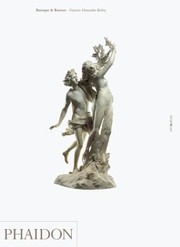
A comprehensive, well-illustrated survey of Baroque art across Europe and the Americas that introduces all the major figures and movements covered in later stages.
Faith, Drama, and Darkness — Caravaggio and the Counter-Reformation
IntermediateUnderstand how the Counter-Reformation shaped a new visual language of emotional immediacy, and master Caravaggio's tenebrism as both a theological and painterly strategy.
▸ Study plan for this stage
Pace: 4–5 weeks, ~25–30 pages/day. Week 1–2: Dickens (Counter-Reformation context and ideology); Week 3: transition and thematic synthesis; Week 4–5: Brown (visual analysis and Caravaggio's practice). Allow 2–3 days for review and integration.
- The Counter-Reformation as a theological and institutional response: its doctrinal priorities (sensory engagement, emotional immediacy, saint veneration) and how these differed from Protestant iconoclasm
- Tenebrism as a Counter-Reformation visual strategy: the use of dramatic chiaroscuro to create psychological and spiritual intensity, making religious narratives viscerally present
- Caravaggio's revolutionary naturalism: the integration of street-level realism, lower-class models, and contemporary settings into sacred narratives, challenging Renaissance idealization
- The role of light as both optical phenomenon and theological metaphor: divine revelation through illumination, and how Caravaggio weaponized this for devotional impact
- Patronage and institutional context: how the Counter-Reformation Church (Jesuits, Oratorians, reformed orders) actively commissioned and shaped Baroque art to serve catechetical and emotional conversion goals
- Caravaggio's compositional innovations: diagonal movement, close-up framing, and viewer immersion that collapse the distance between sacred event and contemporary observer
- The relationship between artistic transgression and religious orthodoxy: how Caravaggio's controversial subject matter (rejected paintings, secular models, ambiguous iconography) both served and challenged Counter-Reformation aims
- How did the Counter-Reformation's theological priorities—particularly its emphasis on sensory experience and emotional engagement—directly shape the visual language of Baroque art?
- What is tenebrism, and how does Caravaggio use dramatic light and shadow to create both optical drama and theological meaning in his religious paintings?
- How does Caravaggio's use of contemporary, often lower-class models and naturalistic settings differ from Renaissance approaches to sacred narrative, and what Counter-Reformation goals does this serve?
- What role did major Counter-Reformation institutions (the Jesuits, the Oratory, reformed orders) play in commissioning and shaping Caravaggio's work?
- How does Caravaggio's compositional strategy—diagonal movement, close framing, viewer immersion—function as a devotional tool aligned with Counter-Reformation aims?
- Why were some of Caravaggio's paintings rejected by his patrons, and what does this reveal about the tensions between artistic innovation and institutional religious orthodoxy?
- Create a timeline of key Counter-Reformation events and doctrinal shifts (from Dickens) and map them onto Caravaggio's major commissions and stylistic developments (from Brown). Identify 3–4 direct correlations between institutional change and artistic innovation.
- Select one Caravaggio painting from Brown's analysis (e.g., *The Calling of Saint Matthew*, *The Conversion of Saint Paul*, *Judith Beheading Holofernes*). Write a 500-word analysis explaining how tenebrism, naturalism, and compositional framing work together to serve a Counter-Reformation devotional goal.
- Conduct a comparative visual analysis: choose one Renaissance sacred painting (from your broader knowledge or a museum database) and one Caravaggio work. Write notes on how light, figure placement, emotional register, and viewer relationship differ, and explain these differences through the Counter-Reformation lens.
- Diagram the patronage network: using evidence from Brown, map out the major institutions, individual patrons, and religious orders that commissioned Caravaggio's work. Annotate with their Counter-Reformation affiliations and theological priorities.
- Close-read one rejected Caravaggio painting (e.g., the first *Saint Matthew and the Angel* or *Death of the Virgin*). Identify the specific elements that violated Counter-Reformation expectations, and argue whether the rejection reveals conservative or progressive institutional positions.
- Create a visual glossary: for each key concept (tenebrism, naturalism, diagonal composition, chiaroscuro, divine light), find 2–3 Caravaggio examples from Brown and annotate them with technical and theological observations.
Next up: This stage establishes Caravaggio as the pivotal figure who synthesized Counter-Reformation theology with revolutionary visual technique, providing the foundation to explore how his methods spread across Europe and influenced the broader development of Baroque art in different regional and institutional contexts.
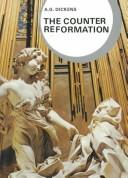
Provides the essential religious and political history of the Catholic Church's response to Protestantism — the ideological engine behind Baroque art's drama and didacticism.

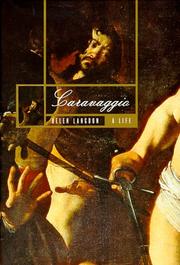
The definitive English-language biography of Caravaggio, weaving his violent life into close readings of his paintings and explaining how tenebrism served Counter-Reformation devotion.
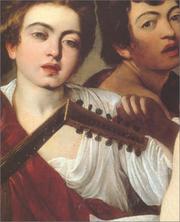
Examines the Roman artistic milieu Caravaggio inhabited, placing his innovations alongside contemporaries and showing how the city itself was a crucible of Baroque style.
Marble and Majesty — Bernini and Baroque Rome
IntermediateAchieve a deep understanding of Gian Lorenzo Bernini's sculpture and architecture as the supreme expression of papal Rome's ambitions, and see how space, light, and theatricality became instruments of faith.
▸ Study plan for this stage
Pace: 10–12 weeks total. Weeks 1–6: "Bernini" by Franco Mormando (~25–30 pages/day, 4–5 days/week) — read chronologically, pausing at each major commission to study images alongside the text. Weeks 7–12: "Bernini and the Art of Architecture" by Tod A. Marder (~20–25 pages/day, 4–5 days/week) — slower pace
- The bel composto — Bernini's fusion of sculpture, painting, architecture, and theatrical lighting into unified devotional experiences
- Papal patronage as the engine of Baroque Rome: how Urban VIII, Innocent X, and Alexander VII shaped Bernini's career and commissions
- Sculptural illusionism: Bernini's conquest of marble — capturing fleeting motion, soft flesh, flowing fabric, and psychological intensity in stone (Apollo and Daphne, The Ecstasy of St. Teresa)
- Theatricality and the beholder: how Bernini designed works to be experienced from a specific vantage point, implicating the viewer in the drama
- Sacred space and urban scenography: the Piazza San Pietro colonnade as an embrace of the faithful, and how Bernini reimagined Rome's topography as a stage for Catholic triumphalism
- The Baldacchino and the Cathedra Petri as theological statements in bronze — marking sacred axes and asserting apostolic authority inside St. Peter's Basilica
- Architecture as rhetoric: Marmder's analysis of how Bernini's buildings (Sant'Andrea al Quirinale, Palazzo Barberini contributions) use geometry, light, and material to persuade and move the visitor
- The tension between Bernini's personal faith and his role as a political instrument of the Counter-Reformation Church
- According to Mormando's biography, how did Bernini's relationship with successive popes — particularly Urban VIII and Alexander VII — directly determine the ambition and iconographic program of his greatest works?
- What does Bernini mean by the bel composto, and how is it concretely demonstrated in a single work such as the Cornaro Chapel? How do Mormando and Marder each approach this concept differently?
- How does Marder's architectural analysis of Sant'Andrea al Quirinale reveal Bernini's manipulation of geometry and light to create an emotionally and spiritually directed experience for the worshipper?
- In what ways did the design of the Piazza San Pietro function simultaneously as urban planning, political propaganda, and liturgical theater? What specific design decisions does Marder identify as key to this effect?
- How did Bernini's sculptural technique — as described by Mormando — challenge and ultimately redefine what marble could represent, and what were the critical reactions from contemporaries?
- What role did personal Catholic piety play in Bernini's artistic choices, and how does Mormando distinguish between sincere devotion and strategic alignment with Church ideology in his commissions?
- Comparative image journal: For each major work discussed in Mormando, find at least three high-resolution photographs taken from different angles. Write a 150-word entry on how the viewing angle changes the emotional and narrative impact — directly testing the bel composto and theatricality concepts.
- Annotated floor-plan exercise: Using the architectural drawings in Marder, trace the floor plans of Sant'Andrea al Quirinale and the Piazza San Pietro colonnade by hand. Annotate each with notes on how the geometry guides movement, controls sightlines, and directs light — then compare the two buildings' strategies.
- Patron-commission timeline: Build a two-column timeline mapping each pope's reign against the Bernini commissions it produced (drawing from Mormando's biographical narrative). Add a third column noting how each commission served a specific political or theological agenda of that papacy.
- Close-reading response: After finishing Mormando's chapters on the Ecstasy of St. Teresa and the Cornaro Chapel, write a 400-word essay arguing whether the work is best understood as an expression of personal mysticism, Counter-Reformation propaganda, or theatrical spectacle — using evidence from the text.
- Rome virtual walk: Using Google Street View or a virtual tour platform, 'walk' from the Piazza del Popolo to St. Peter's Square, pausing at each Bernini site (Piazza Navona fountains, Sant'Andrea al Quirinale, the colonnade). At each stop, write two sentences connecting what you see to a specific argument made by Mormando or Marder.
- Debate prompt: Draft a one-page position paper responding to this question — 'Was Bernini an artist who happened to serve the Church, or a Church instrument who happened to be an artist?' — drawing evidence from both books to support and complicate your argument.
Next up: By mastering Bernini's Rome as the apex of papal Baroque — where sculpture, architecture, and urban space merged into a single rhetorical system — the reader is primed to explore how Baroque ambitions traveled beyond Italy, mutating as they encountered different courts, religions, and national traditions across Northern Europe and the Iberian world.

A richly researched biography that situates Bernini's entire career within the politics and patronage of the papal court, essential reading before tackling formal analyses of his work.
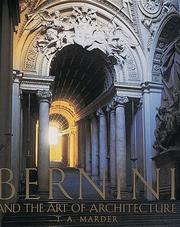
Shifts focus to Bernini's architectural projects — St. Peter's colonnade, Sant'Andrea al Quirinale — showing how he unified sculpture, painting, and space into total Baroque environments.
Light from the North — Rubens and Rembrandt
ExpertMaster the distinct but intertwined worlds of Flemish Baroque (Rubens) and Dutch Golden Age painting (Rembrandt), understanding how religion, commerce, and light shaped two very different but equally monumental visions.
▸ Study plan for this stage
Pace: 8–10 weeks, ~40–50 pages/day. Allocate 4–5 weeks to "Rubens and Italy" (approx. 300–350 pages), then 4–5 weeks to "Rembrandt's Eyes" (approx. 500+ pages). Build in weekly review sessions to synthesize cross-cultural comparisons.
- Rubens's synthesis of Italian Renaissance ideals with Flemish tradition: how his time in Italy shaped his dynamic, sensual Baroque aesthetic and his role as a court painter-diplomat
- The mechanics of Rubens's workshop: production methods, collaborative practices, and how scale and speed enabled his prolific output and commercial success
- Rembrandt's radical inversion of light and shadow (chiaroscuro) as both technical mastery and spiritual/psychological exploration, distinct from Italian Baroque theatricality
- The Dutch Golden Age economic and religious context: how Protestant mercantilism, domestic interiors, and the absence of court patronage fundamentally shaped Rembrandt's subject matter and technique
- Rubens's religious commissions and Counter-Reformation ideology versus Rembrandt's introspective, often ambiguous treatment of biblical and mythological themes
- The role of printmaking and drawing in both artists' practices: Rembrandt's obsessive experimentation with etching as a medium for intimate exploration; Rubens's use of prints for dissemination
- Portraiture, self-portraiture, and the construction of artistic identity: how both artists used the portrait to assert authority, explore interiority, and navigate patronage
- Color, texture, and materiality: Rubens's sensual paint handling and rich palette versus Rembrandt's tonal restraint and psychological depth
- How did Rubens's Italian apprenticeship fundamentally shape his artistic vision, and how did he synthesize Italian Renaissance principles with Flemish traditions?
- What were the operational and ideological differences between Rubens's workshop model and Rembrandt's more solitary, experimental approach?
- How did the religious and economic contexts of Counter-Reformation Antwerp versus Protestant Amsterdam produce radically different artistic priorities and subject matter?
- Compare and contrast how Rubens and Rembrandt each used light, shadow, and color to convey meaning—what philosophical or spiritual purposes did these formal choices serve?
- What role did printmaking play in each artist's practice, and how did their approaches to prints reflect their broader artistic philosophies?
- How did both artists use self-portraiture as a tool for exploring artistic identity, and what do their self-portraits reveal about their relationship to patronage and legacy?
- Create a visual timeline mapping Rubens's Italian journey (dates, cities, mentors, key works) alongside major events in Counter-Reformation art patronage; annotate with how specific Italian influences appear in his later Antwerp works.
- Analyze 3–4 large-scale Rubens religious commissions (e.g., altarpieces from 'Rubens and Italy') and map the workshop division of labor: identify which elements Rubens likely executed himself versus delegated, and explain the compositional logic that enabled this collaboration.
- Select one Rembrandt etching sequence (e.g., states of a single print) from 'Rembrandt's Eyes' and trace how he revised the plate across iterations—what formal or conceptual changes did he make, and what does this reveal about his creative process?
- Comparative close-reading exercise: choose one Rubens mythological or religious painting and one Rembrandt painting on a similar theme (e.g., both depicting biblical scenes or classical subjects). Write a 2–3 page analysis contrasting their compositional strategies, use of light, emotional tone, and underlying worldview.
- Create a 'patronage map' for each artist: document the types of patrons (court, church, merchant, private collector), their geographic locations, and the genres they commissioned. What does this reveal about how patronage shaped artistic priorities?
- Sketch or photograph museum visits (or high-resolution reproductions) of Rubens and Rembrandt works side-by-side; annotate with observations about brushwork, color harmony, spatial recession, and emotional register. Reflect on how their technical choices embody different philosophical approaches.
Next up: This stage establishes the foundational contrast between Baroque court culture (Rubens) and introspective Northern European realism (Rembrandt), preparing you to explore how these two poles generated distinct regional schools and how later artists navigated, synthesized, or rejected these legacies.

The standard scholarly monograph on Rubens, covering his diplomacy, workshop, and painterly technique — read first to establish the Catholic Flemish pole of Northern Baroque.
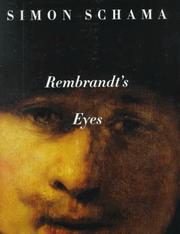
A magisterial dual biography of Rubens and Rembrandt that explicitly compares their worlds, making it the ideal capstone for understanding the Catholic-Protestant divide within Baroque painting.
Synthesis and Scholarship
ExpertEngage with the Baroque at a scholarly level — its historiography, its global reach, and the theoretical frameworks critics use — so the reader can form and defend original interpretations.
▸ Study plan for this stage
Pace: 4–5 weeks, ~25–30 pages/day, with 2–3 days per week reserved for note-taking, concept mapping, and written reflection
- The period eye: how visual perception and aesthetic judgment are historically contingent, shaped by the cultural practices and economic systems of a specific time and place
- The relationship between mathematical perspective, commercial practices, and artistic intention in Renaissance Italy
- Baxandall's method of art historical analysis: reconstructing the cognitive and social contexts that made certain visual effects meaningful to contemporary viewers
- How patronage, guild structures, and mercantile culture directly influenced the formal choices artists made
- The distinction between the artist's intentional effects and the viewer's trained capacity to recognize and interpret them
- Ekphrasis and descriptive language: how Renaissance writers' vocabulary for art reveals what they valued and how they saw
- The limits of formal analysis alone: why understanding Baroque (and Renaissance) art requires historical, economic, and social reconstruction
- What does Baxandall mean by the 'period eye,' and how does this concept challenge the idea that artistic beauty is universal or timeless?
- How did the commercial and mathematical practices of fifteenth-century Florence shape the way artists composed paintings and viewers understood perspective?
- What role did patronage and guild membership play in determining which visual effects an artist would pursue?
- How does Baxandall use language and rhetoric (ekphrasis) from period sources to reconstruct what viewers actually saw and valued in paintings?
- What is the relationship between an artist's intentional effects and a viewer's trained capacity to perceive them? How does this apply to understanding Baroque visual culture?
- How would you apply Baxandall's historical method to analyze a Baroque painting—what contextual factors would you need to reconstruct to understand its original impact?
- Close-read one chapter of Baxandall (e.g., on perspective or on descriptive language) and write a 500-word analysis of his argumentative method: What evidence does he use? How does he move from historical fact to interpretive claim?
- Select a specific Renaissance painting discussed in the book (e.g., a work by Botticelli or Piero della Francesca) and write a 'period eye' analysis: What would a fifteenth-century Florentine merchant have noticed and valued in this work, based on Baxandall's framework?
- Collect 3–4 period documents (ekphrasis, letters, guild records, or merchant accounts) related to a single painting or artist, and write a 750-word essay showing how these sources reveal the historical context that shaped artistic production and reception
- Create a concept map showing the interconnections between: mathematical perspective, commercial practice, patronage structures, visual effects, and viewer perception—use specific examples from Baxandall to illustrate each link
- Write a comparative reflection (600 words): How does Baxandall's historical method differ from formalist or biographical approaches to art history? What does each approach reveal or obscure?
- Design a hypothetical 'period eye' exercise for a Baroque painting (not discussed in Baxandall): What historical, economic, and social contexts would a viewer of that era have brought to it? What visual effects would have been legible to them?
Next up: This stage equips you with Baxandall's rigorous historical method for reconstructing the period eye—a toolkit you'll now apply directly to Baroque art itself, examining how seventeenth-century religious fervor, courtly spectacle, and global trade shaped the visual language of the Baroque across Europe and beyond.
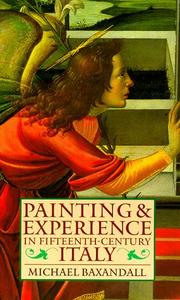
Though focused on the Renaissance, Baxandall's method of reading paintings through their social and economic conditions is the foundational model for all serious Baroque scholarship — reading it here sharpens analytical tools.
Discussion
Keep reading
Paths that share books, cover the same subject, or open a related topic.