The Dutch Golden Age of Painting: The Best Books to Read, in Order
Seventeenth-century Holland produced an art unlike anything else in Europe: no court, almost no church commissions, and instead an open market in which still life, landscape, seascape and the domestic interior were invented as commercial categories. This path builds the pictures first, then the society and the market that bought them, then goes deep on Rembrandt and on Vermeer and the genre painters, and finishes with the interpretive arguments that have shaped how the period is read.
The Pictures
BeginnerRecognise the major painters and the genre categories — portrait, group portrait, landscape, marine, still life, genre scene — and be able to say what makes a Dutch seventeenth-century picture look the way it does.
▸ Study plan for this stage
Pace: 2 weeks for about 280 pages, which sounds slack until you realise both books are mostly plates. Brown's Dutch Painting is 87 pages and can be read in two sittings; Westermann's A Worldly Art is 192 and repays a week. Budget as much time looking as reading — a page with four paintings on it is not a
- The genre categories are the subject. Portrait, militia group portrait, landscape, marine, church interior, still life, low-life genre scene — these were commercial specialisms, and a painter usually worked in one of them for a career.
- There is almost no altarpiece and almost no royal commission in this entire body of work. The market, not a patron, decided what got painted, and that is the single fact that makes Dutch painting look unlike Italian or Spanish painting of the same decades.
- Brown gives you the field as a survey; Westermann gives you the same field as a set of arguments — about realism, about domesticity, about what a picture was for. Read Brown first so Westermann's questions have something to attach to.
- Specialisation ran deep enough to be absurd: painters known for winter scenes, for moonlight, for church interiors, for dead game. Learn to name the specialism when you see a picture before you try to name the painter.
- Westermann's phrase 'a worldly art' is a claim, not a description — that this art is about the here and now in a way its neighbours were not. Note where you find it convincing and where it starts to feel like a national compliment.
- The word 'realism' is going to do enormous work over the next four stages, and both of these books already hedge it. Watch how carefully each one avoids saying the pictures simply record what was there.
- What does a Dutch group portrait have to solve that a single portrait does not, and how do Hals and Rembrandt solve it differently?
- Name four commercial genres and one painter who specialised in each. If you cannot do this from memory, the rest of the path will be harder than it needs to be.
- What does Westermann mean by calling this art worldly, and what is she contrasting it with?
- Why is the near-absence of church commissions the most important economic fact about this painting?
- Looking at any still life in Brown: what is the picture doing besides showing you objects?
- Take ten plates at random from Brown, cover the captions, and assign each to a genre and an approximate decade. Then check. Do this again at the end of the path and compare your hit rate.
- Find Westermann's discussion of realism and write out, in your own words, the strongest single sentence she commits to. You will hold it against Alpers in the final stage, so write it down where you will find it again.
- Pick one painting reproduced in both books and compare the two captions. Note what Brown tells you that Westermann does not, and vice versa — this is your first sight of the difference between a survey and an argument.
- Make a one-page list of the twelve painters you would name if asked. Keep it; you will be adding Ter Borch, Metsu and De Hooch to it in stage four and you should notice yourself doing so.
Next up: You now know what these pictures look like and what they were called, which is exactly what you need before asking who was buying them and why.
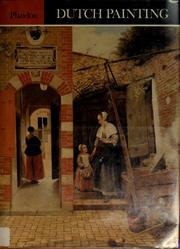
A compact, well-illustrated survey by a National Gallery curator, and the most efficient way to get the whole field in view before reading anything argumentative about it.
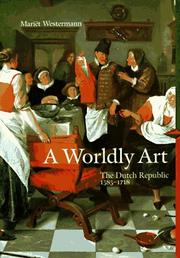
A short thematic introduction organised around the questions the art raises — the market, domesticity, realism — rather than around a chronology. Read second: it turns Brown's survey into a set of problems.
The Republic That Bought the Paintings
BeginnerUnderstand the economic and cultural conditions that made this art possible: a merchant republic with disposable income, Calvinist unease about wealth, and an open art market with dealers, auctions and speculative production.
▸ Study plan for this stage
Pace: 5 weeks, and the load is uneven. Schama's The Embarrassment of Riches is 698 pages of dense cultural history — three weeks at 30 pages a day. North's Art and Commerce in the Dutch Golden Age is 164 pages of prices and inventories and goes in three or four sittings. Brook's Vermeer's Hat is 272 pages
- Schama's thesis is moral discomfort: a Calvinist society that got rich fast and never stopped worrying about it, and an art full of warnings against the abundance it depicts.
- North supplies what Schama does not — actual numbers. Picture prices, output volumes, how many households owned paintings, what a dealer's margin looked like. A painting was a manufactured good with a price point.
- Speculative production is the key mechanism: painters made pictures for stock and for dealers, not to order, which is why output was enormous and prices for most work were low.
- Brook reads objects inside paintings as evidence of world trade — the beaver pelt from Canada in a hat, Chinese porcelain on a table, tobacco, silver. The domestic interior turns out to be a global interior.
- Hold Schama and North against each other deliberately. One explains the pictures by what the Dutch believed; the other by what they could afford. Neither is sufficient, and knowing where each stops is the point of reading them together.
- Emblem literature and proverb culture are the connective tissue in Schama's account: a seventeenth-century viewer brought a stock of moralised images to a picture that we do not.
- The Dutch East India Company and the Amsterdam exchange are not background here. They are why there was disposable income in a merchant household in the first place.
- What is the embarrassment in Schama's title, and what evidence does he offer that Dutch viewers actually felt it?
- According to North, roughly what did an ordinary genre painting cost relative to a craftsman's wages, and what does that imply about who owned pictures?
- Brook builds a chapter out of a hat in a Vermeer. Which painting, which object, and what trade route does he trace from it?
- If paintings were produced speculatively for a dealer's stock, what does that do to the idea of a picture as a personal statement?
- Where do Schama's cultural explanation and North's economic explanation actually conflict rather than merely differ in emphasis?
- Take one still life reproduced in Schama and list every object in it. Then ask, for each, where it came from — using Brook's method. You will find you cannot source half of them, which tells you how much reading a picture requires.
- Find North's figures for the number of paintings produced in the Republic and divide by population. Write the number down. Then decide whether Schama's account of moral anxiety is compatible with output on that scale.
- Read Schama's treatment of one moralised motif — the smoker, the bubble, the extinguished candle — and then go looking for it in three paintings he does not discuss. Note whether it reads as a warning or as decoration to you, and why.
- Write a paragraph arguing that Dutch painting is explained entirely by market economics and requires no reference to Calvinism at all. Make it as strong as you can. You are going to need this muscle in the final stage.
Next up: With the market and the moral climate in place, one career can now be read as a career — which is what the Rembrandt literature has been arguing about for forty years.
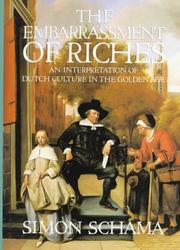
Schama's cultural history of the Dutch Republic's uneasy relationship with its own prosperity, told largely through images. It is the book that explains why these paintings are full of moral anxiety about the things they depict.
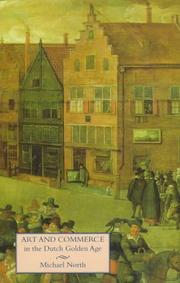
The hard economic counterpart: prices, production volumes, who owned pictures, how dealers worked. Read it straight after Schama so the culture and the market sit side by side.

A global historian uses details inside Vermeer's paintings — a beaver hat, a porcelain bowl — to trace the seventeenth-century world trade that put them there. The most enjoyable book on the path and a genuine widening of the frame.
Rembrandt
IntermediateFollow one career from Leiden apprentice to bankrupt Amsterdam master, and understand the competing readings of him — Romantic genius, shrewd operator in a picture market, or both.
▸ Study plan for this stage
Pace: 6 weeks, dominated by one book. Schama's Rembrandt's Eyes is 750 pages and roughly a third of it is about Rubens; three to four weeks at 30 pages a day, and do not skip the Rubens material because the whole structure depends on it. Alpers's Rembrandt's Enterprise is 160 pages but argumentatively den
- Schama's frame is rivalry: Rembrandt measured himself against Rubens, the courtly, learned, internationally successful painter he was never going to be. The book is a double biography for that reason.
- Alpers's argument is that Rembrandt ran a workshop as an enterprise and manufactured the idea of Rembrandt — the distinctive handling, the studio pupils painting in his manner, the self-portraits as brand. Authorship as a product.
- These two readings are not compatible and you should not try to reconcile them prematurely. Schama's Rembrandt is a Romantic subject; Alpers's is a shrewd operator in the market you learned about in stage two.
- The bankruptcy of 1656 and the inventory taken at it are the hardest evidence anyone has about how he lived, what he collected and what he owed. Both books use it and use it differently.
- Schwartz did more than anyone to identify the actual patrons and clients, which turns 'Rembrandt' from a temperament into a set of transactions with named Amsterdam people.
- The attribution problem sits under everything: the Rembrandt Research Project spent decades subtracting paintings from the corpus, and a book's date tells you which corpus it was working from.
- The self-portraits are the test case. Confession, or a marketable commodity in a market that wanted a picture of a famous face?
- What does Schama gain by structuring the book around Rubens, and what does that structure make it hard for him to say?
- State Alpers's thesis in two sentences without using the word 'genius'. Then state Schama's in two sentences without using the word 'business'.
- What does the 1656 bankruptcy inventory actually show, and what do the two authors each conclude from it?
- Take The Night Watch. How does each of the three books account for its composition — as artistic ambition, as a solved commercial problem, or as a commission from identifiable men?
- Which of these three books would you hand to someone who had decided Rembrandt was overrated, and why?
- Trace one claim across Schama and Alpers: that Rembrandt's late rough handling was a deliberate manner. Find where each says it, note what evidence each cites, and decide which one is arguing from the paintings and which from the documents.
- Look at the Anatomy Lesson of Dr Nicolaes Tulp (1632) and The Syndics (1662) side by side. Write 150 words on what changed in thirty years, then check your account against Schwartz's chapters on the patrons of each.
- Alpers claims the pupils' work is not a falling-off from the master but part of the enterprise. Find two paintings whose attribution has moved between Rembrandt and a pupil, and ask whether your judgement of them changed with the label.
- Write the opposing case: a paragraph arguing that Alpers's market reading explains the studio and explains nothing about why the Jewish Bride looks the way it does. Then a paragraph arguing back.
- Use Schwartz to find who paid for three specific pictures. Having actual names is the fastest cure for treating Rembrandt as a solitary figure.
Next up: Having seen one painter's reputation dismantled and rebuilt, you are ready for Vermeer, where the documentary record is thinner and the mythmaking correspondingly heavier.
A very long, very readable biography built around Rembrandt's rivalry with Rubens. The best narrative account, and the one to read first because it gives you the life the other two books argue about.
Alpers's revisionist argument that Rembrandt ran a studio as a business and manufactured his own authorship. Directly against the Romantic reading you have just absorbed from Schama, which is exactly why it goes here.
Organised thematically rather than chronologically, by the scholar who did most to document the patrons and clients. The reference volume to end the stage on.
Vermeer and the Genre Painters
IntermediateLearn how the domestic interior became a subject, why Vermeer's small output has attracted such disproportionate attention, and how to read a genre scene for its contemporary meanings rather than as a photograph of daily life.
▸ Study plan for this stage
Pace: 5 weeks for roughly 1,200 pages, but Wheelock's Vermeer is 71 pages of mostly plates and Franits is a reference-shaped survey you can read in chunks. Montias's Vermeer and His Milieu (440pp) is archival and slow — two weeks. Westermann's The Amusements of Jan Steen (366pp) is the most enjoyable and
- Montias replaced speculation with documents: the family's debts, the Delft guild records, the innkeeping business, and Pieter van Ruijven as the patron who bought about half the surviving output. Vermeer had one significant collector, not a market.
- Roughly thirty-five paintings survive. Almost every romantic claim about Vermeer exists because the record is thin enough to write into.
- Wheelock is on the pictures themselves — light, the treatment of edges, the possible use of a camera obscura, the extraordinary slowness of the technique.
- Franits is the corrective: Ter Borch, Metsu, De Hooch, Dou, Steen and a dozen others were doing this work, often first, and Vermeer's isolation is a nineteenth-century invention.
- A genre scene is not a photograph of daily life. Letters, maps, musical instruments, wine glasses, birdcages and open windows carry conventional meanings that a contemporary viewer read fluently.
- Westermann's Steen argues for a comic tradition with its own rules, drawn from theatre and proverb, which the 'sober realism' account of Dutch painting simply cannot accommodate.
- The transmission problem runs through the whole stage: De Hooch and Vermeer were in the same small city doing similar things, and who influenced whom is genuinely unsettled.
- What are the three most consequential facts Montias established from the Delft archives, and what did each one displace?
- Van Ruijven bought about half the surviving paintings. What does a single dominant buyer do to the market model you built in stage two?
- Take Woman Holding a Balance. What does Wheelock say it is doing, and what would Franits's genre-tradition framing say instead?
- Why does Westermann insist Steen is funny on purpose, and what in the 'realism' reading of Dutch art makes that hard to admit?
- If you had never heard of Vermeer and read Franits first, where would you place him in the field?
- Put a De Hooch courtyard beside Vermeer's The Little Street and write out what is actually different. Composition, light, the handling of brick. Resist the word 'greater' entirely.
- Take one Vermeer with a letter in it and one with a map, and use Franits to find the conventional associations of each object. Then decide whether the painting is using the convention or resisting it.
- Read Steen's The Feast of Saint Nicholas or In Luxury, Beware as a joke with a punchline. Identify the punchline. Then check yourself against Westermann.
- Cross-check one biographical claim about Vermeer that you have heard repeated — the camera obscura, the poverty, the eleven children — against what Montias actually documents. Note the gap between claim and record.
- Count how many of Franits's named painters you had heard of before this stage. That number is a measure of how much of the field Vermeer's reputation has been standing in front of.
Next up: You have now read these pictures both as documents of a society and as coded arguments, which is precisely the disagreement the final stage is about.
An economic historian's archival reconstruction of Vermeer's family, debts, patron and Delft. The book that replaced speculation about Vermeer with documents, and the necessary foundation here.
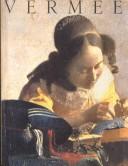
Wheelock's study of the paintings themselves, close and technical on light, optics and process. Read after Montias: first the man in his town, then the pictures on the wall.
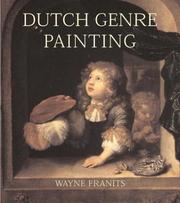
The standard scholarly survey of the whole genre tradition — Ter Borch, Metsu, De Hooch, Steen — which is what Vermeer's reputation has overshadowed. Essential for seeing him as part of a field.

A study of the comic tradition Steen worked in, and a corrective to reading Dutch genre painting as sober realism. The work is published as The Amusements of Jan Steen, which is how the catalogue displays it.
The Arguments About How to Look
IntermediateEngage with the interpretive debate that has driven Dutch art history for forty years — whether these paintings describe the visible world or encode emblematic meanings — and be able to take a position on it.
▸ Study plan for this stage
Pace: 3 weeks for 465 pages, and this is the slowest reading on the path. Alpers's The Art of Describing is 273 pages of art history written against the grain of the discipline; two weeks, and reread the introduction after you finish it. Bryson's Looking at the Overlooked is 192 pages in four essays — one
- Alpers's claim is that Dutch art is a descriptive visual culture, not a narrative art in the Italian sense — closer to the map, the lens and the printed image than to the storytelling picture the discipline was built to analyse.
- The rival position, associated with emblematic readings, holds that these pictures are full of hidden moral meanings and must be decoded. Alpers is explicitly arguing against that, and the field split accordingly.
- Alpers connects painting to optics, cartography and the new science — Kepler, the microscope, the mapped surface — rather than to literature. The map hanging on the wall in a Vermeer becomes evidence rather than furniture.
- Bryson takes the lowest genre in the academic hierarchy, still life, and argues it addresses a whole register of human life — eating, dwelling, mortality — that narrative painting cannot reach.
- Bryson's essays are theoretically explicit where Alpers is not, and the pair together show you two different ways of importing theory into art history.
- Both books are contested, which is the point of the stage. You are being asked to take a position with evidence, not to arrive at the correct answer.
- Everything published on Dutch art since 1983 positions itself relative to Alpers, so knowing her argument makes the entire secondary literature legible.
- State the descriptive-versus-emblematic disagreement in your own words, without caricaturing either side.
- What does Alpers do with maps, lenses and printed images that a conventional iconographic reading cannot do?
- Where is Alpers weakest? Name a painting or a genre her account handles badly, and say why.
- Bryson calls still life 'the overlooked'. Overlooked by whom, and on what grounds was it demoted in the first place?
- Having read the whole path: is Dutch painting best explained by its market, its religion, its optics, or its comic and moral conventions? Defend one, and say what your answer cannot account for.
- Take Vermeer's The Art of Painting — the picture with the large map on the back wall. Write a paragraph reading it as Alpers would, then a paragraph reading it emblematically. Decide which paragraph you found easier to write and ask what that tells you.
- Go back to the sentence on realism you wrote out from Westermann in stage one. Set it against Alpers's argument and note whether Westermann was already conceding the point or resisting it.
- Apply Bryson to one Claesz or Heda breakfast piece: half-peeled lemon, overturned glass, bread. Argue that the picture is about mortality; then argue that it is about the pleasure of paint imitating pewter. Both are available.
- Find one review or later book that criticises The Art of Describing and identify the specific charge. Reading the objection is the fastest route to knowing what the argument actually commits Alpers to.
- Redo the stage-one exercise: ten plates, captions covered, assign genre and decade. Then, for three of them, say what interpretive question you would now want to ask about each — which is the thing you could not have done six months ago.
Next up: The path ends here with an argument rather than a conclusion, which is the honest state of the field and the right equipment for reading anything published in it next.
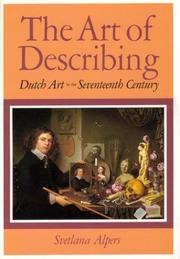
The most influential and most contested book in the field, arguing that Dutch art is a visual culture of description rather than a narrative art in the Italian sense. Everything after 1983 in this subject is written with or against it.

Four essays on still life as a category, and the best theoretical account of why painting food, flowers and dead game was a serious enterprise. The right closing book: it makes the humblest genre the most interesting one.
Discussion
Keep reading
Paths that share books, cover the same subject, or open a related topic.