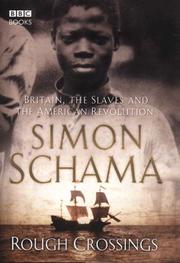
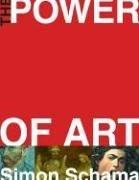
Start with Rough Crossings. Simon Schama's books are independent, so nothing forces an order, but the sequencing question is real: two of them run past 900 pages and one is a two-volume project, so where you enter determines whether you finish.
Rough Crossings is 478 pages with a chronology you can hold, and it shows his central instinct immediately — history told as narrative with people in it. It follows enslaved Americans who sided with the British for a promise of freedom, and what actually happened to them afterwards. The moral arrangement is deliberately scrambled: the empire is the liberator and the revolutionaries are the slaveholders.
The obvious alternative is Citizens, which is the book he is famous for. It is also 948 pages, and spending that to find out whether you like a historian is a poor trade. Read Rough Crossings first and Citizens third.
The two entry points
Rough Crossings, then The Power of Art. Both are much faster than their page counts suggest, because Schama writes in scenes and neither asks you to hold a large structure in mind.
The Power of Art is eight self-contained chapters, one artist each, caught at a single decisive moment — a dramatist's structure rather than an art historian's. Read it with the paintings open in front of you; the book is about specific canvases and is substantially poorer without them. Between them these two books show the storyteller and the art critic separately, which is useful, because the rest of the shelf keeps combining them.
Both began life alongside television work. That is part of why they are so propulsive, and part of why academic historians are wary of him.
The great histories
Citizens, then The Embarrassment of Riches. Plan this stage as a season rather than a month.
Citizens tells the French Revolution as narrative rather than structure and argues that violence was present from the beginning rather than arriving with the Terror. That argument is genuinely contested — it cuts against a social-historical tradition that locates the Revolution's causes in structures rather than in individuals, and Schama was attacked for it accordingly. Reading it well means holding the counter-case in view: a narrative of individuals cannot settle a question about social forces. It also helps to know it was published into the 1989 bicentenary and read at the time as a political intervention.
The Embarrassment of Riches is harder going, because it is organised thematically rather than chronologically and has no plot to carry you. It reads the Dutch Golden Age through its own anxiety about wealth — a Calvinist republic uneasy at being rich — using paintings, still lifes, household objects and conduct manuals as primary evidence. It is the most ambitious thing he attempts anywhere, and everything later on the shelf assumes it.
Landscape and art
Landscape and memory, then Rembrandt's eyes.
Landscape and memory is his most digressive big book and the one readers most often abandon. It is organised by element rather than by chronology, which is why it feels like wandering, and its hardest section faces directly how landscape myth served nationalism. Rembrandt's eyes is longer but far more disciplined, because it has two lives to narrate: Rubens as the successful courtier against Rembrandt as the bankrupt experimenter. The Dutch context from the previous stage is assumed throughout, which is precisely why that book came first.
Both are illustrated books whose images are integral. Read with the plates.
The Story of the Jews
The Story of the Jews, then Belonging. Unlike everything else on this shelf, this project is genuinely sequential — read them in order and consecutively.
The defining choice is to build a history from ordinary lives and surviving documents rather than from a chronicle of persecutions. Papyri, letters, contracts and inscriptions do the work paintings do elsewhere in his books. The first volume runs from antiquity to the expulsion of 1492; Belonging is the larger of the two and covers 1492 to 1900. The reading is episodic by design, so a chapter a sitting works and skipping around does not. Note that our list holds the first two volumes; the project is not complete.
The experiments
Dead certainties and Foreign Bodies, in either order, and neither should be a first Schama.
Dead certainties tells two historical episodes with acknowledged invention — interior monologue, imagined scenes — and admits it in an afterword. It caused a genuine methodological row about where history stops and fiction begins, and that row is the reason to read it. His defence is that all narrative history involves construction and that making it visible is more honest than hiding it; the counter-case is that a reader cannot separate the invented from the evidenced, which damages the authority of everything else on the shelf. Foreign Bodies applies his storytelling to vaccination and epidemic disease, and is a straightforward read at 30 pages a sitting.
Where to stop
Rough Crossings, Citizens and The Embarrassment of Riches are the three that matter. For narrative history at a quarter of the length, Erik Larson is the adjacent shelf.
Follow the full ordered path here: Simon Schama Reading Order: Where to Start.