Best books on root cellars and storing food
This curriculum takes a beginner from the basic principles of food preservation and cold storage all the way through hands-on root cellar construction, advanced humidity and temperature management, and whole-system harvest preservation. Each stage builds vocabulary and practical intuition so that later, more technical books make immediate sense.
Foundations: Preservation Principles & the Homestead Mindset
BeginnerUnderstand WHY food spoils, the core variables (temperature, humidity, airflow, ethylene), and how traditional food storage fits into a whole homestead system.
▸ Study plan for this stage
Pace: 6–8 weeks, ~40–50 pages/day. Start with "Animal, Vegetable, Miracle" (weeks 1–4, approximately 400 pages), then move to relevant sections of "The Encyclopedia of Country Living" (weeks 5–8, focusing on food preservation chapters: ~100–150 pages).
- Why food spoils: the role of microorganisms, enzymes, and oxidation in breaking down nutrients and creating off-flavors
- Temperature as the primary control variable: how cold slows microbial growth and enzymatic activity, and why consistency matters more than extremes
- Humidity and moisture management: the balance between preventing mold/rot and avoiding desiccation that ruins texture and nutrition
- Airflow and gas exchange: how ethylene gas (produced by ripening fruit) accelerates spoilage in nearby produce, and why ventilation prevents buildup
- The homestead mindset: viewing food storage not as isolated preservation, but as part of a closed-loop system of growing, harvesting, storing, and eating seasonally
- Practical storage hierarchy: understanding which foods suit which methods (root cellaring, drying, canning, fermentation) based on their biology and your climate
- Seasonal eating and food psychology: how storage enables self-sufficiency and reduces dependence on industrial supply chains
- What are the three main mechanisms by which food spoils, and how does temperature affect each one?
- Why is ethylene gas a critical concern in root cellars and storage spaces, and which common foods produce it?
- How do humidity and airflow work together to create an ideal storage environment, and what happens when either is out of balance?
- According to Kingsolver's experience in 'Animal, Vegetable, Miracle,' how does seasonal eating and food storage fit into a broader homestead philosophy?
- What does Carla Emery's 'Encyclopedia' teach about matching storage methods (root cellaring, drying, fermenting, etc.) to specific foods and your local climate?
- Why is consistency of temperature more important than achieving the coldest possible temperature in a root cellar?
- Create a 'spoilage timeline' chart: pick three foods from your kitchen (e.g., apple, potato, carrot) and track how long each lasts at room temperature vs. refrigeration, noting visible signs of spoilage (mold, softening, discoloration). Correlate your observations to the microbial and enzymatic mechanisms discussed in the readings.
- Conduct an ethylene sensitivity experiment: place a ripe banana in a sealed bag with an unripe avocado for 3–5 days, and compare its ripening speed to a control avocado in open air. Document the results and explain using the ethylene concept from the books.
- Map your local climate and design a hypothetical root cellar: using Emery's guidance on regional variations, sketch a storage space for your climate zone, specifying target temperature, humidity, ventilation, and which foods you'd store in each zone (cool corner, humid area, well-ventilated shelf, etc.).
- Interview a local farmer or gardener about their storage practices: ask them which foods they store, how, and why—then cross-reference their methods against Emery's recommendations and Kingsolver's philosophy of seasonal eating.
- Read and annotate the food preservation chapters in Emery's 'Encyclopedia' (root cellar, drying, fermenting sections), creating a one-page decision tree: 'If I have X food and Y climate, which storage method should I use and why?'
- Conduct a 'seasonal eating audit': for one week, track every food you eat and note whether it was grown/stored locally, imported, or processed. Reflect on how Kingsolver's year-long experiment would change your diet and what storage infrastructure you'd need.
Next up: This stage establishes the *why* and *how* of food spoilage and the homestead philosophy; the next stage will dive into *specific techniques*—building and optimizing actual root cellars, mastering temperature/humidity control, and learning preservation methods like canning, fermenting, and drying in detail.
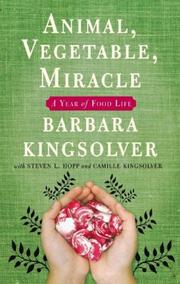
A narrative introduction to eating and storing seasonally; builds the 'why bother' motivation and vocabulary around harvest cycles before any technical detail.
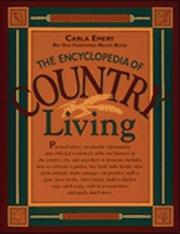
A beloved homesteading bible that surveys every preservation method — drying, canning, cellaring — giving beginners a broad map of the territory they will explore in depth later.
Core Skills: Canning, Fermenting & Preserving the Harvest
BeginnerMaster the foundational hands-on preservation techniques (water-bath canning, pressure canning, fermentation, drying) that complement and reduce the load on cold storage.
▸ Study plan for this stage
Pace: 8–10 weeks, ~40–50 pages/day (mix of reading and hands-on practice). Week 1–3: "Putting Food By" (canning & drying foundations); Week 4–6: "Putting Food By" (advanced techniques & troubleshooting); Week 7–10: "The Art of Fermentation" (theory, methods, and experimentation).
- Water-bath canning principles: acidity, processing times, and safe jar sealing for high-acid foods
- Pressure canning mechanics: steam pressure, altitude adjustments, and low-acid food safety protocols
- Fermentation as preservation: salt ratios, anaerobic environments, and microbial ecology
- Drying methods and moisture control: sun-drying, oven-drying, and storage conditions to prevent spoilage
- Testing for doneness and spoilage: visual cues, smell tests, and recognizing failed batches
- Equipment sterilization and kitchen sanitation: preventing contamination across all preservation methods
- Scaling recipes and adapting techniques: adjusting processing times for altitude, jar size, and ingredient variations
- Fermentation flavor development: understanding how time, temperature, and starter cultures affect taste and texture
- What is the critical difference between water-bath canning and pressure canning, and when must you use each method?
- How do salt concentration and anaerobic conditions work together in fermentation to preserve food and develop flavor?
- What are the signs of a failed canning batch, and how do you troubleshoot common problems like incomplete seals or cloudiness?
- How do you determine the correct processing time for a canned product, and why does altitude matter?
- What role does microbial activity play in fermentation, and how do you create conditions that favor beneficial bacteria over pathogens?
- How do you know when a dried product is ready for storage, and what storage conditions prevent rehydration or mold growth?
- Execute a complete water-bath canning project (e.g., jam, pickles, or tomato sauce) from prep through cooling and seal-testing; document processing times and results.
- Perform a pressure canning batch of a low-acid food (e.g., green beans, carrots, or broth) and practice reading the pressure gauge and adjusting for altitude.
- Start three fermentation experiments with different salt ratios (e.g., 2%, 3%, 5%) using the same vegetable; taste and compare weekly to understand salt's role in flavor and preservation.
- Dry a harvest of herbs, vegetables, or fruit using two different methods (sun, oven, or dehydrator); test for proper dryness and store in sealed containers for 2 weeks to monitor for rehydration.
- Deliberately create a failed batch (e.g., underprocess a canned item or ferment without salt) to recognize spoilage signs; compare it side-by-side with a successful batch.
- Adapt a recipe from 'Putting Food By' for your altitude and jar sizes; calculate new processing times and document the reasoning.
Next up: Mastering these hands-on preservation techniques—canning, fermenting, and drying—equips you to process and store the bulk of your harvest independently, setting the stage to integrate these methods with root cellar storage and design a year-round food preservation system tailored to your climate and crops.
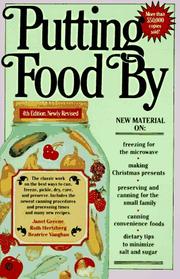
The definitive, science-backed guide to all major preservation methods; reading it first establishes safe-food principles that inform every cold-storage decision that follows.

Fermentation is the oldest 'root cellar companion' — this authoritative deep-dive explains lacto-fermentation and how cool, dark storage conditions keep ferments alive.
The Root Cellar: Planning, Building & Managing Cold Storage
IntermediateDesign, build, or retrofit a root cellar or cold room; understand temperature and humidity zones, and know which crops belong where.
▸ Study plan for this stage
Pace: 8–10 weeks, ~25–35 pages/day (mix of dense technical sections and practical guides; allow extra time for design sketches and planning exercises)
- Root cellar site selection and environmental assessment (light, drainage, soil, temperature stability)
- Construction methods for new builds and retrofits (insulation, ventilation, materials, cost-benefit analysis)
- Temperature and humidity zones: creating microclimates for different storage needs (32–40°F for roots, 50–60°F for apples, etc.)
- Crop-specific storage requirements: which vegetables, fruits, and herbs thrive in which conditions and how long they keep
- Ventilation design and passive air management to maintain optimal conditions without mechanical systems
- Shelving, storage containers, and organization systems that maximize space and airflow
- Monitoring and troubleshooting: managing condensation, pests, rot, and seasonal temperature swings
- What are the ideal temperature and humidity ranges for storing root vegetables, apples, and leafy greens, and why do these ranges differ?
- How would you assess a basement, cellar, or outbuilding to determine if it's suitable for root cellar conversion, and what modifications might be needed?
- Describe the ventilation strategy you would use for a passive root cellar in a cold climate versus a mild climate, and explain why the approach differs.
- Which crops from Bubel and Centre Terre Vivante can be stored together in the same zone, and which must be separated? What are the reasons for compatibility or incompatibility?
- Walk through the steps you'd take to retrofit an existing space into a functional root cellar, including materials, layout, and expected challenges.
- How would you monitor and adjust conditions (temperature, humidity, airflow) throughout the storage season to prevent spoilage and pest problems?
- Conduct a site assessment of a basement, cellar, garage, or outbuilding: measure temperature fluctuations over 2–4 weeks, check for moisture, light, and drainage issues, and write a one-page feasibility report.
- Create a detailed floor plan and cross-section sketch of a root cellar design (either new or retrofit) showing ventilation ducts, insulation, shelving zones, and temperature/humidity microclimates.
- Build or assemble a simple storage container system (wooden crates, shelving, or bins) and test airflow and humidity retention with a thermometer and hygrometer over 1–2 weeks.
- Develop a crop-by-crop storage matrix for your region: list 10–15 vegetables and fruits you want to store, note their ideal conditions (temperature, humidity, duration), and assign each to a zone in your planned cellar.
- Conduct a small-scale storage trial: store 2–3 different crops in different conditions (e.g., one in a cool closet, one in a basement corner, one in a cardboard box with damp sand) and track spoilage rates and quality over 4–8 weeks.
- Research and price out materials for a DIY root cellar retrofit (insulation, ventilation pipes, shelving, thermometer/hygrometer) and create a budget and timeline for construction.
Next up: This stage equips you with the knowledge and hands-on skills to build and manage a functional cold storage space; the next stage will deepen your ability to preserve specific crops using techniques like sand storage, root cellaring with humidity control, and fermentation to extend shelf life beyond what temperature and humidity alone can achieve.
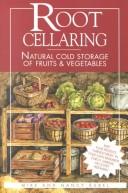
THE canonical text on root cellars — covers site selection, construction options, temperature/humidity zones, and crop-by-crop storage requirements. Read first in this stage to anchor everything else.
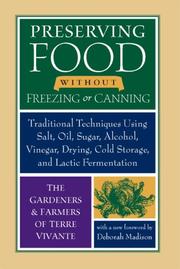
Focuses exclusively on traditional European cold-storage and low-tech methods; expands the learner's toolkit beyond what Bubel covers and reinforces humidity management with real examples.
Advanced Harvest & Storage Strategy
ExpertIntegrate root cellaring into a full season-long harvest and storage plan, select the best storage varieties, and troubleshoot spoilage, pests, and climate challenges.
▸ Study plan for this stage
Pace: 8–10 weeks, ~40–50 pages/day (mix of dense reference material and practical guides)
- Variety selection for storage: choosing cultivars bred for long-term storage vs. fresh market, understanding maturity dates and storage longevity
- Season-long harvest planning: staggering plantings and harvest timing to align with storage capacity and climate windows
- Root cellar design and microclimate management: temperature, humidity, and airflow optimization for different crop types
- Postharvest handling and curing: proper cleaning, curing protocols, and conditioning to extend shelf life and prevent spoilage
- Integrated pest and disease management in storage: monitoring, ventilation strategies, and organic treatments to prevent losses
- Winter production techniques: extending the growing season to coordinate fresh harvest with storage crop availability
- Troubleshooting spoilage: identifying rot, mold, and decay patterns to diagnose environmental or handling failures
- Building a year-round food security system: layering storage crops, preserved foods, and winter production into one cohesive plan
- How do you select vegetable varieties specifically for storage longevity, and what characteristics distinguish storage varieties from fresh-market types?
- What is a realistic harvest and storage timeline for a season, and how do you stagger plantings to ensure continuous availability from both storage and winter production?
- What are the critical environmental parameters (temperature, humidity, ethylene sensitivity) for storing different crop families, and how do you manage these in a root cellar?
- How do you cure and condition crops before storage, and why does this step prevent spoilage?
- What are the most common storage failures (rot, mold, pest damage), what causes them, and how do you diagnose and prevent each?
- How does winter production (cold frames, low tunnels, greenhouse) complement root cellar storage in a year-round food system?
- Create a detailed season-long planting and harvest calendar for your climate zone, specifying which crops go to storage, which to winter production, and which to fresh market, using variety recommendations from Stewart and Coleman
- Design or audit a root cellar storage layout: map temperature and humidity zones, assign crop families to zones based on their requirements, and identify ventilation improvements needed
- Conduct a curing and storage trial: harvest and properly cure 2–3 storage crops (e.g., winter squash, potatoes, root vegetables), monitor them weekly for 4–6 weeks, and document any spoilage with photos and notes on cause
- Build or improve a simple storage structure (root cellar, insulated shed, or buried cooler): take before/after photos, measure temperature and humidity daily for 2 weeks, and compare to target ranges
- Create a pest and disease monitoring protocol: set up storage inspections on a weekly schedule, document any problems found, and test one organic control method (e.g., improved ventilation, removal of affected crops)
- Develop a year-round food availability chart: map out which crops come from storage, which from winter production, and which from preserved foods (canning, freezing) for each month, identifying any gaps
Next up: This stage equips you to execute a complete, resilient food storage system; the next stage will likely focus on scaling production, optimizing economics, or integrating storage into market-based or community food systems.

Bridges the gap between growing and storing by covering variety selection and post-harvest handling — critical for understanding why some crops store for months while others fail.

Coleman's advanced treatment of cold-climate food production and storage shows how unheated structures, timing, and microclimate management extend the harvest — the logical next step after mastering the root cellar itself.

A systems-level book on building a year-round food storage practice; ties together all prior learning into a practical, week-by-week preservation and rotation strategy.
Discussion
Keep reading
Paths that share books, cover the same subject, or open a related topic.