Homestead: grow, build, live self-sufficient
This curriculum moves from the inspiring "why" of homesteading through practical food-growing and preservation skills, into small livestock and home systems, and finally into the deeper philosophy and hard-won wisdom of experienced modern homesteaders. Each stage builds vocabulary, confidence, and hands-on know-how so that later, more technical books feel approachable rather than overwhelming.
Foundations & Mindset
BeginnerUnderstand what modern homesteading actually looks like, develop a realistic mindset, and get a broad map of all the skills you will need to build.
▸ Study plan for this stage
Pace: 8–10 weeks total. Week 1–5: Read "The Encyclopedia of Country Living" by Carla Emery — treat it as a reference survey rather than a cover-to-cover read; skim chapter introductions daily (~20–25 pages), then deep-read any two sections that interest you most each week. Week 6–10: Read "The Self-Suffic
- Modern homesteading is a spectrum, not an all-or-nothing lifestyle — Emery's encyclopedia shows that self-sufficiency is built skill-by-skill, category-by-category, not overnight.
- The homestead as an integrated system — Seymour's whole-farm vision illustrates how animals, crops, soil, and food preservation are interdependent, not isolated tasks.
- Honest assessment of land, climate, and personal capacity — both authors stress matching ambitions to real resources and physical realities.
- The importance of foundational food skills (growing, preserving, fermenting, butchering) as the core of self-sufficiency, as catalogued extensively by Emery.
- Community and knowledge networks matter — Emery's conversational tone reflects that homesteading knowledge is passed person-to-person, not just book-to-book.
- Seymour's 'one-acre' to 'five-acre' farm models provide a scalable mental framework for planning how much land different levels of self-sufficiency actually require.
- Mindset of patient, iterative learning — both authors normalize failure, seasonal setbacks, and the multi-year learning curve inherent to homesteading.
- Prioritization and sequencing of skills — understanding which foundational skills (soil, water, food storage) must come before advanced ones (livestock, dairying, fiber arts).
- After surveying Emery's encyclopedia, what are the five broadest skill domains of homesteading, and which two feel most urgent or accessible for your specific situation?
- How does Seymour's integrated farm model differ from simply having a vegetable garden, and what does 'closing the loop' on a homestead mean in practice?
- What does Emery say about the relationship between food preservation and food production — why does she treat them as inseparable?
- According to Seymour's land-scale models, what level of self-sufficiency is realistically achievable on a quarter-acre, one acre, and five acres respectively?
- What mindset pitfalls do both authors warn against (e.g., romanticization, over-expansion too soon), and how do they suggest guarding against them?
- Which three skills covered across both books do you currently have zero experience with, and what is the first concrete step each author suggests for a beginner starting there?
- Create a 'Homestead Skills Inventory': list every major skill category found in Emery's table of contents, then honestly rate yourself 0–3 on each. This becomes your personal curriculum map.
- Draw Seymour's integrated farm diagram from memory after finishing his book, labeling how outputs from one system (e.g., animal manure) become inputs for another (e.g., garden soil). Compare it to his original.
- Pick ONE preservation method described by Emery (e.g., water-bath canning, lacto-fermentation, or root cellaring) and actually do it this season with produce you already have — document what worked and what didn't.
- Write a one-page 'Homestead Reality Check': describe your actual current situation (land size, climate zone, budget, time available per week, household members) and use Seymour's land-scale models to set a realistic 1-year and 3-year vision.
- Start a dedicated homesteading notebook or journal. After each reading session, write one thing you learned, one thing you want to try, and one question you still have — keep this running through all future stages.
- Visit one local resource tied to something in these books — a farmers' market, a county extension office, a community garden, or a neighbor who keeps chickens — and ask one knowledgeable person one specific question from your reading.
Next up: ">Having built a broad mental map of all homesteading domains from Emery and a systems-thinking framework from Seymour, the reader is now ready to move from orientation into deep skill-building — the next stage will take specific domains (typically soil and food growing) and develop them with hands-on, focused depth.
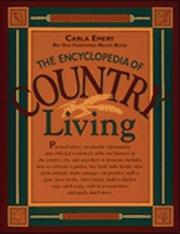
The definitive starting reference for self-sufficiency — covers food, animals, tools, and home skills in one volume. Reading it first gives you the full landscape and a shared vocabulary for everything that follows.
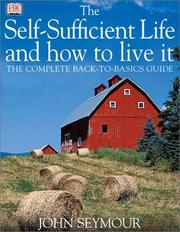
Beautifully illustrated and highly motivating, this book shows how all the homestead systems connect to each other, reinforcing Emery's reference material with a holistic, integrated vision.
Growing & Preserving Food
BeginnerPlan and grow a productive kitchen garden, understand soil health, and safely preserve harvests through canning, fermenting, and other methods.
▸ Study plan for this stage
Pace: 8–10 weeks total: Weeks 1–5 cover "The Market Gardener" (~25–30 pages/day, 3–4 days/week); Weeks 6–10 cover "The Art of Fermentation" (~20–25 pages/day, 3–4 days/week). Allow extra days at the end of each book for review and hands-on practice.
- Intensive bed gardening: Fortier's permanent, narrow raised-bed system (30-inch beds) that maximizes yield per square foot while minimizing labor and inputs
- Soil fertility as the foundation: building and maintaining living soil through compost, organic matter, and minimal tillage — Fortier's 'grow the soil, not the plant' philosophy
- Crop planning and succession planting: mapping out what to grow, when to sow, and how to stagger plantings for continuous harvests across a season
- Low-tech, high-efficiency tools and infrastructure: understanding which tools (broadfork, wire hoop houses, row covers) give the most return for a beginner's investment
- Fermentation as preservation and nutrition: Katz's core argument that fermentation is a natural, ancient, and forgiving process accessible to anyone — not a precise science requiring sterile labs
- The role of salt, water, and anaerobic environments: how these three elements create the conditions for lacto-fermentation and inhibit harmful bacteria in vegetables, grains, and legumes
- Diversity of fermentation traditions: vegetables (sauerkraut, kimchi), beverages (kvass, kombucha), dairy (yogurt, kefir), and grains — recognizing fermentation as a global, culturally rich practice
- Food sovereignty and self-reliance: the shared thread across both books — producing and transforming your own food as an act of independence, health, and community resilience
- According to Fortier, why are permanent narrow beds superior to traditional row gardening, and how does this system reduce the need for external inputs over time?
- What is Fortier's approach to soil fertility, and what specific practices does he recommend to build and maintain it without synthetic fertilizers?
- How does Fortier use succession planting and crop mapping to ensure a continuous, productive harvest rather than a single glut?
- According to Katz, what is lacto-fermentation, and why does the presence of salt and an anaerobic environment make it safe without requiring sterilization or special equipment?
- Katz presents fermentation as culturally universal — what are three distinct fermentation traditions from different parts of the world that he describes, and what do they share in common?
- How do the philosophies of Fortier and Katz complement each other in building a self-sufficient food system — from seed to preserved harvest?
- Sketch a scale drawing of your available growing space (even a balcony or small yard) and design at least two 30-inch permanent beds following Fortier's layout principles, including planned crops and a basic succession schedule for one season.
- Build or source a simple compost system and begin composting kitchen scraps and yard waste; keep a two-week log tracking what you add, moisture levels, and any observable changes — referencing Fortier's soil-building guidance.
- Make a batch of basic sauerkraut using only cabbage and salt, following Katz's core lacto-fermentation method; taste it at days 3, 7, and 14 and journal the flavor, texture, and aroma changes at each stage.
- Attempt a second ferment from a different category in Katz's book — such as a simple brine-fermented vegetable (e.g., pickled carrots or garlic), a dairy ferment (yogurt or kefir), or a beverage (kvass) — to experience how the same principles apply across ingredients.
- Create a one-page 'Garden-to-Jar' plan that connects Fortier's crop calendar to Katz's preservation methods: for each crop you plan to grow, identify at least one fermentation or preservation technique from Katz that could be used to store the harvest.
- Visit a farmers market, community garden, or local homestead and interview a grower or food preserver about their soil practices or fermentation habits; compare their real-world approach to the methods described by Fortier and Katz.
Next up: By mastering the full cycle of growing food (Fortier) and transforming it for long-term storage (Katz), the reader has established the productive core of a homestead — making them ready to expand into the broader infrastructure, animal husbandry, and whole-systems thinking that characterize the next stage of self-sufficiency.

Teaches intensive, small-scale vegetable growing with clear systems — perfect for a homesteader who wants maximum yield from minimal land before tackling preservation.

Deepens preservation skills into live-culture fermentation (krauts, kimchi, kefir, vinegar) and explains the underlying biology, giving you creative flexibility beyond recipes.
Small Livestock & Animal Husbandry
IntermediateConfidently raise chickens, rabbits, goats, or other small livestock for eggs, meat, and dairy, and handle basic animal health and husbandry.
▸ Study plan for this stage
Pace: 8–10 weeks total. Weeks 1–5: "Storey's Guide to Raising Chickens" by Gail Damerow (~25–30 pages/day, covering brooding, housing, feeding, health, and egg/meat production chapters). Weeks 6–10: "Storey's Guide to Raising Meat Goats" by Maggie Sayer (~20–25 pages/day, covering breeds, housing, nutriti
- Flock management fundamentals: brooding chicks from day-old to pullet stage, managing temperature, light cycles, and flock integration (Damerow)
- Housing and infrastructure design: coop ventilation, predator-proofing, nesting boxes, roost spacing, and pasture rotation for chickens (Damerow)
- Poultry nutrition and feeding systems: understanding layer vs. meat-bird rations, grit, calcium supplementation, and free-range foraging balance (Damerow)
- Chicken health and disease prevention: recognizing common illnesses (Marek's, coccidiosis, respiratory infections), vaccination schedules, and biosecurity protocols (Damerow)
- Egg and meat production cycles: maximizing lay rates, molt management, culling decisions, and humane processing of meat birds (Damerow)
- Meat goat breed selection and physical evaluation: distinguishing Boer, Kiko, Spanish, and Myotonic breeds by conformation, growth rate, and hardiness (Sayer)
- Goat nutrition, grazing, and supplementation: browse vs. pasture needs, mineral balancing (copper, selenium), hay quality, and preventing bloat and urinary calculi (Sayer)
- Goat reproduction, kidding, and neonatal care: breeding season management, gestation tracking, signs of labor, assisted kidding, colostrum management, and disbudding/castration of kids (Sayer)
- Basic livestock health monitoring: taking vitals, administering injections, recognizing and treating common goat ailments (parasites/FAMACHA, pneumonia, foot rot), and knowing when to call a vet (Sayer)
- After reading Damerow, can you walk through the complete lifecycle of a laying hen — from brooding temperature on day 1 through peak lay, molt, and culling — and explain the key management decisions at each stage?
- What are the five most common chicken diseases or health problems Damerow covers, and what are the early warning signs and first-response actions for each?
- How do you design a chicken coop and run that satisfies ventilation, predator-proofing, space-per-bird, and seasonal climate requirements as described by Damerow?
- After reading Sayer, how do you select a meat goat breed and individual animal for your specific climate, land type, and production goal (market weight, hair fiber, or direct-to-consumer)?
- Using Sayer's guidance, describe a complete breeding-to-market timeline for meat goats: when to breed, expected gestation, kidding protocols, weaning age, and target slaughter weight/age.
- How do you implement a parasite management program for goats using the FAMACHA method and targeted selective treatment as outlined by Sayer, and why is this approach preferred over calendar-based deworming?
- Coop design blueprint (Damerow): Sketch a to-scale coop and run layout for a flock of 6–12 hens, annotating ventilation placement, roost height, nesting box count, feeder/waterer positioning, and at least two predator-proofing features. Compare your design against Damerow's specifications and revise.
- Flock health journal (Damerow): Over 2–4 weeks, conduct daily 5-minute flock observations and log behavior, droppings appearance, comb color, and feed/water consumption. Use Damerow's health chapters to flag any anomalies and research the likely cause.
- Feed ration calculation (Damerow + Sayer): Using the nutritional tables in both books, calculate a weekly feed budget (lbs and cost) for (a) 10 laying hens and (b) 5 growing meat goat kids from weaning to market weight. Identify where you can source each ingredient locally.
- Kidding preparedness kit (Sayer): Build a physical or detailed written kidding kit checklist based on Sayer's kidding chapter. Include every supply, its purpose, and the specific scenario in which you'd use it (e.g., OB gloves for malpresentation, nasal bulb for clearing airways).
- FAMACHA scoring practice (Sayer): Using the FAMACHA reference card (printable from extension services, as referenced in Sayer's parasite chapter), practice scoring eye membranes on at least 5 goats (or practice on photos/diagrams if livestock access is limited) and record scores, treatment decisions, and rationale.
- Comparative livestock decision matrix: Create a one-page chart comparing chickens and meat goats across 8–10 criteria (startup cost, feed cost, space needed, time commitment, income potential, processing complexity, zoning considerations, etc.) drawing evidence directly from both Damerow and Sayer. Use it to write a 1-paragraph recommendation for which species best fits your current homestead situ
Next up: Mastering the daily rhythms, health monitoring, and production cycles of small livestock builds the animal-care confidence and infrastructure thinking needed to tackle larger or more complex homestead systems — such as dairy operations, pasture management at scale, or integrated crop-livestock farming — in the next stage.
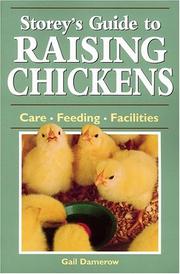
Chickens are most homesteaders' first livestock; this is the canonical, comprehensive guide — covering breeds, housing, feed, health, and eggs — that sets the template for learning any other animal.
Goats are the next logical step for meat and dairy; this volume applies the same rigorous Storey's framework to a more demanding animal, building on the husbandry instincts developed with poultry.
Home Systems, Skills & Repairs
IntermediateHandle essential home maintenance, basic carpentry, plumbing, and electrical work, and understand off-grid or low-dependency energy and water systems.
▸ Study plan for this stage
Pace: 6–8 weeks total: Weeks 1–4 cover "Dare to Repair, Replace, and Renovate" (~25–30 pages/day, reading alongside active home walkthroughs); Weeks 5–8 cover "The Hand-Sculpted House" (~20–25 pages/day, with slower, reflective reading for the philosophy-heavy sections).
- Systematic home diagnostics — using Sussman's room-by-room and system-by-system framework to identify, prioritize, and safely address plumbing, electrical, and structural issues before they escalate
- Plumbing fundamentals — understanding supply vs. drain-waste-vent systems, shutoff valve locations, fixture replacement, and leak repair as taught in 'Dare to Repair'
- Electrical safety and basic circuitry — reading a breaker panel, resetting GFCIs, replacing outlets and switches, and knowing when to call a licensed electrician, per Sussman's guidelines
- Carpentry and renovation basics — patching drywall, fixing floors, rehanging doors, and caulking/weatherstripping for energy efficiency, drawn from Sussman's step-by-step repair sequences
- Natural building philosophy — Evans's argument in 'The Hand-Sculpted House' that shelter should be shaped by human hands using local, living materials rather than industrial supply chains
- Cob construction principles — the composition and mixing of cob (clay, sand, straw), wall-building techniques, load-bearing considerations, and the integration of sculptural and functional elements
- Thermal mass and passive climate control — how cob's density stores and releases heat, reducing dependence on mechanical heating/cooling systems, a central theme in Evans's design philosophy
- Low-dependency and off-grid mindset — synthesizing Sussman's repair self-reliance with Evans's natural building ethos to create homes that are maintainable, durable, and minimally dependent on outside infrastructure
- After reading 'Dare to Repair', can you walk through your own home and locate every main shutoff valve, the breaker panel, and the GFCI outlets — and explain the safety procedure before starting any repair on each system?
- What is the drain-waste-vent (DWV) system, and how does understanding it help you diagnose a slow drain versus a venting problem, as Sussman explains?
- How does Evans define 'cob', and what are the three primary ingredients — what role does each play structurally and thermally in a finished wall?
- According to 'The Hand-Sculpted House', why does Evans argue that conventional stud-frame construction creates a fundamentally different relationship between owner and home compared to natural building methods?
- How do the repair and maintenance skills in 'Dare to Repair' translate to or complement the owner-builder approach Evans advocates — where do the two books philosophically align and where do they diverge?
- What are the key site-selection and foundation considerations Evans outlines before a single handful of cob is mixed, and why does he treat these as non-negotiable prerequisites?
- Home systems audit (Week 1): Armed with 'Dare to Repair', physically walk every room and create a written inventory — note the age, condition, and shutoff location of every plumbing fixture, the label accuracy of every breaker, and any visible drywall, floor, or door issues. Photograph everything.
- Tackle one real repair per week from Sussman's book: choose a dripping faucet, a running toilet, a sticky door, or a faulty outlet/switch, and complete the repair using only the book's instructions. Document the before, process, and after in a repair journal.
- Weatherization sweep: Using Sussman's guidance on caulking and weatherstripping, identify and seal at least three drafts or gaps in your home. Measure the improvement by holding a lit incense stick near seams before and after.
- Cob test batch (Week 5–6): Following Evans's mixing ratios in 'The Hand-Sculpted House', make a small test batch of cob (even in a bucket or on a tarp) using local clay-rich soil, sand, and straw. Perform the 'drop test' and 'shrinkage test' Evans describes to evaluate your mix.
- Thermal mass observation journal (Week 6–8): Pick a south-facing wall or a concrete/masonry surface in or near your home. Over two weeks, record its surface temperature morning and evening. Relate your observations to Evans's explanations of thermal mass behavior.
- Design sketch exercise: Using Evans's site and design principles, sketch a simple one-room cob structure suited to your climate — include wall thickness, window placement for passive solar gain, roof overhang calculations, and a note on local material availability. Annotate each decision with a page reference from 'The Hand-Sculpted House'.
Next up: Mastering conventional home repair with Sussman and natural building fundamentals with Evans equips the reader with both the practical fix-it confidence and the low-dependency design thinking needed to advance into food production, land management, and whole-homestead systems — where the home itself becomes the hub of a fully integrated self-sufficient lifestyle.

An accessible, confidence-building introduction to home repairs written for complete beginners — builds the practical vocabulary needed before tackling more advanced systems work.
Introduces natural building principles and the philosophy of owner-built, low-cost shelter, expanding the homesteader's thinking about what a home can be and how to maintain or modify it.
Integrated Homesteading & Long-Term Wisdom
ExpertSynthesize all prior skills into a resilient, whole-farm system; understand permaculture design, economic realities, and the lived experience of committed modern homesteaders.
▸ Study plan for this stage
Pace: 8–10 weeks total: Weeks 1–4 on "Gaia's Garden" (~25–30 pages/day, including time to sketch guild and zone diagrams); Weeks 5–10 on "The Resilient Farm and Homestead" (~20–25 pages/day with slower, reflective reading given its dense systems-thinking content — budget extra days for re-reading the wate
- Permaculture zones and sectors (Gaia's Garden): organizing the homestead landscape by frequency of use and energy flow so that every element is placed with intention
- Guilds and polycultures (Gaia's Garden): assembling mutually supportive plant communities — nitrogen-fixers, dynamic accumulators, pest confusers, attractors — that mimic forest-edge ecology and reduce external inputs
- Closing nutrient and water loops (Gaia's Garden): sheet mulching, composting, and rainwater harvesting as the foundation of a self-renewing soil system rather than a consumptive one
- Whole-farm resilience design (The Resilient Farm and Homestead): Ben Falk's Vermont property as a living case study in stacking functions — every pond, swale, orchard, and animal system serves multiple roles simultaneously
- Water as the master resource (The Resilient Farm and Homestead): landscape-scale water harvesting through ponds, swales on contour, and wetland integration as the single highest-leverage intervention on any homestead
- Perennial staple crops and cold-climate food security (The Resilient Farm and Homestead): chestnuts, hazelnuts, perennial grains, and medicinal plants as the backbone of a low-labor, high-yield long-term food system
- Economic realities and honest accounting (The Resilient Farm and Homestead): Falk's frank treatment of time, capital, and labor costs — understanding that homestead viability requires realistic multi-decade planning, diversified income streams, and community relationships
- Adaptive management and long-term observation (both books): treating the homestead as a living system that is read, adjusted, and co-designed over years, not engineered once and left alone
- After reading Gaia's Garden, can you draw a zone map of a hypothetical or real property, correctly placing high-maintenance annuals, perennial guilds, food forests, and wild edges in their appropriate zones — and explain why each placement reduces labor?
- What are the five functional roles in a permaculture plant guild (as described by Hemenway), and can you name at least two real plant species that fill each role in your own climate?
- How does Ben Falk define 'resilience' differently from mere 'sustainability,' and what specific design strategies in The Resilient Farm and Homestead embody that distinction?
- Describe Falk's approach to water harvesting at the landscape scale: what is the design sequence (observation → earthworks → planting), and why does he treat water before soil before plants?
- What are the honest economic and labor trade-offs Falk presents for full-time homesteading in a cold climate, and what does he suggest are the most realistic paths to financial viability?
- How do the design philosophies of Hemenway (suburban/small-scale permaculture) and Falk (whole-farm, cold-climate resilience) complement each other, and where do they differ in emphasis or approach?
- Zone-and-sector audit: Walk your own property (or a friend's, or a local community garden) with Hemenway's zone framework in hand. Sketch a rough map, mark sun/wind/water sectors, and propose three specific placement changes that would reduce your labor or increase yield.
- Design a three-layer guild: Using Gaia's Garden as your guide, design a complete edible guild for your climate zone — choose a canopy tree, an understory, a shrub layer, ground covers, a nitrogen-fixer, a dynamic accumulator, and a pollinator attractor. Write one sentence explaining each plant's function in the system.
- Sheet-mulch a new bed: Execute Hemenway's sheet-mulching method on at least a 4×8 ft area. Document layers, materials sourced, and observe results at 30 and 60 days. Note what volunteer plants appear and what soil life you find.
- Water-harvesting observation walk: On your property or a nearby landscape, identify where water flows during a rain event. Sketch the flow paths, locate at least two spots where a swale or small pond could slow and sink water, and write a one-paragraph rationale for each site using Falk's design logic.
- Resilience audit of your current homestead plan: Using Falk's 'stacking functions' lens, list every major element of your homestead (garden, animals, structures, water sources) and write at least two functions each element serves. Identify any single-function elements and brainstorm how to add a second function.
- 10-year economic projection: Inspired by Falk's honest accounting chapters, build a simple spreadsheet projecting your homestead's major costs (infrastructure, seeds, animals, time) and potential income/savings streams over 10 years. Identify your top three financial vulnerabilities and one mitigation strategy for each.
Next up: Mastering integrated whole-farm design and the economic realities laid out in these two books gives the reader the systems-level confidence and critical realism needed to engage with community-scale homesteading, agrarian economics, and the broader philosophical and cultural literature on land stewardship — the natural horizon of a complete self-sufficiency curriculum.

The best introductory permaculture design book for home-scale land — teaches you to see your property as an interconnected system, tying together garden, animals, water, and energy.
A deeply practical, hard-won account of building a productive homestead in a challenging climate — the ideal capstone that shows how all the skills from earlier stages work together under real-world conditions.
Discussion
Keep reading
Paths that share books, cover the same subject, or open a related topic.