Starting a Public Health Career: The Best Books, In Order
This curriculum builds a rigorous foundation for a public health career by moving from core concepts and epidemiology, through health policy and systems, to global health practice. Each stage deepens the vocabulary and analytical tools needed for the next, mirroring the real-world progression from classroom to fieldwork to policy influence.
Foundations of Public Health Thinking
BeginnerUnderstand what public health is, how populations get sick, and how the field thinks about prevention and disease at scale.
▸ Study plan for this stage
Pace: 6–8 weeks, ~25–30 pages/day. Start with "The Ghost Map" (300 pages, ~2 weeks), then move to "Epidemiology: An Introduction" (200 pages, ~3–4 weeks), with 1–2 weeks for review and exercises.
- Disease transmission and causation: how diseases spread through populations and the difference between correlation and causation
- Population-level thinking: shifting from individual patient care to understanding patterns across groups and communities
- The epidemiological triad: agent, host, and environment as the framework for understanding disease occurrence
- Data as evidence: how mapping, counting, and analyzing disease patterns reveal truth and drive intervention
- Prevention at scale: the concept of preventing disease before it occurs through environmental and behavioral changes
- The role of investigation and hypothesis: how public health professionals ask questions and test theories about disease
- Social and environmental determinants: how living conditions, water systems, and infrastructure shape health outcomes
- Quantitative reasoning: understanding rates, risk, and probability in public health decision-making
- What was the central public health problem in John Snow's cholera investigation, and how did he use data to solve it?
- Explain the difference between the pre-germ theory and germ theory approaches to disease, and why this shift mattered for public health.
- What is the epidemiological triad, and how would you apply it to a modern disease outbreak (e.g., COVID-19 or influenza)?
- Why is population-level thinking fundamentally different from individual clinical medicine, and what are the implications for how public health professionals approach problems?
- How do environmental and social factors influence disease transmission, and what does this mean for prevention strategies?
- What is the difference between incidence and prevalence, and why does this distinction matter in epidemiological studies?
- Map a modern disease outbreak: Choose a recent disease outbreak (e.g., measles, Zika, monkeypox). Plot cases on a map or timeline, identify clusters, and hypothesize about transmission routes—mirroring Snow's cholera mapping approach.
- Epidemiological triad analysis: Select a disease (e.g., malaria, tuberculosis, food poisoning). Identify and describe the agent, host factors, and environmental factors that contribute to its spread. Explain how changing one factor could prevent transmission.
- Calculate and interpret rates: Using provided data (e.g., disease cases in a population), calculate incidence rates, prevalence, and attack rates. Interpret what these numbers tell you about disease burden and risk.
- Critique a causal claim: Find a news article or social media post making a health claim (e.g., 'X causes Y'). Evaluate whether the claim is supported by evidence or confuses correlation with causation. Write a brief analysis.
- Design a prevention intervention: Based on the epidemiological triad and environmental factors, design a population-level prevention strategy for a disease of your choice. Explain why you targeted the specific factors you did.
- Read and annotate a real epidemiological study: Find a short published epidemiological study (e.g., from the CDC or a public health journal). Identify the research question, study design, key findings, and limitations. Reflect on how it mirrors the investigative approach in 'The Ghost Map'.
Next up: This stage establishes the foundational mindset and core tools of public health—understanding disease patterns, thinking at population scale, and using data to drive decisions—which will enable you to tackle more specialized topics like specific disease prevention, health policy, and epidemiological methods in depth.
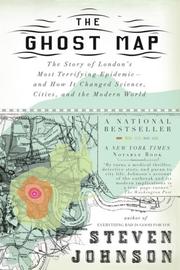
Tells the story of John Snow's cholera investigation in Victorian London, making epidemiological reasoning vivid and memorable before the learner encounters formal methods.
Written by one of the field's leading thinkers, this short book sharpens causal reasoning and study design concepts — the intellectual backbone every public health professional needs.
Health Policy and Systems
BeginnerLearn how health systems are structured, how policy is made, and how evidence translates (or fails to translate) into government and institutional action.
▸ Study plan for this stage
Pace: 4-5 weeks, ~25-30 pages/day, with 2-3 review days per week
- The structure and organization of health systems (financing, delivery, governance)
- How health policy is formulated, adopted, and implemented at different governmental levels
- The role of evidence and data in policy decision-making and the barriers to evidence translation
- Key stakeholders in health policy (government agencies, providers, insurers, advocacy groups, patients)
- Policy analysis frameworks and tools for evaluating health system performance
- How institutional and political contexts shape health policy outcomes
- What are the main structural components of a health system and how do they interact?
- Describe the policy-making process: who are the key actors and what stages does a policy go through from conception to implementation?
- Why does evidence often fail to translate into policy and practice? What barriers exist?
- How do different stakeholders (government, providers, insurers, public) influence health policy outcomes?
- What frameworks or tools can be used to analyze and evaluate health policies and their effectiveness?
- How do institutional, political, and economic contexts shape the feasibility and success of health policies?
- Create a systems map of your country's or region's health system, identifying key components (financing, delivery, governance) and how they connect
- Select a recent health policy (e.g., vaccine mandate, mental health parity law) and trace its journey from proposal to implementation, identifying key actors and decision points
- Conduct a policy analysis using a framework from the book on a current health issue, documenting evidence, stakeholders, and barriers to action
- Interview a health policy professional (administrator, advocate, or government official) about how evidence influences their policy decisions and what obstacles they face
- Write a brief policy memo (2-3 pages) proposing a solution to a health system problem, grounding it in evidence and addressing implementation feasibility
- Compare two different countries' approaches to a similar health challenge (e.g., primary care access, drug pricing) and analyze how their different systems and policies produced different outcomes
Next up: This stage establishes the foundational understanding of how health systems work and how policy decisions are made, preparing you to examine specific public health interventions, disease prevention strategies, and evidence-based programs in subsequent stages.

Provides a structured overview of the U.S. health policy landscape, key actors, and the policy cycle — essential vocabulary before tackling more critical or comparative texts.
Epidemiology and Evidence in Depth
IntermediateMaster intermediate epidemiological methods, understand how research evidence is evaluated, and apply these tools to real public health problems.
▸ Study plan for this stage
Pace: 8–10 weeks, ~40–50 pages/day. Epidemiology (weeks 1–6, ~350 pages) at a careful pace given technical density; The Checklist Manifesto (weeks 7–10, ~280 pages) at a faster pace for integration and application.
- Study design fundamentals: cohort, case-control, and cross-sectional studies; their strengths, limitations, and appropriate applications in epidemiological investigation
- Measures of disease frequency and association: incidence, prevalence, relative risk, odds ratios, and how to interpret them in context
- Causation in epidemiology: Bradford Hill criteria, confounding, bias, and the distinction between association and causation
- Outbreak investigation and surveillance: systematic approaches to identifying sources, tracking disease spread, and implementing control measures
- Implementation science and systems thinking: how evidence-based interventions fail in practice and how checklists and standardized protocols bridge the gap between knowledge and action
- Quality improvement and error prevention: applying epidemiological rigor to organizational and clinical systems to reduce preventable harm
- Evidence evaluation in real-world contexts: translating research findings into actionable public health decisions despite incomplete data and competing priorities
- What are the key differences between cohort, case-control, and cross-sectional study designs, and when would you choose each for investigating a suspected disease outbreak?
- How do you distinguish between association and causation using the Bradford Hill criteria, and why is this distinction critical in public health decision-making?
- What are confounding and bias in epidemiological studies, and what strategies can you use to identify and control for them?
- How does The Checklist Manifesto challenge the assumption that expertise alone prevents errors, and what does this imply for implementing epidemiological findings in public health practice?
- Describe a real public health problem and outline how you would design an epidemiological investigation, including study design choice, measures you would use, and how you would translate findings into action.
- What is the relationship between surveillance data and outbreak response, and how do checklists improve the reliability of both?
- Analyze a published epidemiological study (e.g., from a journal like Epidemiology or American Journal of Public Health): identify the study design, measures of association reported, potential confounders, and limitations. Write a one-page critical appraisal.
- Design a hypothetical outbreak investigation for a foodborne illness cluster: specify your study design, case definition, exposure assessment strategy, and how you would identify the source. Include a timeline and decision points.
- Calculate and interpret epidemiological measures from a provided dataset: compute incidence rates, prevalence, relative risk, odds ratios, and 95% confidence intervals. Explain what each tells you about disease burden and association.
- Create a checklist for a specific public health intervention or clinical protocol (e.g., vaccination clinic, disease surveillance reporting, or infection control). Test it with a peer or mentor; refine based on feedback and identify failure points it prevents.
- Conduct a mini-outbreak investigation in your own setting (e.g., a cluster of illness in a workplace, school, or community organization): gather data, apply epidemiological methods, and present findings with recommendations.
- Read and summarize a case study from The Checklist Manifesto (e.g., the WHO surgical safety checklist or the Michigan ICU checklist), then identify a parallel public health system where similar implementation failures occur and propose a checklist-based solution.
Next up: This stage equips you with the methodological rigor to investigate disease patterns and the systems-thinking tools to implement solutions reliably, preparing you to lead evidence-based public health programs and navigate the organizational and behavioral challenges of translating research into practice at scale.
The most widely used epidemiology textbook in schools of public health worldwide — builds systematically on beginner concepts with rigorous methods, bias analysis, and screening.

Bridges evidence and practice by showing how systematic thinking saves lives in clinical and public health settings — a crucial lesson for fieldwork and program implementation.
Global Health: Practice and Ethics
IntermediateUnderstand the landscape of global health, the role of international organizations, and the ethical complexities of working in low-resource settings.
▸ Study plan for this stage
Pace: 8–10 weeks, ~40–50 pages/day (mix of narrative and dense academic material; allow extra time for reflection on case studies and ethical dilemmas)
- Paul Farmer's model of structural violence and how social/political/economic systems create health inequities
- The role and limitations of major international health organizations (WHO, UNICEF, World Bank, NGOs) in addressing global health challenges
- The epidemiological transition and how disease burden differs across low-, middle-, and high-income countries
- Ethical frameworks for global health work: beneficence, justice, respect for autonomy, and navigating cultural differences in low-resource settings
- The relationship between poverty, infectious disease, and chronic disease in resource-limited contexts
- Community-based participatory approaches and the importance of local partnership in sustainable health interventions
- How individual clinical practice intersects with systemic change and advocacy in global health
- What is structural violence, and how does Paul Farmer use this concept to explain health disparities in Haiti and other low-resource settings?
- How do the organizational structures and mandates of WHO, UNICEF, and other international bodies both enable and constrain their effectiveness in addressing global health problems?
- What ethical tensions arise when a global health worker from a high-income country works in a low-resource setting, and how can they be navigated responsibly?
- What is the epidemiological transition, and how does understanding it help explain different disease burdens across regions?
- How does Paul Farmer's work in Haiti (as depicted in *Mountains Beyond Mountains*) exemplify or challenge the approaches described in *Introduction to Global Health*?
- What does it mean to practice 'medicine with a social conscience,' and what are the practical and political obstacles to doing so?
- Read *Mountains Beyond Mountains* (Weeks 1–2) and create a timeline of Paul Farmer's major interventions in Haiti; annotate each with the structural barriers he encountered and his response strategy.
- While reading *Introduction to Global Health*, map out 3–4 major global health organizations (WHO, UNICEF, MSF, GAVI) on a matrix showing their mandates, funding sources, and primary beneficiaries; identify overlaps and gaps.
- After finishing *Pathologies of Power*, select one essay and write a 2–3 page reflection on how Farmer's concept of structural violence applies to a contemporary global health crisis (e.g., COVID-19 disparities, maternal mortality in sub-Saharan Africa).
- Conduct a case study analysis: choose a low-resource health system (e.g., rural Haiti, northern Nigeria, or a refugee camp) and identify one health intervention; evaluate it against the ethical frameworks discussed (beneficence, justice, autonomy, cultural respect).
- Interview or arrange a conversation with a global health professional (via email, video call, or in person) working in a low-resource setting; ask them about the ethical dilemmas they face and how they reconcile individual patient care with systemic advocacy.
- Create a visual comparison chart: for a specific disease (e.g., tuberculosis, maternal mortality), show how its epidemiology, treatment access, and social determinants differ across three countries at different income levels, grounding your analysis in the books.
Next up: This stage establishes the ethical and organizational foundations of global health practice, preparing you to dive deeper into specific disease contexts, implementation science, and the technical skills needed to design and evaluate evidence-based interventions in resource-limited settings.

Follows Paul Farmer and Partners in Health delivering care in Haiti — a powerful narrative introduction to global health equity, community-based practice, and the moral stakes of the field.
A comprehensive, textbook-style overview of global health metrics, major disease burdens, and international health institutions — the systematic complement to Kidder's narrative.
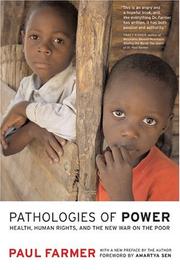
Farmer's own writing on structural violence and human rights grounds the learner in the ethical and political dimensions of global health work that no career in the field can ignore.
Advanced Policy, Leadership, and Career Practice
ExpertSynthesize epidemiology, policy, and global health into a professional identity — understanding how to lead programs, influence policy, and navigate a public health career.
▸ Study plan for this stage
Pace: 4–5 weeks, ~40–50 pages/day (approximately 300 pages total; allows time for reflection and case analysis)
- Cultural competence and humility in public health practice — recognizing how cultural beliefs shape health behaviors and medical decision-making
- The gap between biomedical and traditional/folk medicine frameworks — understanding why patients may reject or reinterpret clinical guidance
- Structural and systemic barriers to health equity — how language, immigration status, poverty, and institutional racism compound health disparities
- Ethical complexity in cross-cultural healthcare — navigating conflicting values between providers, families, and patients without imposing Western medical authority
- The role of communication and trust-building in public health — how miscommunication and cultural misunderstanding can lead to tragic outcomes
- Leadership through advocacy and systems change — recognizing when individual clinical care is insufficient and policy/institutional change is needed
- Reflexivity in professional practice — examining your own cultural assumptions and biases as a public health leader
- How does 'The Spirit Catches You and You Fall Down' illustrate the limitations of a purely biomedical approach to health? What alternative frameworks does it suggest?
- What specific cultural beliefs and practices of the Hmong community shaped the Lees' medical decisions, and how did Western providers misinterpret or dismiss these?
- Identify 3–4 systemic barriers (beyond individual provider bias) that contributed to Lia Lee's poor health outcomes. How could policy or institutional change have addressed them?
- How did the breakdown in communication between the Lee family and medical providers occur? What communication strategies might have prevented or mitigated this?
- What does this case reveal about power dynamics in healthcare — who had authority, whose voices were heard, and whose were silenced?
- As a public health leader, how would you design a program or policy to prevent similar tragedies in your community? What would you change at the individual, organizational, and systems levels?
- Close-read 2–3 key scenes (e.g., Lia's initial seizure, the family's first hospital visit, the final hospitalization) and annotate them for cultural misunderstandings, power imbalances, and communication breakdowns. Write a 1-page reflection on what each scene reveals about the limits of Western medicine.
- Conduct a 'stakeholder analysis' of the Lia Lee case: map out all parties involved (Lee family, doctors, social workers, interpreters, hospital administrators), their goals, values, and constraints. Write a 1-page memo identifying where interests aligned and where they clashed.
- Interview a healthcare provider, public health official, or community health worker from a different cultural background than your own. Ask them about a time they encountered cultural misunderstandings in their work. Write a 2-page case study comparing their experience to Lia Lee's.
- Design a 'cultural competence training' module for a hospital or clinic serving immigrant or refugee populations. Include: learning objectives, key content (drawn from Fadiman's book), role-play scenarios, and assessment methods. Present it to a peer or mentor.
- Write a policy brief (3–4 pages) proposing one institutional or systemic change (e.g., mandatory interpreter services, community health worker programs, cultural liaison positions) that could have prevented or mitigated Lia Lee's outcome. Ground it in evidence from the book and public health literature.
- Reflect in a journal on your own cultural assumptions about health, medicine, and family decision-making. How might these assumptions shape your leadership decisions in public health? Share one insight with a mentor or peer for feedback.
Next up: This stage establishes the ethical, cultural, and systemic foundations for public health leadership — preparing you to recognize how individual clinical decisions are embedded in broader policy, institutional, and cultural contexts, which the next stage will help you navigate and influence at scale.

A landmark case study in cultural competency and health systems failure — required reading for anyone who will work across communities or in policy roles affecting diverse populations.
Discussion
Keep reading
Paths that share books, cover the same subject, or open a related topic.