Optometry lives at an unusual intersection: the physics of light, the biology of the eye, and the clinical judgment to correct and treat what you find. The reading rewards an order that respects that structure — understand vision, master refraction, prepare for admissions, then move into clinical and business practice. Jump ahead and the clinical texts assume a science you never built.
As always with a licensed health profession, these books complement, not replace, an accredited Doctor of Optometry program, supervised clinical training, and board licensure.
Understand the eye and how it sees
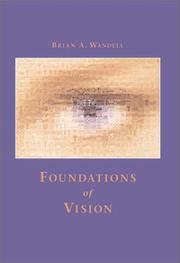
Begin with the core science. Borish's clinical refraction is the definitive text on measuring and correcting refractive error — the skill at the center of the profession — and it repays slow study. Adler's physiology of the eye explains how the eye actually works as a biological system, and Foundations of vision by Brian Wandell steps back to the perceptual and computational side of seeing. Read these together and refraction stops being a procedure and becomes something you understand.
Get into the program
With the science underway, prepare for admissions. OAT Prep Plus 2023-2024 by Kaplan is the comprehensive guide to the Optometry Admission Test, and OAT Flashcards gives you the spaced-repetition drill for the facts it tests. These are tools for a gate, not the profession itself, so treat them as a focused sprint alongside your foundational reading.
Move into clinical practice
Now apply it. Clinical ocular pharmacology teaches the drugs used to diagnose and treat eye conditions, and Primary care optometry by Theodore Grosvenor covers the everyday clinical encounter — how to examine, diagnose, and manage patients. Optometry by Mark Rosenfield rounds out the clinical picture with a broad, evidence-oriented view of practice.
Learn the business
Many optometrists own or join a practice, so end with The Business of Optometry, which covers the management, staffing, and financial realities that clinical training rarely touches. It is the book that turns a clinician into a viable practitioner.
Read in this order — vision science, admissions, clinical, business — and the profession assembles logically rather than as scattered facts. If public-facing eye health interests you, the public health path offers a wider lens. Follow the full path to build the whole practitioner, not just the exam-taker.
Follow the full reading path →
Ready to learn something deeply?
Build a reading path — free