Become a nurse: the ultimate AI-proof profession
This four-stage curriculum takes a complete beginner from "Is nursing right for me?" all the way through the intellectual and human dimensions of professional nursing practice. Each stage builds on the last: first you understand the landscape and decide to commit, then you survive and succeed in nursing school, then you pass the NCLEX and navigate your first year on the floor, and finally you zoom out to understand why skilled human nursing care is uniquely irreplaceable — giving you a career-long sense of purpose and professional identity.
Is Nursing for Me? — Landscape & Prerequisites
BeginnerUnderstand what nursing actually looks like day-to-day, what prerequisite science knowledge is expected, and make an informed decision to pursue the path.
▸ Study plan for this stage
Pace: 8–10 weeks total. Weeks 1–4: Read "School Nursing Scope and Standards of Practice 4th Edition" at a relaxed pace (~15–20 pages/day, including re-reading dense standards sections). Weeks 5–10: Work through "Human Anatomy and Physiology Laboratory Manual" by Marieb (~20–25 pages/day), completing at le
- The six Standards of Practice for nursing (Assessment, Diagnosis, Outcomes Identification, Planning, Implementation, Evaluation) as defined by the ANA, and how they apply even in a specialized school-nursing context
- The Standards of Professional Performance (ethics, advocacy, collaboration, leadership, quality of practice) and what they demand of a nurse's character and conduct daily
- The scope of nursing practice — what nurses legally and professionally can and cannot do — and how that scope shifts by specialty (e.g., school nursing vs. hospital nursing)
- The nurse's role as patient advocate, care coordinator, and health educator, illustrated through the school-nurse lens in the ANA text
- Foundational anatomical terminology: body planes, cavities, directional terms, and organ systems, as introduced in Marieb's lab manual
- Core physiological concepts covered in Marieb's lab exercises: cell structure, tissue types, the integumentary/skeletal/muscular/nervous systems, and how body systems integrate
- The scientific method as practiced in a lab setting — forming hypotheses, making observations, recording data — because nursing practice is evidence-based
- Self-assessment: matching personal traits (empathy, stamina, scientific aptitude, communication) against the professional portrait painted by both books
- According to the ANA's School Nursing Scope and Standards, what distinguishes a 'standard of practice' from a 'standard of professional performance,' and can you give one concrete example of each from the text?
- How does the school-nursing specialty illustrate the broader nursing scope of practice — what unique responsibilities does a school nurse hold that reveal what ALL nurses must be prepared for?
- After working through Marieb's lab manual, can you correctly use at least ten directional/anatomical terms to describe the location of structures on a body diagram?
- Which organ systems did Marieb's lab exercises cover, and how does dysfunction in each system translate into the kinds of health concerns a nurse would assess and document?
- Reflecting on both books together: what personal strengths do you already have that align with nursing's demands, and what knowledge or skill gaps do you need to address before advancing?
- What does the ANA text say about continuing competence and lifelong learning, and how does beginning your A&P study right now embody that standard?
- **Standards Mapping Journal:** After finishing each chapter of the ANA book, write 1–2 paragraphs describing a real or imagined school-health scenario (e.g., a student with a severe allergy) and map it explicitly to the standard you just read — Assessment, Planning, Implementation, etc.
- **Anatomy Sketch Sessions:** For every Marieb lab exercise, close the manual and redraw the diagram from memory, then reopen and self-correct in a different color. Keep a dedicated sketchbook; review all sketches weekly.
- **Directional-Term Flashcard Deck:** Create 30+ flashcards (physical or digital via Anki) using Marieb's terminology — one side shows a body diagram with a structure highlighted, the other side requires the correct directional term and the system it belongs to.
- **'Day in the Life' Interview:** Using the professional portrait in the ANA Scope & Standards book as a guide, interview (in person, by phone, or via email) at least one practicing nurse — ideally a school nurse — and compare their described daily reality to what the ANA text outlines.
- **Personal Fit Reflection Essay:** Write a 1–2 page honest self-assessment after completing both books. Use specific language from the ANA Standards (e.g., 'advocacy,' 'ethical practice,' 'collaboration') and specific body systems from Marieb to argue whether nursing is the right path for you and what your next concrete steps are.
- **Lab Practical Simulation:** Pick any three Marieb lab exercises (e.g., microscopy of tissue slides, skeletal identification, reflex testing) and redo them using household proxies or free virtual lab tools (e.g., Visible Body, PhET simulations), then write a one-page lab report in proper scientific format to practice evidence-based documentation.
Next up: Completing these two books gives you a clear-eyed picture of nursing's professional expectations AND a working foundation in human anatomy and physiology — the two pillars you must stand on before tackling the more rigorous pathophysiology, pharmacology, and clinical-skills content that will dominate the next stage of the curriculum.

The authoritative definition of what nurses do, what they are accountable for, and how the profession is structured — essential orientation before anything else.

The single most widely used prerequisite text for nursing programs; reading it first builds the biological vocabulary every subsequent nursing book assumes you have.
Surviving Nursing School — Fundamentals & Clinical Thinking
BeginnerMaster the core concepts, skills, and clinical reasoning frameworks taught in the first year of nursing school so that lectures and labs feel manageable rather than overwhelming.
▸ Study plan for this stage
Pace: 16–20 weeks total, divided across three books: Book 1 "Fundamentals of Nursing" (Potter) — 8–9 weeks, ~35–40 pages/day, 5 days/week; Book 2 "Critical Thinking in Nursing" (Lipe) — 3–4 weeks, ~20–25 pages/day, 5 days/week (read alongside clinical lab days); Book 3 "Pharmacology and the Nursing Proces
- Patient-centered care and the nursing metaparadigm (person, health, environment, nursing) as framed in Potter's Fundamentals — the philosophical backbone of every clinical decision
- The Nursing Process (ADPIE: Assessment, Diagnosis, Planning, Implementation, Evaluation) as the structured problem-solving cycle introduced in Potter and applied throughout all three books
- Head-to-toe physical assessment techniques and documentation standards taught in Potter's assessment chapters — the foundation of safe clinical practice
- Maslow's Hierarchy of Needs as a prioritization tool for nursing diagnoses and care planning, emphasized in Potter's care-planning chapters
- NANDA-I nursing diagnosis format (three-part diagnostic statement: problem, etiology, signs/symptoms) introduced in Potter and reinforced in Lipe
- Clinical reasoning vs. critical thinking: Lipe's distinction between surface-level task completion and deep reflective reasoning, including the RED model (Recognize assumptions, Evaluate arguments, Draw conclusions)
- The nursing process as a critical-thinking scaffold: how Lipe's frameworks map onto each ADPIE phase to prevent errors and bias in clinical judgment
- Pharmacokinetics and pharmacodynamics fundamentals (absorption, distribution, metabolism, excretion) as presented in Lilley — understanding how drugs move through the body before memorizing individual drugs
- Safe medication administration: Lilley's 'Ten Rights of Medication Administration' and how they integrate with the nursing process to prevent adverse events
- Drug classifications and prototype-based learning: Lilley's approach of mastering one prototype drug per class so that unfamiliar drugs in the same class become predictable
- After reading Potter, can you walk through all five phases of ADPIE for a patient presenting with acute pain — writing a correctly formatted three-part nursing diagnosis and a SMART goal for the planning phase?
- Using Lipe's RED model, how would you identify and challenge a cognitive assumption you might make about a patient based on their age or cultural background during assessment?
- Potter dedicates significant coverage to infection control and asepsis — what is the difference between medical and surgical asepsis, and in which clinical situations does each apply?
- How do Lilley's pharmacokinetic principles (ADME) explain why an elderly patient with reduced kidney function requires a lower dose or longer dosing interval for a renally-cleared drug?
- Using Lilley's Ten Rights framework, describe the step-by-step mental checklist a nurse should complete before administering an IV medication, and identify which right is most commonly violated in medication errors.
- How does Lipe's concept of reflective practice connect to Potter's evaluation phase of the nursing process — and why is self-critique after a clinical encounter essential for a beginning nurse?
- ADPIE Case Study Journals (Potter): After each major Potter unit, write a one-page case study for a fictional patient. Practice writing assessment findings in SOAP note format, formulating a NANDA-I nursing diagnosis, setting one SMART goal, listing two interventions with rationale, and writing an evaluation statement. Repeat weekly to build muscle memory for the nursing process.
- Head-to-Toe Assessment Practice (Potter): Using Potter's assessment chapters as your guide, perform a full head-to-toe assessment on a willing family member, friend, or yourself. Use a printed checklist derived from Potter's assessment framework. Record findings in writing, then identify one 'actual' and one 'risk' nursing diagnosis from your findings.
- Critical Thinking Reflection Log (Lipe): After every clinical lab or simulation session, write a 10-minute reflective entry using Lipe's RED model: (1) What assumption did I make? (2) What evidence supported or challenged it? (3) What conclusion did I draw, and was it sound? Review entries weekly to spot recurring reasoning gaps.
- Drug Card System (Lilley): For every drug class covered in Lilley, create a physical or digital drug card for the prototype drug listing: classification, mechanism of action, indications, contraindications, common/serious side effects, nursing considerations, and patient teaching points. Quiz yourself using the cards in a spaced-repetition app (e.g., Anki) three times per week.
- Medication Error Analysis Exercise (Lilley): Find three published, de-identified medication error case reports (available via the Institute for Safe Medication Practices website). For each case, apply Lilley's Ten Rights framework to identify which right(s) were violated, then write a one-paragraph nursing intervention plan that would have prevented the error.
- Integrated Prioritization Drill (all three books): Write five patient scenarios, each with three competing nursing diagnoses. Using Maslow's hierarchy (Potter), NANDA-I formatting (Potter), and Lipe's critical-thinking criteria, rank the diagnoses by priority and justify each ranking. Then identify the primary drug therapy involved and apply one of Lilley's pharmacokinetic principles to explain a
Next up: Mastering ADPIE, clinical reasoning, and foundational pharmacology in this stage equips the reader with the structured thinking and safety frameworks needed to tackle the more complex, system-specific pathophysiology and advanced clinical decision-making that characterize the next stage of nursing education.
The canonical nursing-school fundamentals textbook; reading it early gives you the full conceptual map — assessment, safety, communication, basic procedures — before instructors assign chapters piecemeal.
Nursing school rewards clinical reasoning over memorization; this book teaches the specific thinking patterns — ADPIE, prioritization, delegation — that separate passing students from struggling ones.
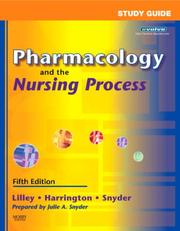
Pharmacology is the subject most nursing students fear most; this widely adopted text pairs drug classes with the nursing process so knowledge sticks in a clinically useful way.
Passing the NCLEX & Entering Practice
IntermediateDevelop the test-taking strategy and applied clinical judgment needed to pass the NCLEX-RN on the first attempt, then survive and grow through the chaos of the first year as a new graduate nurse.
▸ Study plan for this stage
Pace: 10–12 weeks total. Weeks 1–8: Saunders Comprehensive Review — read 1 content area chapter per day (~25–40 pages), complete all end-of-chapter practice questions the same day, and dedicate every Saturday to a timed full-length practice exam (75–145 questions). Weeks 9–10: First Year Nurse — read 2–3
- Next Generation NCLEX (NGN) clinical judgment model: the six cognitive skills (Recognize Cues, Analyze Cues, Prioritize Hypotheses, Generate Solutions, Take Action, Evaluate Outcomes) as framed throughout Saunders
- Pyramid to Success: Silvestri's layered test-taking strategy — eliminating wrong answers by identifying the 'umbrella' option, applying ABCs (Airway, Breathing, Circulation), Maslow's hierarchy, and the nursing process to every question
- Content area mastery across all NCLEX client needs categories: Safe & Effective Care Environment, Health Promotion, Psychosocial Integrity, and Physiological Integrity — each weighted differently on the exam
- Pharmacology priority principles: knowing drug classes, expected vs. adverse effects, and nurse-specific interventions as drilled in Saunders' dedicated pharmacology chapters
- Alternate-item format fluency: mastering NGN case studies, drag-and-drop, matrix questions, audio/graphic items, and extended multiple-response formats introduced in Saunders
- Reality shock and the Kramer transition model: understanding the honeymoon, shock, recovery, and resolution phases that Arnoldussen describes new graduates moving through in the first year
- Workplace survival skills from First Year Nurse: communicating assertively with physicians, navigating unit culture, managing time with a full patient load, and recognizing lateral violence/bullying
- Self-care and professional identity formation: Arnoldussen's emphasis on building resilience, setting boundaries, finding a mentor, and sustaining the emotional energy needed for long-term nursing practice
- Using Silvestri's Pyramid to Success, walk through a sample prioritization question step-by-step — which strategy (ABCs, Maslow, nursing process) applies first, and why?
- What are the six NGN clinical judgment cognitive skills, and how does each one map to a specific type of question or case study item you encountered in Saunders?
- Which NCLEX client needs category carries the highest percentage weight on the RN exam, and what content areas fall under it — and how did you allocate your study time accordingly?
- According to Arnoldussen, what is 'reality shock,' what are its four phases, and what concrete strategies does she recommend for moving from the shock phase into resolution?
- How does First Year Nurse advise a new graduate to handle a situation where a physician dismisses a safety concern — what communication framework is suggested, and how does it connect to NCLEX-level clinical judgment?
- What does Arnoldussen identify as the top time-management mistakes new graduate nurses make, and what systems or habits does she recommend to manage a full patient assignment safely?
- NCLEX Simulation Saturdays: Every Saturday during Weeks 1–8, sit for a timed 75-question mock exam using Saunders' online practice bank. Score it, categorize every wrong answer by client needs category and cognitive skill, and enter results into a personal error log spreadsheet to track patterns over time.
- NGN Case Study Deconstruction: After each Saunders chapter, select one NGN unfolding case study and write out your reasoning for each of the six clinical judgment steps in a notebook — do not just circle answers; narrate your thinking as if explaining to a preceptor.
- Pharmacology Flash Card Sprint: Using the drug tables in Saunders' pharmacology chapters, create one index card per drug class (not individual drug) listing: class action, priority nursing assessment, critical adverse effect, and patient teaching point. Quiz yourself daily for 10 minutes during Weeks 3–6.
- Reality Shock Reflection Journal: While reading First Year Nurse, keep a running journal with two columns — 'Scenario Arnoldussen Describes' and 'How I Would/Did Handle It.' If you are already working, use real clinical experiences; if pre-licensure, use clinical rotation memories. Review entries at the end of Week 10.
- SBAR Role-Play Practice: Based on the communication guidance in First Year Nurse, write out three SBAR (Situation, Background, Assessment, Recommendation) scripts for high-stakes scenarios (e.g., a patient whose condition is deteriorating, a medication error caught before administration, a patient refusing treatment). Practice delivering each one aloud, timing yourself under 90 seconds.
- Mentor Mapping Exercise: After finishing First Year Nurse, draft a one-page 'First Year Support Map' — identify one potential clinical mentor, one peer accountability partner, one professional organization to join, and one self-care routine to protect. Set a calendar reminder to revisit and update this map at the 3-month and 6-month marks of your first nursing job.
Next up: By passing the NCLEX and absorbing the first-year survival wisdom in these two books, the reader has moved from student to licensed practitioner — establishing the clinical judgment foundation and professional self-awareness needed to pursue specialty certification, leadership roles, or advanced practice in the next stage of the curriculum.
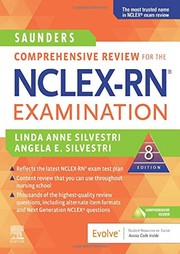
The best-selling NCLEX review book for decades; its question rationales teach you to think the way the exam demands, not just recall facts.

Written specifically for new graduates entering the floor, it addresses preceptor relationships, medication errors, emotional overwhelm, and building confidence — exactly what the NCLEX does not prepare you for.
The Deeper Why — Human Care in an Automated World
ExpertDevelop a mature professional identity grounded in the philosophy of caring, understand why skilled human nursing is uniquely resistant to automation, and sustain a meaningful long-term career.
▸ Study plan for this stage
Pace: 10–12 weeks total (~3–4 weeks per book): "Nursing, the Finest Art" is image- and text-dense — read slowly at ~15–20 pages/day, pausing to study illustrations; "The Spirit Catches You and You Fall Down" reads like narrative nonfiction — ~25–30 pages/day; "The Checklist Manifesto" is the most concise
- The historical arc of nursing as a moral and intellectual discipline — from ancient care rituals through Nightingale's reforms to modern professional identity (Donahue)
- Nursing as art AND science: Donahue's argument that the aesthetic, humanistic dimension of care is not decorative but constitutive of what nursing IS
- Cultural humility vs. cultural competence: Fadiman's account of Lia Lee's tragedy as a case study in what happens when biomedical systems fail to genuinely hear patients and families
- The collision between institutional/biomedical authority and patient/family belief systems, and the nurse's unique position as potential bridge across that divide (Fadiman)
- Complexity and cognitive overload in modern healthcare: Gawande's diagnosis of why even expert clinicians fail — not from ignorance but from the sheer volume and pace of decisions
- The checklist as a humility tool, not a replacement for judgment — Gawande's distinction between 'errors of ignorance' and 'errors of ineptitude', and why the latter demand systems thinking
- Why human nursing resists automation: the synthesis across all three books — moral presence, cultural translation, adaptive judgment, and relational trust cannot be protocolized away
- Sustaining meaning over a long career: integrating historical pride (Donahue), empathic humility (Fadiman), and disciplined systems thinking (Gawande) into a durable professional identity
- After reading Donahue, how would you articulate in your own words why nursing's history of sacrifice and advocacy makes it irreplaceable — and how does that history obligate nurses practicing today?
- Fadiman never assigns simple blame for Lia Lee's outcome. What systemic, cultural, and interpersonal failures does she document, and what specific actions by a culturally humble nurse might have changed the trajectory?
- Gawande argues that checklists do not deskill professionals — they liberate expert judgment. How does this reconcile with the fear that standardization dehumanizes care, and what does it mean for nursing practice?
- Across all three books, what is the common thread that explains why skilled human nursing cannot be automated — and what does each author contribute to that argument?
- How does Donahue's portrayal of nursing's artistic tradition reframe the emotional and relational labor nurses perform — labor that is often invisible, undervalued, or mistaken for personality rather than professional skill?
- If you were designing an orientation program for new nurses using insights from all three books, what three non-negotiable principles would you embed, and which book most informs each principle?
- Visual reflection journal (Donahue): Choose 5 images from 'Nursing, the Finest Art' that move you and write a one-page response to each — what era does it depict, what values does it embody, and what direct line can you draw from that image to a challenge nurses face today?
- Cultural encounter case analysis (Fadiman): Identify a real or hypothetical patient case from your own clinical context involving a cultural or linguistic gap. Map it against Fadiman's narrative: Where did communication break down? Who held power? Draft a one-page 'cultural bridge plan' a nurse could have enacted.
- Error audit using Gawande's framework: Recall two clinical errors or near-misses you have witnessed or read about. Classify each as an 'error of ignorance' or 'error of ineptitude' per Gawande's definitions, then design a brief checklist (5–9 items) that would have caught the ineptitude-type error without adding cognitive burden.
- Automation stress-test essay: Write a 600–800 word argument answering the question 'What can a nurse do that an AI-assisted robot cannot?' Draw explicitly on at least one specific passage or example from each of the three books to build your case.
- Professional identity statement: Draft a 1-page personal nursing philosophy statement that synthesizes all three books — grounding your 'why' in nursing's history (Donahue), your commitment to the patient as a whole person in context (Fadiman), and your approach to safe, humble, systems-aware practice (Gawande). Revisit and revise it annually.
- Peer discussion or book-club session: Facilitate or participate in a 60-minute discussion with colleagues using one question from each book. Track where your peers' answers diverge from yours — disagreement is data about how professional identity forms differently across experiences.
Next up: By grounding professional identity in nursing's history, cross-cultural ethics, and systems humility, this stage equips the reader to engage confidently with advanced topics in leadership, policy, and healthcare innovation — wherever the curriculum leads next.
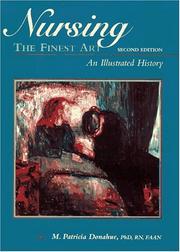
A richly illustrated history of nursing that reveals the deep human and cultural roots of the profession, giving new nurses a sense of identity and continuity with something much larger than themselves.

This landmark work on culture, medicine, and communication shows — through a devastating real case — why empathy, cultural humility, and human judgment cannot be protocolized or automated away.

Gawande argues that systems and checklists reduce error, but his own evidence shows they only work when skilled, attentive humans apply judgment at every step — a powerful argument for the irreplaceable role of the nurse.
Discussion
Keep reading
Paths that share books, cover the same subject, or open a related topic.