Public health is unusual among health careers: its patient is a population, and its core skill is a way of reasoning about risk and cause across whole communities. The reading works best in an order that builds the method before the mission — epidemiology first, then policy and systems, then the human and ethical stories that show why any of it matters. Start with the narratives alone and you get inspiration without rigor; start with the method and the stories land harder.
These books complement, not replace, formal training such as an MPH and supervised field experience, but they are an unusually rich foundation for the field.
Learn the method
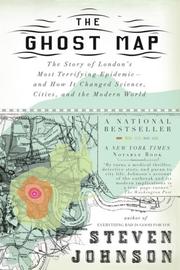
Start with An Introduction to Epidemiology, a gentle entry to the discipline's core logic, then let The Ghost Map show that logic in action through the story of a cholera outbreak that founded modern epidemiology. Deepen the rigor with Epidemiology: An Introduction by Rothman and the widely assigned Epidemiology by Leon Gordis — read the shorter texts first, then Gordis as the fuller reference. This cluster is the intellectual spine of the field.
Understand systems and policy
Method needs a system to act in. Introduction to health policy explains how health decisions get made and financed, and The Healing of America by T.R. Reid puts the U.S. system in global perspective by touring how other countries cover their people. To see how safety actually improves in practice, The Checklist Manifesto by Atul Gawande shows a deceptively simple intervention reshaping outcomes.
Go global, and stay honest about ethics
The field is global and unavoidably moral. Introduction to Global Health frames worldwide health challenges systematically, while Mountains Beyond Mountains and Pathologies of power, both rooted in Paul Farmer's work, insist that health is inseparable from poverty and justice. The Spirit Catches You and You Fall Down is the essential book on cultural humility, showing how care fails when it ignores a patient's world. Close with Preventing Chronic Disease: Public Health Research, Practice, and Policy, which turns the lens toward the slow epidemics that now dominate the field.
Read in this order — method, systems, ethics — and public health becomes a discipline you can practice, not just admire. Follow the full path to build both the reasoning and the conscience the work demands.
Follow the full reading path →
Ready to learn something deeply?
Build a reading path — free