Becoming a pharmacist is a years-long, heavily licensed journey, and the reading tracks its stages: get into a PharmD program, master how drugs work, learn how to use them in real patients, then pass the boards. Read out of order and pharmacology feels like a list of names; read it in sequence and each drug attaches to a mechanism and then to a patient.
The essential caveat: these books complement, but never replace, an accredited PharmD program, supervised rotations, and licensure through the NAPLEX and MPJE. No book confers the authority to dispense.
Get in, then learn how drugs work
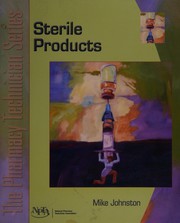
Start at the gate with PCAT by Kaplan, the admissions-test prep that also refreshes the science foundation you will lean on. For an early, grounded look at the profession's day-to-day, The pharmacy technician series introduces the workflow of a pharmacy from the ground up.
Then build the core science. Pharmacology: An Illustrated Review is a concise, visual way to fix the fundamentals in memory, and Lippincott Illustrated Reviews Pharmacology 6th Ed With Online Access is the fuller, deservedly popular text that most students learn mechanisms from. Read the concise book first to build scaffolding, then the Lippincott review to fill it in.
Move from drugs to patients
Knowing a drug is not knowing how to use it. Applied therapeutics, the clinical use of drugs teaches decision-making through patient cases, which is where pharmacology becomes practice. Pharmacotherapy: a pathophysiologic approach is the deeper reference that connects disease processes to drug choices, and it is the book you will return to throughout a career.
Pass the boards
The final stage is licensure. Rxprep course book is the widely trusted NAPLEX preparation resource, dense with the high-yield material the exam tests, and McGraw-Hill's NAPLEX Review Guide offers a complementary structure and practice set. Used after the therapeutics texts, they consolidate rather than introduce.
Read in this order — admission, mechanism, therapeutics, boards — and the enormous body of pharmacy knowledge assembles into something you can reason with. Follow the full path to support, not shortcut, the training and licensure the profession requires.
Follow the full reading path →
Ready to learn something deeply?
Build a reading path — free