Become a social worker: human advocacy as a career
This curriculum takes a beginner from "what is social work?" all the way to the nuanced, irreplaceable human skills that define a master practitioner. It moves in four stages: first building a personal and professional identity, then mastering the core skills of direct practice, then understanding the systems and populations you will navigate, and finally developing the reflective depth and ethical sophistication that no algorithm can replicate.
Foundations: Who Social Workers Are and Why It Matters
BeginnerUnderstand what social work is as a profession and calling, grasp its history and values, and decide with clarity whether this is the right path — before investing in a BSW or MSW program.
▸ Study plan for this stage
Pace: 10–12 weeks total, reading all three books sequentially. Week 1–4: "The Social Work Skills Workbook" (~20–25 pages/day, completing one chapter per sitting and pausing to do embedded self-assessments). Week 5–8: "Just Mercy" (~25–30 pages/day, reading in 2–3 chapter blocks to preserve narrative momen
- The professional identity of a social worker — Cournoyer's framework of being, knowing, and doing as the three integrated dimensions of social work practice
- Core social work values and the NASW Code of Ethics: service, social justice, dignity and worth of the person, importance of human relationships, integrity, and competence
- Foundational helping skills introduced in Cournoyer: active listening, empathic reflection, verbal and nonverbal communication, and the use of self as a professional tool
- The historical arc of social work — from the Settlement House Movement and charity organization societies to modern licensure and evidence-based practice — as context for why the profession's values were forged the way they were
- Bryan Stevenson's concept of 'proximity' — the idea that getting close to suffering, inequality, and the people most affected by injustice is both an ethical obligation and a practical prerequisite for effective advocacy
- Systemic injustice as a social work concern: how race, poverty, and the legal system intersect, illustrated through Stevenson's casework, and why macro-level change is inseparable from individual client support
- Adverse Childhood Experiences (ACEs) and the toxic stress response — Burke Harris's research showing how chronic adversity biologically embeds itself in the body and brain, producing lifelong health and behavioral consequences
- The biopsychosocial model and trauma-informed care: Burke Harris's integrated clinical approach as a real-world example of how social workers and allied professionals must address root causes, not just symptoms
- After reading Cournoyer, can you articulate in your own words what distinguishes a professional social worker from a well-meaning volunteer or a friend who gives good advice — and why that distinction matters to clients?
- What are the six core values of the NASW Code of Ethics as Cournoyer presents them, and can you give a concrete example from either 'Just Mercy' or 'The Deepest Well' where violating one of those values would have caused direct harm?
- How does Bryan Stevenson's idea of 'proximity' challenge or expand the boundaries of what you thought social work practice looked like before starting this stage?
- Using Burke Harris's ACE research, how would you explain to a skeptical family member why a child who experienced early trauma might struggle with behavior, health, or school — and why punishment alone is an inadequate response?
- Across all three books, what recurring populations (by age, race, income, or circumstance) appear most underserved, and what does that pattern tell you about where social workers are most urgently needed?
- Having completed this stage, what is your honest, evidence-based answer to the question: 'Is social work the right career path for me, and am I prepared for its emotional and ethical demands?'
- Cournoyer Self-Assessment Journal: After each major section of 'The Social Work Skills Workbook,' complete the book's built-in self-appraisal exercises in writing — do not skip them. Then add a paragraph reflecting on one personal strength and one growth edge the exercise revealed. Keep all entries in a single dedicated notebook you will return to throughout the curriculum.
- Values Mapping Activity: Draw a two-column chart. On the left, list the six NASW core values. On the right, find and write one specific scene or quote from 'Just Mercy' and one from 'The Deepest Well' that illustrates each value in action (or its absence). This forces you to connect abstract ethics to lived reality.
- Proximity Challenge: Identify one local organization (a legal aid clinic, a homeless shelter, a community health center, a school social work program) and arrange a single informational interview or volunteer shift during the weeks you are reading 'Just Mercy.' Write a one-page reflection connecting what you observed to Stevenson's argument about the necessity of proximity.
- ACE Score and Reflection: Take the publicly available ACE questionnaire yourself (the same instrument Burke Harris uses clinically). Write a private, honest reflection on your own score — not to share, but to begin building the self-awareness Cournoyer identifies as foundational. Then write a second paragraph on how a high ACE score in a client should reshape your approach as a practitioner.
- Population Brief: Choose one population that appears across at least two of the three books (e.g., incarcerated individuals, low-income children, communities of color). Write a one-to-two page brief summarizing: who they are, what systemic barriers they face, what the research says about effective intervention, and which social work roles (micro, mezzo, macro) are most relevant.
- Stage Capstone — 'Should I Pursue Social Work?' Essay: Write a structured, 500-word personal statement answering whether you will pursue a BSW or MSW and why. Cite specific passages from all three books as evidence. This mirrors the personal statement required for graduate school applications and gives you a reusable draft to refine later.
Next up: By grounding you in social work's values, history, and the human stakes of the profession through Cournoyer's skills framework, Stevenson's advocacy, and Burke Harris's science, this stage gives you the 'why' and the ethical compass you'll need to engage seriously with the formal academic theory, policy structures, and practice models that a more advanced stage of the curriculum will introduce.
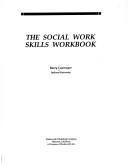
The single most widely assigned introductory text in BSW programs; it defines core competencies, professional values, and the NASW Code of Ethics in plain language — the perfect first map of the field.
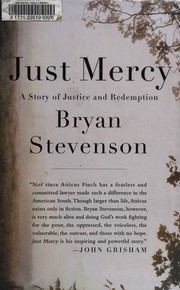
A vivid, narrative-driven account of fighting for justice on behalf of the most vulnerable; it builds the moral imagination and empathy that textbooks alone cannot teach, and shows why this work is irreplaceable.
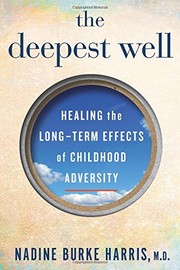
Introduces Adverse Childhood Experiences (ACEs) and trauma-informed thinking — foundational vocabulary every social worker needs — through a compelling personal and scientific story.
Core Skills: Direct Practice and the Helping Relationship
BeginnerLearn the concrete, evidence-based skills of interviewing, assessment, case planning, and relationship-building that form the daily work of a caseworker or clinical social worker.
▸ Study plan for this stage
Pace: 10–12 weeks total, reading roughly 20–25 pages per day. Week 1–3: "Interviewing for the Helping Professions" (McKenzie) — read slowly and reflectively, pausing to practice each technique. Week 4–7: "Motivational Interviewing" (Miller) — read in paired sessions, one day reading, one day practicing th
- The foundational interviewing micro-skills (attending, listening, reflecting, questioning) as introduced by McKenzie — the building blocks of every client interaction
- The ethical and relational stance of the helper: unconditional positive regard, empathy, and genuineness as prerequisites for a productive helping relationship (McKenzie & Egan)
- The 'Spirit of Motivational Interviewing' (Miller): partnership, acceptance, compassion, and evocation (PACE) as a non-coercive philosophy of change
- The four core MI processes (Miller): Engaging, Focusing, Evoking, and Planning — and how they map onto a real case trajectory
- Change talk vs. sustain talk (Miller): recognizing, eliciting, and responding to client language that signals readiness or resistance to change
- Egan's three-stage Skilled Helper model: Stage I (Current Picture — exploring the problem), Stage II (Preferred Picture — setting goals), Stage III (The Way Forward — action strategies)
- Collaborative assessment and case planning: moving from problem exploration to concrete, client-owned goals and action steps (Egan)
- The concept of 'leverage' in Egan: identifying which problems or goals, if addressed first, will produce the most meaningful change for the client
- After reading McKenzie, can you name and demonstrate at least five interviewing micro-skills, and explain why open-ended questions are prioritized over closed ones in the early stages of an interview?
- How does Miller's concept of 'rolling with resistance' differ from confronting or arguing with a client, and what specific MI techniques (e.g., reflective listening, double-sided reflection) does a helper use instead?
- What is the difference between 'change talk' and 'sustain talk' in MI, and how would you respond differently to each in a live session?
- How does Egan's Stage I of the Skilled Helper model align with the interviewing skills from McKenzie — and what is the risk of moving to Stage II (goal-setting) too quickly?
- Using Egan's framework, how would you help a client move from a vague complaint ('I just feel stuck') to a specific, achievable preferred-future statement?
- How do the MI spirit (PACE) and Egan's helper values complement each other, and where might tensions arise between evoking client motivation and directing a structured helping process?
- Role-play interviews in pairs (or with a willing friend/colleague): one person plays a client with a self-chosen dilemma, the other practices McKenzie's micro-skills for 10 minutes. Record the session and review it, counting open vs. closed questions and instances of genuine reflection.
- Create a personal 'MI Spirit Audit': after any significant conversation this week, score yourself 1–5 on each PACE element (Partnership, Acceptance, Compassion, Evocation) from Miller, and write two sentences on what you would do differently.
- Change-talk spotting drill: watch a publicly available counseling demonstration video (e.g., from the MINT network) and pause every time you hear change talk or sustain talk, labeling it by type (desire, ability, reason, need, commitment, activation, taking steps) using Miller's taxonomy.
- Map a real or fictional case onto Egan's three-stage model: write one paragraph per stage describing what the helper would do, what questions they would ask, and what a realistic client response might look like — then identify the 'leverage point' for Stage III.
- Write a mock case note after one of your role-play sessions: document presenting concern, client strengths, preliminary assessment, and a draft goal using SMART criteria — practicing the link between Egan's Stage I–II and real-world documentation.
- Integrative reflection journal: after finishing all three books, write a 1–2 page synthesis answering 'How would McKenzie, Miller, and Egan each approach the first session with the same client?' — identifying where they agree, where they diverge, and which approach feels most natural to you and why.
Next up: Mastering these direct-practice micro-skills and the structured helping relationship creates the essential clinical foundation upon which the next stage — understanding diverse populations, systemic oppression, and culturally responsive practice — can be meaningfully applied, because a helper must first know how to listen and plan before they can adapt those skills across difference.

A focused, practical guide to the interview — the single most important tool in direct practice — covering active listening, questioning, and rapport-building in a step-by-step format.
MI is now a required competency in most MSW programs and agency settings; reading this after basic interviewing skills locks in the evidence-based approach to helping resistant or ambivalent clients change.
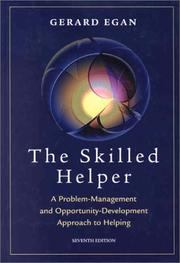
A classic problem-management model used across social work, counseling, and case management; it gives beginners a reliable, stage-by-stage framework for structuring every client interaction.
Systems and Populations: Navigating the World Clients Live In
IntermediateUnderstand the macro systems — child welfare, mental health, poverty, housing, immigration — that shape clients' lives, and develop the structural lens needed to advocate effectively within and against those systems.
▸ Study plan for this stage
Pace: 8–10 weeks total. Week 1–3: "Evicted" (~30 pages/day, including prologue and methodological note). Week 4–6: "The Spirit Catches You and You Fall Down" (~25 pages/day, allowing time to sit with the cultural complexity). Week 7–9: "Unbroken Brain" (~25 pages/day). Week 10: Integration week — review n
- Structural poverty and housing instability as cyclical, system-produced conditions — not individual failures (Evicted)
- The eviction economy: how landlords, courts, and policy interact to extract wealth from the poorest renters, disproportionately affecting Black women (Evicted)
- Cultural humility vs. cultural competence: the limits of professional expertise when worldview, language, and institutional power collide (The Spirit Catches You and You Fall Down)
- Iatrogenic harm — how well-intentioned systems (medicine, child welfare, immigration enforcement) can deepen trauma rather than relieve it (The Spirit Catches You and You Fall Down)
- The learning disorder model of addiction: how the brain learns compulsive behavior, and why punishment-based interventions are neurologically counterproductive (Unbroken Brain)
- Stigma as a structural barrier: how moral and criminal framing of addiction shapes policy, funding, and the help clients can actually access (Unbroken Brain)
- Intersectionality across all three books: race, class, immigration status, disability, and gender as compounding vulnerabilities within macro systems
- The social worker's dual mandate — serving the individual while advocating for systemic change — and the tension that creates in daily practice
- After reading Evicted, can you explain the specific mechanisms — serial eviction, informal housing markets, court processes — that trap Milwaukee's poorest residents in housing instability, and name at least two policy levers Desmond argues could interrupt that cycle?
- How does the Lees' experience in The Spirit Catches You and You Fall Down illustrate the difference between compliance and genuine informed consent, and what does this reveal about power dynamics between clients and institutions?
- Using Szalavitz's neuroscience framework from Unbroken Brain, how would you reframe a client's substance use history in a biopsychosocial assessment — and how does that reframing change the intervention you'd recommend?
- Across all three books, how do race and ethnicity shape the way systems respond to clients in crisis? Provide at least one concrete example from each book.
- What does each book reveal about the gap between a system's stated purpose and its actual impact on the populations it serves — and what does that gap demand of a social worker operating inside that system?
- How do Desmond's ethnographic methodology, Fadiman's narrative journalism, and Szalavitz's memoir-meets-science approach each model a different way of centering client experience in research and practice?
- Housing mapping exercise (Evicted): Research the eviction filing rate, affordable housing waitlist length, and average renter-to-income ratio in your own city or a city you plan to practice in. Write a 1-page structural analysis connecting those numbers to Desmond's findings.
- Role-play debrief (The Spirit Catches You and You Fall Down): With a peer, role-play the initial hospital intake of Lia Lee — one person as the clinician, one as a Hmong family member with no shared language. Afterward, write a reflection: What assumptions did you make? What would a culturally humble approach have looked like?
- Case conceptualization rewrite (Unbroken Brain): Take a fictional or anonymized case vignette involving substance use (write one yourself or use a textbook example). Write two versions of the assessment — one using a moral/criminal lens, one using Szalavitz's learning-disorder lens. Compare the implied interventions and client dignity in each.
- Annotated policy brief: Choose one macro system featured across the books (housing, child welfare, mental health/addiction, or immigration). Find one current federal or state policy that affects it. Write a 1-page annotated brief explaining how the policy helps or harms the populations depicted in the books, citing specific passages.
- Structural lens journal: After finishing each book, write a 300-word entry answering: 'What would a social worker who only saw individual pathology miss in this story — and what would they get wrong?' Compare all three entries during integration week.
- Synthesis discussion or essay: Write or discuss the following prompt — 'Desmond, Fadiman, and Szalavitz each document a system failing a vulnerable population. What single structural change, informed by all three books, would you advocate for first — and why?' This forces integration of housing, cultural, and neurological lenses into a coherent advocacy argument.
Next up: By internalizing how macro systems produce harm across housing, culture, and addiction, the reader is now equipped to move into direct practice methods — understanding not just what clients face, but how to build relationships, conduct assessments, and intervene in ways that are structurally informed and trauma-aware.
A Pulitzer-winning ethnography of poverty and the housing crisis; it makes structural inequality viscerally real and teaches the social worker to see the system, not just the individual, as the unit of intervention.

The definitive case study in cultural humility and systems collision; it shows how medical, legal, and social service systems can catastrophically fail a family — essential reading before any field placement.
Reframes addiction as a learning disorder rather than a moral failure, giving social workers the scientific and empathic grounding to work with substance-using clients without stigma.
Advanced Practice: Reflection, Ethics, and the Irreplaceable Human Core
ExpertDevelop the reflective practitioner mindset — critical self-awareness, ethical reasoning under pressure, and the deeply relational skills of presence and witness — that distinguish a master social worker and that automation cannot replicate.
▸ Study plan for this stage
Pace: 10–12 weeks total: Weeks 1–5 for "The Reflective Practitioner" (~25–30 pages/day, 5 days/week), Weeks 6–11 for "Trauma and Recovery" (~20–25 pages/day, 5 days/week), with Week 12 reserved for integration, journaling, and synthesis across both books.
- Reflection-in-action vs. reflection-on-action (Schon): the difference between adjusting your practice in real time and analyzing it afterward — both are essential to mastery
- The 'swampy lowlands' of professional practice (Schon): the messy, indeterminate problems that resist technical solutions and demand judgment, creativity, and ethical reasoning
- Knowing-in-action (Schon): the tacit, embodied knowledge practitioners carry that must be surfaced and examined to avoid stagnation or harmful automaticity
- The reflective conversation with the situation (Schon): treating each client encounter as a unique 'experiment' that talks back, requiring the practitioner to reframe rather than just apply formulas
- The three stages of trauma recovery (Herman): Safety → Remembrance and Mourning → Reconnection — a non-linear but structured framework for understanding survivor healing
- Traumatic disconnection and the centrality of relationship (Herman): how trauma fundamentally ruptures trust, identity, and connection, making the therapeutic alliance the primary instrument of healing
- Bearing witness as a professional responsibility (Herman): the ethical and emotional demands placed on the helper who holds a survivor's story, including the risks of vicarious traumatization and the necessity of self-care
- Power, ethics, and the politics of trauma (Herman): how social structures, gender, and power dynamics shape both the experience of trauma and the institutional responses to survivors — requiring the social worker to maintain a critical, advocacy-oriented lens
- According to Schon, why do the most important problems in social work practice resist the 'technical rationality' model, and what does he propose instead? Can you give an example from a real or imagined client scenario?
- What is the difference between a practitioner who reflects-on-action and one who reflects-in-action? Which is harder to develop, and why does Schon argue both are necessary for professional artistry?
- Herman identifies Safety as the non-negotiable first stage of trauma recovery. What does 'establishing safety' actually look like in a social work relationship, and what practitioner behaviors can inadvertently undermine it?
- How does Herman's concept of 'bearing witness' connect to Schon's idea of the reflective conversation with the situation? What do both frameworks demand of the practitioner's inner life, not just their technique?
- Herman argues that helpers are not immune to the impact of traumatic material. What are the signs of vicarious traumatization, and what structural and personal practices does she suggest to protect the helper's capacity to remain present?
- Across both books, what is the argument for why these skills — reflective practice, ethical presence, trauma-informed witnessing — cannot be automated or replaced by algorithmic tools, and what does that mean for your own professional development?
- Reflective Practice Journal (ongoing, both books): After each significant reading session, write a 1-page 'reflection-on-action' entry about a real or role-played client interaction. Explicitly use Schon's vocabulary — what did you know-in-action, where did you reframe, where did you default to a formula?
- The 'Swampy Lowlands' Case Map (Schon): Identify one genuinely difficult, ethically ambiguous case (real, from supervision, or from case literature). Map it using Schon's framework: What is the technical problem? What is the indeterminate problem underneath it? How would a reflective practitioner 'name and frame' it differently than a purely technical one?
- Trauma Stage Assessment Exercise (Herman): Using Herman's three-stage model, take a published case study or a fictional vignette and write a structured assessment: Which stage is this person in? What does the evidence suggest? What would 'moving toward the next stage' require from the practitioner — and from the environment?
- Vicarious Traumatization Self-Audit (Herman): After finishing 'Trauma and Recovery,' complete a written self-audit using Herman's warning signs as a checklist. Identify two personal and two structural/supervisory safeguards you will commit to. Share and discuss with a peer or supervisor.
- Dialogue Reconstruction (Schon + Herman): Recall or role-play a difficult client conversation. Write it out as a script. Then annotate it in two colors: one for moments where you were reflecting-in-action (Schon), and one for moments where you were or were not creating safety and bearing witness (Herman). Identify one concrete thing you would do differently.
- Ethics Under Pressure Seminar (both books): With a peer or study group, present a scenario where ethical principles conflict under time pressure (e.g., mandatory reporting vs. therapeutic alliance with a trauma survivor). Use Schon's reframing tools and Herman's power/ethics analysis to argue multiple positions before reaching a reasoned conclusion. Debrief on what the exercise revealed about your
Next up: By internalizing reflective practice (Schon) and trauma-informed relational presence (Herman), the reader has built the inner architecture of a master practitioner — making them ready to move outward into advanced systemic work, policy advocacy, and leadership, where these same capacities must be applied at the organizational and community level.
The foundational text on professional wisdom; it explains how expert practitioners think-in-action and learn from experience — the intellectual backbone of supervision, field education, and lifelong growth.
The landmark clinical text on trauma; at this stage the reader has the vocabulary and field experience to absorb its depth, and it permanently elevates how one understands suffering, power, and healing.
Discussion
Keep reading
Paths that share books, cover the same subject, or open a related topic.