Epidemiology: how we track disease & save lives
This curriculum takes a complete beginner from intuitive, story-driven introductions to disease and public health, through the statistical and methodological core of epidemiology, and finally into advanced policy, global health systems, and cutting-edge practice. Each stage builds the vocabulary, mental models, and quantitative comfort needed for the next, so no step feels like a leap.
The Big Picture — Stories That Build Intuition
BeginnerUnderstand, through vivid narrative, what epidemiologists actually do: trace outbreaks, identify causes, and save lives — before touching any formal method.
▸ Study plan for this stage
Pace: 8–10 weeks total, reading roughly 25–35 pages per day: ~2.5 weeks for "The Ghost Map" (~300 pp), ~4 weeks for "Spillover" (~500 pp), and ~1.5 weeks for "The Demon in the Freezer" (~250 pp). Read each book continuously before moving to the next. Reserve 2–3 days between books for reflection and journ
- Disease detectives & shoe-leather epidemiology: how John Snow's door-to-door investigation of the 1854 Broad Street cholera outbreak exemplifies the core epidemiological method of observation, mapping, and hypothesis-testing (The Ghost Map)
- The spot map as an analytical tool: how visualizing cases geographically can reveal a source of infection before the pathogen is even identified (The Ghost Map)
- Zoonotic spillover — the jump of pathogens from animal reservoirs to humans: why most emerging infectious diseases originate in wildlife, and how ecological disruption accelerates these jumps (Spillover)
- Reservoir hosts, amplifier hosts, and dead-end hosts: the ecological cast of characters in an outbreak, illustrated through Hendra, Nipah, Ebola, and SARS in Spillover
- The concept of R₀ (basic reproduction number) introduced narratively: why some outbreaks fizzle and others explode, as shown through Quammen's case studies (Spillover)
- Eradication vs. containment: the distinction between diseases that can be wiped out (smallpox) and those that can only be managed, and why biology and politics both determine which is possible (The Demon in the Freezer)
- Biosecurity, dual-use research, and the social dimensions of public health: how The Demon in the Freezer shows that controlling a disease is as much a geopolitical and ethical challenge as a scientific one
- The epidemiological narrative arc: index case → chain of transmission → source identification → intervention → outcome — a story structure visible in all three books
- Using John Snow's investigation in The Ghost Map as your example, explain in plain language what an epidemiologist does when a new outbreak begins — what questions do they ask, what data do they collect, and how do they move from observation to a testable hypothesis?
- Quammen introduces the idea of 'spillover' across many different pathogens (Hendra, Nipah, Ebola, SARS, etc.). What common ecological or human-behavioral factors appear repeatedly as triggers for a spillover event?
- The Demon in the Freezer describes the eradication of smallpox and the subsequent controversy over remaining virus stocks. Why is eradication considered a public-health triumph, and what new risks does it paradoxically create?
- All three books feature a moment where authorities or the public resisted or delayed accepting the correct explanation for an outbreak. What were those moments, and what does this pattern suggest about the non-scientific obstacles epidemiologists face?
- How does the concept of an animal reservoir (central to Spillover) change the strategy an epidemiologist must use compared to investigating a purely human-to-human disease like the cholera outbreak in The Ghost Map?
- After reading all three books, how would you define 'public health' to someone who has never heard the term — using one concrete example from each book to support your definition?
- Recreate Snow's ghost map: Using free tools like Google My Maps or even graph paper, plot the fictional or real data points from the Broad Street outbreak described in The Ghost Map. Annotate the pump location and draw the 'walking distance' boundary Snow used. Reflect in writing on what the map reveals that a table of numbers would not.
- Spillover case-study matrix: Create a simple table with columns — Pathogen | Animal Reservoir | Amplifier/Bridge Host | Geographic Origin | Key Human Behavior That Enabled Spillover | Outcome. Fill in one row for each major outbreak Quammen covers (Hendra, Nipah, Ebola, SARS, etc.). Look for patterns across rows.
- Transmission chain diagram: Choose one outbreak from any of the three books and draw a hand-sketched chain-of-transmission diagram: index case → secondary cases → interventions. Label where the chain was broken and what action broke it.
- Eradication debate journal: After finishing The Demon in the Freezer, write a one-page position statement arguing either FOR or AGAINST destroying the remaining smallpox stocks. Then write a one-paragraph steel-man of the opposing view. This forces engagement with the ethical and biosecurity concepts Preston raises.
- Newspaper front page exercise: For each book, write a mock 150-word newspaper front page as if you are a journalist covering the outbreak at its peak moment of uncertainty (before the cause was known). This builds intuition for what is unknown in real time versus what hindsight reveals.
- Concept connection essay: Write a 400–600 word reflection answering: 'What single idea connects all three books?' There is no single correct answer — the goal is to synthesize across narratives and begin forming your own epidemiological worldview before encountering formal methods.
Next up: These three books have built a vivid mental model of what epidemiology looks like in practice — the next stage will give that intuition a rigorous skeleton by introducing the formal vocabulary, study designs, and quantitative measures (rates, ratios, odds) that epidemiologists use to do precisely what Snow, Quammen's scientists, and Preston's researchers were doing all along.
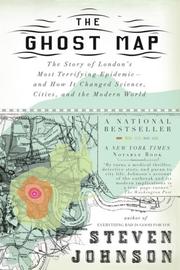
The story of John Snow's 1854 cholera investigation is the founding myth of epidemiology; it introduces core ideas — mapping cases, identifying a source, challenging consensus — in a gripping, zero-jargon way.

Traces zoonotic diseases (Ebola, SARS, HIV) from animal reservoirs to human pandemics, building intuition about transmission, surveillance, and why outbreaks happen before the reader knows the formal terms.
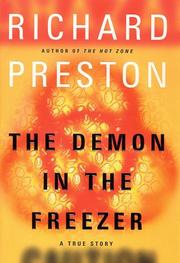
Follows the eradication of smallpox and the subsequent biosecurity debate, showing how a coordinated global public-health campaign can eliminate a disease — a perfect bridge to thinking about prevention at scale.
Foundations — Core Concepts & Health Statistics
BeginnerLearn the essential vocabulary of epidemiology: rates, risk, bias, confounding, study designs, and how to read a health statistic critically.
▸ Study plan for this stage
Pace: 6–8 weeks total. Week 1–5: Rothman's "Epidemiology: An Introduction" — read ~20–25 pages/day, 5 days/week, pausing after each chapter to take notes on definitions and worked examples. Week 6–8: Blastland's "The Numbers Game" — read ~30–35 pages/day (lighter prose), 4 days/week, actively annotating e
- Measures of disease frequency: incidence rate, prevalence, cumulative incidence, and how Rothman distinguishes them with precision
- Measures of association: risk ratio, rate ratio, odds ratio, and risk difference — when each is appropriate and how to interpret their magnitude
- Study designs and their hierarchy: cross-sectional, case-control, cohort, and experimental studies as introduced by Rothman, including their inherent strengths and limitations
- Bias types — selection bias and information bias — and how they systematically distort epidemiological estimates
- Confounding: what it is, why it differs from bias, and Rothman's explanation of how confounders must be both associated with the exposure and independently related to the outcome
- Standardization and adjustment: why crude rates can mislead and how age-standardization corrects for population differences
- Critical numeracy applied to public health statistics: Blastland's lessons on how numbers are constructed, cherry-picked, or framed to mislead in media and policy contexts
- The interplay between statistical significance and practical/public health significance — a theme reinforced by both authors from different angles
- After reading Rothman, can you define incidence rate vs. cumulative incidence and explain why the distinction matters when comparing disease burden across populations?
- What is the difference between a confounder and a mediator, and why does Rothman argue that controlling for a mediator is a methodological error?
- Given a 2×2 contingency table from a cohort study, can you calculate the risk ratio, odds ratio, and risk difference — and explain which measure is most appropriate for a rare disease?
- How does Rothman define selection bias, and can you construct a realistic public health scenario in which it would inflate or deflate an apparent association?
- Drawing on Blastland's 'The Numbers Game,' what are three ways a health statistic reported in a newspaper headline could be technically accurate yet deeply misleading to a general audience?
- How would you explain the concept of 'rate' to a non-specialist, incorporating both Rothman's formal definition and Blastland's caution about how rates are communicated publicly?
- **Rothman Chapter Glossaries:** After each chapter of 'Epidemiology: An Introduction,' write a personal glossary entry (3–5 sentences) for every new term in your own words — no copying definitions verbatim. Test yourself 48 hours later without looking at the book.
- **2×2 Table Drill:** Using publicly available data (e.g., CDC WONDER or WHO mortality tables), construct at least three 2×2 tables for real exposure-outcome pairs. Calculate incidence rates, risk ratios, and odds ratios by hand, then check your arithmetic with a calculator.
- **Blastland Headline Audit:** Collect 5 health-related news headlines per week during the Blastland reading phase. For each, identify: (a) what type of statistic is being used, (b) what the denominator is (or isn't), and (c) at least one way the framing could mislead — directly applying his framework.
- **Bias Scenario Writing:** Write two short case studies (one page each): one illustrating selection bias and one illustrating confounding in a realistic epidemiological study. Swap with a study partner or self-critique against Rothman's criteria.
- **Crude vs. Adjusted Rate Comparison:** Find age-specific mortality or disease data for two different countries or time periods. Calculate crude rates and then age-standardize them using the direct method. Write a paragraph explaining how your conclusion changes (or doesn't) after adjustment.
- **Integrated Reflection Essay:** After finishing both books, write a 500-word essay answering: 'How does Rothman's technical framework for measuring disease help you decode — or expose the limits of — the kinds of statistics Blastland warns us about?' This forces synthesis across both texts.
Next up: Mastering Rothman's vocabulary of rates, bias, and study design — sharpened by Blastland's critical numeracy — gives you the analytical grammar needed to engage rigorously with more advanced epidemiological methods, causal inference frameworks, and specific disease-area research in subsequent stages.
Written by one of the discipline's leading thinkers, this slim volume delivers the conceptual core — incidence, prevalence, measures of association, causation — in plain language ideal for a first formal encounter.

Sharpens statistical literacy and healthy skepticism about health data in the media; reading this alongside Rothman ensures the learner can both produce and critically consume epidemiological numbers.
Going Deeper — Methods, Evidence & Causation
IntermediateMaster the main study designs (cohort, case-control, RCT, ecological), understand confounding and bias rigorously, and learn how epidemiologists establish causation.
▸ Study plan for this stage
Pace: 10–12 weeks total: Weeks 1–7 on Gordis's "Epidemiology" (~25–30 pages/day, covering all major study design and causation chapters); Weeks 8–12 on Spiegelhalter's "The Art of Statistics" (~20–25 pages/day, focusing on chapters dealing with uncertainty, bias, regression, and statistical evidence). Ove
- Study design taxonomy: distinguishing observational designs (cohort, case-control, cross-sectional, ecological) from experimental designs (RCTs) using Gordis's framework of directionality and timing
- Measures of association: risk ratio, odds ratio, rate ratio, and attributable risk as developed in Gordis — when each is appropriate and how to compute them from 2×2 tables
- Confounding: Gordis's definition of a confounder (associated with exposure, independent risk factor, not on causal pathway) and the methods to control it — restriction, matching, stratification (Mantel-Haenszel), and multivariable adjustment
- Bias taxonomy: Gordis's systematic treatment of selection bias (Berkson's bias, healthy worker effect) and information/misclassification bias (differential vs. non-differential), and their direction of effect on estimates
- Causal inference: Hill's viewpoints (strength, consistency, specificity, temporality, biological gradient, plausibility, coherence, experiment, analogy) as presented by Gordis, and their limitations as a checklist
- Statistical uncertainty and communicating evidence: Spiegelhalter's framework for understanding variability, confidence intervals, and p-values as summaries of evidence rather than bright-line verdicts
- Regression and adjustment in practice: Spiegelhalter's accessible treatment of how multivariable models 'adjust' for confounders and what residual confounding means in real studies
- Algorithmic thinking about data: Spiegelhalter's PPDAC cycle (Problem, Plan, Data, Analysis, Conclusion) as a scaffold for critically reading any epidemiological study
- Given a study described in a journal abstract, can you identify its design using Gordis's criteria — directionality, timing, and whether exposure was assigned — and name one key strength and one key limitation of that design?
- How would you construct and interpret a 2×2 table for a case-control study, and why does Gordis insist the odds ratio (rather than the risk ratio) is the appropriate measure in that design?
- A cohort study finds a relative risk of 2.5 between coffee drinking and myocardial infarction. Walk through at least three specific confounders that could explain this association and describe, using Gordis's methods, how you would test for and control each one.
- Using Hill's viewpoints as laid out by Gordis, evaluate a classic association (e.g., smoking and lung cancer) — which criteria are strongly met, which are weak or inapplicable, and why does satisfying more criteria not 'prove' causation?
- Spiegelhalter argues that p-values are widely misunderstood. What does a p-value actually measure, how does it differ from the probability that the null hypothesis is true, and what does Spiegelhalter suggest as better ways to communicate statistical evidence?
- How does Spiegelhalter's PPDAC cycle map onto the design and reporting of a real cohort study from Gordis? Identify where the biggest threats to validity enter at each stage of the cycle.
- 2×2 table drill: Find 5 published abstracts (cohort, case-control, RCT, cross-sectional, ecological — one each). For each, reconstruct or sketch the implied 2×2 table, compute the appropriate measure of association using Gordis's formulas, and write one sentence on the dominant bias risk.
- Confounder identification map: Pick one landmark study discussed by Gordis (e.g., Framingham Heart Study). Draw a DAG (directed acyclic graph) with exposure, outcome, and at least four potential confounders. Label which variables meet all three of Gordis's confounder criteria and which do not.
- Mantel-Haenszel stratification exercise: Using publicly available data (e.g., CDC WONDER or a teaching dataset), stratify a crude association by a suspected confounder, compute stratum-specific odds ratios, apply the Mantel-Haenszel pooled estimate, and compare it to the crude — write a paragraph interpreting the change.
- Hill's viewpoints scorecard: Choose a contemporary controversial association (e.g., ultra-processed food and depression). Score it on each of Hill's nine viewpoints using Gordis's criteria, citing actual evidence for each score, then write a one-page causal argument or rebuttal.
- Spiegelhalter replication exercise: Reproduce one of Spiegelhalter's data visualizations (e.g., a frequency tree or icon array for communicating risk) using a real epidemiological statistic of your choice, then explain in plain language what the graphic communicates that a p-value alone would not.
- Critical appraisal journal club: Select one observational study and one RCT from a public health journal. Using both Gordis's bias/confounding framework and Spiegelhalter's statistical-evidence lens, write a structured one-page critique of each, explicitly noting where the two frameworks give complementary versus conflicting verdicts.
Next up: Mastering study designs, confounding, and causal reasoning here provides the methodological vocabulary and critical instincts needed to engage with more advanced topics — such as systematic reviews, meta-analysis, infectious disease dynamics, and health policy evaluation — where these same concepts operate at greater scale and complexity.
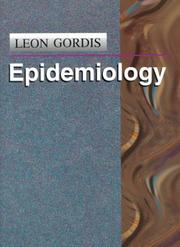
The most widely used undergraduate and graduate epidemiology textbook worldwide; it systematically covers every major study design, validity threats, and screening — the essential methodological toolkit.

Builds the statistical reasoning (confidence intervals, p-values, Bayesian thinking) that underpins epidemiological evidence, using real public-health examples and requiring no prior maths background.
Public Health in Practice — Systems, Policy & Prevention
IntermediateSee how epidemiological evidence is translated into public-health policy, health systems, and population-level interventions — the 'so what' of all the science.
▸ Study plan for this stage
Pace: 6–8 weeks total: Weeks 1–4 for "The Status Syndrome" (~25–30 pages/day, including reflection pauses after each chapter); Weeks 5–7 for "Factfulness" (~30–35 pages/day, a faster read but rich in data exercises); Week 8 reserved for synthesis, review, and completing exercises across both books.
- The Social Determinants of Health: Marmot's central argument that health outcomes are shaped not just by healthcare access but by social position, autonomy, and participation across the entire socioeconomic gradient
- The Status Syndrome: The phenomenon whereby people lower in the social hierarchy suffer worse health even when basic needs are met — health follows a gradient, not a threshold
- Autonomy and Social Participation as Health Mechanisms: Marmot's evidence that control over one's life and full engagement in society are the key biological and psychological pathways linking status to health
- The Health Gradient vs. the Poverty Trap: Understanding that health inequalities are not only about the poorest vs. the richest, but exist at every rung of the social ladder, requiring policy that addresses the whole gradient
- Translating Evidence into Policy — The Marmot Reviews: How epidemiological findings are operationalized into actionable public-health recommendations (e.g., early childhood investment, workplace conditions, community empowerment)
- Factfulness and the 'Overdramatic Worldview': Rosling's framework of ten cognitive instincts (gap, negativity, straight-line, fear, size, generalization, destiny, single, blame, and urgency instincts) that systematically distort our understanding of global health data
- The Four Income Levels Framework: Rosling's replacement of 'developed vs. developing' with a four-level income model to accurately describe where populations live and what public-health interventions are feasible at each level
- Data Literacy as a Public-Health Competency: The obligation of public-health practitioners to interrogate statistics, question framing, and communicate evidence honestly to avoid misguided policy and public panic
- According to Marmot in 'The Status Syndrome', why does the health gradient persist even among people who are not in poverty, and what does this imply for public-health policy that focuses only on the very poorest?
- What are the two core psychosocial mechanisms Marmot identifies as linking social status to biological health outcomes, and what real-world policy levers does he propose to address them?
- Rosling identifies ten 'dramatic instincts' that distort our view of global health. Choose any three and explain, using examples from 'Factfulness', how each one could lead a policymaker to design an ineffective or harmful public-health intervention.
- How does Rosling's four-level income framework change the way we should think about targeting and designing population-level health interventions compared to the traditional 'developed/developing world' binary?
- Both Marmot and Rosling argue that the dominant public narrative about health is wrong in important ways. Compare their critiques: what is each author challenging, and where do their arguments complement or tension with each other?
- If you were advising a national health ministry, what specific policy recommendations could you derive from combining Marmot's social-determinants evidence with Rosling's call for data-driven, proportionate thinking?
- **Status Gradient Mapping:** Choose a country or city of your choice. Using publicly available data (WHO, OECD, or national statistics), plot a health outcome (e.g., life expectancy, infant mortality, diabetes prevalence) against income quintiles or education levels. Write a one-page reflection on whether the pattern matches Marmot's gradient thesis and what policy levers could address it.
- **Instinct Audit:** Before finishing 'Factfulness', write down your intuitive answers to 5–10 of Rosling's quiz questions (available at gapminder.org). After reading, revisit each wrong answer and identify which of Rosling's ten instincts caused the error. Keep a personal 'bias log' for the rest of the stage.
- **Policy Brief Draft:** Using Marmot's framework, write a 500-word policy brief addressed to a local or national government recommending one concrete intervention (e.g., paid parental leave, early childhood education funding, workplace autonomy standards). Cite specific evidence and arguments from 'The Status Syndrome'.
- **Four-Level Intervention Design:** Pick a global health challenge (e.g., vaccine coverage, maternal mortality, clean water access). Using Rosling's four income levels, design a differentiated intervention strategy — what would the intervention look like at each level, and why would a one-size-fits-all approach fail?
- **Socratic Dialogue — Marmot Meets Rosling:** Write a one-page imagined dialogue between Marmot and Rosling debating the following question: 'Is inequality itself the enemy of health, or is absolute improvement in living standards sufficient?' Use direct arguments and evidence from each book to represent each author's position faithfully.
- **Media Fact-Check:** Find three recent news articles or public-health campaign messages (from any source). Apply Rosling's instinct checklist to identify any dramatic distortions, and apply Marmot's social-determinants lens to assess whether the coverage addresses root causes or only symptoms. Summarize your findings in a short critical review.
Next up: By internalizing how social hierarchies and cognitive biases shape both health outcomes and health policy, the reader is now equipped to critically evaluate the epidemiological research methods and study designs that generate the very evidence Marmot and Rosling draw upon — making the transition to a deeper, more technical study of epidemiological methodology a natural and motivated next step.
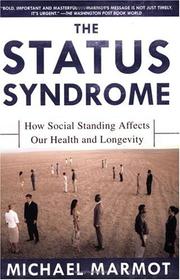
Marmot's landmark work on social determinants of health shows how factors outside the clinic — income, education, status — drive disease patterns, expanding the learner's view of what public health must address.
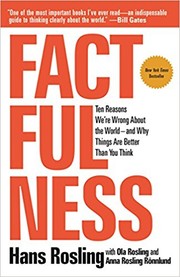
Corrects systematic misconceptions about global health data and progress; essential for anyone who will work with or communicate population health statistics to policymakers or the public.
Advanced Frontiers — Global Health, Pandemics & Modern Challenges
ExpertEngage with cutting-edge challenges: pandemic preparedness, global health equity, the limits of evidence, and where the field is heading in the 21st century.
▸ Study plan for this stage
Pace: 8–10 weeks total: Weeks 1–4 cover "Pale Rider" (~30–35 pages/day, including re-reading key chapters on mortality data and societal impact); Weeks 5–10 cover "Epidemics and Society" (~25–30 pages/day, given its density and breadth across historical periods). Reserve the final 3–4 days of each book fo
- Pandemic preparedness and the lessons of the 1918 influenza — how structural, political, and communication failures amplified mortality, as reconstructed by Spinney
- The epidemiology of influenza: viral evolution, antigenic shift/drift, and why the 1918 H1N1 strain was uniquely lethal across age groups (the W-shaped mortality curve)
- Wartime censorship and the politics of epidemic data: how suppression of information distorted the public health response in 1918 and foreshadows modern information-governance challenges
- Social determinants of pandemic outcomes: Spinney's cross-national comparisons reveal how poverty, crowding, nutrition, and race shaped who died — a foundation for health equity analysis
- Snowden's 'disease and history' thesis: epidemic diseases are not random misfortunes but are shaped by — and in turn reshape — social structures, economies, and political orders
- The concept of 'crowd diseases' and the epidemiological transition: Snowden traces how industrialization, urbanization, and colonialism created new disease ecologies (cholera, plague, tuberculosis, malaria, HIV/AIDS)
- Global health equity and the unequal burden of disease: Snowden's comparative chapters on the Global South illustrate how colonial legacies and structural adjustment perpetuate vulnerability
- The limits of biomedical evidence and the need for interdisciplinary approaches: both authors argue that epidemiology alone — without history, sociology, and political economy — cannot fully explain or prevent epidemics
- According to Spinney, what combination of biological and socio-political factors explains why the 1918 pandemic killed an estimated 50–100 million people, and which of those factors remain unresolved risks today?
- How does Spinney use cross-national case studies (e.g., South Africa, India, Alaska, Western Samoa vs. American Samoa) to demonstrate that mortality was not simply a function of viral virulence but of pre-existing social conditions?
- What is Snowden's central argument about the relationship between epidemic disease and historical change, and which two or three case studies from 'Epidemics and Society' does he use most compellingly to support it?
- How do both books together illustrate the tension between national sovereignty/political interest and the need for transparent, globally coordinated epidemic surveillance and response?
- Snowden argues that the rise of 'emerging infectious diseases' in the late 20th century (HIV/AIDS, Ebola, SARS) reflects specific ecological and social disruptions — what are those disruptions, and how do they connect to his broader historical framework?
- What do these two books collectively suggest about the adequacy of a purely biomedical, evidence-based model of public health, and what complementary frameworks do they implicitly or explicitly endorse?
- Comparative mortality mapping: Using Spinney's cross-national data from 'Pale Rider', build a simple table comparing at least six countries/regions on three variables (estimated mortality rate, wartime censorship level, pre-existing poverty indicators). Write a 300-word analysis of the patterns you find and what they imply for pandemic equity today.
- Snowden's thesis stress-test: Select any two diseases covered in 'Epidemics and Society' (e.g., cholera and HIV/AIDS) and write a 500-word comparative essay arguing for or against Snowden's claim that social structure — not biology alone — determines epidemic outcomes. Use specific evidence from the text.
- Pandemic preparedness audit: Drawing on lessons from both books, draft a one-page 'preparedness checklist' for a hypothetical low-income country facing a novel respiratory pathogen. For each item on the checklist, cite a specific historical failure documented by Spinney or Snowden that motivates it.
- Information-governance timeline: Create a timeline of epidemic information suppression or distortion events discussed across both books (e.g., 1918 wartime censorship, colonial-era disease reporting). Annotate each event with its public health consequence and a one-sentence parallel to a 21st-century scenario.
- Interdisciplinary reading response: Both authors draw on non-epidemiological disciplines (history, anthropology, political science). Identify three specific passages — at least one from each book — where a non-biomedical lens changes the interpretation of an epidemic event. Write a reflection on what this implies for how epidemiology should be practiced and taught.
- Capstone synthesis essay (800–1,000 words): Argue whether the 21st century is better or worse prepared for a 1918-scale pandemic than the world was in 1918, drawing evidence exclusively from 'Pale Rider' and 'Epidemics and Society'. Force yourself to steelman both sides before reaching a conclusion.
Next up: By internalizing how historical, political, and social forces shape epidemic outcomes — and where current evidence and institutions fall short — the reader is now equipped to engage critically with contemporary primary literature, policy documents, and emerging research debates that form the frontier of 21st-century epidemiology and global public health practice.

A rigorous historical epidemiology of the 1918 influenza pandemic, modelling how to analyse a catastrophic outbreak across populations, geographies, and time — directly relevant to modern pandemic science.

A Yale historian's sweeping synthesis of how epidemic disease has shaped — and been shaped by — human society, politics, and medicine; provides the critical, big-picture perspective that rounds out a deep education in public health.
Discussion
Keep reading
Paths that share books, cover the same subject, or open a related topic.