Professional Kitchens and Chef Life: The Best Books to Read, in Order
The literature of professional cooking is mostly memoir, and it is unusually honest — chefs write about their trade the way soldiers write about theirs, with a mixture of pride and warning. This path is for someone deciding whether to enter the industry, or for a reader who wants to understand what happens on the other side of the pass. It moves from the books that put you on the line during service, to the ones about learning the craft in a school or a stage, to the ones about running a kitchen and paying for it, and ends with the professional reference that all of it is training toward. Nearly every book here is one person's account of one kitchen in one era; the industry has changed since Kitchen Confidential, and several of these authors have said so.
On the Line
BeginnerUnderstand the physical shape of a working service — the brigade, mise en place, the pass, the pace — and what the culture of a restaurant kitchen has traditionally been like.
▸ Study plan for this stage
Pace: Two to three weeks. Kitchen Confidential (320 pages) is a fast, propulsive read and takes three or four evenings. Sous Chef follows immediately and is short enough for two sittings — read it while Bourdain is still fresh, because the contrast is the point. White Heat (128 pages) is a large-format bo
- The brigade system: a kitchen divided into stations with a defined hierarchy from chef de cuisine down through sous chef, chefs de partie and commis. It is a nineteenth-century military-derived structure, and understanding it explains almost every social dynamic these memoirs describe.
- Mise en place is not preparation in the domestic sense but a state of readiness that determines whether a station survives service. In these books it functions as a moral category as much as a practical one.
- Service has a physical shape — the build-up, the push, the point at which tickets outpace the line, and the recovery — and Gibney's Sous Chef exists to render that minute by minute, in the second person, without mythology.
- Kitchen Confidential is what created the genre and remains the fastest immersion in a working line. It was written about a New York industry of the 1980s and 1990s, and Bourdain himself later criticised it for glamorising addiction and for its treatment of women. Read it as a period document as well
- White Heat is part cookbook and part manifesto, shot in black and white in a London kitchen, and it is the book that turned the chef into a rock-star figure. Its importance here is as the aesthetic Bourdain's generation grew up inside — and as the working culture the industry has spent decades argui
- The macho, high-attrition kitchen culture these three books portray is presented in each with a different attitude: celebrated in White Heat, narrated with affection and irony in Bourdain, and described flatly and technically in Gibney. Notice which of the three ages best.
- The pass is the interface between kitchen and dining room, and control of it is what a chef's authority actually consists of. Every later stage returns to it.
- What these books assume: that you have never worked a line, and that you are curious rather than committed. None of them is a technical manual, and none should be read as career advice on its own.
- Describe the brigade hierarchy and say what each station is responsible for. Where would a new cook enter, and what is the realistic path upward?
- What does mise en place actually consist of on a single station, and why do these authors treat failing at it as a character failure rather than a scheduling one?
- Gibney writes in the second person. What does that choice let him convey about service that a first-person memoir does not?
- Bourdain later disowned parts of Kitchen Confidential. Identify two passages that read differently now and say what has changed — the industry, the author, or the reader.
- White Heat presents a particular ideal of the chef. State it plainly, then state the case against it that the industry has since made.
- Draw a brigade organisation chart for a restaurant of about forty covers, with each station's responsibilities and its equipment. Then mark which stations Bourdain and Gibney actually describe.
- Reconstruct a single service from Sous Chef as a timeline from prep through to close, marking every point where something almost goes wrong and what absorbs it.
- List the working conditions the three books treat as normal — hours, pace, heat, injury, drinking, hiring practices — and mark for each whether the author presents it as a problem.
- Write 300 words comparing how Bourdain and Gibney describe the same phenomenon of being in the weeds. The difference between mythologising and reporting is visible in the sentences.
Next up: You now know what the job looks like from the line; the next stage covers the two ways people get there, and what each route actually teaches.

The book that created the genre, and still the fastest immersion in a New York line kitchen. Written in 2000 about a 1980s and 1990s industry Bourdain himself later called out for its treatment of women and its glamorisation of addiction; read it as a period document as well as an introduction.
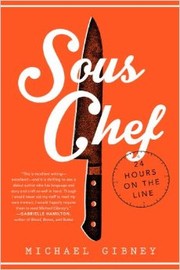
One day in a kitchen, in the second person, from prep to close. Read it directly after Bourdain because it does what Bourdain does not: describe the actual mechanics of a service minute by minute, without the mythology.
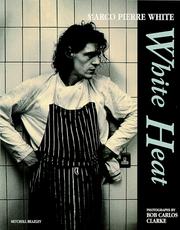
Part cookbook, part manifesto, shot in black and white in a London kitchen in 1990, and the book that turned the chef into a rock-star figure. Included third as the aesthetic that Bourdain's generation grew up inside — and the working culture the industry has spent thirty years arguing about.
Learning the Craft
BeginnerSee the two routes into the profession — culinary school and apprenticeship in someone else's kitchen — through people who took each and wrote it down.
▸ Study plan for this stage
Pace: Four to five weeks for around 1,280 pages. Ruhlman's The Making of a Chef (305 pages) is the anchor and takes a week to ten days. Flinn's The Sharper Your Knife, the Less You Cry (304 pages) is lighter and can follow in under a week. Buford's Heat (336 pages) is the richest of the four and deserves
- The two routes into the profession are culinary school and apprenticeship in someone else's kitchen, and they produce different cooks. This stage exists so you can see both from inside before committing to a view about which is better.
- Ruhlman went in as a writer rather than a cook and reported the whole curriculum at the Culinary Institute of America from inside. What that gives you is the clearest available picture of what culinary school actually teaches, in what order, and at what cost.
- Formal training front-loads technique and vocabulary — stocks, mother sauces, knife work, fabrication — on the theory that a cook who owns the fundamentals can learn any kitchen's style. Ruhlman is good on both the strength and the artificiality of that.
- Flinn ran the same experiment at Le Cordon Bleu in Paris after quitting a corporate job in her late thirties, which makes her book the mid-career-change counterpart and the more honest of the two about money.
- Buford's Heat is the apprenticeship route: a magazine editor working as a kitchen slave for a well-known chef, then travelling to Italy to learn pasta and butchery from craftsmen. It shows how much of the craft is transmitted by standing next to someone and cannot be lectured. His later Dirt does th
- Tacit knowledge is the concept underneath the whole stage: a great deal of cooking is knowledge that its holders cannot fully articulate, which is why apprenticeship persists in a profession that also has schools.
- Pépin's memoir describes the old French system — a formal apprenticeship begun at thirteen, then the Paris grand restaurants and an American career. It is the historical baseline against which every other training story here is a departure.
- What these books assume: no prior professional training, and an interest in the trade rather than in recipes. None of them will teach you to cook; they will tell you what learning to cook professionally costs in time and money.
- What does culinary school teach that a kitchen job does not, and what does a kitchen job teach that no school can?
- Reconstruct the actual cost of culinary school from Ruhlman and Flinn — tuition, time, forgone income — and set it against the wage a graduate can expect at entry.
- Buford learns pasta and butchery from craftsmen in Italy. What kind of knowledge is being transmitted there, and why is it resistant to being written down?
- How does Pépin's apprenticeship differ from both modern routes in duration, obligation and what it guaranteed at the end?
- Flinn is the only one of the four who changes career in mid-life. What does her account show about the trade that the others, who came to it young or as observers, cannot?
- Having read all four, which route would you recommend to a twenty-year-old and which to a forty-year-old, and why do the answers differ?
- Build a syllabus from The Making of a Chef: list the curriculum in order and note what each module is meant to install. Then mark which items Buford picked up informally and which he did not.
- Write a one-page cost-benefit comparison of culinary school and apprenticeship using only figures and outcomes stated in these books.
- Take one technique described in two of the four books and compare how each author was taught it. The difference in pedagogy is the substance of this stage.
- Interview yourself in writing: what would you actually be trying to acquire by entering this trade, and which of the four routes supplies it?
- List every piece of knowledge Buford acquires that is genuinely tacit, and try to write instructions for one of them. The failure is instructive.
Next up: Training gets you onto a line; the next stage is about what happens when the outcome of a whole kitchen becomes your problem, and what that costs the people who take it on.
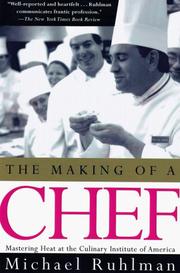
Ruhlman, a writer rather than a cook, enrolled at the Culinary Institute of America and reported the whole curriculum from inside. The clearest picture available of what culinary school teaches and what it costs, and the natural first book of this stage.
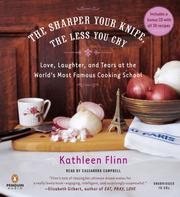
The same experiment at Le Cordon Bleu in Paris, by a woman who quit a corporate job in her late thirties. Read second as the mid-career-change counterpart to Ruhlman, and the more honest one about the money.
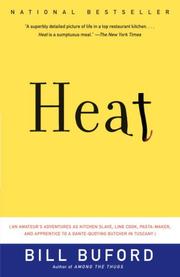
The apprenticeship route: a New Yorker editor works as a kitchen slave for Mario Batali, then goes to Italy to learn pasta and butchery. Read it after the two school books to see how much of the craft is transmitted by standing next to someone. Buford's later Dirt does the same thing in Lyon.
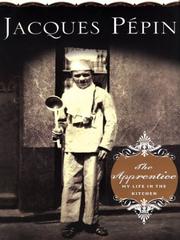
Pepin's memoir of the old French system — a formal apprenticeship at thirteen, then the Paris grand restaurants and an American career. The historical baseline against which every other training story on this path is a departure.
Running the Room
IntermediateMove from working in a kitchen to owning the outcome of one: the pursuit of a standard, the economics of a small restaurant, and what the job takes from the people who do it.
▸ Study plan for this stage
Pace: Four to five weeks. Ruhlman's The Soul of a Chef is three linked portraits and reads well one portrait at a time over ten days. Hamilton's Blood, Bones and Butter (298 pages) is the best-written book on the path and deserves a slow week. Achatz's Life, on the Line is co-written with his business par
- Mastery in this trade is a specific and testable thing, and The Soul of a Chef is the best account of it: the brutal Certified Master Chef examination, a working Cleveland chef, and Thomas Keller at the French Laundry, set side by side so that three definitions of excellence can be compared.
- The Certified Master Chef exam is worth understanding on its own terms as an attempt to make craft mastery objective — timed, blind-judged, and with a low pass rate — and as an argument about whether that is possible.
- Hamilton opened her restaurant with no formal training and an MFA in fiction, and her book is the clearest account of what it personally costs to keep a small restaurant open — the marriage, the family, the years. It is catalogued with an ampersand in the title, as published.
- Restaurant economics are brutal and mostly invisible to customers: thin margins, high fixed costs, labour as the largest controllable line, and a failure rate that all four of these authors treat as background rather than news.
- Achatz's book is the other end of the ambition scale — a restaurant built to be one of the most technically demanding in the world — and because it is co-written with his business partner it doubles as a rare account of restaurant finance from the inside.
- Achatz lost his sense of taste to tongue cancer while running that kitchen, which turns the book into an unplanned examination of what a chef's authority actually rests on when the palate is gone.
- Onwuachi's route — selling sweets on the subway, a culinary degree, a television run, and a restaurant that closed within months — addresses most directly who the industry lets through and on what terms, and it is the most recent account in the stage.
- What these books assume: that you have read the first two stages. They are about ownership and standards, not about technique, and none of them is a business plan.
- The Soul of a Chef offers three models of mastery. State each one and say what it would take to achieve it. Which is the most demanding, and which is the most useful?
- What is the Certified Master Chef exam actually testing, and what does its low pass rate tell you — about the candidates, the standard, or the format?
- From Hamilton and Achatz, itemise where the money in a restaurant goes. Which costs are fixed, which are controllable, and which one usually kills the business?
- Achatz continues to run a kitchen while unable to taste. What does that reveal about the components of a chef's competence?
- Onwuachi's restaurant closed quickly. What does his account identify as the causes, and how many of them were within his control?
- Hamilton, Achatz and Onwuachi describe very different costs of ownership. Which cost would be decisive for you?
- Build a rough monthly profit and loss for a fifty-seat restaurant using figures and proportions stated across these books. It will be crude and it will still be clarifying.
- Write out the three definitions of excellence in The Soul of a Chef as testable criteria, then apply each to a restaurant you know.
- Take Hamilton's account of one year and list every non-financial cost — time, relationships, health — with an honest note on whether you would accept it.
- From Onwuachi, list the structural barriers he describes and mark which ones the older memoirs on this path do not mention at all.
- Draft the opening plan for a small restaurant of your own: concept, covers, staffing, and the single assumption most likely to be wrong. Then find the book in this stage that argues against it.
Next up: The last stage asks whether the job is worth it, shows you the half of the restaurant these memoirs treat as scenery, and hands you the reference book that all the training has been aimed at.

Three linked portraits — the brutal Certified Master Chef exam, a Cleveland chef, and Thomas Keller at the French Laundry. The best book here on what mastery in this trade actually consists of, and the sequel to The Making of a Chef.
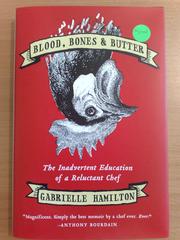
Hamilton opened Prune with no formal training and an MFA in fiction, and writes better prose than anyone else on this path. The clearest account of what it costs personally to keep a small restaurant open. Published with an ampersand in the title, which is how it is catalogued.
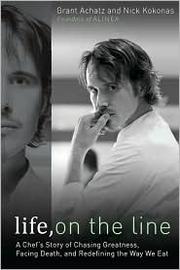
The other end of the ambition scale: Achatz built Alinea into one of the most technically demanding restaurants in the world, then lost his sense of taste to tongue cancer while running it. Co-written with his business partner, so it doubles as a rare account of restaurant finance.

The most recent book in this stage and the one that most directly addresses who the industry lets through: Onwuachi's route from selling sweets on the subway to a Culinary Institute degree, a Top Chef run, and a restaurant that closed in months. Read last here for the counterweight to the older memoirs.
The Verdict, and the Reference
IntermediateWeigh whether the career is worth it, see the dining room from the staff side, and meet the textbook the whole profession is measured against.
▸ Study plan for this stage
Pace: Three to four weeks, but the last book is a lifetime rather than a fortnight. Bourdain's Medium Raw (288 pages) takes four or five evenings and is best read immediately after re-skimming Kitchen Confidential. Damrosch's Service Included (240 pages) is short and quick — three evenings. The Profession
- Medium Raw is Bourdain's revision of himself — older, sober, and ambivalent about the celebrity chef culture Kitchen Confidential helped create. It is the honest sequel and the right book to reread the first stage against.
- Authorial self-revision is the methodological lesson of this stage: the same writer, the same industry, and a very different account. It is a reminder that every memoir on this path is a snapshot with a date on it.
- Damrosch worked as a captain in a high-end dining room, and Service Included covers front of house — the half of a restaurant that kitchen memoirs treat as scenery, with its own hierarchy, training and craft.
- The relationship between kitchen and dining room is structurally adversarial and mutually dependent, and reading the front-of-house account changes how every service scene in the earlier stages reads.
- The Professional Chef is the Culinary Institute of America's core reference — technique, fabrication, sanitation and kitchen management — and it is a textbook rather than a memoir. It assumes you intend to work, and it is a book to own and work through rather than read once.
- Sanitation and food safety are the least glamorous and most consequential material in the trade, and the textbook is the only book on this path that treats them seriously.
- Kitchen management — costing, ordering, yield, scheduling, waste — is where a professional kitchen is actually won or lost, and it appears in the memoirs only as stress. The reference makes it explicit.
- The honest verdict this stage is built to let you reach: these are one person's accounts of particular kitchens in particular eras, the industry has changed in hours, hiring and culture since most of them were written, and no book here can substitute for a stage in a real kitchen before committing.
- What has Bourdain changed his mind about between the two books, and what has he not? Which revisions are about him and which are about the industry?
- What does a dining-room captain actually do, and which of those responsibilities did you not know existed before Damrosch?
- Reread one service scene from Bourdain or Gibney with Damrosch in mind. What is happening on the other side of the pass at the same moment?
- Open The Professional Chef at a technique you thought you knew. What does the textbook specify that the memoirs never mention?
- Having read the whole path, is the career worth it? Answer for a specific person with specific constraints rather than in general — that is the only form the question has.
- Which parts of these accounts are period-specific and which describe the trade as it still is? Name the evidence for your split.
- Reread the first three chapters of Kitchen Confidential immediately after finishing Medium Raw and list every judgement Bourdain later revised.
- Work through one full section of The Professional Chef — stocks, or dry-heat methods, or fabrication — cooking as you go, and note how much of it the memoirs assumed you already knew.
- Write a one-page job description for a line cook and for a dining-room captain, drawing only on these books, and compare the skills each requires.
- Arrange a stage or a shift in a working kitchen if you can. A single service will tell you more than the rest of the path, and the path is what lets you understand what you are seeing.
- Write a final 500-word verdict for yourself: what the trade offers, what it takes, and what you would need to test in person before deciding. Name the book that most influenced each part of the answer.
Next up: That closes the path: the line, the two routes into it, the cost of owning the outcome, and the textbook the whole trade measures itself against — with the standing caution that every memoir here is one kitchen in one era, and the only reliable test is a shift.
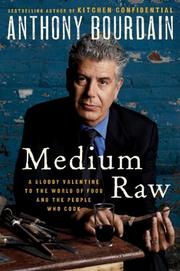
Bourdain's revision of himself a decade after Kitchen Confidential — older, sober, ambivalent about the celebrity chef culture he helped create. The honest sequel, and the right book to reread the first stage against.
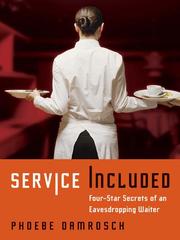
Front of house, from a captain at Per Se: the other half of a restaurant, and the half kitchen memoirs treat as scenery. Short, and it will change how you read every service scene above.

Not a memoir but the actual textbook — the Culinary Institute of America's core reference on technique, fabrication, sanitation and kitchen management. Placed last because it is the thing all the training in this path is training toward, and because it is a book to own and work through rather than read once.
Discussion
Keep reading
Paths that share books, cover the same subject, or open a related topic.