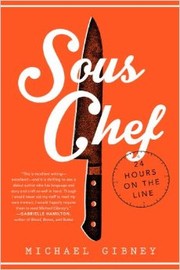
Start with Kitchen Confidential and Sous Chef. Bourdain's 2000 book created the genre and is still the fastest immersion in a New York line kitchen; Gibney's, written in the second person, walks a single day from prep through close and supplies the minute-by-minute mechanics that Bourdain skips in favour of the mythology. Between them you get the culture and the actual work, which are the two things a first book on this subject has to deliver.
Then the honest part, because it determines what this list is for. These memoirs document abuse, addiction and hours, and they do it as ordinary content rather than as scandal — Bourdain's heroin and cocaine years, the kitchen as a place of controlled fury in White Heat, what keeping a small restaurant open costs a marriage in Blood, Bones & Butter, Grant Achatz being treated for tongue cancer around service in Life, on the Line. If you are reading to decide whether to do this for a living, that material is the answer to your question, not an obstacle in front of it. Bourdain spent much of the following decade saying that the culture his book had glamorised needed to end, and Medium Raw is largely him doing it.
The order below runs from the line, to how the trade is learned, to what running a room costs, and finishes with the reference all of it trains toward. Nothing here substitutes for a stage in a working kitchen or for the training a culinary programme gives you; what these books can do is tell you accurately what you would be signing up for.
On the line
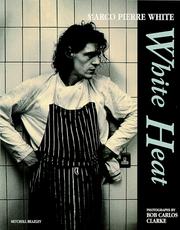
Kitchen Confidential first, read as a period document as much as an introduction: it describes a 1980s and 1990s industry, and both the food and the labour practices have moved since. Sous Chef second, and directly after, because it is the corrective — no anecdotes, just the sequence of a service and the load a mid-level cook carries. White Heat third: part cookbook and part manifesto, photographed in black and white in a London kitchen in 1990, only 128 pages, and the book that turned the chef into a rock-star figure. Read it as the aesthetic Bourdain's generation grew up inside, and as the working culture the trade has spent thirty years arguing about.
Learning the craft
Four books, four routes in. The Making of a Chef is Michael Ruhlman, a writer rather than a cook, enrolling at the Culinary Institute of America and reporting the curriculum from inside — the clearest picture of what culinary school teaches and costs. The sharper your knife, the less you cry runs the same experiment at Le Cordon Bleu in Paris, by a woman who quit a corporate job in her late thirties, and it is the more candid of the two about money. Heat covers the other route: Bill Buford, a New Yorker editor, works as kitchen labour for Mario Batali and then goes to Italy for pasta and butchery, showing how much of this craft is transmitted only by standing next to someone. Buford's later book Dirt does the same thing in Lyon and is not on this list. The Apprentice is the historical baseline — Jacques Pépin's formal apprenticeship at thirteen, then the Paris grand restaurants and an American career.
Running the room
The Soul of a Chef is Ruhlman's sequel and the best book here on what mastery in this trade consists of, built from the Certified Master Chef exam, a Cleveland chef, and Thomas Keller at the French Laundry. Blood, Bones & Butter is the best-written book on the path; Gabrielle Hamilton opened Prune with an MFA in fiction and no formal training, and is unsparing about the personal cost. Life, on the Line is the opposite pole of ambition, Achatz building Alinea while losing his sense of taste, and co-written with his business partner, so it doubles as a rare account of restaurant finance. Notes from a Young Black Chef is the most recent and the one that most directly addresses who the industry lets through: Kwame Onwuachi's route from selling sweets on the subway to a CIA degree, a Top Chef run, and a restaurant that closed within months.
The verdict, and the reference
Medium Raw is Bourdain revising himself a decade on, older and ambivalent about the celebrity culture he helped build. Service Included is short, comes from a captain at Per Se, and covers the half of a restaurant that kitchen memoirs treat as scenery. Then The Professional Chef, which is not a memoir at all but the Culinary Institute of America's core textbook on technique, fabrication, sanitation and kitchen management — over 1,200 pages, currently in its ninth edition, and a book to work through rather than read. Our catalogue record for it carries a much older year than the edition you would buy.
Follow the full ordered path here: Professional Kitchens and Chef Life: The Best Books, in Order.