The Best Precalculus Books to Prepare for Calculus
This curriculum takes a complete beginner from arithmetic confidence through the full landscape of precalculus — algebra, functions, trigonometry, and analytic geometry — before arriving at the doorstep of calculus. Each stage builds the vocabulary and problem-solving fluency needed for the next, so no step feels like a leap.
Arithmetic & Algebra Foundations
BeginnerRebuild or solidify core arithmetic and introductory algebra skills so that symbolic manipulation feels natural and confident.
▸ Study plan for this stage
Pace: 8–10 weeks, ~40–50 pages/day. Start with "Basic Mathematics" (weeks 1–4, ~150 pages), then move to "Algebra" (weeks 5–10, ~200 pages). Allocate 2–3 days per major section for review and problem-solving.
- Number systems: natural numbers, integers, rationals, and their properties (commutativity, associativity, distributivity)
- Fraction arithmetic: addition, subtraction, multiplication, division, and simplification using GCD
- Decimal representation and conversion between fractions and decimals
- Algebraic expressions: variables as placeholders, combining like terms, and expanding/factoring
- Linear equations: solving for unknowns using inverse operations and maintaining balance
- Quadratic expressions and equations: factoring, completing the square, and the quadratic formula
- Polynomial operations: addition, subtraction, multiplication, and division
- Symbolic manipulation as a generalization of arithmetic: recognizing that algebra follows the same rules as numbers
- Why does the distributive property work, and how does it connect arithmetic to algebraic expansion?
- How do you solve a linear equation, and why does 'doing the same thing to both sides' preserve the solution?
- What is the relationship between factoring and solving quadratic equations?
- How do you add, subtract, and multiply fractions, and why do these procedures work?
- What does it mean to simplify an algebraic expression, and when is an expression fully simplified?
- How can you verify that your solution to an equation is correct?
- Work through all computational exercises in 'Basic Mathematics' (fractions, decimals, order of operations) without a calculator to build fluency
- Create a 'properties reference sheet' listing commutativity, associativity, distributivity, and identity/inverse elements with numerical examples
- Solve 50+ linear equations from 'Algebra' by Gel'fand, starting with one-step equations and progressing to multi-step and equations with fractions
- Factor 30+ quadratic expressions by hand, identifying patterns and verifying by expanding back
- Rewrite word problems from both books as algebraic equations, then solve and check answers
- Practice polynomial long division and synthetic division until you can do 10 problems in a row without errors
- Create a 'mistake journal': whenever you make an arithmetic or algebraic error, write down what went wrong and the correct approach
Next up: This stage establishes the symbolic fluency and procedural confidence needed to tackle functions, equations in multiple variables, and the graphical interpretation of algebra—all prerequisites for precalculus topics like composition, inverse functions, and transformations.
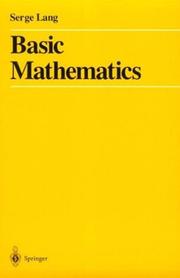
A rigorous yet accessible review of arithmetic, fractions, decimals, and introductory algebra written by a master expositor. Reading this first ensures no foundational gap is left unfilled before tackling formal algebra.
Gelfand's problem-driven approach builds genuine algebraic intuition — polynomials, factoring, and equations — rather than rote procedure. It bridges arithmetic thinking to the abstract reasoning precalculus demands.
Core Precalculus — Functions & Graphs
BeginnerUnderstand the concept of a function deeply, master graphing and transformations, and become fluent with polynomial, rational, exponential, and logarithmic functions.
▸ Study plan for this stage
Pace: 8–10 weeks, ~40–50 pages/day (Stewart first, then Gel'fand); allocate 5–6 weeks for Stewart's chapters on functions, graphs, and function families; 2–3 weeks for Gel'fand's deeper conceptual treatment
- Function definition, domain, range, and notation (Stewart Ch. 1–2); understanding functions as mappings and relationships
- Graphing techniques: plotting points, transformations (shifts, stretches, reflections), and reading graphs (Stewart Ch. 1–3)
- Polynomial functions: zeros, end behavior, factorization, and sketching (Stewart Ch. 3)
- Rational functions: asymptotes, discontinuities, and long-term behavior (Stewart Ch. 3)
- Exponential and logarithmic functions: growth/decay, inverse relationships, and solving equations (Stewart Ch. 4)
- Gel'fand's geometric intuition: understanding functions as curves, composition, and inverse functions through visual reasoning
- Function composition and inverse functions: algebraic and graphical perspectives (Stewart Ch. 2; Gel'fand throughout)
- Modeling with functions: translating real-world situations into function notation and graphs
- What is a function, and how do domain and range constrain it? How can you determine domain and range from an equation or graph?
- How do vertical and horizontal shifts, stretches, and reflections transform a parent function's graph? Can you predict the graph of f(x−2)+3 given f(x)?
- What are the zeros of a polynomial, and how do they relate to the graph? How do you sketch a polynomial using end behavior and zeros?
- What are vertical and horizontal asymptotes in rational functions, and how do you find them algebraically?
- How are exponential and logarithmic functions inverses of each other? How do you solve exponential and logarithmic equations?
- What does it mean to compose two functions, and how do you find the domain of a composition?
- How do you determine if a function has an inverse, and how do you find it algebraically and graphically?
- How do you model a real-world scenario (e.g., population growth, cooling) using an appropriate function?
- Complete Stewart Ch. 1–2 exercises on function notation, domain/range, and piecewise functions; focus on problems requiring you to write domain in interval notation and justify your answer
- Graph at least 15 functions by hand (both parent functions and transformed versions): include linear, quadratic, cubic, absolute value, square root, and rational functions; label key features (intercepts, asymptotes, vertices)
- Work through Stewart's polynomial problems (Ch. 3): factor polynomials, find zeros, sketch graphs, and verify your sketches using a graphing tool
- Solve 20+ rational function problems from Stewart: find asymptotes, holes, intercepts, and sketch graphs; compare your sketches to a graphing calculator
- Complete exponential and logarithmic function problems from Stewart Ch. 4: solve equations, evaluate compositions, and model growth/decay scenarios
- Work through Gel'fand's visual exercises on function composition and inverse functions; draw diagrams showing how composition and inversion transform graphs
- Create a 'transformation portfolio': for 5 parent functions, show how f(x), f(x−h)+k, −f(x), f(2x), and 2f(x) differ graphically and algebraically
- Solve 10 modeling problems: translate word problems into function equations, identify the appropriate function family, and interpret the solution in context
Next up: This stage builds the foundational fluency with functions and their graphs that is essential for the next stage—whether it involves trigonometric functions, limits and continuity, or applications in calculus—by establishing how to recognize, manipulate, and visualize function behavior algebraically and geometrically.

The most widely adopted precalculus textbook in North America. Its clear exposition, abundant worked examples, and logical sequencing make it the ideal first full-course text for functions and their properties.
A slim, insight-rich companion that deepens understanding of what a function really is and how graphs encode behavior — perfect for reading alongside or just after Stewart to cement intuition.
Trigonometry
IntermediateMaster the unit circle, all six trigonometric functions, identities, inverse trig, and the laws of sines and cosines — the trigonometric toolkit calculus assumes you own.
▸ Study plan for this stage
Pace: 8–10 weeks, ~25–30 pages/day with problem sets
- The unit circle as the foundation: coordinates, angles in radians and degrees, and the relationship between arc length and central angle
- The six trigonometric functions (sine, cosine, tangent, cotangent, secant, cosecant) defined via the unit circle and right triangles
- Fundamental trigonometric identities: Pythagorean, reciprocal, quotient, and cofunction identities
- Inverse trigonometric functions and their domains/ranges: arcsin, arccos, arctan and their applications
- The Law of Sines and Law of Cosines for solving arbitrary triangles and real-world applications
- Angle addition and subtraction formulas, double-angle and half-angle formulas for simplifying and solving equations
- Trigonometric equations and inequalities: solving for unknown angles using identities and algebraic techniques
- How are the six trigonometric functions defined on the unit circle, and why is the unit circle the natural setting for understanding them?
- What are the Pythagorean, reciprocal, and quotient identities, and how do you use them to simplify trigonometric expressions?
- How do inverse trigonometric functions work, what are their domains and ranges, and when do you use them to solve equations?
- When would you use the Law of Sines versus the Law of Cosines, and how do you apply each to solve a triangle?
- How do angle addition formulas lead to double-angle and half-angle formulas, and what problems do they help you solve?
- How do you solve a trigonometric equation like sin(2x) + cos(x) = 1, and how do identities guide your approach?
- Plot points on the unit circle for angles in both degrees and radians (0°, 30°, 45°, 60°, 90°, etc.) and verify the sine and cosine values
- Derive and memorize the Pythagorean identity sin²(θ) + cos²(θ) = 1 geometrically, then use it to simplify expressions like (1 − cos²(θ))/sin²(θ)
- Solve 10–15 inverse trig problems: find arcsin(1/2), arccos(−√3/2), arctan(1), and verify by checking sin(arcsin(x)) = x
- Apply the Law of Sines to solve at least 3 non-right triangles given two angles and a side (AAS or ASA cases)
- Apply the Law of Cosines to solve at least 3 non-right triangles given three sides (SSS) or two sides and an included angle (SAS)
- Solve 8–10 trigonometric equations of increasing difficulty: sin(x) = 1/2, cos(2x) = cos(x), sin²(x) − 3sin(x) + 2 = 0, using identities and algebraic factoring
- Verify angle addition formulas geometrically or algebraically, then use them to compute sin(75°) and cos(15°) without a calculator
- Work through Gel'fand's problem sets at the end of each chapter, focusing on proofs and conceptual problems, not just computation
Next up: Understanding the unit circle, all six trig functions, identities, and the laws of sines and cosines equips you with the essential trigonometric toolkit that calculus relies on—particularly for derivatives and integrals of trig functions, solving applied optimization problems, and working with periodic phenomena.

Gelfand builds trigonometry from first principles with elegant problems, making the unit circle and identities feel inevitable rather than memorized. Starting here builds the deepest conceptual foundation.
Analytic Geometry & Advanced Precalculus Topics
IntermediateCommand conic sections, polar coordinates, sequences, series, and the binomial theorem — the remaining precalculus topics that appear constantly in calculus and beyond.
▸ Study plan for this stage
Pace: 6–7 weeks, ~40–50 pages/day. Start with Simmons' conic sections and sequences/series chapters (2–3 weeks), then transition to Gel'fand's coordinate geometry (2–3 weeks), with 1 week for integration and review.
- Conic sections (circles, ellipses, parabolas, hyperbolas) defined by focus-directrix properties and algebraic equations
- Parametric equations and their role in describing curves and motion
- Polar coordinates and conversion between polar and Cartesian systems
- Sequences, series, and summation notation; arithmetic and geometric progressions
- Binomial theorem and binomial expansions with applications to series
- Coordinate geometry as a unifying framework connecting algebra, geometry, and functions
- Transformations of coordinates and their geometric interpretations
- Applications of conic sections and coordinate methods to real-world problems
- What are the defining properties of each conic section (circle, ellipse, parabola, hyperbola) in terms of foci and directrices, and how do these lead to their standard equations?
- How do you convert between Cartesian and polar coordinates, and when is polar form more natural or useful than Cartesian form?
- What is the binomial theorem, and how does it connect to series expansions and the general term of a binomial expansion?
- How do parametric equations describe curves, and what advantages do they offer over implicit or explicit Cartesian equations?
- What is the difference between a sequence and a series, and how do you find the sum of arithmetic and geometric series?
- How does the method of coordinates unify geometric and algebraic reasoning, and why is this framework essential for calculus?
- Derive the standard equations of all four conic sections from their focus-directrix definitions; verify with specific examples (e.g., parabola with focus (1,0) and directrix x = -1).
- Convert 10–15 points and curves between Cartesian and polar coordinates; sketch curves given in polar form (e.g., r = 2cos(θ), r = 1 + sin(θ)).
- Expand (a + b)^n for n = 3, 4, 5 using the binomial theorem; find specific terms without full expansion (e.g., the x^3 term in (2x + 3)^5).
- Write parametric equations for circles, ellipses, and parabolas; eliminate the parameter to recover Cartesian equations.
- Compute sums of arithmetic and geometric series; apply to real problems (e.g., loan amortization, population growth with constant rate).
- Analyze a conic section given in general form (Ax² + Bxy + Cy² + Dx + Ey + F = 0); classify it, find its center/vertex, and sketch it using coordinate transformations.
Next up: This stage equips you with the geometric and algebraic machinery—conic sections, parametric and polar representations, series, and the binomial theorem—that calculus uses to model curves, compute limits and derivatives of parametric functions, and evaluate infinite series.

A beautifully concise 120-page masterpiece covering geometry, algebra, and trigonometry with unusual clarity and elegance. Reading it at this stage ties everything together and fills any remaining gaps with remarkable efficiency.
Gelfand's dedicated treatment of the coordinate plane, lines, conics, and parametric equations gives the analytic geometry backbone that calculus textbooks assume — a perfect capstone before calculus.
Bridge to Calculus
ExpertDevelop mathematical maturity, problem-solving stamina, and a preview of limiting ideas so the transition into calculus feels seamless rather than shocking.
▸ Study plan for this stage
Pace: 8–10 weeks, ~25–35 pages/day (with 2–3 days per week for reflection and problem-solving)
- Mathematical proof and rigorous argumentation: understanding why theorems are true, not just memorizing formulas
- The concept of infinity and limits: how sequences and series approach limiting values, laying groundwork for calculus
- Functions as dynamic relationships: viewing functions as transformations and mappings rather than static equations
- Continuity and discontinuity: intuitive understanding of when functions behave 'smoothly' versus when they break
- Rates of change and optimization: exploring how quantities change and finding extrema without formal derivatives
- Mathematical abstraction and generalization: recognizing patterns across different domains and unifying seemingly disparate problems
- Problem-solving strategies and mathematical thinking: developing stamina for multi-step, non-routine problems
- What is the difference between a mathematical proof and a plausible argument? Why does Courant emphasize the importance of rigorous justification?
- How does the concept of infinity appear in different contexts (infinite series, infinite sequences, infinite sets)? What makes some infinities 'larger' than others?
- Explain the intuitive idea of a limit using a concrete example from the book. How does this preview the formal definition you'll see in calculus?
- What does it mean for a function to be continuous? Give examples from the book of continuous and discontinuous functions, and explain why the distinction matters.
- How can you find the maximum or minimum value of a function without calculus? What strategies does Courant present?
- Choose a problem from the book that initially seemed difficult. Walk through your solution process and explain what mathematical thinking strategies you used.
- Work through the proofs in Courant's chapters on number systems and algebra. For each proof, write a one-paragraph explanation of the key insight—why the result is true—in your own words.
- Select 3–4 sequences or series from the book (e.g., geometric series, harmonic series). Compute partial sums, plot them, and describe in writing what value they appear to approach and why.
- Graph 5–6 functions from the book by hand or with software, focusing on identifying points of discontinuity, local extrema, and behavior at infinity. Annotate each graph with observations.
- Solve at least 10 non-routine problems from the end-of-chapter exercises, choosing problems that require multi-step reasoning. Write up clean solutions that justify each step.
- Create a 'concept map' connecting infinity, limits, continuity, and rates of change. Use examples from the book to show how these ideas relate to one another.
- Revisit a problem you initially found confusing. Write a detailed reflection on what mathematical insight or technique finally made it click, and how you might approach similar problems in the future.
Next up: By internalizing Courant's emphasis on rigorous thinking, intuitive understanding of limits, and the dynamic nature of functions, you will have developed the mathematical maturity and conceptual foundation needed to encounter formal calculus definitions (derivatives, integrals, continuity) not as arbitrary rules but as natural extensions of ideas you've already explored.
A celebrated survey of mathematical ideas — number, geometry, calculus, and topology — written for the serious non-specialist. Reading this last expands mathematical vision and provides the 'big picture' motivation that makes calculus feel like a natural next step.
Discussion
Keep reading
Paths that share books, cover the same subject, or open a related topic.