The Best Kinesiology Books to Learn Movement Science
This curriculum builds a rigorous, layered understanding of kinesiology — starting with how the body is built, then how it moves, then the science behind training and performance, and finally the clinical and biomechanical depth that defines expert-level mastery. Each stage assumes the vocabulary and intuition gained in the previous one, so reading in order is essential.
Foundations: Anatomy & the Body's Blueprint
BeginnerBuild a solid mental map of the human body — bones, muscles, joints, and connective tissue — so that all future movement concepts have a structural anchor.
▸ Study plan for this stage
Pace: 8–10 weeks, ~20–25 pages/day. Start with "The Anatomy Coloring Book" (weeks 1–4, ~15 pages/day of reading + coloring), then transition to "Trail Guide to the Body" (weeks 5–10, ~25 pages/day with hands-on palpation practice).
- Skeletal system architecture: bones as the body's structural framework, including major bones, their landmarks, and how they articulate
- Joint classification and mechanics: how different joint types (hinge, ball-and-socket, pivot, etc.) enable specific movement patterns
- Muscle anatomy and organization: muscle fiber structure, the relationship between origin/insertion and movement, and how muscles attach to bone via tendons
- Connective tissue hierarchy: fascia, ligaments, and tendons as the body's interconnected support system that stabilizes and transmits force
- Regional anatomy: understanding how bones, muscles, and connective tissue work together in functional regions (shoulder, hip, spine, etc.)
- Anatomical planes and directional terminology: using standardized language (sagittal, frontal, transverse; medial, lateral, proximal, distal) to describe body position and movement
- Palpation skills: the ability to locate and feel anatomical structures on a living body, bridging theory to tactile reality
- Can you identify and name the major bones of the skeleton and explain their primary functions (support, protection, movement)?
- What are the different types of joints, and how do their structures determine the range and type of movement they allow?
- How do muscles, tendons, and ligaments work together to create movement and stabilize joints?
- Using anatomical terminology, can you describe the position and movement of a body part relative to anatomical planes and directional references?
- Can you palpate and locate key anatomical landmarks (e.g., spinous processes, greater trochanter, acromion process) on yourself or a partner?
- How does the organization of fascia and connective tissue create functional chains that link distant body regions?
- Complete the coloring activities in 'The Anatomy Coloring Book' for each system (skeletal, muscular, connective tissue), actively labeling and color-coding structures to reinforce visual memory and anatomical relationships.
- Create a skeletal map: draw or trace the human skeleton from memory, then label all major bones, bony landmarks, and articulation points; compare against the book's illustrations.
- Use 'Trail Guide to the Body' to palpate your own skeleton: locate and feel at least 15 major bony landmarks (e.g., ribs, vertebrae, hip bones, knee, ankle) and mark them on a body diagram.
- Muscle origin-insertion mapping: select 10 major muscles from 'Trail Guide to the Body' and draw arrows showing where each muscle attaches and what movement it produces; practice on a partner if possible.
- Joint movement exploration: for each major joint type (shoulder, elbow, hip, knee, ankle, spine), move through its range of motion while referencing the anatomical descriptions in 'Trail Guide to the Body' and name the movements in anatomical terms.
- Palpation practice sessions: dedicate 2–3 sessions per week to hands-on exploration using 'Trail Guide to the Body' as a guide; locate muscles, tendons, and bony landmarks on yourself and a willing partner, building tactile confidence.
Next up: This stage establishes the anatomical vocabulary and structural knowledge required to understand how muscles generate force, how joints move, and how the body's architecture enables or constrains movement—preparing you to explore movement mechanics, biomechanics, and functional anatomy in the next stage.
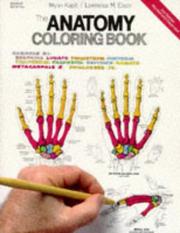
Active coloring forces genuine engagement with anatomical structures, making this the single most effective first step for a beginner building spatial memory of the body.
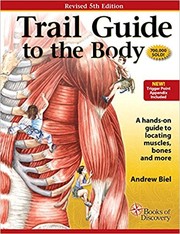
Bridges pure anatomy into palpation and real-world body landmarks, giving the learner a tactile, applied sense of where muscles and bones actually live — essential before studying movement.
Movement Fundamentals: How the Body Moves
BeginnerUnderstand the principles of human movement — joint mechanics, muscle actions, planes of motion, and basic biomechanics — as a coherent system.
▸ Study plan for this stage
Pace: 4–5 weeks, ~40–50 pages/day. Start with Neumann's foundational chapters (Weeks 1–2), then transition to Jarmey's applied muscle reference (Weeks 3–4), with a final week for integration and review.
- Joint anatomy and classification: how different joint types (hinge, ball-and-socket, pivot) determine the range and type of motion possible
- Planes of motion and axes of rotation: sagittal, frontal, and transverse planes as the framework for describing all human movement
- Muscle actions and roles: agonist, antagonist, synergist, and stabilizer functions in coordinated movement
- Lever systems and mechanical advantage: how bone length, muscle attachment points, and force application create efficient or powerful movements
- Arthrokinematics: the roll, slide, and spin mechanics of bones within joints during movement
- Muscle architecture and fiber arrangement: how pennation angle, fiber length, and cross-sectional area affect force production and range of motion
- Kinetic chain principles: how proximal stability enables distal mobility and how forces transfer through linked joints
- Basic force analysis: tension, compression, and shear forces acting on joints and tissues during movement
- Explain the difference between a hinge joint and a ball-and-socket joint, and describe what types of movements each allows.
- Describe the three planes of motion and give a specific example of a human movement that occurs primarily in each plane.
- What is the functional difference between an agonist and a synergist muscle, and why is this distinction important in understanding coordinated movement?
- How do bone length and muscle attachment point location affect mechanical advantage in a lever system, and what trade-offs exist between force and speed?
- Explain arthrokinematics: what is the difference between roll and glide motions, and why does a bone need to both roll and glide during joint movement?
- How does muscle fiber pennation angle influence the force-producing capacity and range of motion of a muscle?
- Joint mapping exercise: Identify and palpate the major joints of your body (shoulder, elbow, wrist, hip, knee, ankle); classify each by type and manually test the planes of motion available at each.
- Plane of motion analysis: Perform 10 common movements (e.g., bicep curl, squat, lateral raise, rotation) and identify which plane(s) each movement occurs in; sketch or describe the axis of rotation.
- Muscle action identification: During 5 everyday activities (climbing stairs, throwing, reaching overhead, walking), identify the primary agonist, antagonist, and stabilizer muscles involved using Jarmey's muscle reference.
- Lever system analysis: Analyze 3 different movements (e.g., bicep curl, leg press, push-up) to determine the class of lever, identify the fulcrum/joint, effort (muscle), and load, and explain the mechanical advantage or disadvantage.
- Arthrokinematics observation: Perform shoulder flexion and hip flexion slowly while palpating the joint; describe what you feel (roll vs. glide) and compare to Neumann's diagrams of arthrokinematics.
- Muscle fiber architecture study: Select 3 muscles from Jarmey (e.g., deltoid, rectus femoris, tibialis anterior) with different pennation angles; sketch their architecture and explain how it relates to their functional role.
Next up: Mastering these movement fundamentals—how joints move, how muscles coordinate, and how forces distribute through the body—provides the mechanical foundation needed to analyze specific movement patterns, postural deviations, and injury mechanisms in the next stage.
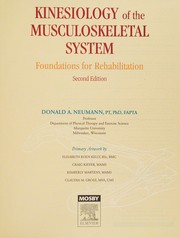
The gold-standard kinesiology textbook; it systematically connects anatomy to movement joint by joint, and is written accessibly enough for motivated beginners while being thorough enough to carry you through advanced study.
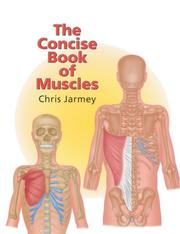
A compact, muscle-by-muscle reference covering origin, insertion, and action — ideal to read alongside Neumann as a quick-lookup companion that reinforces muscle function in motion.
Exercise Science: Training, Physiology & Adaptation
IntermediateUnderstand how the neuromuscular and cardiovascular systems respond and adapt to exercise, and how to apply that knowledge to design effective training.
▸ Study plan for this stage
Pace: 8–10 weeks, ~40–50 pages/day (with 2 rest days per week for review and integration)
- Bioenergetics: ATP production pathways (phosphocreatine, anaerobic glycolysis, aerobic oxidation) and their role in different exercise intensities and durations
- Neuromuscular physiology: motor unit recruitment, muscle fiber types (Type I, IIa, IIx), and how neural adaptations drive strength and power development
- Cardiovascular responses to exercise: acute changes in heart rate, stroke volume, cardiac output, and blood flow distribution during different exercise modalities
- Metabolic adaptation: how chronic training induces mitochondrial density, enzyme activity changes, and substrate utilization shifts (fat vs. carbohydrate oxidation)
- Oxygen uptake and aerobic capacity: VO₂max, lactate threshold, and the physiological basis for endurance training adaptations
- Thermoregulation and fluid balance: heat dissipation mechanisms, sweat response, and hydration strategies during exercise
- Training-induced adaptations: peripheral and central mechanisms of cardiovascular adaptation, muscle hypertrophy signaling, and recovery physiology
- Nutrition's role in energy availability, performance, and adaptation: carbohydrate, fat, and protein metabolism during and after exercise
- Explain the three ATP production systems and describe which system dominates during a 30-second sprint versus a 60-minute endurance event.
- How do Type I and Type II muscle fibers differ in structure, metabolism, and recruitment patterns, and what training methods preferentially recruit each?
- Describe the acute cardiovascular adjustments that occur within the first minutes of exercise and explain the mechanisms behind them.
- What are the primary physiological adaptations to chronic aerobic training, and how do they improve VO₂max and endurance performance?
- How does lactate threshold relate to training intensity, and why is it a practical marker for endurance training prescription?
- Explain the relationship between muscle damage, protein synthesis, and hypertrophy, and how nutrition and recovery influence these processes.
- Create a detailed energy system flowchart: map ATP production pathways for three different exercise scenarios (e.g., 100m sprint, 5km run, 2-hour cycling) and label the dominant energy system, duration, and typical lactate response for each.
- Conduct a personal VO₂max estimation test (e.g., 1.5-mile run or step test) and calculate your aerobic capacity; then design a 4-week training plan to improve it based on McArdle's principles of aerobic adaptation.
- Analyze a muscle biopsy study from the textbook: identify the fiber type distribution and mitochondrial density changes pre- and post-training, then predict performance implications.
- Design a periodized training program for a specific goal (e.g., 10km race, strength gain, or general fitness) that incorporates different intensities and durations to target multiple energy systems and adaptations.
- Track your own heart rate response during three different exercise intensities (low, moderate, high) and plot the relationship between intensity and cardiovascular variables; compare your data to textbook norms.
- Create a nutrition and hydration strategy for a simulated endurance event (e.g., 90-minute run): calculate carbohydrate needs, fluid intake, and electrolyte replacement based on McArdle's guidelines and your sweat rate.
Next up: This stage establishes the physiological foundation of how bodies respond to exercise stress, preparing you to apply these mechanisms in the next stage—designing individualized, sport-specific training programs and addressing special populations' unique adaptations and constraints.
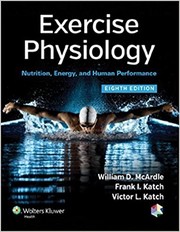
Deepens understanding of how the body produces and sustains energy during movement, adding the physiological 'engine' layer that pure kinesiology texts leave out.
Biomechanics & Motor Control: The Science of Motion
IntermediateAnalyze human movement quantitatively and qualitatively — understanding forces, levers, torque, and how the nervous system coordinates skilled motion.
▸ Study plan for this stage
Pace: 8–10 weeks, ~40–50 pages/day. Week 1–4: LeVeau's Biomechanics (primary focus on kinematics, kinetics, and joint mechanics); Week 5–8: Schmidt's Motor Learning (skill acquisition and feedback); Week 9–10: Integration and applied analysis projects.
- Kinematics and kinetics: how to describe and measure human movement using displacement, velocity, acceleration, force, and torque
- Anatomical levers and mechanical advantage: how skeletal geometry determines the efficiency of muscle force application across joints
- Joint mechanics and range of motion: how bone structure, ligaments, and cartilage constrain and enable movement patterns
- Force analysis and free-body diagrams: quantitative methods to resolve internal and external forces acting on body segments
- Motor learning stages: cognitive, associative, and autonomous phases that govern skill acquisition and performance improvement
- Feedback and error correction: how sensory information (intrinsic and extrinsic) drives motor adaptation and refinement
- Neural coordination and motor control: how the central nervous system organizes muscle activation patterns for smooth, efficient movement
- Practice variability and contextual interference: how training conditions affect learning retention and transfer to novel tasks
- How would you use free-body diagrams and force analysis to quantify the forces acting on the knee joint during a squat, and what role do anatomical levers play in determining muscle force requirements?
- Explain the differences between kinematics and kinetics, and provide an example of how both are necessary to fully understand a human movement pattern.
- What are the three stages of motor learning described by Schmidt, and how do the cognitive demands and performance characteristics change across these stages?
- How do intrinsic and extrinsic feedback mechanisms contribute to motor learning, and what does research suggest about the optimal timing and frequency of feedback for skill acquisition?
- Describe how anatomical constraints (joint structure, range of motion, muscle architecture) interact with neural control to produce coordinated, efficient movement.
- Design a training program that manipulates practice variability and contextual interference to optimize learning transfer for a complex motor skill—justify your design choices using motor learning principles.
- Conduct a biomechanical analysis of a common movement (e.g., walking, throwing, jumping): measure or estimate joint angles, segment velocities, and ground reaction forces; create free-body diagrams for key body segments.
- Calculate mechanical advantage for 3–4 different joint actions (e.g., elbow flexion, hip extension, shoulder abduction) by measuring lever arm lengths and comparing muscle force to external load requirements.
- Perform a qualitative movement analysis of a peer or video: identify deviations from optimal kinematics, hypothesize the biomechanical or neural causes, and suggest corrective cues.
- Design and conduct a simple motor learning experiment: teach yourself or a partner a novel skill (e.g., a specific coordination pattern or balance task) while systematically varying feedback type or practice schedule; document performance curves and retention.
- Video-analyze your own movement in a sport or exercise: use slow-motion replay to identify timing of muscle activation, joint sequencing, and force transfer; compare to a skilled model and identify learning targets.
- Create a detailed case study: select a movement disorder or injury (e.g., anterior knee pain, stroke-related hemiparesis) and explain how biomechanical constraints and motor control deficits interact; propose a rehabilitation strategy grounded in both biomechanics and motor learning principles.
Next up: This stage equips you with the quantitative tools to analyze movement mechanics and the conceptual framework to understand how the nervous system learns and refines motor skills—preparing you to apply these principles to clinical assessment, rehabilitation, and performance optimization in the next stage.

Introduces the physics of movement (forces, vectors, torque, levers) in a kinesiology context, making biomechanics approachable before tackling more rigorous texts.

Covers how the nervous system acquires, stores, and executes movement skills — a critical dimension of kinesiology that pure anatomy and biomechanics books omit.
Advanced Integration: Clinical & Performance Mastery
ExpertSynthesize everything into expert-level understanding of movement dysfunction, injury mechanics, and elite performance — thinking like a kinesiologist in clinical or high-performance settings.
▸ Study plan for this stage
Pace: 8–10 weeks, ~40–50 pages/day (with 2–3 days/week dedicated to practical assessment and palpation work)
- Movement screening as a diagnostic tool: FMS principles, scoring logic, and how dysfunctional patterns reveal underlying mobility/stability deficits
- The seven fundamental FMS tests (deep squat, hurdle step, inline lunge, shoulder mobility, active straight-leg raise, trunk stability push-up, rotational stability) and their clinical interpretation
- Corrective exercise strategy: how to regress/progress exercises to address specific FMS failures and restore fundamental movement patterns
- Myofascial meridians and tensegrity: understanding how muscles, fascia, and connective tissue form integrated chains that govern movement quality and injury risk
- Anatomy Trains mapping: the six major lines (superficial back, superficial front, lateral, spiral, arm, and deep front lines) and how restrictions in one region cascade dysfunction downstream
- Integration of FMS findings with Anatomy Trains assessment: linking movement dysfunction to specific fascial restrictions and designing targeted release/mobilization strategies
- Clinical reasoning in high-performance settings: synthesizing screening data, movement observation, and tissue assessment to create individualized corrective and performance-enhancement protocols
- Injury prevention and performance optimization: how restoring movement quality and fascial continuity reduces injury risk and unlocks athletic potential
- How do the seven FMS tests systematically reveal mobility vs. stability deficits, and what does a specific FMS failure pattern tell you about underlying dysfunction?
- What are the six major Anatomy Trains lines, and how do restrictions in one line (e.g., superficial back line) manifest as movement dysfunction in seemingly unrelated areas?
- Given a client with a failed deep squat FMS test, how would you use Anatomy Trains principles to identify whether the limitation is fascial restriction, motor control, or both—and how would your corrective strategy differ?
- How do you design a corrective exercise progression that addresses both the FMS failure and the underlying myofascial restriction identified through Anatomy Trains assessment?
- What is the relationship between fascial continuity, tensegrity, and movement efficiency, and why does restoring this continuity improve both injury resilience and performance?
- How would you integrate FMS screening and Anatomy Trains assessment into a clinical or high-performance evaluation to create a comprehensive, individualized intervention plan?
- Perform and score the seven FMS tests on 3–5 different clients/partners; video record and review your scoring against the FMS manual to ensure reliability and consistency
- For each FMS failure pattern observed, identify the primary fascial line(s) involved using Anatomy Trains; create a written hypothesis linking the movement dysfunction to specific myofascial restrictions
- Conduct a full Anatomy Trains palpation assessment on at least 2 clients: trace each of the six major lines, identify restrictions, and document findings with photos/diagrams
- Design and implement a 4-week corrective program for a client with a specific FMS failure (e.g., failed hurdle step); integrate FMS-based corrective exercises with Anatomy Trains-informed release/mobilization work
- Practice the corrective exercise regressions and progressions from Cook's book on yourself and 2–3 partners; film yourself performing each exercise and self-critique movement quality
- Create a case study: document a client's FMS results, Anatomy Trains assessment findings, movement observations, and your integrated corrective/performance plan; present it to a peer for feedback
Next up: This stage equips you with the diagnostic frameworks (FMS) and anatomical reasoning (Anatomy Trains) to identify and address movement dysfunction at an expert level, positioning you to advance into specialized applications such as sport-specific performance enhancement, complex injury rehabilitation, or advanced manual therapy integration.
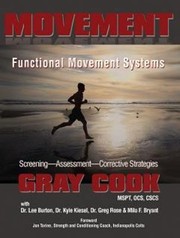
Integrates anatomy, biomechanics, and motor control into a practical framework for assessing and correcting movement dysfunction — a landmark text used by clinicians and strength coaches alike.

Reframes the body not as isolated muscles but as continuous myofascial lines of force, providing a sophisticated, systems-level model of how tension and movement propagate through the whole body.
Discussion
Keep reading
Paths that share books, cover the same subject, or open a related topic.