Precalculus is the quiet reason so many capable people bounce off calculus. The limits and derivatives are rarely the problem; the shaky algebra, the half-remembered trig identities, and the fuzzy sense of what a function is are. Precalculus done well closes those gaps so thoroughly that calculus feels like the natural next sentence rather than a wall.
The key is to rebuild from genuine foundations rather than skipping to advanced problem sets. The books below are chosen because they explain rather than merely drill, and because they connect algebra, coordinates, and trigonometry into one coherent picture instead of three disconnected units.
Rebuilding the foundations
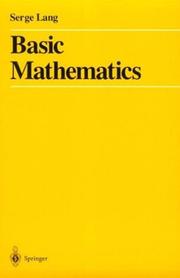
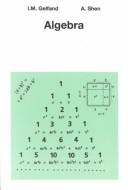
Start with Basic Mathematics, Serge Lang's no-nonsense reconstruction of arithmetic, algebra, and geometry for people who want to actually understand the machinery. Follow it with Algebra, where Gelfand teaches the subject as reasoning rather than recipes, with problems that reward thought. These two turn algebra from a bag of tricks into something you can see the logic of.
Functions and the standard course
Next, meet the central object of all later math. Precalculus by James Stewart is the comprehensive standard course covering functions, exponentials, logarithms, and more, and it works well as your spine. Pair it with Functions and graphs, Gelfand's short, brilliant book on how equations become pictures, which builds exactly the graphical intuition calculus will demand.
Trigonometry and the big picture
Trigonometry is where precalculus students most often stall, so give it real attention. Trigonometry by Gelfand develops the subject conceptually from the unit circle, while the Trigonometry text by Bogomolov supplies additional worked practice to cement the identities. Precalculus mathematics in a nutshell is George Simmons's famously compact review of geometry, algebra, and trig for readers who want the essentials fast. The method of coordinates sharpens the link between algebra and geometry that calculus relies on, and What is mathematics? closes the path by pulling back to show how all these pieces fit into the larger structure of the subject, a perfect bridge into calculus itself.
Work these in order and the transition to calculus becomes almost anticlimactic, in the best way. Follow the full path to arrive genuinely ready.
Follow the full reading path →
Ready to learn something deeply?
Build a reading path — free