Primatology is the study of our closest living relatives, and it rewards a narrative reading order more than a technical one. The field began with patient observation in the wild, matured into questions about social strategy and emotion, and now presses hard on the science of animal minds. Read it in that arc and you watch the discipline grow up.
The risk in this subject is anthropomorphism in both directions: seeing too much of ourselves in apes, or too little. The best books teach you to hold that tension, which is why the order below moves from raw observation toward careful argument about cognition.
Into the field
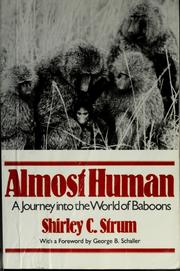
Start with In the shadow of man, Jane Goodall's account of the Gombe chimpanzees that overturned assumptions about tool use and animal individuality. Then read The Bonobo and the Atheist, where Frans de Waal uses our other close cousin to argue that morality has deep primate roots, and Almost human, Shirley Strum's long study of baboons that reframes their society around friendship and negotiation rather than brute dominance.
Politics and emotion
De Waal's work anchors the middle of the path. Chimpanzee Politics reads a captive colony like a Machiavellian court, showing coalition-building and strategy among apes. Mama's Last Hug turns to emotion, arguing that animals feel in ways continuous with our own. Are We Smart Enough to Know How Smart Animals Are? then confronts the methods problem directly: how our own biases and bad tests have long underrated animal intelligence.
The comparative mind
The final stretch widens the lens. The cultural lives of whales and dolphins shows that socially transmitted culture is not a primate monopoly, a useful check on primate exceptionalism. Primate cognition is the more technical treatment of what apes understand about goals, tools, and other minds, and Grooming, Gossip and the Evolution of Language connects primate social bonding to the origins of human speech. Demonic males confronts the darker side, the evolutionary roots of male violence, and Behave closes by placing primate behavior inside the full stack of biology that produces human conduct.
Read this way, primatology becomes less a search for ourselves in animals and more a disciplined encounter with other kinds of minds. Follow the full path from the field to the comparative science.
Follow the full reading path →
Ready to learn something deeply?
Build a reading path — free