The Best Biomedical Engineering Books, in Order
This curriculum builds a rigorous, well-rounded foundation in biomedical engineering across its four core pillars — biomechanics, medical imaging, biomaterials, and device design — starting from an intermediate level and progressing to advanced research-grade understanding. Each stage deepens both theoretical knowledge and practical application, with earlier books establishing the quantitative language and physical intuition that later texts demand.
Core Foundations
IntermediateBuild a unified quantitative framework across the major BME domains — mechanics, materials, physiology, and instrumentation — so that later specialized texts feel cohesive rather than isolated.
▸ Study plan for this stage
Pace: 8–10 weeks, ~40–50 pages/day (Enderle first: 3–4 weeks; Saltzman second: 4–5 weeks). Allocate 1–2 days per major topic cluster for integration and problem-solving.
- Quantitative modeling of biological systems using differential equations and linear systems theory (Enderle's emphasis on signal processing and control)
- Mechanical properties of biomaterials and tissues: stress–strain relationships, viscoelasticity, and anisotropy (Saltzman's materials framework)
- Physiological transport phenomena: diffusion, convection, and perfusion across cellular and tissue scales (Saltzman's transport-centric view)
- Instrumentation and signal acquisition: sensors, amplifiers, filtering, and noise in biomedical measurements (Enderle's instrumentation chapters)
- Dimensional analysis and scaling laws: how physical principles apply across vastly different biological length and time scales
- Integration of mechanics, materials, and physiology: recognizing how tissue mechanics emerges from molecular composition and how instrumentation must account for physiological constraints
- Feedback and homeostasis: control-theoretic perspective on how biological systems maintain stability (Enderle's systems approach)
- Biocompatibility and material selection: linking material properties to physiological response and clinical performance (Saltzman's biomaterials perspective)
- How do you set up and solve a differential equation model for a physiological system (e.g., drug clearance, neural signaling)? What assumptions simplify the problem?
- Given tissue mechanical data (stress–strain curve), how do you extract material parameters and predict behavior under different loading conditions?
- What is the role of diffusion vs. convection in nutrient transport to a tissue, and how do you estimate which dominates at a given length scale?
- Design a measurement system (sensor + electronics) for a specific biomedical signal. What are the noise sources, bandwidth requirements, and filtering strategy?
- How do material properties (elastic modulus, porosity, surface chemistry) influence both mechanical function and cellular response in a biomaterial?
- Compare the physiological and engineering constraints on a biomedical device (e.g., stent, scaffold, implant). How do they conflict or align?
- Work through Enderle's examples on modeling first-order and second-order physiological systems (e.g., glucose homeostasis, drug kinetics). Solve by hand, then verify numerically in MATLAB or Python.
- Extract material parameters from published stress–strain data for collagen, elastin, or bone. Plot the data, fit a constitutive model (linear elastic or viscoelastic), and predict behavior at untested strains.
- Estimate the Péclet number for nutrient diffusion into a tissue construct at different scales (cell, tissue, organ). Determine whether diffusion or convection dominates and justify design implications.
- Design a simple biomedical sensor circuit (e.g., ECG amplifier, strain gauge bridge) from first principles: specify gain, bandwidth, filtering, and noise performance. Sketch the circuit and justify component choices.
- Compare two biomaterials (e.g., natural vs. synthetic scaffold) using a decision matrix that weights mechanical properties, transport characteristics, biocompatibility, and manufacturability.
- Write a 2–3 page technical memo analyzing a real biomedical device (e.g., insulin pump, artificial heart valve, neural electrode). Identify the dominant physics (mechanics, transport, signal processing) and explain trade-offs in design.
Next up: This stage establishes the quantitative vocabulary and mental models needed to tackle specialized domains (tissue engineering, cardiovascular devices, neural interfaces, etc.) in later stages, where these unified principles will be applied to solve real clinical problems with deeper technical depth.
A canonical, broad-scope BME textbook that covers physiology, signals, biomechanics, biomaterials, and medical imaging in one volume — ideal for establishing shared vocabulary across all four pillars before diving deep into any one.

Complements Enderle with a stronger emphasis on how engineering principles translate into clinical solutions, reinforcing the device-design and materials mindset that will be essential in later stages.
Biomechanics & Tissue Mechanics
IntermediateDevelop a solid mechanical understanding of biological tissues, joints, and the cardiovascular system, including the mathematical tools (continuum mechanics, constitutive models) needed for device and implant design.
The definitive reference on soft-tissue mechanics by the field's founding figure; reading it first establishes the constitutive-modeling language that all subsequent biomechanics literature assumes.
Extends tissue mechanics into the musculoskeletal system — bone, cartilage, ligament — providing the applied context (implants, joint replacement) that bridges pure mechanics to device design.
Biomaterials & Biocompatibility
IntermediateUnderstand how materials interact with living systems at the molecular, cellular, and tissue levels, and learn the selection criteria and regulatory considerations that govern implantable and surface-contact devices.
▸ Study plan for this stage
Pace: 8–10 weeks, ~40–50 pages/day (Ratner first: 4–5 weeks; Hollinger second: 3–4 weeks)
- Biocompatibility as a dynamic interaction between material surface and biological environment, not an intrinsic material property
- Protein adsorption, cell adhesion, and inflammatory response pathways triggered by implant surfaces
- Structure-property relationships: how material composition, surface chemistry, and topography influence biological response
- Degradation mechanisms (hydrolytic, enzymatic, oxidative) and their effects on mechanical integrity and tissue integration
- Selection criteria for biomaterials based on application (load-bearing vs. soft tissue vs. drug delivery) and in vivo environment
- Regulatory pathways (FDA, ISO standards) for biocompatibility testing and clinical translation of implantable devices
- Common biomaterial classes: metals (Ti, stainless steel), ceramics (alumina, zirconia), polymers (PEEK, PLA, silicone), and composites
- What is biocompatibility and why is it not an intrinsic property of a material but rather a function of the application and biological environment?
- Describe the sequence of events when a biomaterial surface contacts blood or tissue, including protein adsorption, cell adhesion, and immune response.
- How do material properties (surface chemistry, roughness, porosity, stiffness) influence cell behavior and tissue integration?
- Compare the degradation pathways of metallic, ceramic, and polymeric biomaterials and explain how degradation products affect surrounding tissue.
- What are the key regulatory requirements (ISO, FDA) for demonstrating biocompatibility of an implantable device, and what testing methods are used?
- Given a specific clinical application (e.g., orthopedic implant, vascular stent, soft tissue scaffold), how would you select an appropriate biomaterial and justify your choice?
- Create a comparison matrix of at least four biomaterial classes (metals, ceramics, polymers, composites) across dimensions: biocompatibility, mechanical properties, degradation, cost, and clinical applications.
- Map the inflammatory cascade triggered by implant placement: identify key cell types, cytokines, and timeframes from acute to chronic response using Ratner's framework.
- Design a hypothetical biocompatibility testing protocol for a new polymeric joint spacer, specifying which ISO tests you would conduct and why each is necessary.
- Analyze a case study of a failed implant (e.g., silicone breast implant controversy, metal-on-metal hip failures) and trace the failure back to biocompatibility and material selection issues.
- Conduct a literature search for one biomaterial class (e.g., titanium alloys) and summarize how surface modifications (coating, texturing, chemical treatment) improve biocompatibility.
- Write a brief regulatory submission summary for a hypothetical implantable device, addressing biocompatibility, material selection rationale, and preclinical/clinical evidence.
Next up: This stage establishes the fundamental principles of how materials behave in biological environments, providing the foundation for the next stage—whether that focuses on specific tissue engineering applications, drug delivery systems, or advanced manufacturing techniques for biomaterial devices.

The most widely adopted biomaterials textbook; its logical progression from material classes → surface science → host response → clinical applications makes it the right starting point for this stage.
Provides a more concise, clinically oriented counterpoint to Ratner, reinforcing biocompatibility concepts and introducing scaffold and tissue-engineering applications that set up the advanced stage.
Medical Imaging
IntermediateMaster the physics, signal processing, and reconstruction mathematics behind the major imaging modalities (X-ray/CT, MRI, ultrasound, nuclear), and understand how image quality metrics drive clinical and device decisions.
▸ Study plan for this stage
Pace: 8–10 weeks, ~40–50 pages/day (mix of dense technical content and worked examples; allow extra time for mathematical derivations and signal processing concepts)
- Signal representation and Fourier analysis: understanding how medical images are signals in spatial and frequency domains, and how Fourier transforms enable reconstruction and filtering
- Image formation physics across modalities: the physical principles underlying X-ray/CT (attenuation, beam geometry), MRI (nuclear magnetic resonance, relaxation, pulse sequences), ultrasound (acoustic propagation, piezoelectric transduction), and nuclear imaging (radioactive decay, gamma detection)
- Reconstruction mathematics: filtered back-projection for CT, Fourier reconstruction, iterative algorithms, and how mathematical inversion recovers images from raw sensor data
- Spatial resolution, contrast, noise, and artifacts: quantitative metrics that define image quality and how hardware design, acquisition parameters, and reconstruction choices trade off these metrics
- System design trade-offs: how physics constraints, signal processing choices, and reconstruction algorithms determine clinical utility, dose, speed, and cost for each modality
- Sampling, aliasing, and frequency response: Nyquist theorem, point spread functions, and modulation transfer functions as they apply to medical imaging systems
- Image quality assessment: contrast-to-noise ratio, signal-to-noise ratio, spatial resolution limits, and how these drive clinical decision-making and device specifications
- Explain how the Fourier transform relates the spatial domain representation of a medical image to its frequency domain, and why this relationship is critical for understanding resolution and filtering in CT and MRI reconstruction
- Compare and contrast the physical principles of image formation in X-ray/CT versus MRI: what are the fundamental differences in how each modality encodes spatial information?
- Derive or explain the filtered back-projection algorithm: why is filtering necessary before back-projection, and how does the choice of filter affect image quality?
- Define and distinguish between spatial resolution, contrast resolution, and temporal resolution in medical imaging; provide examples of how each is measured and why each matters clinically
- How do noise, artifacts, and sampling limitations affect image quality in each modality, and what design or acquisition choices can mitigate them?
- For a given imaging task (e.g., detecting a small lesion), explain how you would trade off dose, acquisition time, spatial resolution, and contrast to optimize the imaging protocol
- Work through the Fourier analysis examples in Prince: compute the 1D and 2D Fourier transforms of simple functions (box, Gaussian, sinusoid) and sketch their frequency spectra; interpret what high and low frequencies represent in an image
- Implement or simulate filtered back-projection in MATLAB or Python using synthetic or real CT data; experiment with different filters (ramp, Hann, Hamming) and observe how they affect noise and resolution trade-offs
- Analyze a real MRI pulse sequence diagram (e.g., spin echo, gradient echo): trace the timing of RF pulses and gradients, and explain how spatial encoding is achieved in each direction
- Calculate signal-to-noise ratio, contrast-to-noise ratio, and modulation transfer function for a given imaging system; compare results across modalities or parameter sets
- Design a simple imaging protocol for a clinical scenario (e.g., detecting a brain tumor): specify acquisition parameters (field strength, pulse sequence, resolution, acquisition time) and justify trade-offs in image quality metrics
- Critically review a published medical image (from a journal or textbook): identify artifacts, assess spatial and contrast resolution, and propose how acquisition or reconstruction parameters could be adjusted to improve clinical utility
Next up: Mastery of imaging physics, signal processing, and reconstruction mathematics provides the foundation to move into advanced topics such as image processing (filtering, segmentation, registration), clinical applications and protocol optimization, or emerging modalities (photoacoustic imaging, optical coherence tomography), where you will apply these principles to solve real diagnostic and intervent
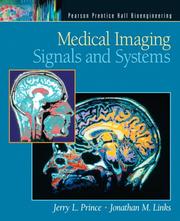
The standard graduate-level imaging textbook; it builds each modality from first principles using a consistent linear-systems framework, making it the ideal entry point for readers with an engineering background.
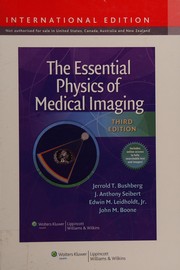
Provides the complementary physics depth — radiation, detectors, dosimetry — that Prince's signal-processing focus leaves implicit, giving a complete picture of how imaging hardware actually works.
Medical Device Design & Advanced Integration
ExpertSynthesize all prior knowledge into the full device development cycle — concept, design controls, prototyping, verification & validation, and FDA regulatory strategy — and engage with cutting-edge topics in neural interfaces and biosensors.
▸ Study plan for this stage
Pace: 8–10 weeks, ~40–50 pages/day (mix of dense technical chapters and case studies). Allocate 5–6 weeks for King's design controls and regulatory content, then 3–4 weeks for DiLorenzo's neuroengineering depth.
- Design controls framework: requirements, design specifications, design verification, and design validation as mandated by FDA 21 CFR Part 11 and IEC 62304
- Risk management and failure mode analysis (FMEA) applied to medical device development and clinical safety
- Prototyping strategies, materials selection, and manufacturing considerations for biomedical devices
- FDA regulatory pathways (510(k), PMA, De Novo) and post-market surveillance requirements
- Neural interface design principles: electrode materials, biocompatibility, signal acquisition, and chronic implant challenges
- Biosensor fundamentals: transduction mechanisms, signal conditioning, and integration into wearable and implantable systems
- Systems integration: bridging hardware, firmware, and software validation in complex medical devices
- Clinical translation: bridging bench-to-bedside through iterative design and human factors engineering
- Explain the relationship between design inputs, design outputs, design verification, and design validation in the context of FDA design controls. How do these stages interact in an iterative development cycle?
- Describe the key differences between 510(k), PMA, and De Novo regulatory pathways. When would you choose each for a novel neural interface device?
- What are the critical biocompatibility and material selection criteria for a chronically implanted neural electrode array, and how do they influence device longevity and performance?
- Design a risk management strategy (including FMEA) for a wireless biosensor patch. What are the top failure modes, and how would you mitigate them?
- Compare and contrast the signal acquisition and processing requirements for intracortical, epidural, and peripheral nerve interfaces. What are the trade-offs in spatial resolution, invasiveness, and signal quality?
- How would you structure a verification and validation plan for a closed-loop neural prosthetic device? What metrics and test protocols are essential?
- Work through a complete design control case study from King's book: select a real medical device (e.g., a glucose monitor or pacemaker), document design inputs and outputs, and map them to regulatory requirements.
- Conduct a failure mode and effects analysis (FMEA) on a wearable biosensor or implantable neural device. Identify at least 10 failure modes, assess severity/occurrence/detectability, and propose mitigation strategies.
- Create a regulatory strategy document for a hypothetical novel neural interface device: determine the appropriate FDA pathway, outline the evidence package needed, and draft a 510(k) or PMA submission outline.
- Design and prototype a simple neural signal acquisition front-end (e.g., using Arduino or similar): amplify, filter, and digitize a low-amplitude biosignal. Document design decisions and verify performance against specifications.
- Read and critically analyze a published neuroengineering paper (e.g., on chronic electrode performance or biocompatibility). Identify the design controls and validation methods used; discuss gaps and improvements.
- Develop a human factors and usability test plan for a neural prosthetic control interface. Define user tasks, success criteria, and metrics; conduct a mock usability session with peers.
Next up: This stage equips you with the complete device development lifecycle and cutting-edge neural/biosensor knowledge, positioning you to either specialize deeper into a specific device class (e.g., closed-loop neuromodulation, implantable sensors) or transition to leadership roles in biomedical engineering teams and regulatory affairs.

A structured, standards-aware guide to the entire device design process; reading it after the domain-specific stages lets the learner immediately connect regulatory requirements to real biomechanics, materials, and imaging decisions.

Represents the frontier where biomechanics, materials, imaging, and device design converge in neural interfaces — a fitting capstone that challenges the reader to apply every prior concept in one of BME's most demanding application areas.
Discussion
Keep reading
Paths that share books, cover the same subject, or open a related topic.