Almost everything written in English about Kabbalah falls into one of two piles. One is rigorous historical scholarship, largely founded by Gershom Scholem, which treats Jewish mysticism as a documented historical phenomenon with texts, dates, and controversies. The other is devotional or self-help writing, some of it from within living Jewish practice and some of it detached from Judaism entirely. Both piles use the same vocabulary — sefirot, Ein Sof, tikkun — and a reader who starts in the wrong one can go a long way without noticing.
There is also a genuine ordering problem inside the scholarly pile. Kabbalah is not a single doctrine; it is a chain of quite different systems — the Bahir, the thirteenth-century Zohar, Cordovero, the Lurianic revolution at Safed, Sabbatianism, Hasidism — each responding to the last. Read them out of sequence and the terminology stays constant while the meaning silently shifts underneath you.
The foundational scholarship
Zur Kabbalah und ihrer Symbolik is Scholem's essay collection on Kabbalistic symbolism, and one honest note is due: this is the German edition, so unless you read German you will want the English translation of the same essays, which is widely available. The material — the golem, the mystical shape of the Godhead, the symbolism of the Torah — is where Scholem is at his most vivid.
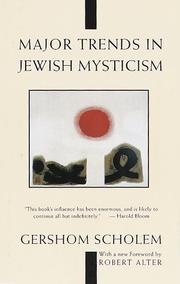
Major Trends in Jewish Mysticism is the book that founded the field, and it is the true anchor of this path. Its nine lectures move from Merkabah mysticism through the Zohar to Lurianic Kabbalah, Sabbatianism, and Hasidism, giving you exactly the chronological spine the subject needs. Scholem's conclusions have been argued with for eighty years — Moshe Idel's work is the best-known challenge — but the framework is still the one every later scholar positions against.
Go to the text
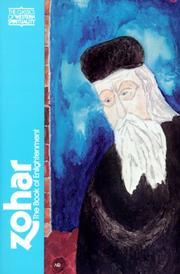
Zohar, the book of enlightenment is Daniel Matt's selected, annotated translation, and it is the right way to meet the central text of Kabbalah. The full Zohar runs to many volumes of difficult Aramaic; Matt selects passages, translates them with genuine literary care, and annotates enough that the associative, hallucinatory logic of the text becomes followable rather than baffling.
The crisis case study
Sabbatai Sevi is Scholem's enormous study of the seventeenth-century messianic movement and its collapse when its messiah converted to Islam. It is long and it is not an introduction — but it is the single best demonstration of what mystical ideas do when they escape the study and reach a mass movement. Read it after you already know the Lurianic system it draws on, or it will read as a very detailed story about people you have no context for.
Accessible landings
The Essential Kabbalah, Matt's thematic anthology of short passages with commentary, is the book to hand someone who wants a way in without a semester of history; many readers do well starting here and then going back to Scholem. God is a verb by David A. Cooper is the most popular book on the list and should be read as what it is — a contemporary neo-Hasidic devotional work, not historical scholarship. It is a reasonable closing note if you want the living practice, but do not mistake it for a source.
Read in this sequence and you will know both the history and the texts, and you will be able to tell the two literatures apart on sight.
Follow the full ordered path here: Best Books on Kabbalah, in Reading Order.
Ready to learn something deeply?
Build a reading path — free