Best Books on Development Economics and Global Poverty, in Reading Order
Development economics is a field defined by an unresolved argument: does poverty end because outsiders spend money on it, because institutions change, or because a thousand small things are fixed one at a time. This path establishes the facts first, then stages the great aid debate between Sachs and Easterly, then follows the randomised-trial revolution that tried to settle it empirically, then the institutional and historical objections to that whole approach, and closes with the question of what development is actually for.
The facts before the arguments
BeginnerKnow what has actually happened to global poverty, health and income over the past two centuries, so you can tell a real disagreement from a factual error.
▸ Study plan for this stage
Pace: Two to three weeks for about 730 pages. Factfulness (352 pages) reads in a few evenings and should be read fast — it is built from short chapters, each named for one cognitive instinct. The Great Escape (376 pages) is much denser and carries real charts; give it two weeks and do not skip the graphs,
- The four-income-level framework Rosling substitutes for the rich-world/poor-world binary, and why the binary is the specific error that makes most development commentary wrong
- The gap instinct, the negativity instinct and the straight-line instinct — the three of Rosling's ten that do the most damage to how people read poverty statistics
- Deaton's central claim that health and income improve together but unevenly, so progress and inequality are produced by the same process rather than being opposites
- The Great Escape as a metaphor: those who escape leave others behind, and the people left behind are worse off relative to a world that has moved
- Life expectancy and child mortality as the headline measures of development, and why Deaton trusts them more than income figures
- Deaton's scepticism about aid, stated openly in the last part of the book — that large aid flows to poor-country governments can weaken the accountability that produces state capacity
- How badly measured poverty data actually is: household surveys, purchasing power parity conversions, and why two credible sources can disagree about the same country
- What are Rosling's four income levels, and roughly how many people live at each?
- Which of Rosling's ten instincts do you personally fall for, and what specific belief did the book correct for you?
- What does Deaton mean by an escape, and who does he say gets left behind by it?
- Why does Deaton distrust aid, and is his objection about effectiveness, about politics, or about both?
- Where do Rosling and Deaton disagree in tone, and does the disagreement come from different facts or different temperaments?
- Take Rosling's thirteen-question quiz at the front of Factfulness before reading anything else and keep your score. Retake it after finishing the book.
- Write the aid-scepticism argument from the closing chapters of The Great Escape in 200 words, in Deaton's strongest form. You will need it as the reference version when Sachs argues the opposite in the next stage.
- Pick one country and sketch its child mortality and GDP per capita over the last fifty years from the data Deaton discusses. Note where the two lines move together and where they do not.
- List three beliefs you held about global poverty before this stage that turned out to be factually wrong, and write one sentence on where you picked each one up.
Next up: With the actual trajectory of global poverty in hand and Deaton's doubts about aid already stated, you can read the Sachs-Easterly argument as a real disagreement about causes rather than as a fight about whether things are getting better.
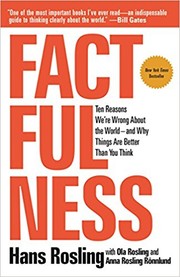
Corrects the systematically pessimistic picture most readers carry, using the data Rosling spent a career visualising. Read it first so you argue about the right world.
A Nobel laureate's history of how health and wealth improved together and left some countries behind. Deaton is sceptical of aid and says so, which sets up the next stage precisely.
The aid debate
BeginnerUnderstand the field's central public argument from all three of its main positions, and be able to state each one in its strongest form.
▸ Study plan for this stage
Pace: Four to five weeks for roughly 1,040 pages. Read The End of Poverty (416 pages) and The White Man's Burden (436 pages) back to back with as little gap as you can manage — they are explicitly arguing with each other and the rebuttals lose their force if you have forgotten the claim. Dead Aid is only
- The poverty trap: Sachs's claim that below a certain threshold a country cannot save enough to invest, so growth never starts without an outside injection of capital
- The big push and clinical economics — Sachs's diagnostic method, borrowed explicitly from medicine, and the Millennium Development Goals it was built to serve
- Planners versus searchers, Easterly's organising distinction: planners set global targets and answer to donors, searchers find local solutions and answer to the people they serve
- The feedback and accountability problem — Easterly's real objection is not that aid is wasteful but that nobody in the aid system faces consequences for failure
- Moyo's argument from the receiving end: government-to-government aid is a revenue stream that lets a government stop needing its own citizens' taxes, and therefore their consent
- Moyo's proposed alternatives — bond markets, trade, foreign direct investment, microfinance — and the objection that these are available precisely to the countries that need aid least
- Why all three authors can cite real evidence: aid is not one thing, and vaccination campaigns and structural adjustment loans behave nothing alike
- State Sachs's poverty trap in three sentences. What would have to be true of a country for the trap to be the binding constraint?
- What exactly is Easterly's objection to the Millennium Development Goals, and is it about the goals or about the machinery built to meet them?
- Where does Easterly concede that aid works, and what do those cases have in common?
- Moyo argues for phasing aid out over a fixed period. What is the strongest objection to that timetable, and does she answer it?
- All three authors agree on more than the public argument suggests. What do they actually agree about?
- Write a one-page summary of Sachs's case in his own terms, then a one-page summary of Easterly's, then mark every point where they are describing the same intervention differently rather than disagreeing about facts.
- Take one intervention discussed in both books — bed nets and fertiliser subsidies are the cleanest cases — and write out what Sachs predicts, what Easterly predicts, and what evidence would settle it.
- Read Moyo's proposal for replacing aid with bond issuance and list the countries you think could realistically do it today. The shortness of your list is the standard objection to her book.
- Draft the question you would put to each author if you could ask one. Keep the three questions; the next stage is an attempt to answer them empirically.
Next up: Sachs and Easterly argue at the level of whole countries and neither can be refuted from an armchair, which is precisely the frustration that produced the randomised-trial movement you read next.
The case for a big push: extreme poverty is a trap that a large, coordinated aid effort can break. Read the optimistic side first, because everything after it is a response.
The direct rebuttal — Easterly's planners-versus-searchers argument that top-down aid fails because it answers to donors, not to the poor. Read it back to back with Sachs; they are explicitly arguing with each other.
An African economist's case that government-to-government aid entrenches bad governance and should be phased out in favour of capital markets and trade. Contested, and worth reading for the argument from the receiving end.
Evidence from the ground up
IntermediateLearn how randomised controlled trials changed what counts as evidence in development, and what they can and cannot tell you.
▸ Study plan for this stage
Pace: Four to five weeks for about 1,010 pages. Poor Economics (320 pages) is the most readable of the three and structured as a tour of decisions poor households actually make, so read it first and take notes by chapter. Good Economics for Hard Times (416 pages) is longer and more argumentative. The Idea
- The randomised controlled trial imported into development: two comparable villages, one intervention, and the measured difference — plus what that design cannot tell you
- Banerjee and Duflo's reframing of the aid debate as unanswerable at the level of grand theory and answerable one question at a time
- The specific findings that made the field's name: deworming and school attendance, small nudges to immunisation uptake, bed net pricing, and the repeated result that free is not the same as underused
- The disappointing microcredit results, which the randomistas published against the field's own enthusiasm, and why that matters for their credibility
- External validity as the standing objection: a trial in Rajasthan tells you about Rajasthan, and the leap to national policy is a judgement call the method does not license
- Good Economics for Hard Times turning the method on rich-country questions — migration, trade adjustment, growth, climate — and the finding that people move far less than economic models predict
- Munk's Millennium Villages reporting as the concrete test of the big push: what happened in Dertu and Ruhiira when Sachs's model met local realities the model did not contain
- What is randomised in a randomised controlled trial, and what specific bias does the randomisation remove?
- Name three findings from Poor Economics that surprised you, and say what earlier belief each one corrected.
- What is the external validity problem, and how do Banerjee and Duflo answer it? Do you find the answer sufficient?
- In Good Economics for Hard Times, why do the authors argue that people are far less mobile than economists assume, and what follows for trade policy?
- What went wrong in the Millennium Villages according to Munk, and is it a failure of the theory, of the implementation, or of the measurement?
- Design a trial. Pick one intervention from Poor Economics, write out the treatment group, the control group, the outcome you would measure and the time horizon, in half a page. Then write the paragraph explaining why your result might not transfer to another country.
- Reread the microcredit chapter of Poor Economics and write 200 words on what the results actually showed versus what microcredit was sold as doing.
- After finishing The Idealist, go back to the poverty-trap chapters of The End of Poverty and mark every claim Munk's reporting tests. This is the single most useful hour in the whole path.
- Write one page on whether Munk's book refutes Sachs or only refutes one project of his. Both readings are defensible and the choice tells you how much weight you put on a single case.
Next up: Trials answer small questions well, which is exactly the opening for the next stage's objection — that what makes countries rich or poor operates at a scale no experiment can randomise.
The book that made the randomista approach legible to general readers, built from field experiments on bed nets, immunisation, microcredit and schooling. It is the empirical answer to the Sachs–Easterly stalemate.

Banerjee and Duflo turn the same method on migration, trade, growth and climate, including in rich countries. Read it second to see how far the approach stretches beyond village-level trials.

Six years reporting inside Sachs's Millennium Villages Project, watching the big push meet reality. The concrete test case for everything the first three stages argued about.
Institutions, history and growth
IntermediateEngage the objection that trials measure small interventions while the real determinants of prosperity are political, historical and national in scale.
▸ Study plan for this stage
Pace: Five to six weeks for roughly 930 pages, but the weight is uneven. Why Nations Fail is 529 pages and moves through case after historical case; read it over three weeks and resist the urge to skim the examples, because the examples are the argument. The Bottom Billion (209 pages) and Kicking Away the
- Inclusive versus extractive institutions — the distinction that carries the entire argument of Why Nations Fail, and the claim that it is political and not geographic or cultural
- Critical junctures and institutional drift: small institutional differences plus a shock produce divergent paths, which is how Acemoglu and Robinson explain why similar places ended up unlike
- Creative destruction as the mechanism extractive elites suppress, because growth that reallocates power threatens the people holding it
- Collier's four traps — conflict, natural resources, being landlocked with bad neighbours, and bad governance in a small country — as a more granular and more policy-usable diagnosis than institutions in general
- The resource curse and the specific fiscal mechanism behind it, which connects directly to Moyo's argument about aid in stage two
- Chang's historical case that Britain, the United States, Germany and Japan all industrialised behind tariffs, subsidies and weak patent enforcement — and are now advising against exactly those tools
- Kicking away the ladder as the phrase and the accusation: the policy advice offered to poor countries does not match the policies rich countries used
- The methodological tension running under all three books — institutional explanations are hard to test experimentally, which is precisely the previous stage's criticism of them
- Define inclusive and extractive institutions and give two examples of each from Why Nations Fail. Where do the categories blur?
- The Nogales comparison opens Why Nations Fail. What is that case designed to rule out, and does it succeed?
- Which of Collier's four traps do you think is most tractable to outside action, and which is least? Say why.
- What is Chang's strongest historical example, and what is the best reply a free-trade economist could make to it?
- Acemoglu and Robinson argue institutions cause prosperity. What would the reverse claim look like, and how do they rule it out?
- Take one country not discussed at length in Why Nations Fail and write two pages applying the inclusive/extractive framework to it. The exercise is valuable mainly because you will find the framework hard to falsify, which is the standard criticism.
- Sketch a table of Collier's four traps with a real country in each row and the specific policy he recommends for it. Then mark which recommendations require a functioning state to implement.
- Read Chang's chapter on the historical tariff record and check one of his claims against another source. He is making a strong empirical assertion and it deserves testing.
- Write 300 words answering Banerjee and Duflo on behalf of Acemoglu and Robinson: what can an institutional theorist say to someone who insists on randomised evidence?
Next up: Four stages have argued about how to make poor countries richer without ever asking what richer is supposed to mean, which is the gap Sen's final book exists to fill.
The most influential statement of the institutional thesis: inclusive versus extractive institutions decide long-run prosperity. Acemoglu and Robinson later won a Nobel for this research programme.

Identifies four specific traps — conflict, natural resources, landlockedness, bad governance — holding back the poorest countries, with a policy toolkit for each. More granular than Acemoglu, and less sweeping.
Argues that today's rich countries developed behind tariffs and subsidies they now forbid poorer ones to use. The strongest historical challenge to the free-market policy advice implicit in most of this list.
What development is for
IntermediateStep back from measurement and method to the underlying question of what counts as development in the first place.
▸ Study plan for this stage
Pace: Three to four weeks for 366 pages, which is far slower than the length implies. Development as Freedom is a lecture series turned into a book: the prose is clear but each chapter is doing philosophical work, and Sen builds his argument cumulatively. One chapter per sitting, with the previous chapter
- Capabilities versus commodities: what matters is what a person is actually able to do and be, not what goods they possess or what income they report
- Functionings and capability sets — the achieved states versus the range of achievable states, which is the technical core of Sen's alternative to income measurement
- Development as the removal of unfreedoms: poverty, tyranny, poor economic opportunity, systematic deprivation, neglect of public facilities, and the intolerance of repressive states
- Freedom as both the end and the means of development, so that political liberty is not a luxury purchased after growth but part of the mechanism that produces it
- Sen's famine argument: no substantial famine has occurred in a functioning democracy with a free press, because the information and the incentive to act both exist
- Missing women — the demographic evidence of differential survival that Sen used to make gender inequality a measurable development question rather than a moral aside
- Public discussion and social choice as the way values get decided, and Sen's refusal to hand a technocrat the list of what counts as a good life
- The reason this book belongs last: it supplies the standard against which the RCTs, the institutions and the aid debate can each be judged
- What is the difference between a functioning and a capability, and why does Sen insist on the distinction?
- Reconstruct Sen's famine argument. What exactly does a free press supply that a benevolent autocrat cannot?
- What does Sen mean by calling freedom constitutive as well as instrumental, and what would development policy look like if you took only the instrumental half?
- How would Sen assess a randomised trial that raised incomes but did not change what people were able to choose?
- Which earlier book in this path does Sen's framework most damage to, and which does it most support?
- Write out Sen's capability approach in 200 words without using the word income. If you cannot, you have not separated it from GDP thinking yet.
- Go back through the earlier books and judge one intervention from each — Sachs's Millennium Villages, an RCT from Poor Economics, and Collier's aid-plus-security proposal — against Sen's standard. Write a paragraph on each.
- Test the famine claim: find one twentieth-century famine and check Sen's two conditions against it. He states the claim strongly enough to be checkable.
- Finish by writing your own answer to the question the path opened with. Does poverty end through money, institutions, or a thousand small fixes? You now have the reading to hold a real position, and writing it down is the point of the whole sequence.
Next up: This is the end of the path — from the facts, through the aid argument, the trials and the institutional objection, to the question of what any of it is for — and the natural next step is following one thread into the primary literature rather than reading another survey.
Sen's capabilities argument reframes development as the expansion of what people are actually able to do and be, rather than growth in income. Save it for last: it is the standard against which every earlier book can be judged.
Discussion
Keep reading
Paths that share books, cover the same subject, or open a related topic.