This is one of the few subjects where reading order determines what you end up believing. The literature on McCarthyism divides roughly into two camps that have been arguing since the 1950s: one focused on the injustice done to Americans who lost careers and liberty over their politics, the other focused on evidence that Soviet intelligence did in fact recruit inside the United States government. Both camps have serious historians. Read only one and you will come away confident and half-informed.
The honest approach is to read the human record first — what the investigations actually did to people — and then the archival material that complicates the simplest version of the story. That is the order below.
Start with the atmosphere
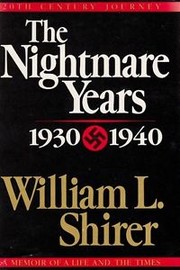
The Nightmare Years is not about McCarthy, and that is why it is useful early. Shirer's account of the 1930s establishes the world in which American communism was a live political current rather than a retrospective accusation, and understanding that context is what keeps the later books from reading as caricature.
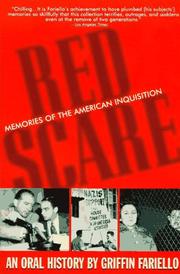
Then Red Scare: Memories of the American Inquisition, an oral history built from interviews with people on every side — blacklisted writers, informers, investigators, FBI agents. Because it is testimony rather than argument, it gives you the texture of the period before anyone has told you what to conclude about it.
Hear the blacklist from the people in it
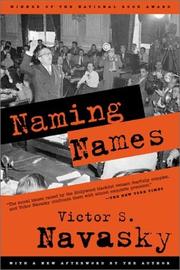
Naming names is the central book on the moral core of the era: Victor Navasky's study of the Hollywood witnesses who did and did not inform on colleagues, and of what informing cost on both sides. It is a book with a clear point of view and it does not hide it.
Scoundrel time is Lillian Hellman's memoir of her own HUAC appearance. Read it, but read it knowing it is contested — Hellman's self-presentation drew sharp public criticism from other writers of the period, and historians treat parts of it as unreliable. Its value is as a document of how a participant chose to tell the story, not as settled fact. Only Victims, Robert Vaughn's history of the entertainment-industry hearings, grew out of his doctoral work and is more scholarly than the actor-author framing suggests.
Weigh the man and the evidence
Two biographies of McCarthy anchor the middle of the path. Senator Joe McCarthy was written by a journalist who covered him and is the sharper, more contemporaneous portrait; A conspiracy so immense is the fuller modern biography, better on the politics that made his rise possible and the collapse that ended it. Read Rovere for the voice, Oshinsky for the structure.
Finally, the archival turn. Venona and The haunted wood draw on decrypted Soviet cables and, in the latter case, KGB files opened briefly in the 1990s. Together they make the case that Soviet espionage in American government was real and more extensive than many mid-century defenders believed. This is where the argument still lives: critics dispute how much the decrypts prove about specific individuals, and nearly all historians accept that McCarthy himself identified almost none of the actual agents and ruined many innocent people. Holding both facts at once is the point of reading the whole path rather than half of it.
If you want the wider framework around loyalty, dissent, and state power, the political science hub picks up that thread. Follow the full path to keep the sequence.
Follow the full ordered path here: Best Books on McCarthyism and the Red Scare, in Reading Order.