Jainism is one of the oldest continuously practiced traditions in India, and one of the most often misread from outside it. Newcomers usually meet it as a footnote to Buddhism, or as a catalogue of ascetic extremes — the mouth-cloth, the swept path, the fast unto death — without the metaphysics that makes any of it coherent. Nothing about Jain practice looks rational until you know what a jiva is and why karma is treated as a fine physical substance that literally adheres to the soul.
The second trap is the primary sources. The Jain canon is vast, split along sectarian lines (the Svetambara and Digambara traditions do not even agree on which texts are canonical), and mostly available in nineteenth-century scholarly translations with dense apparatus. Open one first and you will bounce off it. Open it third, after a modern introduction and a proper survey, and the same pages become readable.
Begin with a modern introduction
Start with Jainism by Jeffery D. Long. It is the gentlest genuine entry point in print: it lays out ahimsa (non-violence) as a metaphysical position rather than a moral preference, explains the Jain account of karma as matter, and introduces anekantavada, the doctrine that reality has many aspects and no single viewpoint captures all of them. Long writes for readers with no Sanskrit and no prior background, and he is careful to distinguish what Jains believe from what outsiders assume they believe.
Then the standard scholarly survey
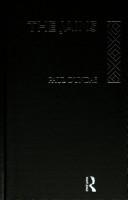
The Jains by Paul Dundas is the reference every university course assigns, and for good reason. It covers the historical development of the tradition, the Svetambara–Digambara split and what actually divides the two, the structure of mendicant orders, lay practice, temple ritual, and the tradition's long entanglement with regional political power. Dundas is denser than Long and assumes you already know the vocabulary, which is exactly why it sits second rather than first. On the contested questions — the historicity of Mahavira's predecessors, the dating of the canon — he describes the scholarly disagreement rather than settling it, which is the right posture for a reader still building a map.
Read a canonical text
Only now go to the source. Acaranga Sutra in Hermann Jacobi's translation is among the oldest surviving Svetambara texts, and it is concerned with monastic conduct: how to walk, what to accept as alms, how to avoid harming beings too small to see. Two honest warnings. Jacobi's Victorian English and dated transliteration take adjustment, and the text was written for mendicants, not lay readers — it will feel severe. Read it as evidence of how seriously the tradition takes its first principle, not as a manual.
Finish with the philosophy
The central philosophy of Jainism (Aneka nta-va da) by Bimal Krishna Matilal is short, technical, and worth the effort. Matilal was a first-rate analytic philosopher of Indian logic, and he treats anekantavada and its companion doctrine syadvada — the sevenfold scheme of conditional predication — as serious philosophical machinery rather than as pious relativism. It is the book that shows why Jain thought belongs in a philosophy syllabus and not only in a religious studies one. If you are also reading across traditions, the related subject hubs will point you at neighbouring paths.
Four books, in that order, take you from outsider curiosity to being able to read a Jain philosophical argument on its own terms.
Follow the full ordered path here: How to Learn Jainism from Books, in Reading Order.
Ready to learn something deeply?
Build a reading path — free