Best Books on International Relations, in Order
This curriculum builds from accessible introductions to international relations, through the great theoretical debates between realism and liberalism, into the hard questions of war, diplomacy, and world order. Each stage deepens analytical vocabulary and historical grounding so that later, more demanding texts feel earned rather than overwhelming.
Foundations: How the World Works
BeginnerGrasp the basic landscape of international relations — what states are, why they conflict and cooperate, and the key vocabulary (anarchy, power, sovereignty, national interest) needed for everything that follows.
▸ Study plan for this stage
Pace: 8–10 weeks, ~40–50 pages/day. Allocate roughly 3–4 weeks to Roberts' Penguin History (foundational overview), 2–3 weeks to Marshall's Prisoners of Geography (geographic determinism), and 2–3 weeks to Rodrik's Globalization Paradox (modern state tensions).
- States as the primary actors in international relations: their sovereignty, territorial boundaries, and monopoly on legitimate force (Roberts, Marshall)
- Geographic constraints and advantages shape state power, interests, and conflict patterns (Marshall's core thesis)
- Anarchy in international relations: the absence of a global authority forces states to pursue self-help and relative power gains (implicit in Roberts and Marshall)
- National interest as the driver of state behavior: how geography, history, and resources define what states want (Roberts, Marshall, Rodrik)
- Power as multidimensional: military, economic, and soft power, and how states accumulate and project it (Roberts, Marshall, Rodrik)
- The tension between globalization and state autonomy: why states resist or embrace integration despite economic benefits (Rodrik's central paradox)
- Historical contingency: how past conflicts, alliances, and decisions shape present international structures (Roberts)
- Interdependence and cooperation: when and why states cooperate despite anarchic conditions (Rodrik on trade agreements, Marshall on shared interests)
- What is sovereignty, and why do states jealously guard it even when cooperation might be economically beneficial?
- How does geography constrain or enable a state's power and foreign policy options? Provide examples from at least two regions discussed in Marshall.
- Why do states conflict in an anarchic international system, and what mechanisms exist to encourage cooperation despite the absence of a world government?
- What is national interest, and how do Roberts and Marshall explain why different states pursue different interests?
- According to Rodrik, what is the 'globalization paradox,' and why can't states fully embrace open markets without sacrificing democratic autonomy or social stability?
- How do historical events and path dependency (as shown in Roberts) explain current geopolitical tensions and state alignments?
- After reading Roberts: Create a timeline of 5–7 major geopolitical shifts (e.g., rise of nation-states, colonial expansion, world wars) and write one paragraph per shift explaining how it redefined state power and international order.
- After reading Marshall: Select three countries from different regions (e.g., Russia, Singapore, Brazil) and write a 1–2 page analysis of how geography shapes each country's strategic interests, vulnerabilities, and foreign policy choices.
- Comparative mapping exercise: Draw or annotate maps showing (a) geographic chokepoints Marshall highlights, (b) natural resources and borders, and (c) historical empires from Roberts. Annotate how these layers explain current conflicts or alliances.
- After reading Rodrik: Identify one trade agreement or international institution (e.g., EU, NAFTA, WTO) and write a 1–2 page memo analyzing the tension Rodrik identifies: what economic gains does it promise, and what democratic or social costs does it impose on member states?
- Debate preparation: Prepare arguments for both sides of this motion: 'Globalization is inevitable and states must accept it.' Use Roberts for historical precedent, Marshall for geographic realities, and Rodrik for the paradox.
- Case study synthesis: Choose one ongoing geopolitical conflict or cooperation (e.g., US–China relations, EU integration, Middle East tensions) and write a 2–3 page analysis integrating all three books: historical roots (Roberts), geographic drivers (Marshall), and modern economic/political tensions (Rodrik).
Next up: This stage equips you with the vocabulary, historical context, and conceptual foundations (anarchy, power, sovereignty, national interest) to understand the formal theories of international relations—realism, liberalism, and constructivism—that explain *why* states behave as Roberts and Marshall describe and *how* they navigate the tensions Rodrik identifies.

A sweeping historical backdrop that shows how states, empires, and civilizations have interacted across centuries — essential context before diving into IR theory.

An accessible, engaging introduction to geopolitics that explains how geography shapes the ambitions and constraints of major powers, making abstract IR concepts concrete and intuitive.
Introduces the tension between national sovereignty, global markets, and democratic politics — a perfect first encounter with the liberal vs. realist fault line in a readable, non-technical way.
The Great Theories: Realism vs. Liberalism
BeginnerUnderstand the two dominant paradigms of IR — realism and liberalism — their core assumptions, their strongest arguments, and the enduring debate between them.
▸ Study plan for this stage
Pace: 8–10 weeks, ~40–50 pages/day (with 1–2 days off per week for reflection and note-taking)
- Realism's core assumptions: anarchy, self-help, power-seeking, and the security dilemma as explained in Mearsheimer's offensive realism
- Liberalism's core assumptions: interdependence, institutions, democratic peace, and the possibility of cooperation as presented in Ikenberry's framework
- Carr's critique of idealism and his argument that power and morality are inseparable in international relations
- The concept of hegemony and how liberal hegemons (like the US in Ikenberry's analysis) differ from realist predictions of hegemonic instability
- Structural constraints on state behavior: how anarchy shapes rational action differently in realist versus liberal frameworks
- The role of institutions, law, and norms in moderating state behavior—central to understanding the liberal challenge to realism
- Mearsheimer's theory of offensive realism and the logic of great power competition for regional hegemony
- Ikenberry's concept of the liberal world order and how institutional design can lock in cooperation among democracies
- What are the fundamental differences between realism and liberalism in their assumptions about state motivation and the nature of international anarchy?
- How does Carr's analysis of the interwar period support or challenge realist and liberal interpretations of international politics?
- According to Mearsheimer, why do great powers pursue regional hegemony, and what does this imply for the stability of the international system?
- What mechanisms does Ikenberry identify that allow liberal democracies to cooperate despite living in an anarchic international system?
- How do institutions and international law function differently in realist versus liberal theories, and what evidence from these books supports each view?
- Can the rise and maintenance of the American liberal world order be explained by realist or liberal theory, and what does Ikenberry argue?
- Create a two-column comparison chart: list realist assumptions (from Mearsheimer) on one side and liberal assumptions (from Ikenberry) on the other, with specific quotes from each book supporting each point
- Analyze Carr's case studies from the Twenty Years' Crisis (e.g., the League of Nations, disarmament negotiations) and explain how each illustrates the tension between idealism and power politics
- Map out Mearsheimer's security dilemma using a specific historical case (e.g., US-China relations, NATO expansion): show how each state's defensive measures appear threatening to the other
- Diagram Ikenberry's liberal institutional architecture: identify the key institutions, rules, and norms he argues lock in cooperation, and trace how they constrain state behavior
- Write a 1,500-word essay: 'Can Liberalism Survive in an Anarchic System?' using evidence from all three books to construct and defend your argument
- Debate exercise: Assign one person to argue Mearsheimer's position (offensive realism predicts conflict) and another to argue Ikenberry's (liberal institutions enable peace); use specific examples from the books
Next up: This stage equips you with the foundational theoretical frameworks needed to evaluate specific IR phenomena—you now understand the competing lenses through which to interpret state behavior, making you ready to examine particular cases (regional conflicts, trade disputes, alliance formation) through both realist and liberal perspectives in subsequent stages.
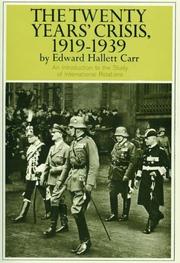
The founding text of realism, written on the eve of WWII; Carr demolishes naive liberal idealism and establishes power as the central fact of international life — read first to understand what realists are arguing.
The most forceful modern statement of offensive realism; after Carr sets the stage, Mearsheimer shows how the logic of great-power competition plays out systematically in history.
The definitive liberal counterargument — Ikenberry explains how the US-led international order of institutions, rules, and alliances has produced unprecedented cooperation, directly challenging the realist worldview.
War, Diplomacy, and the Use of Force
IntermediateUnderstand why wars start, how diplomacy works (and fails), and what the classic and modern literature says about the relationship between force and statecraft.
▸ Study plan for this stage
Pace: 12–14 weeks, ~40–50 pages/day. Clausewitz (4–5 weeks, ~35 pages/day), Copeland (3–4 weeks, ~45 pages/day), Kissinger (4–5 weeks, ~50 pages/day). Include 1–2 weeks for review and synthesis across all three texts.
- The trinity of war: government, military, and people—and how imbalances between them destabilize conflict
- Clausewitz's concept of friction: the gap between theory and reality in warfare, and why plans fail
- The relationship between political objectives and military means—war as an instrument of statecraft
- Copeland's theory of hegemonic war: how declining powers and shifting power distributions trigger major wars
- The security dilemma and arms racing as mechanisms that make diplomacy fail and war more likely
- Kissinger's balance-of-power diplomacy: how statesmen use negotiation, alliances, and force calculation to manage international order
- The distinction between wars of ideology/legitimacy versus wars of interest, and why some are harder to end
- How domestic politics, leadership perception, and misperception shape decisions to wage war or pursue diplomacy
- According to Clausewitz, what is the relationship between war's political purpose and its military conduct? Why does he argue that war cannot be separated from politics?
- What is friction in Clausewitz's theory, and how does it explain why military plans often fail in practice?
- In Copeland's framework, what conditions make a declining power most likely to initiate a major war, and how does this differ from the behavior of rising powers?
- How does Kissinger use the concept of the balance of power to explain both the outbreak of wars and the success or failure of diplomatic settlements?
- Compare Clausewitz's view of diplomacy with Kissinger's: what does each author suggest about when diplomacy can prevent war and when it is likely to fail?
- What role do misperceptions, domestic politics, and leadership beliefs play in the decision to go to war across all three authors?
- Map the trinity (government, military, people) for a historical war of your choice (e.g., WWI, the Napoleonic Wars, or a modern conflict). Identify which element was dominant and how imbalances contributed to the war's outcome.
- Identify three instances of 'friction' in a specific military campaign from Clausewitz's era or later. For each, explain how the gap between plan and reality affected the outcome.
- Apply Copeland's hegemonic war theory to a case study: analyze a major war (e.g., WWI, WWII, or the Peloponnesian War) and determine whether declining-power dynamics were a primary driver.
- Conduct a balance-of-power analysis of a historical diplomatic crisis (e.g., the Concert of Europe, the Cuban Missile Crisis, or the lead-up to WWI). Explain how shifts in power distribution shaped each side's decision to negotiate or escalate.
- Write a comparative memo: if Clausewitz, Copeland, and Kissinger were advising a modern statesman on whether to wage war or pursue diplomacy in a specific scenario, what would each recommend and why?
- Analyze a failed diplomatic negotiation (e.g., the Munich Agreement, the Iran nuclear talks, or the League of Nations) using concepts from all three authors. What does each theory predict about why it failed?
Next up: This stage equips you with the foundational theories of why wars occur and how force and diplomacy interact, preparing you to examine how international institutions, alliances, and modern constraints (economic interdependence, nuclear weapons, international law) either reinforce or challenge these classical patterns in contemporary global politics.

The indispensable classic on the nature of war as a political instrument; even a selective reading of Books I and VIII gives the reader a conceptual framework that all later strategic thinkers build on or argue against.
A rigorous, evidence-rich account of why great powers go to war, bridging classical theory and modern cases — ideal after Clausewitz to see how the logic of war plays out historically.
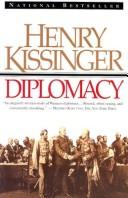
A sweeping history of modern statecraft from Richelieu to the Cold War; Kissinger shows how diplomacy, balance of power, and national interest interact in practice, grounding theory in vivid historical narrative.
The Modern World Order and Its Challenges
ExpertCritically assess the current international order — its origins, its strains, the rise of China, and competing visions for what comes next — applying all the theoretical tools built in earlier stages.
▸ Study plan for this stage
Pace: 8–10 weeks, ~40–50 pages/day. Kissinger (600 pages): 2.5 weeks; Allison (400 pages): 2 weeks; Zeihan (500 pages): 2.5 weeks; review and synthesis: 1 week.
- Kissinger's concept of legitimacy and the historical evolution of world order systems (Westphalian, Concert of Europe, post-WWII)
- The Thucydides Trap: structural causes of conflict when a rising power challenges a declining hegemon, as detailed in Allison's analysis
- China's rise as a peer competitor and the strategic dilemma it poses to the U.S.-led order (Kissinger and Allison)
- Geopolitical determinism: how geography, demographics, and resource constraints shape state behavior and international outcomes (Zeihan's framework)
- The fragmentation of the post-Cold War consensus and competing visions for order: liberal internationalism vs. great power management vs. regional spheres of influence
- The role of technology, energy, and supply chains in reshaping power distribution and state vulnerability (Zeihan)
- How legitimacy crises and power transitions interact: when declining orders lose moral authority and rising powers lack acceptance
- Strategic hedging and multipolarity: how middle powers and non-aligned states navigate great power competition
- What does Kissinger mean by 'legitimacy' in world order, and how have different historical orders (Westphalian, Concert of Europe, post-1945) attempted to establish it?
- According to Allison, what is the Thucydides Trap, and why does he argue it applies to U.S.-China relations despite differences from ancient Athens and Sparta?
- How do Kissinger and Allison differ in their assessment of whether U.S.-China conflict is inevitable, and what evidence does each provide?
- What role does geography play in Zeihan's analysis of the coming world order, and how does it contradict or complement Kissinger's emphasis on legitimacy?
- What are the three competing visions for post-American order that emerge across these three books, and what would each look like in practice?
- How do Zeihan's arguments about energy independence and supply chain vulnerability reshape the traditional great power competition framework discussed by Kissinger and Allison?
- Create a timeline comparing Kissinger's three historical world orders (Westphalian, Concert of Europe, post-1945), noting the legitimacy mechanism, key powers, and how each collapsed or transformed.
- Map the Thucydides Trap onto U.S.-China relations using Allison's 16 historical cases: identify which structural pressures (military, economic, domestic politics) are most acute and which differ from past cases.
- Write a 2–3 page memo from the perspective of a Chinese strategist responding to Kissinger's and Allison's diagnoses: what would Beijing's counter-argument be about legitimacy and inevitability?
- Build a geopolitical vulnerability matrix for 5–6 major powers (U.S., China, EU, India, Russia, Japan) using Zeihan's framework: assess their dependence on energy, food, minerals, and maritime chokepoints.
- Debate exercise: Assign students to defend three competing visions for the next world order—U.S. liberal hegemony, Chinese-led regional spheres, or Zeihan's fragmented multipolar system—using evidence from all three books.
- Analyze a recent geopolitical crisis (e.g., Ukraine, Taiwan tensions, trade wars) through the lens of each author: How would Kissinger, Allison, and Zeihan each explain it, and where do they agree or diverge?
Next up: This stage equips you with a sophisticated, multi-perspective framework for diagnosing the current international order's stability and trajectory; the next stage will likely focus on specific policy domains (trade, security, technology, climate) or regional orders where these theoretical tensions play out in concrete institutional and diplomatic forms.

Synthesizes centuries of IR history into a meditation on whether a stable world order is possible today; a natural capstone that rewards readers who have already absorbed realist and liberal frameworks.

Uses the concept of 'Thucydides's Trap' to examine US-China rivalry through historical analogies — a focused, urgent application of realist theory to the defining geopolitical question of our era.

A provocative, data-driven argument that deglobalization and demographic decline are fracturing the US-led order; challenges liberal assumptions and forces the reader to think independently about what comes next.
Discussion
Keep reading
Paths that share books, cover the same subject, or open a related topic.