Bruno Schulz Reading Order: Where to Start
Bruno Schulz published two thin books of stories before he was shot in the street in Drohobycz in 1942, and that is the entire body of fiction — a reading path for Schulz is therefore short and honest about being short. Read the two collections first, in publication order, then the letters and the biography that reconstruct the man from what survived, then the novels other writers wrote out of his absence, which have become part of how he is read. The whole path is a few hundred pages of Schulz and a great deal of afterlife.
The Two Books
IntermediateRead everything Schulz published, and get the essential Schulz sentence: a provincial Galician shop turned into a cosmology.
▸ Study plan for this stage
Pace: Two to three weeks for The street of crocodiles (160 pages) and Sanatorium under the sign of the hourglass (178) — and that is the complete works. Bruno Schulz published two thin collections of stories and was shot dead in the street in his home town of Drohobycz in 1942 by a Gestapo officer; there
- Matter as alive: Schulz's central move is to treat wallpaper, weather, shop stock and furniture as if they had intentions, which is why the prose feels closer to myth than to memoir
- The father as a mythological figure — a shopkeeper who becomes a bird-breeder, a cockroach, a heresiarch of matter — and the continuous arc across both books is his decline
- Drohobycz transfigured: a provincial Galician town of shops and market squares turned into a cosmology without ever leaving the map
- The Street of Crocodiles as a specific place in the story — the tawdry modern commercial district — and Schulz's contempt for its cheapness as a statement about modernity
- The 'thirteenth month' and other impossible times, which is how Schulz gets around plot entirely: things recur rather than progress
- Sanatorium as the stranger book, more openly fantastical, with time itself becoming negotiable in the title story
- Reading in translation: Celina Wieniewska's English versions have been the standard for decades and are themselves stylised, so the prose you meet is a collaboration
- What actually happens to the father across the two books, and would you call it a plot?
- Why is the Street of Crocodiles district treated with such disgust, and what does Schulz think it represents?
- How does Schulz make objects seem alive — what specific grammatical habits does he use?
- What does the thirteenth month allow him to do that a straightforward chronology would not?
- How is Sanatorium under the sign of the hourglass different in register from the first collection, and does it feel later?
- Read no more than 20 pages at a sitting. Schulz is one of the very few writers where reading less at a time produces more.
- Copy out one sentence about weather and one about a shop. Put them side by side; they will be written in the same register, which is the entire technique.
- Track the father's transformations in order across both books. Written down, they are a single narrative that neither collection states outright.
- Look at Schulz's own drawings, which are widely reproduced. He was a drawing teacher by profession, and the visual work makes the obsessions in the prose considerably clearer.
Next up: That is the whole of Schulz's fiction, which is why the rest of this path is about him rather than by him — and the next stage is the surviving evidence from which the man has had to be reconstructed.
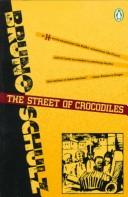
His first collection, published in Polish as Cinnamon Shops, and the only place to start. The father, the shop and the town of Drohobycz are all here, transfigured by a prose that treats matter as if it were alive.

The second and last collection, stranger and more openly fantastical than the first. Read it after The Street of Crocodiles: the father's decline is a continuous arc across both books.
The Man and the Silence
IntermediateReconstruct Schulz from the surviving letters, drawings and biography, and understand what was lost.
▸ Study plan for this stage
Pace: Three to four weeks. Letters and drawings of Bruno Schulz is 256 pages but is a collection to move around in rather than read straight through — dip, then read the essays properly. Regions of the great heresy is 256 pages of biography and reads steadily. Bruno Schulz - an Artist, a Murder, and the H
- The letters as the only place Schulz states his aesthetic directly rather than dramatising it — this is where the two collections become legible as a deliberate project
- Schulz the drawing teacher: his graphic work, particularly the masochistic Booke of Idolatry, which is a side of him the stories only imply
- Jerzy Ficowski's decades of detective work, tracking down everyone who had known Schulz and recovering most of the surviving material — Regions of the great heresy is both biography and provenance
- How thin the record is. Much of what we have exists because one man spent a lifetime looking, and the gaps are permanent
- The lost Messiah manuscript, which has never been found and which shapes everything written about Schulz afterward
- The circumstances of the murder in 1942, and the specific, appalling detail of the rivalry between two officers that led to it
- The Drohobycz murals discovered in 2001 in a pantry, removed to Israel, and fought over internationally — the subject of Benjamin Balint's book and the clearest case of Schulz's remains becoming a political object
- What does Schulz say in the letters about what he was trying to do, and does it match what you read in the stories?
- How much of what survives of Schulz do we owe to Ficowski specifically?
- What happened in Drohobycz in November 1942, and what does the specific circumstance say about the machinery of the Holocaust in a small town?
- Who has a legitimate claim to the murals — Ukraine, Israel, Poland, or a category none of those cover?
- What is the difference between the Schulz of the stories and the Schulz of the biography, and does knowing the second change the first?
- Read the letters in short passages between the biographies rather than all at once. They work as commentary and are exhausting read continuously.
- Find Drohobycz on a map and note which country it has been in since 1900. The sequence — Austria-Hungary, Poland, the Soviet Union, Germany, the Soviet Union, Ukraine — is the whole context of his life and death.
- After Ficowski, list what we do not know about Schulz. It is a longer list than the one of what we do, and the missing novel is only part of it.
- Write a paragraph on who you think should hold the murals. There is no comfortable answer, which is precisely why Balint wrote a book about it.
Next up: With the life reconstructed and the absence made concrete, the last stage turns to what other writers have built in the space where Schulz's third book should have been — which has become inseparable from how he is now read.
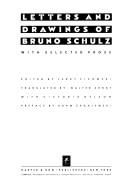
The correspondence and graphic work, which is where his aesthetic is stated directly rather than dramatised. Read it third — it makes the two collections legible as a deliberate project rather than a curiosity.
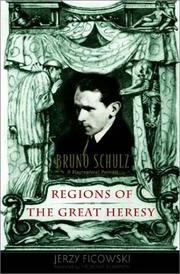
The standard life, written by the man who spent decades tracking down everyone who had known Schulz. Ficowski also recovered most of the surviving material, so this is both biography and provenance.

A recent account of the murder and of the international fight over the murals found in Drohobycz in 2001. Read it after Ficowski: it is the story of what happened to Schulz's remains, literal and literary.
The Schulz Afterlife
IntermediateRead the fiction other writers built out of his disappearance, which is now inseparable from his reputation.
▸ Study plan for this stage
Pace: Three to four weeks, and the most demanding stage in the path even though only one of the three books is long. The Messiah of Stockholm is 141 pages and reads in two evenings. See Under Love is a long, formally wild novel and its Schulz section — the one that matters here — is difficult in a way no
- The Messiah of Stockholm's premise: a Swedish book reviewer convinced he is Schulz's son, and a manuscript claiming to be the lost Messiah — Ozick writing about literary fraud and literary longing at once
- Schulz as a figure other writers project onto, which is what happens when a body of work is small enough to hold and its author is murdered
- See Under Love's second section, in which Schulz survives by becoming a salmon in the Baltic — formally extreme, sincerely meant, and one of the strangest things in postwar fiction
- Grossman writing the Holocaust through a child's imagination rather than through testimony, which is the argument the whole novel makes about representation
- Tree of Codes as erasure: Foer physically cut away the text of The Street of Crocodiles until a new short story remained in the holes
- The ethics of the afterlife: at what point does building on a murdered writer's work honour him and at what point does it consume him — all three books know this is the question
- Why the afterlife is now part of the reading. Schulz's reputation runs through Ozick, Grossman and Foer, and a reader who stops at the two collections gets an incomplete picture of how he is received
- What is Ozick's book actually about — Schulz, or the desire to be descended from someone like him?
- Why does Grossman make Schulz a salmon? What does the impossibility permit that realism would not?
- Does Tree of Codes work as a text, or only as an object? Both answers are defensible and the book invites the argument.
- Is there a point at which writing about Schulz becomes appropriating him? Locate it if you can.
- Having read all of this, how much of your sense of Schulz comes from his own 340 pages and how much from the people who came after?
- Read Tree of Codes with a copy of The street of crocodiles open beside it. The cut text is drawn from that book, and the exercise is meaningless without the source.
- Buy Tree of Codes in physical form or skip it. It is a die-cut object and no screen version exists that does anything.
- In See Under Love, read the Schulz section carefully and the rest at whatever pace suits you. It is a long novel and this path only requires part of it.
- Finally, reread the first story of The street of crocodiles. After a biography, a murder, an international lawsuit and three novels about his absence, the actual sentences are still the best thing here — which is the honest conclusion of this path.
Next up: This is the end of the path: two thin books by Schulz and a large literature about the hole he left, which is the accurate shape of his reputation and the reason his 340 surviving pages are worth rereading rather than replacing.
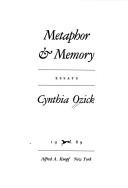
A Stockholm book reviewer who believes he is Schulz's son, and the lost manuscript called The Messiah. The most famous novel written about Schulz's absence, and it assumes you have read him.
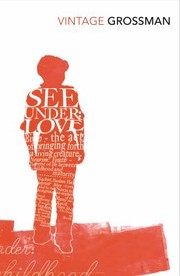
A long, formally wild Israeli novel whose second section imagines Schulz surviving as a salmon. Difficult and extraordinary; the Schulz material is unreadable without the two collections behind it.
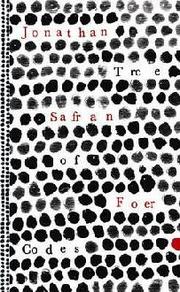
The Street of Crocodiles physically cut away until a new short text remains in the holes. Read it genuinely last — it is an object rather than a book, and it only means anything if you know the text it was carved from.
Discussion
Keep reading
Paths that share books, cover the same subject, or open a related topic.