Lean and Six Sigma: the best books to read in order
This curriculum builds a rigorous, practical mastery of Lean and Six Sigma from the ground up, starting with the foundational philosophies and vocabulary before layering in statistical tools, DMAIC methodology, and advanced integration. Each stage prepares the reader for the next, so concepts like waste, variation, and process thinking are fully internalized before tackling data-heavy or leadership-level material.
Foundations: Lean Thinking & the Toyota Way
BeginnerUnderstand the core philosophy of waste elimination, continuous improvement (kaizen), and the principles that underpin both Lean and Six Sigma before touching any tools or statistics.
▸ Study plan for this stage
Pace: 8–10 weeks, ~40–50 pages/day (accounting for reflection and note-taking). Week 1–3: "The Goal" (320 pages); Week 4–6: "The Toyota Way" (400 pages); Week 7–10: "Lean Thinking" (350 pages), with 1–2 weeks buffer for review and synthesis.
- The Theory of Constraints (TOC): identifying and elevating the system bottleneck as the primary lever for improvement, not local optimization
- Muda (waste): the seven types of waste in manufacturing and processes, and why waste elimination is the foundation of Lean
- Kaizen (continuous improvement): the cultural and operational commitment to small, incremental, relentless improvement by all employees
- The Toyota Way's 14 principles: the philosophy-before-tools approach that balances respect for people, process discipline, and long-term thinking
- Value and value streams: defining what customers truly value, mapping the flow of activities that create it, and eliminating non-value-added steps
- Pull systems vs. push systems: how demand-driven production (pull) reduces inventory, lead time, and waste compared to forecast-driven (push)
- Standardized work and visual management: how clear, repeatable processes and transparent communication enable continuous improvement
- Respect for people and empowerment: why frontline workers are the primary source of improvement ideas and must be engaged, not just directed
- What is the Theory of Constraints, and why does Goldratt argue that local optimization of individual resources is counterproductive to system performance?
- Name and describe at least five of the seven types of muda (waste) identified in Lean, and give a real-world example of each from your own experience or the books.
- What are the 14 principles of the Toyota Way, and how do they differ from traditional Western management approaches to cost-cutting and efficiency?
- Explain the difference between a push system and a pull system. Why do pull systems reduce inventory and lead time, and what does this mean for waste elimination?
- What is kaizen, and how does it depend on respect for people and frontline worker engagement rather than top-down directives?
- How do value stream mapping and the identification of non-value-added activities form the foundation for Lean transformation, as described in 'Lean Thinking'?
- Map a value stream in your own work or daily life (e.g., a project workflow, a household task, or a service process). Identify all steps, categorize them as value-added or non-value-added, and calculate the ratio of value-added time to total time. Write a one-page summary of waste you discovered.
- Identify a bottleneck (constraint) in a process you know well. Using Goldratt's five focusing steps from 'The Goal', outline how you would elevate that constraint and what the expected impact would be on the overall system.
- Create a visual one-page summary of the 14 principles of the Toyota Way, grouping them by theme (e.g., philosophy, process, people). Reflect on which 2–3 principles are most foreign to your current organization or mindset.
- Conduct a 'waste walk' in your workplace or a familiar environment (office, store, factory, etc.). Document examples of each of the seven types of muda you observe, with photos or sketches if possible, and propose one small kaizen improvement for each.
- Interview a colleague or manager about a recent process improvement initiative. Analyze it through the lens of the books: Was it driven by Theory of Constraints thinking? Did it respect people? Was it pull or push? Write a 2–3 page reflection.
- Design a simple pull system for a routine task (e.g., restocking supplies, scheduling meetings, or managing a to-do list). Document the current push system, redesign it as pull, and run it for one week. Capture the differences in lead time, inventory, and stress.
Next up: This stage establishes the philosophical and cultural foundation—waste elimination, continuous improvement, and systems thinking—that makes the tools and statistical methods of Six Sigma (process measurement, control, and optimization) both meaningful and sustainable in the next stage.
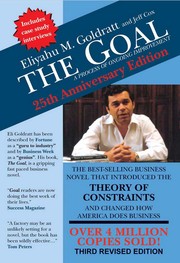
A novel-format introduction to process thinking, bottlenecks, and flow — it builds the intuition for why waste and variation hurt systems, making all subsequent Lean/Six Sigma concepts feel urgent and real.
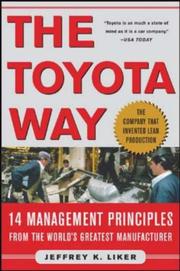
Establishes the 14 management principles behind the Toyota Production System — the original source of Lean — giving the reader a cultural and philosophical framework before diving into specific tools.
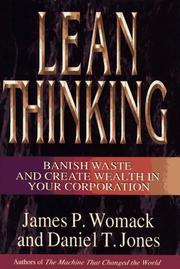
Defines the five core Lean principles (value, value stream, flow, pull, perfection) with real company examples, translating Toyota's factory floor ideas into a universal business language.
Core Lean Tools & Waste Reduction
BeginnerLearn to see and map waste in any process using value-stream mapping and other hands-on Lean tools, and understand how to design flow and pull systems.
▸ Study plan for this stage
Pace: 4–5 weeks, ~25–30 pages/day. *Learning to See* (~100 pages) in weeks 1–2; *Toyota Kata* (~150 pages) in weeks 2–5, with 2–3 days per week reserved for hands-on practice and reflection.
- Value-stream mapping (VSM) as a visual tool to identify and eliminate waste across an entire process from raw material to customer
- The seven types of waste (muda): overproduction, waiting, transport, overprocessing, inventory, motion, and defects
- Current-state vs. future-state mapping: documenting reality first, then designing the ideal flow
- Flow and pull systems: pushing work based on demand (pull) rather than schedule (push) to reduce inventory and waiting
- The Kata framework: a structured practice routine of Grasp Situation → Grasp Target Condition → Establish Next Steps → Execute & Learn, repeated in short cycles
- Coaching kata and coaching questions: how to develop problem-solving capability in others through guided inquiry rather than directive answers
- Continuous improvement as a daily habit: small, repeated experiments and reflection cycles that compound over time
- What are the seven types of waste, and how would you identify each one in a real process you observe?
- How do you construct a current-state value-stream map, and what information must you gather from the gemba (shop floor)?
- What is the difference between a push system and a pull system, and why does pull reduce inventory and lead time?
- Describe the four steps of the Toyota Kata cycle and explain how they form a repeating pattern for continuous improvement.
- What is the role of a coach in the Kata framework, and how do coaching questions differ from giving direct instructions?
- How would you design a future-state value-stream map that reduces lead time and inventory while maintaining quality?
- Map the current state of a real process you know well (e.g., your morning routine, a work task, or a small business process): draw the flow, identify handoffs, waiting time, and inventory; label cycle time and lead time at each step.
- Identify and categorize waste in your current-state map using the seven types of muda; mark at least 3–5 instances and explain why each is waste from the customer's perspective.
- Design a future-state value-stream map for the same process: sketch how you would reduce lead time by 30–50%, introduce pull signals, and minimize inventory or batch sizes.
- Conduct a gemba walk in a real environment (workplace, retail store, restaurant, etc.): observe the actual flow, talk to people doing the work, take photos or notes, and identify one major source of waste.
- Practice the Kata cycle on a small, personal improvement challenge (e.g., reducing time to pack a bag, streamlining a weekly task): complete at least 3 full cycles of Grasp Situation → Target Condition → Next Steps → Execute & Learn, documenting your thinking and results.
- Role-play as a coach and a practitioner: have a partner describe a process problem, and practice asking coaching questions (from *Toyota Kata*) to help them discover the root cause and next step, rather than telling them the answer.
Next up: Mastering VSM and the Kata cycle equips you to see waste and run improvement experiments, preparing you to dive deeper into statistical methods, advanced problem-solving tools, and Six Sigma's data-driven approach to reducing variation and defects.

The definitive workbook on value-stream mapping (VSM) — the single most important Lean tool — read immediately after absorbing Lean principles so the reader can apply them visually and practically.
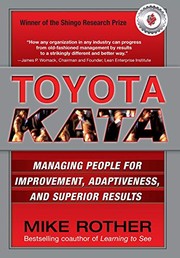
Reveals the daily improvement and coaching routines that sustain Lean gains over time, bridging the gap between one-time tool use and a true continuous-improvement culture.
Six Sigma Fundamentals & DMAIC
IntermediateMaster the DMAIC problem-solving framework and the statistical thinking behind Six Sigma — variation, measurement, and data-driven decision-making — at a practitioner (Green Belt) level.
▸ Study plan for this stage
Pace: 8–10 weeks, ~40–50 pages/day (with 2–3 days/week for exercises and review)
- DMAIC framework: Define, Measure, Analyze, Improve, Control phases and their sequential logic
- Variation as the root cause of poor quality; understanding common cause vs. special cause variation
- Measurement system analysis (MSA) and Gage R&R to ensure data integrity
- Statistical thinking: hypothesis testing, control charts, and process capability (Cp, Cpk)
- Process mapping and root cause analysis tools (fishbone, Pareto, 5 Why) within DMAIC
- Lean principles integration: waste elimination and flow optimization alongside Six Sigma rigor
- Design of Experiments (DOE) and regression analysis for improvement phase decision-making
- Control plans, standard work, and sustaining improvements post-implementation
- What are the five phases of DMAIC, and what is the primary objective and key deliverable of each phase?
- How do you distinguish between common cause and special cause variation, and why does this distinction matter for process improvement?
- What is a Gage R&R study, and why is measurement system adequacy critical before analyzing process data?
- How do you calculate and interpret process capability indices (Cp and Cpk), and what do they tell you about a process?
- What is the relationship between Lean and Six Sigma, and how do waste elimination and variation reduction work together?
- How would you design a simple experiment (DOE) to test improvement hypotheses, and what role does statistical significance play in decision-making?
- Map a real or hypothetical process end-to-end; identify process steps, inputs, outputs, and potential sources of variation using Pyzdek's process mapping framework
- Conduct a Gage R&R study on a measurement system you have access to (or use a case study dataset); calculate repeatability and reproducibility, and determine if the system is adequate
- Collect 20–30 data points from a process; create a control chart (I-MR or X-bar/R chart) and identify any special cause signals or out-of-control points
- Calculate Cp and Cpk for a process using real or simulated data; interpret the results and explain what improvement actions are needed
- Perform a root cause analysis using fishbone and Pareto analysis on a process problem; prioritize the vital few causes using the 80/20 principle
- Design a simple 2² or 2³ factorial experiment to test two or three process factors; collect data, analyze results, and recommend optimal settings
Next up: This stage equips you with the statistical rigor and problem-solving discipline of Six Sigma; the next stage will deepen your ability to design robust processes from scratch (Design for Six Sigma / DFSS) and lead organizational transformation at scale.
The most comprehensive and widely used Six Sigma reference; read first in this stage to get a full map of DMAIC phases, roles, and tools before going deeper into any single area.
Explicitly integrates Lean speed with Six Sigma quality into a unified methodology, showing how DMAIC and waste-reduction tools work together — a critical bridge after learning each discipline separately.
Written by one of Six Sigma's originators, this book deepens understanding of the statistical and business-case logic behind the methodology, reinforcing why reducing variation drives bottom-line results.
Advanced Tools, Statistics & Design
ExpertApply advanced statistical tools — including design of experiments, measurement system analysis, and process capability — and extend quality thinking into product and process design (DFSS/DMADV).
▸ Study plan for this stage
Pace: 8–10 weeks, ~25–30 pages/day (mix of dense statistical content and design methodology; allow extra time for worked examples and calculations)
- Hypothesis testing and p-values: understanding statistical significance and when to reject the null hypothesis
- Design of Experiments (DOE): factorial designs, main effects, interactions, and optimization through systematic variation
- Measurement System Analysis (MSA/Gage R&R): validating that your measurement process is accurate and repeatable before analyzing data
- Process Capability (Cp, Cpk, Pp, Ppk): quantifying whether a process can consistently meet specifications
- Design for Six Sigma (DFSS) and DMADV methodology: Define, Measure, Analyze, Design, Verify phases for building quality into new products and processes
- Robust design principles: creating designs insensitive to variation and noise factors
- Transfer functions and critical-to-quality (CTQ) characteristics: linking customer needs to design parameters
- Tolerance design and design optimization: balancing cost, performance, and manufacturability
- What is the difference between Cp and Cpk, and why is Cpk more useful for assessing process capability?
- How do you design a factorial experiment, and what information do main effects and interaction plots reveal?
- What is Gage R&R, and why must measurement system variation be acceptable before analyzing process data?
- What are the five phases of DMADV, and how does DFSS differ from traditional DMAIC improvement?
- How do you use transfer functions to connect customer requirements to design specifications?
- What is robust design, and how do noise factors and control factors differ in DOE?
- Work through a complete hypothesis test example from Brussee: state the null hypothesis, calculate the test statistic, find the p-value, and draw a conclusion
- Design a 2³ or 2⁴ factorial experiment for a real or simulated process; create a design matrix, analyze main effects and interactions, and interpret the results
- Conduct a Gage R&R study on a measurement process (real or simulated): collect repeat measurements, calculate repeatability and reproducibility, and determine if the system is acceptable
- Calculate Cp, Cpk, Pp, and Ppk for a process dataset; compare the indices and explain what they reveal about process centering and spread
- Map a customer need to a CTQ characteristic, then develop a transfer function linking the CTQ to design parameters using Chowdhury's framework
- Apply the DMADV methodology to a new product or process design scenario: complete Define, Measure, Analyze, and Design phases with documented outputs
Next up: This stage equips you with the statistical rigor and design methodology to not only improve existing processes but to embed quality from conception, setting the foundation for leading enterprise-wide transformation initiatives and mentoring others in advanced quality disciplines.

Provides accessible but rigorous coverage of the key statistical methods (hypothesis testing, regression, control charts) needed for Black Belt-level analysis without requiring a math degree.
Extends the Six Sigma toolkit upstream into product and process design (DFSS/DMADV), completing the quality picture so the reader can prevent defects rather than only detect and fix them.
Leadership, Deployment & Sustaining Excellence
ExpertLead and sustain organization-wide Lean Six Sigma deployments, align improvement programs with strategy, and build a lasting culture of operational excellence.
▸ Study plan for this stage
Pace: 6–8 weeks, ~25–30 pages/day, with 2–3 days per week dedicated to deployment planning and case study analysis
- Strategic alignment of Lean Six Sigma initiatives with organizational goals and business strategy
- Leadership roles and responsibilities in driving enterprise-wide deployment and change management
- Governance structures, steering committees, and portfolio management for multiple improvement projects
- Building and sustaining a culture of continuous improvement and operational excellence
- Practical application of core Lean Six Sigma tools (DMAIC, DMADV, value stream mapping, statistical analysis) at scale
- Metrics, dashboards, and performance management systems for tracking organizational improvement
- Resistance to change, stakeholder engagement, and communication strategies for successful deployment
- Sustaining gains, preventing backsliding, and embedding improvements into standard work and processes
- How do you align a Lean Six Sigma deployment strategy with an organization's overall business strategy and competitive priorities?
- What are the key leadership competencies and organizational structures needed to lead an enterprise-wide Lean Six Sigma program?
- How do you prioritize and manage a portfolio of improvement projects across an organization to maximize impact and resource efficiency?
- What metrics and governance mechanisms ensure that Lean Six Sigma improvements are sustained and do not regress over time?
- How do you build organizational buy-in and overcome resistance to change when deploying Lean Six Sigma at scale?
- What is the role of standard work, visual management, and daily management systems in sustaining operational excellence?
- Develop a comprehensive Lean Six Sigma deployment roadmap for a real or hypothetical organization, including phasing, resource allocation, and strategic alignment
- Create a governance charter and steering committee structure for managing a multi-project improvement portfolio
- Design a communication and change management plan for introducing Lean Six Sigma to a skeptical or resistant workforce
- Build a balanced scorecard or dashboard of key metrics to track organizational improvement progress and financial impact
- Conduct a value stream mapping exercise across a critical end-to-end process and identify improvement opportunities using Lean Six Sigma tools
- Develop a sustainability plan for a completed improvement project, including standard work, visual controls, and audit mechanisms to prevent backsliding
Next up: This stage equips you with the strategic leadership and deployment frameworks needed to scale Lean Six Sigma across an entire organization; the next stage will likely deepen your mastery of specialized advanced tools, industry-specific applications, or certification-level expertise in sustaining and evolving continuous improvement ecosystems.

Shifts the lens from practitioner tools to executive leadership, covering how to sponsor, deploy, and sustain a Lean Six Sigma program — essential for professionals moving into change-leadership roles.
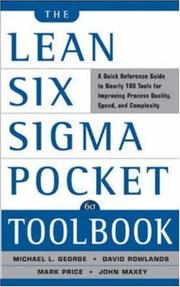
A concise, field-ready reference to all major Lean and Six Sigma tools; read last so it serves as a synthesis and quick-reference guide, reinforcing everything learned across the full curriculum.
Discussion
Keep reading
Paths that share books, cover the same subject, or open a related topic.