Supply chain management: an ordered reading list for beginners
This curriculum takes a beginner from the fundamental concepts of how supply chains work all the way through advanced topics in resilience, strategy, and analytics. Each stage builds on the last — first establishing vocabulary and mental models, then diving into the functional pillars (logistics, procurement, inventory), and finally tackling real-world complexity, disruption, and competitive strategy.
Foundations: How Supply Chains Work
BeginnerUnderstand what a supply chain is, why it matters, and how goods physically and informationally flow from raw materials to the end customer.
▸ Study plan for this stage
Pace: 4–5 weeks, ~40–50 pages/day. Week 1–2: "The Goal" (~350 pages); Week 3: "The Goal" completion and review; Week 4–5: "The New Supply Chain Agenda" (~300 pages) with overlap for integration.
- The Theory of Constraints (TOC): identifying and managing bottlenecks as the key to optimizing system throughput
- End-to-end supply chain visibility: understanding how information and materials flow across the entire network from suppliers to customers
- Synchronization and balance: how dependent processes must be coordinated to avoid waste and delays
- Supply chain as a competitive weapon: how operational excellence in supply chain directly impacts business strategy and customer value
- Demand-driven planning: shifting from forecast-driven to demand-responsive supply chain models
- Integrated decision-making: breaking down silos between procurement, manufacturing, distribution, and sales to optimize the whole system
- Cost vs. throughput trade-offs: understanding when to optimize for efficiency versus when to prioritize flow and responsiveness
- What is the Theory of Constraints, and how does it apply to identifying problems in a supply chain?
- Why is synchronization between dependent processes critical, and what happens when processes are not synchronized?
- How does 'The Goal' illustrate that optimizing individual departments can harm overall system performance?
- What is the difference between a forecast-driven and demand-driven supply chain, and what are the advantages of each approach?
- How can supply chain management become a source of competitive advantage according to 'The New Supply Chain Agenda'?
- What are the main barriers to integrated supply chain decision-making, and how can organizations overcome them?
- Map a real supply chain (e.g., a product you use daily): trace the flow from raw materials through manufacturing, distribution, and retail. Identify at least 3 potential bottlenecks.
- Analyze a case study from 'The Goal': identify the constraint in Alex Rogo's plant and explain how the TOC solution addresses it. Write a 1–2 page reflection.
- Create a simple demand forecast vs. actual demand scenario for a hypothetical product. Simulate the bullwhip effect by showing how forecast errors amplify upstream in the supply chain.
- Interview a supply chain or operations professional (or research a company case study). Ask how they identify and manage constraints in their system. Document findings in a 2–3 page report.
- Build a simple supply chain simulation or flowchart for a multi-stage process (e.g., coffee from farm to cup). Identify where information and material flows diverge, and where delays occur.
- Compare two companies' supply chain strategies (one forecast-driven, one demand-driven). Analyze their inventory levels, lead times, and responsiveness using publicly available information.
Next up: This stage establishes the foundational mental models—constraints, synchronization, and integrated thinking—that are essential for the next stage, which will likely dive deeper into specific supply chain functions (procurement, logistics, inventory management) and advanced optimization techniques.
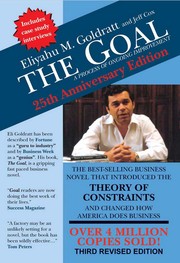
A business novel that introduces the Theory of Constraints and the idea of optimizing the whole system rather than individual parts — the single most important mental model for supply chain thinking. Its story format makes it highly accessible for beginners.

Bridges theory and practice by showing how real companies redesign their supply chains for performance; reading this after the first two books grounds abstract concepts in recognizable business decisions.
The Functional Pillars: Logistics, Procurement & Inventory
IntermediateDevelop working knowledge of the three core disciplines — moving goods (logistics), sourcing them (procurement), and managing stock levels (inventory) — with practical frameworks for each.
▸ Study plan for this stage
Pace: 12–14 weeks, ~40–50 pages/day (approximately 3 weeks per book with overlap for integration)
- End-to-end logistics networks: design, modes of transport, distribution channels, and cost-service trade-offs as covered in Christopher's framework
- The supply chain as an integrated system: how logistics, procurement, and inventory decisions cascade across the organization
- Procurement strategy and supplier relationship management: strategic sourcing, supplier evaluation, and contract negotiation from Monczka's approach
- Inventory fundamentals: demand forecasting, safety stock, economic order quantity (EOQ), and the tension between holding costs and stockout risk
- Production planning and scheduling: time-phased demand, master scheduling, and material requirements planning (MRP) principles
- Total cost of ownership (TCO) and systems thinking: recognizing hidden costs across logistics, procurement, and inventory
- Practical trade-offs: balancing responsiveness, cost, and risk across all three disciplines
- How do logistics network design decisions (transport mode, warehouse location, distribution channels) directly impact procurement lead times and inventory requirements?
- What is the difference between strategic and tactical procurement, and how does supplier relationship management influence supply chain resilience?
- How do you calculate economic order quantity (EOQ), and what assumptions underlie this model? When does it break down in practice?
- What is safety stock, why is it necessary, and how do you determine appropriate safety stock levels given demand and lead-time variability?
- How does a master production schedule (MPS) drive material requirements planning (MRP), and what role does inventory play in buffering demand uncertainty?
- What are the key cost drivers in logistics, procurement, and inventory management, and how do trade-offs between them affect total supply chain cost?
- Map a real or hypothetical product's supply chain: identify the logistics network (transport modes, warehouses, distribution channels), procurement touchpoints (suppliers, lead times, order quantities), and inventory locations. Document the cost and service implications of each design choice.
- Conduct a supplier evaluation exercise using Monczka's framework: score 3–4 potential suppliers across quality, cost, delivery, and innovation dimensions; calculate total cost of ownership (TCO) for each; and recommend a sourcing strategy (single-source, dual-source, or multi-source).
- Calculate EOQ and safety stock for a real product with historical demand and lead-time data. Vary assumptions (holding cost, ordering cost, service level) and observe how the model output changes. Compare the theoretical optimum to actual practice.
- Build a simplified master production schedule (MPS) and material requirements planning (MRP) table for a multi-level product (e.g., a bicycle with frame, wheels, drivetrain). Identify when and how much to order from suppliers to meet demand without excess inventory.
- Perform a logistics cost analysis: compare two distribution network designs (e.g., centralized warehouse vs. regional distribution centers) on total landed cost, order fulfillment time, and inventory carrying cost. Present trade-offs to a stakeholder.
- Develop a procurement strategy document for a critical commodity or component: outline supplier selection criteria, contract terms, risk mitigation (e.g., dual-sourcing, safety stock), and performance metrics. Justify decisions using concepts from Monczka.
Next up: This stage establishes the functional foundations and decision frameworks within each pillar; the next stage will integrate these disciplines into end-to-end supply chain strategy, optimization, and resilience—showing how to orchestrate logistics, procurement, and inventory as a coordinated whole rather than in isolation.

The definitive mid-level textbook on logistics strategy; Christopher's frameworks on lead-time reduction, demand-driven supply, and customer value are foundational for any serious practitioner.
The canonical procurement textbook, covering supplier selection, negotiation, strategic sourcing, and supplier relationships — read after Christopher so logistics context is already in place.
The authoritative reference on inventory models (EOQ, safety stock, reorder points); placed last in this stage because it requires the logistics and procurement context established by the prior two books.
Operations & Execution: Lean, Agile, and Demand-Driven
IntermediateMaster the operational philosophies — Lean, agile, and demand-driven methods — that determine how supply chains are actually run day-to-day and how waste is systematically eliminated.
▸ Study plan for this stage
Pace: 10–12 weeks, ~40–50 pages/day (mix of reading and reflection). Weeks 1–3: "The Machine That Changed the World" (~400 pages); Weeks 4–7: "Lean Thinking" (~350 pages); Weeks 8–12: "Demand Driven Material Requirements Planning" (~400 pages) with overlap and application weeks.
- The Toyota Production System (TPS) as the foundational model for eliminating waste and continuous improvement through standardized work, just-in-time, and jidoka (autonomation)
- Five lean principles: value definition, value stream mapping, flow, pull systems, and perfection-seeking culture
- The distinction between muda (waste), muri (overburden), and mura (unevenness) and how to identify and eliminate each in operations
- Demand-driven supply chain planning: replacing forecast-driven MRP with consumption-based signals and buffer management to reduce variability
- Buffer positioning and sizing (strategic, tactical, and operational buffers) as the mechanism for decoupling demand from supply constraints
- Agile execution: how to respond rapidly to demand changes while maintaining lean principles through flexibility and visibility
- The role of pull signals and kanban-like mechanisms in both lean and demand-driven environments
- Metrics and performance management: shifting from cost-centric to flow-centric and responsiveness-centric measures
- What are the five lean principles, and how did Toyota apply them to create the TPS? How do they differ from traditional batch-and-queue manufacturing?
- Explain the difference between muda, muri, and mura. Give three examples of each in a supply chain context and describe how you would eliminate them.
- What is demand-driven material requirements planning (DDMRP), and how does it fundamentally differ from forecast-driven MRP? What problems does it solve?
- How do buffers (strategic, tactical, and operational) work in DDMRP, and why is buffer positioning more important than buffer size?
- Describe a complete value stream for a product you know. Where is waste occurring, and how would you apply lean principles and pull systems to improve flow?
- How can a supply chain be both lean and agile? What are the trade-offs, and how does DDMRP help reconcile them?
- Map the value stream of a real or hypothetical product (e.g., a laptop, a sandwich, a car part). Identify all steps, cycle times, and wait times. Classify each step as value-adding or waste, and propose three lean improvements.
- Conduct a gemba walk (go to the actual place): observe a manufacturing floor, warehouse, or fulfillment center. Document examples of muda, muri, and mura. Write a one-page improvement proposal for one area.
- Create a simple kanban system for a personal or work process (e.g., email inbox, task management, inventory replenishment). Define card limits, trigger points, and pull signals. Run it for one week and reflect on what changed.
- Build a demand-driven planning model for a simple product with three supply chain stages (raw material, production, distribution). Compare forecast-driven vs. demand-driven outcomes under demand variability. Document the difference in safety stock, lead times, and responsiveness.
- Interview a supply chain professional (operations manager, planner, or procurement lead). Ask them: What waste do you see daily? How do you currently manage demand variability? What barriers prevent you from being more agile? Synthesize findings into a brief report.
- Design a buffer strategy (strategic, tactical, operational) for a product family in a real or case-study company. Justify buffer locations and sizes based on demand variability, lead time, and constraints. Present as a one-page visual.
Next up: This stage equips you with the operational and planning philosophies that drive day-to-day execution; the next stage will build on this foundation by addressing how to design and optimize the broader network—sourcing, supplier relationships, and end-to-end visibility—that enables these lean and demand-driven operations to thrive at scale.
The book that introduced Lean production to the world; essential reading before any demand-driven or agile supply chain work, as virtually every modern operations methodology traces back to Toyota's system described here.
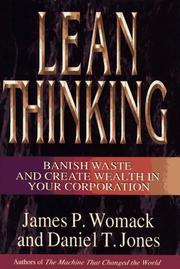
Extends Lean principles beyond the factory floor to the entire value stream and supply chain; reading it directly after The Machine That Changed the World deepens and broadens the same framework.

Presents the modern DDMRP methodology that replaces traditional MRP with a flow-based, buffer-driven approach; this is the practical execution layer that ties Lean philosophy to real planning systems.
Resilience, Risk & Global Complexity
ExpertUnderstand how global supply chains fail, how to design for resilience and risk, and how to manage disruptions — from supplier failures to geopolitical shocks and pandemics.
▸ Study plan for this stage
Pace: 8–10 weeks, ~25–30 pages/day. "The Resilient Enterprise" (weeks 1–5, ~350 pages), then "Supply Chain Risk Management" (weeks 6–10, ~300 pages). Allocate 1–2 days per week for exercises and case study reflection.
- Resilience as a strategic capability: designing supply chains to absorb shocks and recover quickly, not just optimize for cost
- Risk identification and classification: distinguishing between supply disruptions, demand shocks, geopolitical risks, and systemic failures
- Network redundancy and flexibility: strategic use of multiple suppliers, inventory buffers, and modular design to mitigate single-point failures
- Organizational culture and leadership in resilience: how companies embed risk awareness and adaptive capacity across functions
- Risk quantification and modeling: probabilistic approaches to assess vulnerability, impact, and recovery time
- Disruption response frameworks: pre-event planning (mitigation), during-event response (containment), and post-event learning (adaptation)
- Geopolitical, pandemic, and natural disaster scenarios: real-world case studies of supply chain failure and recovery
- Trade-offs between efficiency and resilience: balancing lean operations with strategic redundancy
- What is the difference between supply chain robustness and resilience, and why is resilience more valuable in a complex global environment?
- How do you identify and classify supply chain risks, and what are the key categories of disruption discussed in the readings?
- What are the main strategies for building network redundancy and flexibility, and what trade-offs do they involve?
- How should a company design its risk response strategy across the pre-disruption, during-disruption, and post-disruption phases?
- What role does organizational culture and leadership play in building a resilient supply chain?
- How do you quantify and model supply chain risk, and what metrics should you track to assess vulnerability?
- Map your organization's (or a case study company's) supply chain network: identify all critical suppliers, single points of failure, and geographic/geopolitical concentrations. Document which disruptions would have the highest impact.
- Conduct a risk classification exercise: list 10–15 potential disruptions (supplier bankruptcy, natural disaster, geopolitical event, pandemic, etc.) and categorize them by likelihood, impact, and recovery time using a risk matrix.
- Design a redundancy strategy for a high-risk node in the supply chain: propose alternative suppliers, inventory buffers, or process flexibility. Calculate the cost of redundancy vs. the cost of potential disruption.
- Develop a disruption response playbook for a specific scenario (e.g., a key supplier goes offline for 6 weeks): outline pre-event mitigation, immediate response actions, communication protocols, and recovery steps.
- Analyze a real-world case study from the readings (e.g., a company's response to a major disruption): identify what they did well, what they missed, and how organizational culture enabled or hindered their response.
- Build a simple supply chain risk model: estimate the probability and impact of 3–4 key risks, then model how redundancy or inventory buffers reduce overall vulnerability.
Next up: This stage equips you to diagnose and design for resilience in complex networks; the next stage will likely focus on implementing these strategies operationally—through technology, metrics, governance, and continuous improvement systems that embed resilience into daily supply chain decisions.

The definitive book on supply chain risk and resilience, drawing on dozens of real disruption case studies; it reframes resilience as a competitive advantage rather than just a defensive measure.

Provides a systematic, analytical framework for identifying, assessing, and mitigating supply chain risks — the practical complement to Sheffi's more narrative approach.
Strategy & the Future: Competitive Advantage and Analytics
ExpertSynthesize everything into supply chain strategy, understand how data and analytics are reshaping the field, and see how world-class companies use their supply chains as a source of lasting competitive advantage.
▸ Study plan for this stage
Pace: 8–10 weeks, ~25–30 pages/day (mix of dense strategy content and case studies)
- Supply chain strategy as a competitive differentiator: aligning supply chain design with business strategy and market positioning
- The supply chain strategy matrix: matching supply chain type (efficient, responsive, risk-hedging) to product characteristics and demand patterns
- Total cost of ownership and network optimization: designing end-to-end supply chain networks that minimize cost while meeting service levels
- Data-driven decision-making in supply chains: using analytics and metrics to drive visibility, forecasting, and continuous improvement
- The Amazon Management System (14 leadership principles): how operational excellence, customer obsession, and data orientation create supply chain advantage
- Scalability and flexibility: building supply chains that adapt to growth, disruption, and changing market dynamics
- Organizational alignment and culture: embedding supply chain thinking across functions to sustain competitive advantage
- How do you determine the right supply chain strategy (efficient, responsive, or risk-hedging) for a given product or business unit, and what are the trade-offs?
- What is total cost of ownership (TCO) in supply chain design, and how does it differ from traditional cost accounting?
- How does Amazon's management system (particularly its 14 principles) translate into supply chain practices, and what makes it difficult for competitors to replicate?
- What role does data and analytics play in transforming supply chain strategy, and what are the key metrics that drive decision-making?
- How do you design a supply chain network that balances cost, service, risk, and sustainability objectives?
- What organizational capabilities and cultural elements are required to sustain supply chain competitive advantage over time?
- Conduct a supply chain strategy audit of a real company: identify its current strategy (efficient/responsive/risk-hedging), assess alignment with its business model, and propose one strategic shift with financial impact
- Build a simplified supply chain network model for a product category: define sourcing, manufacturing, and distribution options; calculate total cost of ownership for 2–3 scenarios; recommend the optimal network
- Map your organization's (or a case study company's) supply chain practices against Amazon's 14 leadership principles; identify 3 gaps and propose specific changes to close them
- Create a supply chain analytics dashboard: select 5–7 key metrics that would drive strategic decisions for a supply chain you know; explain why each metric matters and how you'd use it
- Analyze a supply chain disruption (e.g., COVID-19, semiconductor shortage, port congestion): assess how strategy and analytics could have mitigated it, and design a resilience framework
- Develop a 3-year supply chain transformation roadmap for a company: define current state, target state, strategic initiatives, and the data/organizational capabilities needed to succeed
Next up: This stage synthesizes supply chain strategy and modern analytics into a coherent competitive advantage framework; the next stage will likely deepen into implementation, emerging technologies (AI, IoT, blockchain), or industry-specific applications that operationalize these strategic principles.
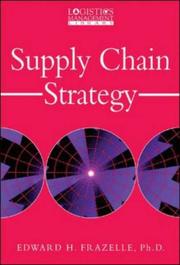
Connects every functional area — logistics, inventory, procurement, operations — into a unified strategic framework, making it the ideal capstone for integrating all prior learning.

Deconstructs how Amazon built the world's most powerful supply chain and fulfillment engine using data, customer obsession, and continuous innovation — a forward-looking case study that shows where the field is heading.
Discussion
Keep reading
Paths that share books, cover the same subject, or open a related topic.