Human Resources Management: Best HR Books to Read, in Order
This curriculum builds a complete, practical mastery of Human Resources Management — starting with the foundational "why" of HR and people strategy, then progressing through the core disciplines of hiring, employee relations, performance management, and compensation/benefits, before finishing with advanced frameworks for building and sustaining a high-performing workforce. Each stage assumes the vocabulary and mental models built in the one before it, creating a coherent, cumulative learning journey from beginner to strategic HR leader.
Foundations: What HR Is and Why It Matters
BeginnerUnderstand the purpose, scope, and core functions of HR — including how people management connects to business outcomes — and build the vocabulary needed for every stage that follows.
▸ Study plan for this stage
Pace: 4–5 weeks, ~40–50 pages/day. Start with Dessler's foundational chapters (1–4, approximately 120–150 pages over 3 weeks), then move to Smith's HR Answer Book (selected chapters on core functions, approximately 100–120 pages over 1–2 weeks).
- HR's strategic role in organizational success: how people management directly impacts business outcomes and competitive advantage
- The five core HR functions: recruitment and selection, training and development, compensation and benefits, performance management, and employee relations
- The HR value chain: how HR activities move from administrative tasks to strategic business contributions
- Legal and ethical foundations of HR: compliance, employment law, and ethical decision-making in people management
- The HR professional's competencies and responsibilities: what HR practitioners must know and do to be effective
- Organizational culture and employee engagement: how HR shapes workplace environment and employee commitment
- Data-driven HR: using metrics and analytics to measure HR effectiveness and inform business decisions
- The employee lifecycle: understanding recruitment, onboarding, development, performance, and separation as interconnected stages
- What are the five core functions of HR, and how does each contribute to organizational performance?
- How has the role of HR evolved from administrative support to strategic business partner, and what does this shift mean for modern HR professionals?
- What legal and ethical considerations must HR professionals navigate when making decisions about hiring, compensation, and termination?
- How do recruitment, training, compensation, and performance management work together to create a coherent people strategy?
- What metrics and data points should HR use to demonstrate its impact on business outcomes?
- How does organizational culture influence HR practices, and what role does HR play in shaping and maintaining culture?
- Map your current or a target organization's HR functions: identify which department or person owns recruitment, training, compensation, performance management, and employee relations. Note gaps or overlaps.
- Create a one-page 'HR value chain' for a specific business problem (e.g., high turnover in a department). Show how each HR function could contribute to solving it.
- Read a real employment law case or compliance scenario (from news or Dessler's examples) and write a brief analysis of the HR and legal implications.
- Interview an HR professional (15–20 minutes) about their biggest challenge in balancing administrative duties with strategic initiatives. Summarize what you learn about the modern HR role.
- Draft a job description for an HR Coordinator or HR Manager role. Use language and competencies from the books to show what skills and responsibilities matter most.
- Analyze an organization's culture (your workplace, a case study, or a company you admire). Identify 3–4 HR practices that either support or undermine that culture.
Next up: This stage equips you with the vocabulary, conceptual framework, and understanding of HR's strategic purpose needed to dive deeper into each core function—recruitment, training, compensation, and performance management—in subsequent stages.
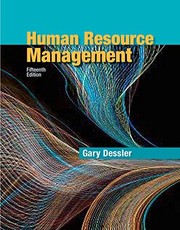
The definitive introductory textbook on HRM, covering every major function — recruiting, training, appraisal, compensation, and labor relations — in a structured, beginner-friendly way. Read this first to get the full map of the HR landscape.
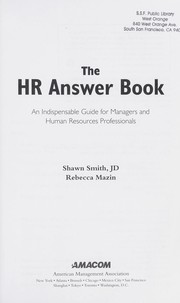
A practical Q&A-style guide that translates HR concepts into real workplace situations. Read it second to immediately ground Dessler's theory in day-to-day HR decisions and common challenges.
Hiring: Attracting and Selecting the Right People
BeginnerMaster the full talent acquisition cycle — writing job descriptions, sourcing candidates, conducting structured interviews, and making sound hiring decisions that reduce bias and improve quality of hire.
▸ Study plan for this stage
Pace: 4–5 weeks, ~25–30 pages/day, with 2–3 days per week dedicated to exercises and reflection
- The Performance-Based Hiring methodology: defining job success criteria before sourcing, not after
- Creating compelling job descriptions that attract top talent by focusing on outcomes and growth opportunities rather than laundry lists of requirements
- Sourcing strategies that reach passive candidates and build talent pipelines, including networking and targeted outreach
- Structured interviewing techniques that assess competency and cultural fit while reducing unconscious bias
- The STAR method and behavioral questioning to evaluate past performance as a predictor of future success
- Scorecard-based evaluation: using consistent rubrics to compare candidates objectively and make defensible hiring decisions
- Red flags and green flags in candidate responses that indicate quality of hire and cultural alignment
- Negotiation and offer strategy to close top candidates while maintaining budget and equity
- What is the core principle of Performance-Based Hiring, and how does it differ from traditional job description writing?
- How do you write a job description that attracts passive candidates and communicates growth opportunity rather than just listing duties?
- What are the key sourcing channels and strategies Adler recommends for finding high-quality candidates, and why is passive candidate recruitment important?
- How do you structure a behavioral interview using the STAR method, and what types of questions reveal competency and fit?
- What is a hiring scorecard, and how does it help reduce bias and improve hiring consistency?
- What are common red flags and green flags in candidate interviews, and how do you interpret them in context?
- Write a Performance-Based Hiring job description for a real or hypothetical role: start by defining 4–6 key outcomes and success metrics, then craft a compelling narrative that emphasizes growth and impact rather than a checklist of requirements
- Conduct a mock sourcing campaign: identify 5–10 passive candidates on LinkedIn or through your network for a target role, draft personalized outreach messages, and document your sourcing strategy and results
- Develop a hiring scorecard for a specific position: define 5–7 competencies, create a 1–5 rating scale with clear behavioral anchors for each level, and practice scoring sample candidate responses
- Record or write out a practice behavioral interview for a peer or colleague: ask 4–5 STAR-based questions, take notes on their responses, and score them using your scorecard; debrief on what you learned
- Analyze a real job description from your organization or a company you admire: identify what works, what's missing, and rewrite it using Performance-Based Hiring principles
- Create a candidate comparison matrix: gather 3–4 real or hypothetical candidate profiles, score them on your scorecard, and write a brief recommendation memo explaining your hiring decision and how you mitigated bias
Next up: This stage equips you with the tactical skills to build a strong talent pipeline and make high-quality hires; the next stage will deepen your ability to onboard, develop, and retain those hires, turning hiring success into long-term organizational performance.

Deepens the hiring framework with performance-based interviewing techniques and practical tools for evaluating candidates against real job outcomes rather than gut feel. Read after 'Who' to add tactical depth.
Employee Relations & Performance Management
IntermediateBuild skills in managing the employee lifecycle after hiring — fostering engagement, handling conflict, delivering feedback, conducting performance reviews, and managing underperformance legally and effectively.
▸ Study plan for this stage
Pace: 8–10 weeks, ~25–35 pages/day. Allocate roughly 3 weeks per book to allow time for reflection and application between titles.
- Strengths-based management: focusing on what employees do best rather than fixing weaknesses, as foundational to engagement and retention
- The role of clear expectations and regular feedback loops in driving performance, not annual reviews alone
- Dialogue skills for high-stakes conversations: preparing, listening actively, and maintaining psychological safety when discussing performance or conflict
- The anatomy of crucial conversations: recognizing when emotions run high, stakes are significant, and opinions differ—and how to navigate them without damaging relationships
- Performance appraisal as a tool for development and alignment, not punishment; the legal and practical pitfalls of poorly designed or executed reviews
- Managing underperformance: distinguishing between capability gaps, motivation issues, and fit problems, and responding appropriately to each
- Creating a culture of accountability and continuous improvement through honest, respectful dialogue
- According to Buckingham, why is fixing weaknesses a less effective strategy than building on strengths, and how does this shift change how you approach employee development conversations?
- What are the five key practices Buckingham identifies for managing talent effectively, and how do they differ from traditional HR approaches?
- In a crucial conversation, what does it mean to 'create safety,' and what specific techniques can you use to signal that you care about the other person's perspective?
- How do Patterson and colleagues define the path to dialogue, and what happens when people move away from dialogue during a high-stakes conversation?
- What are the three main purposes of performance appraisals according to Grote, and why do many organizations fail to achieve them?
- How should you structure a performance appraisal conversation to maximize development and minimize defensiveness, based on Grote's framework?
- What legal risks arise from poorly documented or inconsistently applied performance management, and how can you mitigate them?
- Strengths audit: Identify three direct reports or colleagues. For each, list their top 3–5 strengths (what they do naturally and well). Draft one development conversation per person focused on leveraging those strengths rather than fixing gaps.
- Crucial conversation simulation: Pair with a colleague or mentor. Role-play a high-stakes scenario (e.g., addressing chronic underperformance, resolving a team conflict, or delivering critical feedback). Record or debrief on where you created safety, where you fell into debate, and how you returned to dialogue.
- Feedback loop audit: Review your current feedback cadence with your team. Design a 90-day plan that includes weekly check-ins, monthly one-on-ones with specific feedback moments, and quarterly development conversations. Document what you'll discuss in each.
- Performance appraisal redesign: Take a current performance review form or process in your organization. Using Grote's framework, identify which of the three purposes (evaluation, development, documentation) it serves well and which it neglects. Propose one concrete change.
- Dialogue preparation worksheet: Select a real conversation you need to have (feedback, conflict, underperformance). Before the meeting, complete a worksheet: What outcome do I want? What story am I telling myself about this person? What might they be thinking or feeling? How will I create safety?
- Case study analysis: Read one real-world performance management case (from your organization or a business publication). Analyze it through Grote's lens: Was the appraisal process fair? Were expectations clear? Was there documentation? What would you have done differently?
Next up: This stage equips you to manage individual employee performance and relationships; the next stage will expand your focus to organizational systems, culture, and strategic HR initiatives that scale these practices across teams and the enterprise.

Based on Gallup research with over 80,000 managers, this book reframes what great managers actually do to drive engagement and performance. Read it first in this stage to understand the human dynamics that underpin all employee relations.
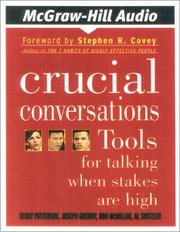
Provides a proven framework for holding high-stakes conversations — performance issues, conflict, difficult feedback — without damaging relationships. Essential reading before tackling formal performance management systems.
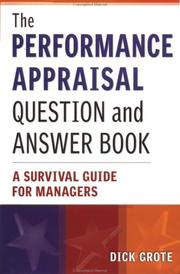
A focused, practical guide to designing and conducting performance appraisals that are fair, legally sound, and actually improve employee output. Builds directly on the conversation skills developed in the previous book.
Compensation, Benefits & HR Compliance
IntermediateUnderstand how to design competitive, equitable compensation and benefits programs, navigate key employment law requirements, and ensure HR practices protect both employees and the organization.
▸ Study plan for this stage
Pace: 8–10 weeks, ~40–50 pages/day (mix of dense compensation theory and practical legal reference material)
- Compensation strategy alignment: linking pay systems to organizational goals and competitive positioning
- Job evaluation and pay structure design: methods for establishing internal equity and external competitiveness
- Base pay, variable pay, and incentive systems: designing effective reward mechanisms for different roles and performance levels
- Benefits design and administration: selecting, communicating, and managing health insurance, retirement, and other employee benefits
- Equal Pay Act, Title VII, and wage-hour laws: understanding legal requirements for non-discrimination and wage compliance
- FMLA, ADA, and leave administration: navigating employee rights to time off and workplace accommodations
- Documentation, record-keeping, and audit trails: maintaining compliance evidence and protecting the organization from legal exposure
- Compensation communication and transparency: explaining pay decisions and benefits to employees in ways that build trust and engagement
- How do you align a compensation strategy with organizational business objectives, and what are the trade-offs between internal equity and external competitiveness?
- What are the main job evaluation methods (ranking, classification, point factor, market pricing), and when is each most appropriate?
- What are the key differences between exempt and non-exempt employee classifications under the Fair Labor Standards Act, and what are the consequences of misclassification?
- How do you design a benefits program that balances cost, employee needs, and legal compliance, and what are the primary regulatory frameworks (ERISA, ACA, HIPAA)?
- What are the legal requirements under the Equal Pay Act and Title VII regarding pay equity, and how do you audit compensation for discrimination risk?
- How should you document compensation decisions, benefits eligibility, and leave requests to create a defensible compliance record?
- Conduct a job evaluation exercise: take 5–8 jobs from a real or fictional organization, apply at least two job evaluation methods (e.g., point factor and market pricing), and compare results to identify internal equity gaps
- Design a compensation strategy memo: define market positioning (lead, match, or lag), salary structure, and incentive plan for a specific role or department, with rationale tied to business strategy
- Audit a sample compensation dataset: identify potential Equal Pay Act violations by comparing pay for similar roles across gender/race, calculate pay ratios, and document findings with recommendations
- Create a benefits communication package: design a one-page summary and FAQ for a hypothetical benefits program (health insurance, 401k, PTO), written for employee comprehension
- Classify a set of job descriptions as exempt or non-exempt under FLSA rules, document your reasoning, and identify misclassification risks in a sample organization
- Build a compliance checklist: create a document retention and record-keeping protocol for compensation, benefits, and leave administration that satisfies federal requirements (FLSA, FMLA, ERISA)
Next up: This stage equips you with the foundational knowledge of how to structure pay, benefits, and compliance systems—skills that directly enable the next stage's focus on talent management, performance evaluation, and employee relations, where you'll learn how to align these systems with recruitment, development, and retention strategies.

The canonical academic and practitioner text on compensation strategy, job evaluation, pay structures, and benefits design. Provides the rigorous foundation needed to make principled, data-driven pay decisions.
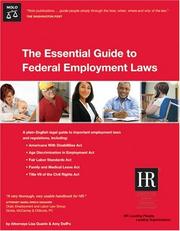
A clear, plain-language reference covering the major U.S. federal employment laws every HR professional must know — FMLA, ADA, FLSA, Title VII, and more. Pairs with compensation study to ensure all programs are legally compliant.
Strategic HR: Building a Strong, Lasting Workforce
ExpertElevate HR from an administrative function to a strategic driver of organizational success — using workforce planning, culture design, learning & development, and people analytics to build a durable competitive advantage.
▸ Study plan for this stage
Pace: 8–10 weeks, ~40–50 pages/day. Week 1–5: "Work Rules!" (400 pages); Week 6–10: "The HR Scorecard" (300 pages). Allocate 2–3 days per book for review and integration exercises.
- Culture as competitive advantage: How Google's culture of trust, transparency, and psychological safety drives performance and retention
- Evidence-based people decisions: Using data and analytics to replace gut-feel HR with measurable, predictive workforce insights
- Workforce planning and talent architecture: Aligning HR strategy with business strategy through deliberate hiring, development, and succession planning
- The HR Scorecard framework: Translating HR activities into business outcomes using a balanced scorecard approach (financial, customer, internal process, learning & growth)
- Learning and development as strategic investment: Designing career paths, skill development, and continuous learning systems that build organizational capability
- Employee value proposition and employer branding: Creating compelling reasons for top talent to join and stay, rooted in authentic culture and opportunity
- HR metrics and analytics: Identifying leading and lagging indicators that connect people practices to business results (revenue, profit, customer satisfaction, innovation)
- How does Google's approach to culture and psychological safety create competitive advantage, and what are the core principles you can adapt to any organization?
- What is the HR Scorecard framework, and how does it translate HR activities (hiring, training, compensation) into measurable business outcomes?
- How should you use data and analytics to make hiring, promotion, and development decisions instead of relying on intuition or credentials alone?
- What is workforce planning, and how do you align HR strategy with business strategy to build the right talent architecture?
- How do you design a learning and development system that builds organizational capability and prepares leaders for future challenges?
- What metrics and KPIs should you track to demonstrate that HR is driving business value, and how do you interpret them?
- Map your organization's current HR practices against Google's eight principles from 'Work Rules!' (e.g., hire conservatively, empower teams, remove barriers). Identify 2–3 gaps and draft a 90-day pilot to test one principle.
- Build a simple HR Scorecard for your organization or a department: define 1–2 strategic objectives, then identify metrics across financial, customer, internal process, and learning dimensions that would indicate success.
- Audit your hiring process: collect data on time-to-hire, quality-of-hire (retention, performance ratings), and cost-per-hire. Identify one data-driven change (e.g., structured interviews, skills assessments) to test.
- Design a workforce plan for a critical role or function: forecast demand (business growth, turnover), assess current supply (skills, bench strength), and outline a development or recruitment strategy to close gaps.
- Create a learning and development roadmap for a high-potential employee or leadership pipeline: define skills needed, learning methods (on-the-job, formal training, mentoring), and success metrics.
- Interview 5–10 employees about your organization's culture and employee value proposition. Synthesize findings into a one-page summary of what attracts and retains talent, then compare to your intended positioning.
Next up: This stage transforms HR from a support function into a strategic asset by grounding decisions in culture, data, and business alignment—preparing you to lead organizational transformation, navigate complex change management, and scale HR systems as the business evolves.
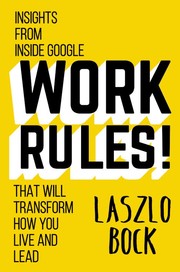
Google's former SVP of People Operations shares the data-driven, culture-first people practices that made Google one of the world's best employers. This is the bridge between operational HR and true people strategy.

Introduces a rigorous framework for measuring HR's contribution to business strategy using metrics and scorecards, completing the journey from HR practitioner to strategic business partner who speaks the language of leadership.
Discussion
Keep reading
Paths that share books, cover the same subject, or open a related topic.