How to learn Startups & entrepreneurship
This curriculum takes you from the core mindset and vocabulary of entrepreneurship all the way to advanced strategy, growth, and venture dynamics. Each stage builds on the last — you'll first internalize how startups think, then learn how to build and validate, then master growth and business models, and finally engage with the deeper mechanics of venture capital and long-term company building.
Foundations: The Entrepreneurial Mindset
BeginnerUnderstand what startups are, how founders think, and what separates entrepreneurial ventures from traditional businesses.
▸ Study plan for this stage
Pace: 6–8 weeks total, reading ~20–25 pages/day. Week 1–3: "The Lean Startup" (read methodically, pausing to journal after each major section). Week 4–5: "Zero to One" (shorter and denser — read one chapter per sitting, reflect before moving on). Week 6–7: "The $100 Startup" (lighter and example-driven —
- Build-Measure-Learn feedback loop (The Lean Startup): the core cycle of turning ideas into products, measuring customer response, and deciding whether to persevere or pivot.
- Minimum Viable Product (MVP): launching the smallest possible version of a product to test real-world assumptions quickly and cheaply, as championed by Ries.
- Validated Learning vs. Vanity Metrics (The Lean Startup): distinguishing meaningful data that informs decisions from superficial numbers that feel good but mislead.
- Pivoting: the disciplined decision to change a core business assumption based on evidence, without abandoning the overall vision.
- Zero-to-One vs. One-to-N Thinking (Zero to One): Thiel's distinction between creating something genuinely new (vertical progress) versus copying and scaling what already exists (horizontal progress).
- The Power of Monopoly (Zero to One): why Thiel argues that truly valuable startups build monopolies through proprietary technology, network effects, economies of scale, and branding — and why competition destroys profits.
- Secrets & Contrarian Thinking (Zero to One): the idea that great startups are built on non-obvious truths ('secrets') that most people overlook or dismiss.
- Microbusiness & Value Arbitrage (The $100 Startup): Guillebeau's framework for identifying the overlap between your skills/passions and what people will pay for, and launching with minimal capital and overhead.
- After reading The Lean Startup, can you explain the Build-Measure-Learn loop in your own words and give a real-world example of a company that used it (or should have)?
- What is an MVP, and how does it differ from a finished product? What is the risk of skipping the MVP stage?
- Thiel argues that 'competition is for losers' — what does he mean, and do you agree or disagree based on the evidence he presents in Zero to One?
- What are the four characteristics Thiel identifies that allow a company to build and sustain a monopoly? Can you name a current company that fits each characteristic?
- According to Guillebeau in The $100 Startup, what is the 'convergence' principle, and how does it guide someone toward a viable microbusiness idea?
- How do the three books collectively define entrepreneurial success differently — and what does that reveal about the range of entrepreneurial paths available to a beginner?
- MVP Sketch (inspired by The Lean Startup): Pick a problem you personally experience. Write a one-page description of the smallest possible product or service that could test whether others share that problem. Define one measurable hypothesis and one metric that would prove or disprove it.
- Assumption Audit (The Lean Startup): Take any existing business idea you admire or have. List every assumption baked into its success (e.g., 'customers will pay $X,' 'users will return weekly'). Rank them by riskiness and design a simple experiment to test the top three.
- Contrarian Question Journal (Zero to One): Write answers to Thiel's famous interview question — 'What important truth do very few people agree with you on?' — in three different domains: your industry of interest, your local community, and technology. Evaluate whether any of your answers could be the seed of a startup.
- Monopoly Scorecard (Zero to One): Choose three well-known startups (e.g., Airbnb, Spotify, OpenAI). Score each one from 1–5 on Thiel's four monopoly characteristics (proprietary tech, network effects, economies of scale, branding). Write a short paragraph on which company has the most durable competitive advantage and why.
- Convergence Map (The $100 Startup): Draw a two-circle Venn diagram. In one circle, list your top 5 skills or areas of knowledge. In the other, list 5 things people in your network regularly ask for help with or would pay for. Identify the overlapping items and draft a one-sentence business concept for each.
- Three-Book Synthesis Essay: Write a 400–600 word reflection answering: 'If I were starting a venture today, which one idea from each of the three books would I apply first, and why?' This forces integration of all three frameworks and surfaces your personal entrepreneurial philosophy.
Next up: Mastering the mindset and vocabulary of entrepreneurship — lean experimentation, monopoly thinking, and low-cost launching — gives you the conceptual scaffolding needed to tackle the next stage, where the focus shifts from how founders think to how startups actually grow, acquire customers, and build lasting businesses.
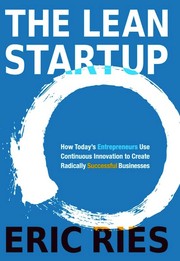
The single most important entry point into modern startup thinking — introduces build-measure-learn, MVPs, and validated learning. Read first to establish the core vocabulary every other book assumes.
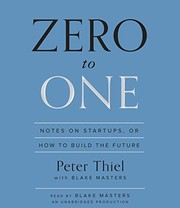
Challenges conventional thinking and asks the foundational question: what valuable company is nobody building? Read second to develop contrarian, first-principles thinking about what makes a startup worth starting.
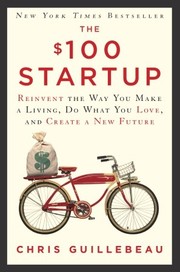
Grounds big ideas in accessible, real-world examples of people who built businesses from scratch with minimal resources — a confidence-builder that makes entrepreneurship feel achievable at the beginner stage.
Building & Validating: From Idea to Product
BeginnerLearn how to find real customer problems, test ideas cheaply, and build something people actually want before scaling.
▸ Study plan for this stage
Pace: 4–5 weeks total: Week 1–2 — "The Mom Test" (~20–25 pages/day, including re-reading key chapters on question framing); Week 3–5 — "Running Lean" (~25–30 pages/day, pausing after each major section to complete the corresponding Lean Canvas or experiment worksheet).
- The Mom Test rule: ask about people's lives and past behaviors, never about your idea or hypothetical futures (The Mom Test)
- Avoiding 'bad data': compliments, hypotheticals, and future promises are not validation (The Mom Test)
- Structuring customer conversations to extract facts, not feelings — and knowing when to stop talking (The Mom Test)
- The three tiers of information: facts > emotions > opinions, and how to rank what you hear (The Mom Test)
- The Lean Canvas as a one-page business model snapshot that replaces the traditional business plan (Running Lean)
- The three stages of a startup: Problem/Solution Fit → Product/Market Fit → Scale, and why sequence matters (Running Lean)
- Identifying and ranking riskiest assumptions, then designing the smallest possible experiment to test each one (Running Lean)
- Continuous Customer Discovery: treating validation as an ongoing loop, not a one-time event (Running Lean)
- According to The Mom Test, why is asking 'Would you buy this?' a fundamentally flawed validation question, and what should you ask instead?
- What are the three types of 'bad data' Rob Fitzpatrick warns against, and can you give a real example of each from a hypothetical customer conversation?
- How does the Lean Canvas differ from a traditional business plan, and which of its nine blocks does Ash Maurya argue you should fill in first — and why?
- What is the 'riskiest assumption' framework in Running Lean, and how do you decide which assumption to test before all others?
- How would you design a concierge MVP (as described in Running Lean) for a new app idea, and what specific metric would tell you the experiment succeeded?
- How do the customer interview techniques from The Mom Test feed directly into the Problem Interview and Solution Interview scripts outlined in Running Lean?
- Script surgery: Write 10 questions you'd naturally want to ask a potential customer about your idea. Then rewrite every single one to comply with The Mom Test rules (past behavior, no hypotheticals, no idea pitching). Compare both lists and note what changed.
- Run 3 real customer conversations using only Mom-Test-compliant questions. Record notes immediately after each using Fitzpatrick's recommended format (facts, quotes, commitments/next steps). Identify one insight that surprised you.
- Build a Lean Canvas for your own idea (or a fictional startup) by filling in all nine blocks in Ash Maurya's recommended order. Highlight the top 3 riskiest assumptions and rank them by the combination of uncertainty × impact.
- Design a Problem Interview script (following Running Lean's template) targeting your riskiest assumption. Conduct at least 2 interviews and score each assumption as 'validated,' 'invalidated,' or 'needs more data.'
- Concierge MVP experiment: Define a version of your product you can deliver manually to 1–3 real users this week — no code required. Set one clear pass/fail metric in advance, run the experiment, and write a one-page debrief on what you learned.
- Pivot-or-persevere review: After your interviews and concierge experiment, revisit your Lean Canvas. Update at least two blocks based on real evidence and write a short paragraph explaining what changed and why, citing specific customer quotes.
Next up: Mastering customer discovery and lean experimentation gives you a validated problem-solution fit and a living Lean Canvas — the exact foundation needed to move into growth strategy and business model scaling in the next stage of the curriculum.

Teaches the critical skill of customer discovery — how to have honest conversations that reveal real pain points rather than polite validation. Must be read before any product is built.

Operationalizes Lean Startup principles into a concrete, step-by-step process using the Lean Canvas. Bridges the gap between mindset and execution, building directly on Ries's framework.
Growth & Business Models: Making It Work
IntermediateUnderstand how startups acquire customers, generate revenue, and design business models that can scale.
▸ Study plan for this stage
Pace: 6–8 weeks total: Week 1–2 — "Traction" (~25–30 pages/day, including the 19-channel framework); Week 3–4 — "Business Model Generation" (~20–25 pages/day, working hands-on with the Canvas as you read); Week 5–6 — "Hooked" (~20–25 pages/day, mapping the Hook Model to real products); Week 7–8 — integrat
- The Bullseye Framework (Traction): systematically brainstorming, ranking, and testing all 19 traction channels to find the one or two that move the needle for your specific startup
- The 50% Rule (Traction): Weinberg's principle that founders should spend roughly half their time on product and half on traction — growth is not an afterthought
- Traction vs. Product fit loop: using traction experiments to validate product-market fit, not just to acquire users
- The Business Model Canvas (Business Model Generation): the nine building blocks — Customer Segments, Value Propositions, Channels, Customer Relationships, Revenue Streams, Key Resources, Key Activities, Key Partnerships, and Cost Structure — as a single visual strategic map
- Business model patterns (Business Model Generation): recurring archetypes such as the Long Tail, Multi-Sided Platforms, FREE/Freemium, and Open Business Models, and when each applies to a startup context
- Iterating and stress-testing the Canvas: using 'What If?' questions and SWOT-style analysis on each block to find fragile assumptions before they become expensive mistakes
- The Hook Model (Hooked): the four-phase cycle — Trigger, Action, Variable Reward, and Investment — that drives habit-forming product behavior
- Internal vs. external triggers (Hooked): how successful products migrate users from external prompts (notifications, ads) to internal triggers (emotions, routines), creating durable retention and reducing CAC over time
- After reading Traction, can you name all 19 traction channels and explain why the Bullseye Framework insists on testing channels you'd normally dismiss?
- How does Weinberg's 50% Rule challenge the common founder instinct to focus almost exclusively on product, and what does it imply about resource allocation at the seed stage?
- Using the Business Model Canvas, how would you map a freemium SaaS startup — which blocks change most dramatically when you add a free tier, and what new risks appear?
- Osterwalder identifies several recurring business model patterns. Pick two (e.g., Multi-Sided Platform and Freemium) and explain how each affects the Revenue Streams and Cost Structure blocks differently.
- Walk through the Hook Model for a product you use daily: what is the internal trigger, what is the variable reward, and what 'investment' does the product ask you to make that loads the next trigger?
- How do the three books connect? Specifically, how might a traction channel identified in Weinberg feed into a specific block of Osterwalder's Canvas, and how could Eyal's Hook Model reduce the customer acquisition cost assumptions in that same Canvas?
- Traction Channel Audit: List 3 real startups you admire. For each, identify which of Weinberg's 19 channels appears to be their primary traction channel and their secondary one. Write a one-paragraph hypothesis for why that combination fits their business model.
- Bullseye Sprint: For a startup idea of your own (or a case study), run a mini Bullseye exercise — brainstorm all 19 channels, score each on cost/speed/scale, pick your top 3, and design a one-week test for each. Document your assumptions explicitly.
- Canvas Sketch x2: Draw a full Business Model Canvas for two companies from different pattern archetypes (e.g., Spotify as a Multi-Sided Platform and Duolingo as a Freemium model). Compare the two canvases side-by-side and annotate where the biggest strategic risks lie in each block.
- 'What If?' Stress Test: Take your own or a case-study Canvas and apply Osterwalder's 'What If?' technique — write 5 provocative questions (e.g., 'What if our top customer segment disappeared?') and sketch how the Canvas would need to be redrawn for each scenario.
- Hook Model Teardown: Choose one consumer app and one B2B tool. For each, map out a complete Hook cycle: identify the external trigger, the internal trigger it aims to replace, the simplest action, the variable reward type (tribe/hunt/self), and the investment asked. Present your findings as a one-page visual.
- Integrated Playbook: Combine all three frameworks into a single two-page 'Growth & Model' brief for one startup idea — include your top 2 traction channels (Weinberg), a completed Canvas (Osterwalder), and a Hook cycle diagram (Eyal). Identify where the three frameworks reinforce each other and where they create tension.
Next up: Mastering how startups acquire customers, model revenue, and build habit-forming products sets the quantitative and strategic foundation needed for the next stage, where the focus shifts to metrics-driven scaling, unit economics, and managing the organizational complexity that comes with rapid growth.
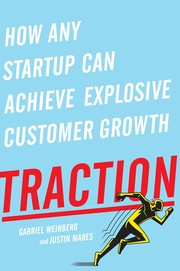
Systematically maps out 19 customer acquisition channels and a framework (Bullseye) for finding which one works for your startup — essential reading once you have a product to grow.
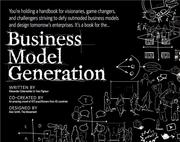
Introduces the Business Model Canvas, the standard tool for designing, testing, and pivoting business models. Builds on Running Lean's canvas with richer strategic depth.

Explains how to build habit-forming products using the Hook Model — deepens your understanding of retention and engagement, which are the true drivers of sustainable growth.
Scaling & Strategy: Building a Lasting Company
ExpertMaster the strategic, organizational, and financial challenges of scaling a startup into a durable, defensible company.
▸ Study plan for this stage
Pace: 6–8 weeks total: Weeks 1–4 cover "High Output Management" (~20–25 pages/day, including reflection time); Weeks 5–8 cover "Venture Deals" (~15–20 pages/day, with heavier annotation on term-sheet chapters). Reserve the final 3–4 days for cross-book synthesis and exercise completion.
- Managerial leverage & output: a manager's output equals the output of their team and the teams they influence (Grove's core thesis in High Output Management)
- The production/process mindset applied to management: identifying limiting steps, optimizing throughput, and measuring leading vs. lagging indicators in an org
- One-on-ones, staff meetings, and task-relevant maturity: Grove's structured cadences for information flow and the situational leadership model for delegating vs. directing
- OKRs (Objectives & Key Results): Grove's original framing of MBOs as a dual-purpose tool for alignment and stretch, the foundation of modern goal-setting at scale
- Dual-class structures, board composition, and investor rights: how Venture Deals maps the power dynamics between founders, VCs, and the board across funding rounds
- The term sheet decoded: economic terms (valuation, option pool, liquidation preferences, anti-dilution) vs. control terms (protective provisions, drag-along, information rights) and why control terms often matter more
- Capitalization tables & dilution mechanics: how each financing round reshapes ownership, and how founders can model the long-term impact of deal terms before signing
- Investor alignment & incentive structures: how liquidation preferences, participation rights, and ratchets create divergent outcomes for founders vs. investors at exit
- According to Grove, what is the fundamental unit of a manager's output, and how does the concept of 'leverage' determine whether a managerial activity is high-value or wasteful?
- How does Grove's task-relevant maturity model change the way a scaling startup should think about promoting individual contributors into management roles?
- What is the difference between economic terms and control terms in a venture term sheet, and which category does Grove's board-composition advice in High Output Management most closely relate to?
- Walk through a scenario: a Series A term sheet offers a $10M pre-money valuation with a 20% option pool shuffle and a 1x participating liquidation preference. How does each element affect founder ownership and exit proceeds at a $50M acquisition?
- How do the anti-dilution provisions described in Venture Deals (broad-based weighted average vs. full ratchet) interact with the OKR-driven growth targets a management team might set using Grove's framework?
- Using both books, how would you design the governance structure (board seats, information rights, decision rights) and internal operating cadence (meetings, metrics, OKRs) for a company entering its Series B?
- Manager's leverage audit: Map out one week of your own (or a case-study manager's) calendar using Grove's leverage framework. Label each activity as high, medium, or low leverage, identify the single highest-leverage change you would make, and write a one-page justification grounded in High Output Management.
- OKR drafting workshop: Write a full quarter's OKRs for a fictional Series A SaaS company (3 company-level objectives, 3 key results each). Then stress-test them against Grove's criteria: are they measurable, time-bound, and do they expose the 'limiting step' in the business?
- Term-sheet redline exercise: Download a sample Series A term sheet (NVCA model documents are free online). Using Venture Deals as your guide, annotate every clause — mark each as economic or control, flag founder-unfriendly provisions, and draft two alternative clauses you would negotiate.
- Cap table modeling: Build a spreadsheet cap table from Seed through Series B for a fictional startup. Model at least two scenarios — one with a 1x non-participating preference and one with a 2x participating preference — and calculate founder, employee, and investor proceeds at a $30M and a $100M exit.
- Board meeting design: Using Grove's staff-meeting principles and Venture Deals' board-composition guidance, write a complete board meeting agenda template for a post-Series A company. Include the metrics dashboard (leading and lagging indicators), decision items, and information-only items, with a rationale for each section.
- Integrated deal memo: Pretend you are a founder preparing for a Series B. Write a two-page internal memo that (a) summarizes the operating model and OKR performance (Grove) and (b) outlines the deal terms you will accept or reject and why (Venture Deals). This forces synthesis of both books into a single founder decision-making artifact.
Next up: Mastering Grove's operating discipline and Feld's financing mechanics gives the reader the internal management language and external capital fluency needed to tackle the next stage's focus on long-term competitive strategy, market positioning, and building durable moats — because you can only defend a market position if your organization can execute and your cap table doesn't constrain your option
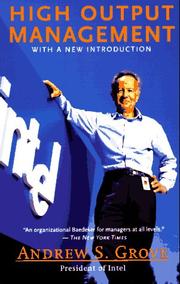
The definitive guide to managing and scaling teams — as your startup grows, operational leverage and management become the bottleneck, and Grove's framework is the gold standard.

Demystifies term sheets, cap tables, and the mechanics of raising venture capital — essential knowledge for any founder considering outside funding, and the perfect capstone to the financial side of the curriculum.
Discussion
Keep reading
Paths that share books, cover the same subject, or open a related topic.