Operations management decides whether a company can actually deliver what it promises, and its ideas are counterintuitive: adding capacity can slow a system down, local efficiency can hurt the whole, and inventory often hides problems rather than solving them. Because the classics span dense textbooks and business novels, readers often bounce between theory they cannot apply and stories they cannot generalize.
The order that works lays a textbook foundation, then internalizes the Lean and Theory of Constraints ideas that reshaped manufacturing, then scales those ideas up to leadership. Each book resolves a puzzle the last one posed.
The foundations
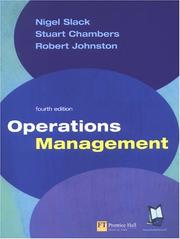
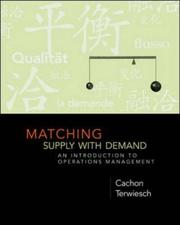
Start with a solid base. Operations management by Nigel Slack is the comprehensive textbook covering process design, capacity, inventory, and quality, giving you the shared vocabulary of the field. Matching supply with demand by Gerard Cachon is the sharper, more quantitative companion, drilling into the core problem of aligning what you can make with what customers want. Together they make the rest of the path legible.
The transformative classics
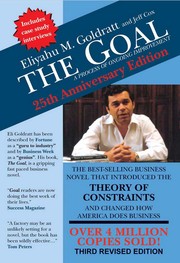
Now read the books that changed how factories run. The goal by Eliyahu Goldratt teaches the Theory of Constraints through a page-turning novel, and it is the best possible introduction to thinking in bottlenecks. Lean thinking by James Womack defines the Lean principles of value, flow, and pull. Learning to see by Mike Rother is the hands-on guide to value-stream mapping, and its follow-up Toyota kata reveals the improvement and coaching routines behind Toyota's success. The machine that changed the world documents the study that introduced Lean production to the West, while Factory physics by Wallace Hopp supplies the rigorous science underneath all of it.
Scaling and speed
The final arc is competitive and organizational. Competing against time by George Stalk shows how speed itself becomes a strategic weapon. The Lean Startup by Eric Ries carries Lean thinking into product development and uncertainty. Close with High Output Management by Andrew Grove, the enduring guide to managing the people and teams who run operations day to day.
Read in this order and operations stops being intuition and becomes a discipline with laws you can use. These books complement real experience on real processes rather than replacing it. Follow the full path from the textbook fundamentals to leading a high-output organization.
Follow the full reading path →
Ready to learn something deeply?
Build a reading path — free