Olympic weightlifting for beginners: the best books to learn the snatch and clean & jerk
This curriculum takes a complete beginner from zero knowledge of Olympic weightlifting all the way through advanced programming and coaching mastery. Each stage builds on the last — starting with movement literacy and foundational strength, progressing through technical deep-dives on the snatch and clean-and-jerk, then into intelligent programming, and finally into the coaching and performance science that separates good lifters from great ones.
Foundations: Movement, Mobility & the Barbell
BeginnerBuild a safe, mobile, and strong foundation — understand basic barbell mechanics, develop the flexibility required for the receiving positions, and learn the vocabulary of strength training before touching the Olympic lifts.
▸ Study plan for this stage
Pace: 8–10 weeks, ~40–50 pages/day (alternating focus: 2–3 weeks on Starting Strength fundamentals, then 4–5 weeks on Becoming a Supple Leopard mobility work, with 1–2 weeks of integrated practice)
- The concept of 'the bar path' and neutral spine as the foundation for safe, efficient barbell movement
- The five basic barbell movements (squat, bench press, deadlift, power clean, press) and their mechanical principles from Starting Strength
- Mobility vs. stability: understanding which joints need mobility (ankles, hips, thoracic spine, shoulders) and which need stability (lumbar spine, knees) per Starrett's framework
- The 'ready position' and receiving positions (front rack, back rack, overhead) and the mobility requirements for each
- Breathing, bracing, and tension as core techniques for maintaining spinal integrity under load
- Movement assessment: identifying personal mobility restrictions and asymmetries that will limit Olympic lifting progress
- The 12-position mobility routine and targeted drills from Becoming a Supple Leopard for correcting common restrictions
- How proper movement quality now prevents injury and accelerates technical learning in the Olympic lifts
- What is the bar path, and why is maintaining a neutral spine critical to safe barbell movement according to Starting Strength?
- Describe the five basic barbell movements and explain the primary joints involved in each lift.
- What is the difference between mobility and stability, and which joints require each for Olympic lifting readiness?
- What are the three receiving positions (front rack, back rack, overhead) and what mobility demands does each place on your body?
- How do breathing and bracing protect your spine during heavy lifts, and what is the correct sequence?
- Identify three common mobility restrictions that would prevent you from achieving proper receiving positions, and what drills from Becoming a Supple Leopard address them?
- Complete the Starting Strength assessment: perform an unloaded squat, deadlift, and press with just the bar (or PVC pipe) and video yourself from the side; compare to Rippetoe's form cues and identify deviations
- Practice the 12-position mobility routine from Becoming a Supple Leopard daily for 4 weeks; track which positions feel restricted and note improvements weekly
- Perform a full-body mobility assessment using Starrett's movement screens (overhead squat, deep squat, shoulder mobility tests); document baseline restrictions in each area
- Spend 2 weeks drilling the 'ready position' with an empty bar or PVC pipe 3–4 times per week, focusing on foot position, knee tracking, and neutral spine; film and self-critique
- Practice the breathing and bracing sequence (Valsalva maneuver) with light loads (empty bar or 5–10 lbs) for 10 reps, 3 sets, 2–3 times per week until it becomes automatic
- Select one mobility restriction from your assessment and commit to a targeted 10-minute daily drill routine (e.g., couch stretch for hip mobility, shoulder pass-throughs for thoracic mobility) for 3 weeks; retest and measure progress
Next up: This stage equips you with the mobility, stability, and mechanical awareness required to safely learn the Olympic lifts (snatch and clean & jerk), ensuring that your body can achieve the demanding receiving positions and that you understand how to maintain spinal integrity under the explosive loads ahead.
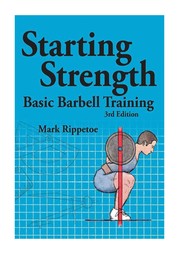
The clearest introduction to barbell mechanics, stance, bracing, and the hip hinge — all of which are prerequisites for Olympic lifting. Reading this first gives beginners the biomechanical vocabulary and body awareness they need before learning the snatch and clean-and-jerk.
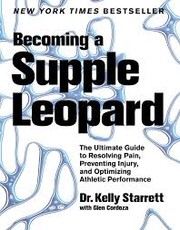
Olympic lifting demands extreme overhead, squat, and wrist mobility; this book is the definitive guide to assessing and fixing those restrictions. It should be read early so the athlete can begin mobility work in parallel with their first technique sessions.
Technical Core: Snatch, Clean & Jerk Technique
BeginnerUnderstand the full technical model of both Olympic lifts — positions, phases, bar path, footwork, and the most common faults — and be able to self-correct with confidence.
▸ Study plan for this stage
Pace: 2–3 weeks, ~20–25 pages/day, with 2–3 days per week dedicated to video analysis and technique practice
- The complete snatch movement broken into distinct phases: setup, first pull, transition, second pull, turnover, and catch
- The complete clean & jerk movement: clean phases (setup through catch) and jerk phases (dip, drive, turnover, recovery)
- Proper bar path mechanics for both lifts and how deviations create technical faults
- Footwork patterns and timing in the pull, transition, and recovery positions
- Common technical faults in each lift and their biomechanical causes
- How programming and exercise selection reinforce technical positions and movement patterns
- The relationship between technique, load, and fatigue in training design
- What are the five main phases of the snatch, and what should the bar path look like in each?
- Describe the footwork sequence in the clean and jerk—when and why does the foot position change?
- What are three common snatch faults and what biomechanical error causes each one?
- How does the dip and drive in the jerk differ from the pull in the clean, and why?
- What role does exercise selection play in reinforcing correct technical positions?
- How should programming account for technique degradation as fatigue accumulates?
- Film yourself performing 5 singles of the snatch at 60–70% of max; review frame-by-frame and identify one technical fault using Takano's fault taxonomy
- Perform 3 sets of 3 tall snatches (starting from hip height) and 3 tall cleans, focusing on turnover speed and catch position
- Record a video of your clean & jerk at 70% intensity; compare your bar path and footwork against the technical model described in the book
- Practice 5 sets of 2 power snatches followed by 2 power cleans, pausing 2 seconds in the catch position to reinforce stability
- Create a one-page diagram of the snatch and clean & jerk showing all phases, bar positions, and foot placements; use it as a reference during training
- Perform 3 sets of 5 hang power snatches and 5 hang power cleans; after each set, write down one technical observation about your movement quality
Next up: Understanding the technical model and common faults in this stage equips you to design and execute programming that specifically targets weak positions and reinforces correct movement patterns—the foundation for the next stage on programming and periodization.

Takano introduces technique and programming together in a highly practical, coach-tested framework; reading it after Everett's technical foundation reinforces cues and begins bridging the gap between 'how to lift' and 'how to train.'
Programming: Building Strength & Skill Over Time
IntermediateDesign and follow intelligent training cycles — understanding periodization, volume, intensity, peaking, and how to progress safely from novice to intermediate as a weightlifter.
▸ Study plan for this stage
Pace: 8–10 weeks, ~40–50 pages/day (mix of dense technical content and practical application)
- Periodization models (linear, undulating, block) and their application to weightlifting cycles
- Volume and intensity relationships: how to manipulate training variables for strength vs. skill development
- The role of technique work, accessory exercises, and competition lifts in a cohesive program
- Progressive overload principles and how to advance safely from novice to intermediate status
- Peaking strategies: tapering, deloading, and timing competition readiness
- Individual variation in recovery, adaptation, and response to training stimuli
- Historical and empirical evidence from elite weightlifting programs (Soviet/Eastern European methods)
- Translating theoretical programming knowledge into a personalized, executable training plan
- What are the three main periodization models discussed, and when is each most appropriate for a weightlifter transitioning from novice to intermediate?
- How do volume and intensity interact in a training cycle, and what happens if you manipulate one without considering the other?
- Describe a complete 12-week training block: what would the progression of intensity, volume, and technique focus look like week-to-week?
- What is the difference between a deload and a peak, and why are both necessary in a long-term training plan?
- How do you determine whether an intermediate lifter should prioritize strength development, technique refinement, or competition simulation in a given phase?
- What role do accessory and supplemental exercises play in a weightlifting program, and how should they be programmed relative to competition lifts?
- Design a 12-week linear periodization block for yourself (or a hypothetical lifter): specify weekly intensity zones, rep ranges, exercise selection, and progression targets for snatch, clean & jerk, and 2–3 accessories.
- Analyze a real weightlifting program (from a coach, online resource, or the books themselves) and identify its periodization structure, volume/intensity distribution, and whether it aligns with principles from Drechsler and Rippetoe.
- Create a deload week protocol: specify how you would reduce volume/intensity, which exercises to keep, which to drop, and how long recovery should take before resuming normal training.
- Track your own training for 4 weeks using the concepts learned: log volume (sets × reps × weight), intensity (% of 1RM), and subjective technique quality; then write a brief analysis of whether your progression matches your stated goals.
- Design a 4-week peaking cycle leading to a competition or max-attempt day: detail the progression of intensity, reduction in volume, and timing of final technique work.
- Compare and contrast how Drechsler's historical Soviet methods and Rippetoe's practical approach would program the same intermediate lifter; identify where they align and where they diverge.
Next up: This stage equips you with the framework to design intelligent, long-term training plans; the next stage will likely focus on troubleshooting, adapting programs when progress stalls, and integrating nutrition, recovery, and mobility work to sustain advanced development.

A comprehensive reference covering training theory, periodization, and the history and science behind how elite weightlifters are developed; its depth on programming principles makes it essential reading before designing your own cycles.

Provides a clear, principle-based framework for novice, intermediate, and advanced programming that applies directly to structuring weightlifting training blocks — a logical companion to Drechsler's more sport-specific theory.
Advanced Performance: Coaching, Cues & Sport Science
ExpertThink like a coach — apply sport science, refine athlete-specific cues, understand the psychology of competition, and develop the eye to diagnose and correct faults in yourself and others.
▸ Study plan for this stage
Pace: 8–10 weeks, ~40–50 pages/day, with 2–3 days per week dedicated to practical application and coaching observation
- Periodization models (macrocycles, mesocycles, microcycles) and how to structure training phases for peak performance
- Neuromuscular adaptation: motor unit recruitment, rate coding, and synchronization as mechanisms for strength development
- Biomechanical analysis of the snatch and clean & jerk: joint angles, force vectors, and individual anthropometric variation
- Fatigue management and recovery: central nervous system fatigue vs. peripheral fatigue, and their implications for programming
- Athlete-specific cueing: translating biomechanical principles into simple, actionable verbal and visual cues
- Sport psychology in competition: arousal regulation, confidence, focus, and managing pressure in high-stakes environments
- Fault diagnosis framework: systematic observation, video analysis, and hypothesis-driven correction strategies
- Individual differences: how genetics, anthropometry, and training history shape optimal technique and programming
- How would you design a 12-week mesocycle for an intermediate lifter preparing for a competition, and what would be your rationale for the intensity/volume distribution across weeks?
- Explain the difference between central and peripheral fatigue, and how would you adjust training if you suspect an athlete is experiencing CNS fatigue rather than muscular fatigue?
- Watch a video of a lifter missing a snatch in the catch position. What biomechanical variables would you assess, and what specific cue would you give to correct the fault?
- How do individual anthropometric differences (limb length, torso length, shoulder width) affect optimal technique in the snatch, and how would you modify coaching cues accordingly?
- Design a pre-competition arousal management protocol for an athlete who tends to be over-aroused under pressure. What psychological and physiological tools would you use?
- Given a lifter's training history and current performance data, how would you diagnose whether a plateau is due to inadequate recovery, poor technique, or a need for a different training stimulus?
- Read and annotate Siff's chapters on periodization and neuromuscular adaptation; create a visual flowchart of how microcycle, mesocycle, and macrocycle decisions cascade from competition goals
- Analyze 5–10 video clips of elite snatches and clean & jerks (from different body types). For each, identify 2–3 key biomechanical features and note how they differ between lifters
- Design a complete 16-week training block for a hypothetical athlete (specify their level, goals, and weaknesses). Include periodization structure, intensity/volume progression, and recovery protocols
- Conduct a 'fault diagnosis' session: watch 3 videos of common technical errors (e.g., early arm bend, incomplete extension, forward knee drift). For each, propose a root cause and a specific cue to address it
- Interview or observe a coach working with 2–3 lifters of different body types. Document the cues they use and analyze whether/how those cues are personalized to each athlete's anthropometry
- Develop a pre-competition mental preparation plan for yourself or a training partner, including arousal assessment, focus cues, and a 24-hour protocol leading into a mock competition
Next up: This stage equips you with the science and coaching framework to make principled decisions; the next stage will likely focus on implementing these principles in real-world team or club settings, managing multiple athletes simultaneously, and adapting your coaching philosophy as you encounter diverse populations and constraints.

The definitive sport-science text on strength and power development, covering force-velocity relationships, plyometrics, and special strength — essential for understanding why the Olympic lifts work and how to intelligently supplement them.
Zatsiorsky's research-backed framework on maximal, explosive, and reactive strength directly explains the physiological demands of weightlifting and gives coaches the scientific language to justify every programming decision.
Discussion
Keep reading
Paths that share books, cover the same subject, or open a related topic.