Become a personal trainer: fitness careers with a face
This curriculum takes a complete beginner from understanding how the human body moves and adapts, through the science and certification knowledge needed to pass a top-tier exam, into the practical art of coaching real people, and finally into building a sustainable personal training business. Each stage builds directly on the last — you must understand the body before you can train it, train it before you can coach it, and coach it before you can sell it.
Foundations: How the Body Works
BeginnerBuild a working vocabulary of anatomy, physiology, and movement so that later exercise science material feels intuitive rather than overwhelming.
▸ Study plan for this stage
Pace: 4–5 weeks, ~20–25 pages/day (the book is dense with photos and movement cues — budget extra time to pause and physically test each position described)
- The 10 Organizing Principles of movement: Starrett's hierarchy for building and diagnosing any movement pattern from the ground up
- Neutral spine and bracing sequence: learning to create and maintain a stable, pressurized midline before and during any load or movement
- Torque and joint centration: how externally rotating limbs into their sockets creates stability and protects joints (e.g., 'screwing' feet into the floor, 'packing' the shoulder)
- The four archetypes of movement: Starrett's foundational movement shapes (e.g., hip hinge, squat, press, pull) that underlie virtually every exercise
- Mobility vs. flexibility: understanding that mobility is motor-control + range of motion, not just passive stretching, and why this distinction matters for programming
- Upstream/downstream dysfunction: how a restriction or fault at one joint (e.g., ankle) creates compensations and pain at another (e.g., knee or low back)
- The MWOD (Mobility WOD) prescription model: using 2-minute holds, banded distraction, and soft-tissue work as targeted interventions rather than generic warm-ups
- Body landmarks and movement vocabulary: planes of motion (sagittal, frontal, transverse), major joint names, and directional terms (flexion/extension, abduction/adduction, internal/external rotation)
- What is the bracing sequence, and why does Starrett argue you must establish it before applying any external load?
- Explain the concept of 'torque' in the context of a squat — what does it mean to 'screw your feet into the floor,' and what joint problem does this prevent?
- What is the difference between a mobility restriction and a stability problem, and how does Starrett suggest you distinguish between the two when diagnosing a movement fault?
- Choose one movement fault (e.g., knee cave in a squat). Trace the upstream and downstream joints that could be contributing to it, using Starrett's framework.
- Why does Starrett prefer joint-centration and motor-control drills over static stretching as a first-line intervention for tightness?
- Define the four primary movement archetypes described in the book. Give one real-world or gym exercise that belongs to each archetype.
- Body-scan journaling: After each reading session, stand in front of a mirror and attempt the movement or position just described. Write 3–5 sentences on what you feel, where you feel restriction, and what cue from the book helped most.
- Bracing sequence drill (daily, 5 minutes): Practice the full bracing sequence — feet screwed in, glutes squeezed, belly braced, ribcage down — while standing, then in a bodyweight squat. Log whether your neutral spine position improves over the 5 weeks.
- Mobility audit: Using Starrett's movement tests (overhead squat, hip internal rotation test, shoulder flexion test), assess yourself or a willing friend at the start of the stage. Repeat the same tests at the end and note changes.
- Fault-mapping worksheet: Pick three common exercises (squat, push-up, hinge). Draw a simple stick figure and annotate every joint involved. For each joint, list one common fault Starrett identifies and its likely upstream/downstream cause.
- Two-minute mobilization practice: Each day, select one mobilization from the book and perform it for the prescribed duration. Keep a log of which tissues feel different afterward — this builds the habit of targeted mobility work you'll prescribe as a trainer.
- Teach-back sessions: Once per week, explain one key concept (e.g., torque, neutral spine, upstream dysfunction) out loud to a friend, family member, or even a recording of yourself. Use no jargon — if you can't simplify it, revisit that section of the book.
Next up: Starrett's movement vocabulary and joint-by-joint thinking give you the anatomical 'language' you need to understand how muscles, energy systems, and training adaptations interact — the exercise science concepts that typically follow in a personal training curriculum.
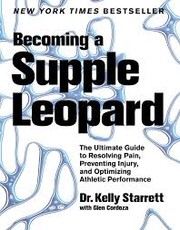
Bridges anatomy into applied movement by teaching mobility, positioning, and injury prevention in plain language — perfect for understanding how real bodies move before you start programming for clients.
Exercise Science Core: The Certification Layer
BeginnerMaster the exercise science principles — biomechanics, physiology, nutrition basics, and program design — that underpin NASM, ACE, and CSCS certification exams.
▸ Study plan for this stage
Pace: 10–12 weeks total. Book 1 — "NSCA's Essentials of Personal Training" (Coburn): 7–8 weeks at ~25–35 pages/day, 5 days/week (the text is dense with figures and tables; budget extra time for anatomy diagrams and resistance-training tables). Book 2 — "Sports Nutrition for Health Professionals" (Muth): 3
- Anatomical terminology, joint mechanics, and musculoskeletal anatomy as presented in Coburn — the structural foundation for every exercise prescription decision
- Bioenergetics and energy systems (phosphagen, glycolytic, oxidative) from Coburn — understanding how the body fuels different exercise intensities and durations
- Neuromuscular physiology: motor unit recruitment, muscle fiber types (Type I, IIa, IIx), and the stretch-shortening cycle as detailed in Coburn
- Principles of training adaptation — SAID principle, progressive overload, specificity, and periodization models (linear, undulating) from Coburn's program-design chapters
- Resistance training variables — intensity (%1RM), volume (sets × reps), rest intervals, tempo, and exercise selection/order — and how Coburn organizes them into beginner, intermediate, and advanced programs
- Cardiorespiratory training guidelines: VO₂max, heart-rate methods (HRmax, HRR/Karvonen), RPE scales, and FITT-VP principle from Coburn
- Macronutrient roles, recommended intake ranges, and timing strategies for active clients as covered in Muth — carbohydrates, proteins, and fats in the context of sport and exercise
- Hydration, micronutrients, and evidence-based supplement evaluation from Muth — equipping the trainer to answer client nutrition questions within scope of practice
- From Coburn: What are the three energy systems, under what exercise conditions does each predominate, and how does this knowledge change how you design a conditioning block for a beginner client?
- From Coburn: Explain the SAID principle and progressive overload. How would you apply both when designing a 12-week resistance program for a sedentary adult?
- From Coburn: What is the difference between Type I and Type II muscle fibers, and how does fiber-type distribution influence exercise selection and rep-range recommendations?
- From Coburn: Define the key resistance-training variables (intensity, volume, frequency, rest, tempo). How does Coburn recommend manipulating these variables differently for muscular endurance vs. hypertrophy vs. maximal strength goals?
- From Muth: What are the primary roles of carbohydrates, proteins, and fats in supporting exercise performance, and what general intake ranges does Muth recommend for active individuals?
- From Muth: How should a personal trainer handle a client's question about a popular supplement (e.g., creatine or protein powder) — what evaluation framework does Muth provide, and where does the trainer's scope of practice end?
- Anatomy mapping drill (Coburn): Using the muscle diagrams in Coburn, create a one-page 'muscle map' for each major joint (shoulder, hip, knee). For each muscle, write its action, the exercises that target it, and one common injury risk — review and self-quiz weekly.
- Energy system timeline exercise (Coburn): Draw a blank graph (x-axis: exercise duration 0–60 min; y-axis: relative energy contribution). Fill in the three energy systems from memory after reading the bioenergetics chapter, then check against Coburn's figures.
- Program design lab (Coburn): Write a complete 4-week beginner resistance-training program for a fictional client using Coburn's NSCA guidelines. Specify every variable (exercise, sets, reps, %1RM or RPE, rest, frequency) and justify each choice with a citation to a specific chapter principle.
- Cardio prescription practice (Coburn): Given three fictional clients with different goals (fat loss, 5K race prep, general health), calculate their target heart-rate zones using both the HRmax percentage method and the Karvonen formula. Compare the outputs and explain the difference.
- Nutrition case study (Muth): Choose one of Muth's athlete profiles or create your own (e.g., a 30-year-old recreational runner, 65 kg). Calculate estimated daily calorie and macronutrient needs using Muth's guidelines, then build a one-day sample meal plan that meets those targets.
- Scope-of-practice boundary map (Muth): List 10 common client nutrition questions. For each, decide — using Muth's framework — whether a personal trainer can answer it directly, should refer to a registered dietitian, or falls in a gray area. Write a one-sentence scripted response for each scenario.
Next up: ">Mastering the exercise science and nutrition principles in Coburn and Muth gives you the theoretical vocabulary and evidence-based reasoning needed to move confidently into the next stage, where you will apply these principles in real client interactions — learning assessment protocols, behavior-change coaching, and business fundamentals that transform scientific knowledge into a functioning per

The official NSCA textbook and the most rigorous science-grounded reference for personal training certification; reading this first gives you the academic foundation that makes all other programming books click.

Nutrition is inseparable from training outcomes; this ACE-aligned text gives you the evidence-based dietary knowledge you need to advise clients safely and within your scope of practice.
Programming & Coaching: Training Real Humans
IntermediateTranslate science into effective, individualized programs and develop the coaching eye and communication skills that separate good trainers from great ones.
▸ Study plan for this stage
Pace: 10–12 weeks total. Book 1 ("Science and Practice of Strength Training"): 3–4 weeks, ~20–25 pages/day — read slowly, annotate, and revisit dense chapters. Book 2 ("Practical Programming for Strength Training"): 3 weeks, ~25 pages/day — read alongside active program-writing practice. Book 3 ("The Coac
- The three methods of strength development (maximal effort, dynamic effort, repeated effort) as defined by Zatsiorsky, and when to apply each with real clients
- Biological adaptation principles — supercompensation, accommodation, and the repeated bout effect — as the scientific foundation for program design decisions
- Volume, intensity, and frequency as the three master variables of programming, and how Zatsiorsky frames their manipulation across training phases
- Rippetoe's novice–intermediate–advanced continuum: how recovery timelines lengthen and programming complexity must increase as a client advances
- Linear progression as the cornerstone of novice programming (Rippetoe), and the specific triggers that signal a client has outgrown it
- Periodization models — linear, undulating, and block — drawn from both Zatsiorsky and Rippetoe, and how to select the right model for a given client's goal and training age
- The seven essential questions from Stanier's 'Coaching Habit' (especially the AWE Question and the Focus Question) as tools for client intake, check-ins, and behavior-change conversations
- Stanier's concept of 'taming your advice monster' — staying curious longer before prescribing solutions — applied directly to trainer–client communication and program adjustments
- According to Zatsiorsky, what is the difference between the maximal effort and repeated effort methods, and which is more appropriate for a hypertrophy-focused beginner client — and why?
- Using Rippetoe's framework, how would you identify the moment a novice client has transitioned to intermediate, and what specific programming change would you make on day one of that transition?
- How do the principles of accommodation and supercompensation (Zatsiorsky) explain why a client who has been on the same program for 16 weeks stops making progress, and what is your evidence-based solution?
- Walk through how you would design a 12-week block for an intermediate client whose goal is maximal strength, drawing on periodization concepts from both Zatsiorsky and Rippetoe.
- Using at least three of Stanier's seven questions, describe how you would run a 10-minute coaching conversation with a client who says 'I just feel like I'm not making progress anymore.'
- How does Stanier's 'advice monster' concept challenge the traditional personal trainer instinct to immediately prescribe a new program, and how can suppressing it actually lead to better long-term client outcomes?
- Program audit: Take any existing 4-week program (yours or a template) and annotate every exercise, set, and rep scheme with the corresponding Zatsiorsky method (maximal effort, dynamic effort, or repeated effort) it represents. Identify gaps and rewrite one week to better balance the methods for a stated client goal.
- Novice-to-intermediate case study: Write a 16-week programming progression for a fictional novice client using Rippetoe's linear progression model. At week 12, write a one-page 'transition report' explaining the signs of stall and your evidence-based pivot to intermediate programming.
- Periodization design sprint: Using both Zatsiorsky's volume/intensity principles and Rippetoe's programming templates, design two 8-week blocks — one for a novice and one for an intermediate client with the same goal (e.g., squat strength). Compare them side by side and write three bullet points explaining the key structural differences.
- Coaching conversation role-play: With a partner (or recorded solo), conduct a 10-minute mock client check-in using only Stanier's seven questions as your guide. Impose a rule: you cannot offer a program change until the client has answered at least three questions. Debrief by noting where your 'advice monster' tried to take over.
- Integrated client profile: Choose a real or fictional client and produce a one-page 'Programming & Coaching Brief' that includes: training age classification (Rippetoe), recommended strength method (Zatsiorsky), a 4-week sample program, and three coaching questions (Stanier) you would use in their first session.
- Reflection journal: After finishing 'The Coaching Habit,' write a one-page personal audit — identify your top two 'advice monster' triggers as a trainer, and write a scripted response for each that replaces your default advice with a Stanier-style curious question.
Next up: Mastering individualized programming and coaching communication here creates the technical and interpersonal foundation needed to tackle the next stage, where the focus shifts to building a sustainable personal training business — because a trainer who can design great programs AND connect deeply with clients is ready to learn how to attract, retain, and scale that client base professionally.
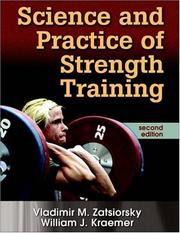
The most respected bridge between sports science research and practical program design — after the certification texts, this book teaches you how to think like a strength coach, not just follow templates.

A clear, opinionated framework for structuring novice, intermediate, and advanced programs; reading it after Zatsiorsky lets you apply periodization theory to real client progressions immediately.

Personal training is as much about asking the right questions as prescribing the right exercises; this concise book builds the listening and behavior-change communication skills that no certification exam teaches.
The Human Side: Motivation, Psychology & Presence
IntermediateUnderstand the psychology of behavior change, habit formation, and human motivation so you can keep clients consistent — the irreplaceable human advantage over any algorithm.
▸ Study plan for this stage
Pace: 4–5 weeks total: Weeks 1–3 cover Atomic Habits (~270 pages, ~15–18 pages/day); Weeks 4–5 cover Drive (~240 pages, ~17–20 pages/day). Read each book straight through before moving to the next, then spend the final 2–3 days reviewing both together.
- The Habit Loop & the Four Laws of Behavior Change (Atomic Habits): make it obvious, attractive, easy, and satisfying — and their inverses for breaking bad habits
- Identity-Based Habits (Atomic Habits): behavior change that lasts starts with a shift in self-concept ('I am a healthy person'), not just outcomes or processes
- Habit Stacking & Environment Design (Atomic Habits): engineering a client's surroundings and routines so the desired behavior is the path of least resistance
- The Plateau of Latent Potential / 'Valley of Disappointment' (Atomic Habits): helping clients persist through the lag between effort and visible results
- The Two-Minute Rule & Showing Up Consistently (Atomic Habits): scaling habits down to their smallest viable form to eliminate friction and build momentum
- Self-Determination Theory — Autonomy, Mastery & Purpose (Drive): intrinsic motivation is fueled by feeling in control, getting better at something meaningful, and connecting to a larger 'why'
- The Danger of Extrinsic Rewards (Drive): how over-reliance on external incentives (prizes, punishments) can crowd out genuine motivation and undermine long-term adherence
- The Goldilocks Rule / Optimal Challenge (Drive): clients stay most engaged when tasks sit just beyond their current ability — neither too easy nor too hard
- Using the Four Laws from Atomic Habits, how would you redesign a client's morning routine to make a 6 a.m. workout habit stick — and which law is most commonly violated when clients quit?
- A client says 'I'm just not a gym person.' According to James Clear's identity-based habit framework, what is the trainer's most powerful lever, and what concrete script would you use in a session?
- A client loses motivation after 6 weeks because they 'don't see results yet.' How do you use the concept of the Plateau of Latent Potential to reframe their experience and keep them engaged?
- Daniel Pink argues that 'if-then' rewards can actually harm motivation. Give a real-world personal training example where a reward system could backfire, and explain the mechanism behind it using Drive.
- How do Autonomy, Mastery, and Purpose each show up differently in a 1-on-1 training session? Provide one specific coaching action for each pillar that you could implement immediately.
- How do the frameworks in Atomic Habits and Drive complement each other — and where might they appear to conflict when designing a client adherence strategy?
- Habit Audit with a Real or Mock Client: Map one of your client's target behaviors onto the Four Laws. Write out exactly what cue, craving, response, and reward currently exist — then redesign each layer using Clear's inversion rules for any law that is failing.
- Identity Statement Workshop: Write 5 identity-based affirmations for 3 different client archetypes (e.g., busy parent, post-injury comeback athlete, weight-loss beginner). Practice delivering them conversationally so they feel natural in a session.
- Environment Design Walk-Through: Visit (or mentally map) a client's home or workplace and identify 3 friction points sabotaging their habit. Propose specific, low-cost environmental changes using habit stacking and the Two-Minute Rule.
- Motivation Profiling Interview: Using Drive's three pillars as a guide, write a 10-question intake interview designed to uncover whether a new client is primarily driven by autonomy, mastery, or purpose. Conduct it with a partner and debrief what you learned.
- Goldilocks Programming Challenge: Take a 4-week training block you have written (or create one now) and annotate each week's sessions, explicitly noting where you are calibrating challenge to sit just above the client's current ability. Adjust any sessions that are too easy or too hard.
- Adherence Case Study Journal: Over the next 2 weeks, log one real or hypothetical client interaction per day where motivation or habit formation was at play. For each entry, cite the specific concept from either Atomic Habits or Drive that explains what happened and what you would do differently.
Next up: Mastering why clients behave the way they do sets the foundation for the next stage, where you will learn how to translate that psychological insight into structured, evidence-based program design — turning human connection into measurable, periodized results.
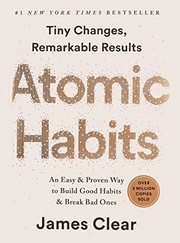
The most practical modern framework for habit formation — essential for helping clients build sustainable fitness behaviors between sessions, which is where real results are made or lost.
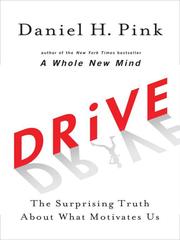
Explains the science of intrinsic motivation (autonomy, mastery, purpose) and gives you a mental model for why clients stay or quit — directly applicable to how you design sessions and set goals with people.
Business of Training: Building Your Career
ExpertLaunch and grow a personal training business — pricing, marketing, client retention, and positioning yourself as a professional that clients choose over any app or AI.
▸ Study plan for this stage
Pace: 2–3 weeks, ~20–25 pages/day — Miller's book is concise (~240 pages) and highly actionable, so pace yourself to reflect and apply each section before moving on rather than racing through it.
- The SB7 Framework: The 7-part StoryBrand narrative structure (Character, Problem, Guide, Plan, Call to Action, Avoiding Failure, Achieving Success) and how to apply it to your personal training brand
- The Client as Hero: Positioning your client — not yourself — as the hero of the story, and yourself as the trusted Guide (like Yoda, not Luke), which directly counters the impersonal nature of apps and AI
- Clarifying Your Message: The principle that 'if you confuse, you lose' — every piece of marketing copy, social media bio, and website must pass the grunt test (a stranger understands what you offer in under 5 seconds)
- The Three Levels of Customer Problems: External problems (lose weight, get stronger), internal problems (feel confident, stop feeling embarrassed), and philosophical problems (I deserve to feel good in my body) — and why marketing to the internal/philosophical level wins clients
- The BrandScript: Building your one-page personal training BrandScript as the master document that drives all marketing, pricing conversations, and client communications
- Calls to Action — Direct vs. Transitional: Understanding the difference between 'Book a Free Consultation' (direct CTA) and 'Download My 5-Day Starter Plan' (transitional CTA), and when to use each in your client acquisition funnel
- Building a Simple Marketing Funnel: Website wireframe, lead-generating PDF/freebie, email nurture sequence, and how these work together to convert strangers into paying clients
- Positioning Against Apps and AI: Using the Guide archetype — empathy + authority — to articulate the irreplaceable human value of a personal trainer versus any algorithm-driven competitor
- Who is the 'hero' in your personal training brand story, and what does their life look like before and after working with you — can you describe both in two sentences each?
- What are the external, internal, and philosophical problems your ideal client faces, and which level does most of your current marketing speak to?
- Can your website or social media bio pass the 'grunt test'? What does a first-time visitor immediately understand about who you help, what you do, and how to get started?
- What is your direct Call to Action and your transitional Call to Action, and where does each appear in your client journey?
- How do you demonstrate both empathy AND authority in your marketing — what specific proof points, testimonials, or credentials establish you as a credible Guide?
- How would you articulate in one clear sentence why a real human personal trainer delivers something no fitness app or AI can replicate — and does that sentence appear anywhere in your current marketing?
- Write Your Personal Training BrandScript: Complete every section of the SB7 framework for your own business using the template at mystorybrand.com. Pin it somewhere visible — every marketing decision you make from now on should reference it.
- The Grunt Test Audit: Pull up your Instagram bio, website homepage, and any current promotional flyer. Read each one as if you are a total stranger. Within 5 seconds, can you answer: What do you offer? How will it make my life better? How do I get started? Rewrite anything that fails.
- Craft Your One-Liner: Using Miller's formula (Character + Problem + Plan + Result), write a single 2–3 sentence 'what I do' statement you can use verbally at networking events, in your bio, and as your social media headline. Practice saying it out loud until it feels natural.
- Map the Three Levels of Your Client's Problem: For your single most common client type (e.g., busy professional wanting to lose weight), write out their external, internal, and philosophical problems. Then rewrite one real piece of your marketing copy so it speaks to the internal or philosophical level instead of just the external.
- Design a Simple Two-CTA Funnel: Create a direct CTA (e.g., a 'Book a Free 20-Minute Call' button/link) and a transitional CTA (e.g., a one-page PDF titled '3 Mistakes Busy Professionals Make at the Gym'). Draft the PDF and set up a simple way to deliver it — even a Google Form and a PDF email works at this stage.
- Write the 'Why a Human Trainer' Paragraph: Draft a short, story-driven paragraph (100–150 words) for your website or social media that uses empathy and authority to explain what you provide that no app or AI ever can. Use Miller's Guide archetype as your framework — lead with empathy, back it with results.
Next up: Mastering StoryBrand gives you the messaging foundation — a crystal-clear brand voice, client-centric story, and marketing funnel — that makes every subsequent business skill (pricing strategy, sales conversations, retention systems, and professional positioning) dramatically more effective because you now know exactly what to say and to whom.

Teaches you how to clarify your message so ideal clients immediately understand why they need you — the single most useful marketing framework for a solo fitness professional building a brand.
Discussion
Keep reading
Paths that share books, cover the same subject, or open a related topic.