CrossFit for beginners: books to start functional fitness safely
This curriculum takes a complete beginner from understanding how the body moves and why CrossFit works, through mastering the foundational lifts and gymnastics skills, into mobility and injury-proofing, and finally into intelligent programming and long-term athletic development. Each stage builds the vocabulary, movement patterns, and physical literacy needed to get the most out of the next — so you train smarter, not just harder, from day one.
Foundations: Why CrossFit Works
BeginnerUnderstand the philosophy behind functional fitness, what CrossFit is designed to develop, and how to think about general physical preparedness before ever touching a barbell.
▸ Study plan for this stage
Pace: 2–3 weeks, ~40–50 pages/day (approximately 400–500 pages total)
- The brain-body connection: how physical exercise directly enhances cognitive function, mood, and learning capacity
- Exercise as a biological intervention: understanding neurotransmitters (dopamine, serotonin, BDNF) and how movement triggers neurochemical changes
- Functional fitness principles: movements that train the body for real-world demands rather than isolated muscle groups
- General Physical Preparedness (GPP): developing broad, transferable fitness across strength, endurance, power, and mobility
- The evolutionary basis for movement: why humans are designed for varied, functional activity and how modern sedentary life contradicts this
- Exercise as a foundation for learning and resilience: how physical activity primes the brain for better decision-making and stress management
- How does exercise improve cognitive function and learning, according to Ratey's research on neurotransmitters and brain chemistry?
- What is the difference between isolated, single-muscle training and functional fitness, and why does Ratey argue functional movement matters for overall health?
- How do the brain's reward systems (dopamine, serotonin) respond to physical activity, and what does this suggest about exercise as a mental health intervention?
- What does General Physical Preparedness mean, and why is developing broad fitness capacity more valuable than specializing in one type of exercise?
- How does Ratey use evolutionary biology to explain why humans need varied, functional movement—and what happens when we don't move this way?
- What is BDNF (Brain-Derived Neurotrophic Factor), and why is it central to understanding how exercise strengthens the brain?
- Track your own mood, energy, and mental clarity for one week before and one week during daily movement (even 20–30 minutes). Document changes in focus, sleep, and emotional resilience.
- Identify three 'functional' movements you do in daily life (carrying groceries, climbing stairs, lifting a child) and three 'isolated' gym movements. Analyze which ones transfer to real-world demands.
- Create a personal movement audit: list all the ways you move in a typical day. Compare this to Ratey's argument about evolutionary movement patterns—where are the gaps?
- Design a simple 2-week General Physical Preparedness routine that includes strength, cardiovascular work, mobility, and power. Reflect on how this differs from a single-focus training program.
- Research and summarize one neurotransmitter (dopamine, serotonin, or BDNF) mentioned in Spark. Explain in one page how exercise influences it and why this matters for your fitness philosophy.
- Interview someone who trains in a functional fitness style (CrossFit, gymnastics, martial arts) about how they think about movement differently than traditional gym-goers. Compare their answers to Ratey's framework.
Next up: This stage establishes the *why* behind functional fitness and primes you to understand that CrossFit is not arbitrary—it's grounded in how the human body and brain actually work—preparing you to learn the *what* and *how* of CrossFit programming and movement mechanics in the next stage.
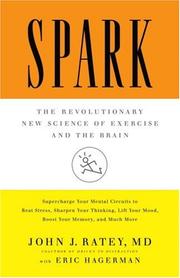
Ratey's science-backed exploration of exercise and the brain explains WHY high-intensity varied training transforms health, giving beginners powerful motivation and context for the CrossFit method.
Movement Fundamentals: Learning to Lift Safely
BeginnerBuild correct technique in the squat, hinge, press, and pull — the movement patterns that underpin every CrossFit workout — and understand how to scale appropriately as a beginner.
▸ Study plan for this stage
Pace: 8–10 weeks, ~40–50 pages/day (mix of reading and practical application)
- The five fundamental movement patterns (squat, hinge, press, pull, and their variations) as the foundation of all strength training
- Correct bar path, foot position, and spinal alignment in the squat and deadlift to prevent injury and maximize force transfer
- The importance of starting light and mastering movement quality before adding weight
- How mobility restrictions and movement compensations affect lifting technique and how to identify them
- The concept of scaling movements appropriately as a beginner (modifying range of motion, load, and complexity)
- Progressive overload through technique refinement rather than jumping to heavy weights
- How breathing, bracing, and tension create stability in compound lifts
- The relationship between mobility, stability, and movement quality in preventing injury
- What are the five fundamental movement patterns in CrossFit, and why does Rippetoe emphasize starting with the squat and deadlift?
- Describe the correct bar path and body position for a back squat from setup through lockout, and explain what common faults look like
- What is the difference between a squat and a hinge movement, and when would you use each in a workout?
- How do mobility restrictions (tight hips, ankles, or shoulders) affect your ability to perform movements correctly, and what does Starrett recommend for addressing them?
- What does it mean to 'scale' a movement as a beginner, and what are three specific ways you can modify a pull-up or press to match your current ability?
- Why is technique quality more important than load when you're starting out, and how do you know when you're ready to add weight?
- Perform 3 sessions per week of the basic squat, hinge (deadlift), press, and pull movements using just the bar or light weight, filming yourself from the side to compare against the cues in Rippetoe's book
- Complete a full-body mobility assessment using Starrett's movement screens (shoulder mobility, hip mobility, ankle mobility, thoracic spine) and identify your two biggest restrictions
- Practice the 'goblet squat' (holding a light weight at chest) for 3 sets of 8–10 reps daily to build squat pattern awareness and mobility simultaneously
- Spend 10 minutes daily on one mobility drill from Becoming a Supple Leopard targeting your identified restriction (e.g., couch stretch for hip mobility, shoulder pass-throughs for shoulder mobility)
- Record yourself performing a squat, deadlift, and press, then review the footage against the technical cues in Starting Strength and identify 2–3 specific faults to correct
- Teach the squat or deadlift to a friend or training partner using only the cues from Rippetoe's book, explaining the 'why' behind each cue to deepen your own understanding
Next up: This stage equips you with the technical foundation and body awareness needed to safely progress to more complex movements and metabolic conditioning, where you'll combine these fundamentals into full workouts and learn how to maintain technique under fatigue.
The definitive technical manual for the squat, deadlift, press, and power clean — the barbell movements most commonly programmed in CrossFit. Reading this first gives beginners the cues and biomechanical understanding to move safely under load.
Starrett's mobility and movement-quality bible directly addresses the positions required in CrossFit (squat, overhead, hinge). Reading it alongside early lifting practice teaches you to self-diagnose and correct faults before they become injuries.
Gymnastics & Bodyweight Skills
IntermediateUnderstand the bodyweight and gymnastics movements central to CrossFit — pull-ups, push-ups, handstands, and ring work — and how to progressively build toward them with proper scaling.
▸ Study plan for this stage
Pace: 8–10 weeks, ~25–30 pages/day, with 2–3 days per week dedicated to practical skill work
- Progressive overload and skill progression frameworks for bodyweight movements (linear progressions, rep ladders, skill cycles)
- Anatomical foundations of pull-ups, push-ups, handstands, and ring work—joint angles, muscle groups, and movement patterns
- Scaling and regression strategies to safely build toward advanced movements from beginner baselines
- Periodization and programming principles specific to gymnastics skills—how to structure training cycles to avoid plateaus and overuse
- Shoulder, wrist, and core stability as foundational pillars for all four movement categories
- The role of antagonist work and mobility in injury prevention and movement quality
- Handstand-specific progressions: wall holds, chest-to-wall, freestanding balance, and dynamic pressing
- Ring-specific demands: stability, strength, and the unique demands of suspended training
- What are the key differences between linear progressions, rep ladders, and skill cycles, and when should each be used for different gymnastics movements?
- How do you scale a pull-up for someone who cannot yet perform a single strict rep, and what are the anatomical reasons each regression works?
- What are the critical stability and mobility prerequisites for handstand training, and how do you assess readiness?
- How does ring training differ biomechanically from barbell or dumbbell training, and why is this relevant to programming?
- What is the relationship between antagonist work and injury prevention in gymnastics-heavy training?
- How would you structure a 12-week training cycle that progresses someone from assisted push-ups to strict muscle-ups on rings?
- Perform a movement assessment for each of the four core movements (pull-ups, push-ups, handstands, ring work) on yourself or a training partner; identify the current level and appropriate starting progression
- Design a 4-week linear progression for pull-ups starting from your current ability level, specifying sets, reps, rest, and the regression/progression triggers
- Practice handstand holds against a wall for 5 minutes total daily for 2 weeks, tracking balance time and noting stability improvements; document wrist and shoulder feedback
- Perform ring support holds for 3–5 sets of 20–30 seconds, 3 times per week for 4 weeks; record stability and shoulder fatigue patterns
- Create a complete 8-week skill cycle for one movement (e.g., push-up to handstand push-up) that includes warm-up progressions, main work, antagonist work, and deload week
- Implement a weekly mobility and antagonist work routine (15–20 minutes) targeting shoulders, wrists, and thoracic spine; perform for 4 weeks and assess impact on movement quality
Next up: This stage equips you with the anatomical understanding and progressive frameworks needed to safely and systematically build gymnastics strength; the next stage will apply these skills to metabolic conditioning and complex movement combinations under fatigue.
The most thorough, science-based guide to building gymnastics and bodyweight strength progressively. It teaches the exact scaling ladders (from ring rows to muscle-ups) that CrossFit athletes need, with clear programming logic.
Sommer's approach to foundational gymnastics strength — shoulder, core, and hip stability — fills in the structural conditioning gaps that prevent CrossFit athletes from progressing to advanced skills safely.
Mobility, Recovery & Injury Prevention
IntermediateDevelop a sustainable daily mobility and recovery practice so that increased training volume and intensity don't lead to overuse injuries or burnout.
▸ Study plan for this stage
Pace: 6–8 weeks, ~20–25 pages/day, with 2–3 rest days per week for practice and integration
- Movement quality and positional awareness as the foundation for injury prevention—how to assess and correct movement dysfunction before it causes injury
- The 90/90 rule and systematic mobility work: targeted stretching and soft tissue work for common problem areas (hips, shoulders, thoracic spine, ankles)
- Breathing mechanics and tension management as tools for both mobility gains and recovery—how to use breathing to reset the nervous system
- Periodization of training load and active recovery: balancing high-intensity work with strategic deloads and recovery modalities to prevent overuse injuries
- Individual assessment and customization: how to identify your specific movement limitations and design a personalized mobility and recovery protocol rather than following generic routines
- The role of sleep, nutrition, and stress management in recovery—how these factors interact with training to determine injury risk and adaptation
- Return-to-training protocols: how to safely progress back to full training after injury or deload periods using objective movement standards
- What is the 90/90 rule and how does it apply to assessing and improving hip mobility for CrossFit athletes?
- How do you systematically assess your own movement quality and identify which areas need the most mobility work?
- What is the relationship between breathing mechanics, tension, and mobility gains, and how can you use breathing to improve both?
- How should you structure a weekly recovery and mobility routine that complements your training volume and intensity without adding excessive time commitment?
- What are the key principles for designing a safe return-to-training protocol after an injury or deload period?
- How do sleep, nutrition, and stress management directly impact your ability to recover from training and prevent overuse injuries?
- Perform a full-body movement assessment using the frameworks from Ready to Run (e.g., overhead squat, shoulder mobility tests, hip internal/external rotation tests) and document your baseline limitations
- Implement a 10–15 minute daily mobility routine targeting your three most restricted areas, following the specific techniques from Ready to Run, and track improvements weekly
- Practice the breathing and tension reset protocols described in Ready to Run for 5 minutes daily, noting changes in mobility and stress levels
- Design a personalized weekly recovery schedule that includes mobility work, foam rolling, stretching, and active recovery days, then execute it for 2 weeks and adjust based on how you feel
- Study one specific injury case from Rebuilding Milo and map out the assessment, training modifications, and return-to-training progression described; then apply this framework to a movement limitation of your own
- Track your sleep, nutrition, and stress for one week while maintaining your normal training, then identify correlations between these factors and your recovery quality and injury risk
Next up: This stage equips you with the knowledge and habits to train sustainably at higher volumes and intensities; the next stage will build on this foundation by teaching you how to structure periodized training programs that strategically manipulate load, intensity, and recovery to maximize performance gains while staying injury-free.

Starrett applies his mobility system specifically to running and lower-body durability — critical for CrossFit's frequent running, box jumps, and double-unders. Read after Becoming a Supple Leopard to deepen the lower-body focus.

Horschig (Squat University) provides a practical, evidence-based framework for identifying and rehabilitating the most common CrossFit injuries — knees, hips, shoulders — empowering athletes to manage their own bodies intelligently.
Programming & Long-Term Athletic Development
ExpertUnderstand how to structure CrossFit training intelligently over weeks and months — balancing strength, conditioning, and skill work — so progress is continuous and sustainable for years.
▸ Study plan for this stage
Pace: 8–10 weeks, ~40–50 pages/day. Start with "Practical Programming for Strength Training" (weeks 1–6, ~350 pages), then "Art of Resilience" (weeks 7–10, ~400 pages). Allocate 1–2 days per week for review and application work.
- Linear periodization and undulating periodization models for structuring training blocks over months and years
- The relationship between intensity, volume, and recovery in preventing plateaus and managing fatigue
- How to balance strength development with metabolic conditioning and skill refinement in a coherent program
- Autoregulation and listening to readiness cues to adjust training on the fly while maintaining long-term progression
- Psychological resilience, mental toughness, and the role of mindset in sustaining training through adversity and setbacks
- Periodization of mental and physical stress to build durability and prevent burnout over multi-year athletic careers
- Individual variability in response to training stimulus and how to customize programming rather than follow one-size-fits-all templates
- What are the key differences between linear and undulating periodization, and when would you apply each in a CrossFit context?
- How do intensity, volume, and frequency interact in a training program, and what happens when you manipulate one without adjusting the others?
- Describe a 12-week training block that balances strength work, conditioning, and skill development. What would each phase prioritize and why?
- How can you use autoregulation and readiness assessment to modify a planned workout without abandoning long-term progression?
- What role does psychological resilience play in sustainable athletic development, and how can you deliberately build it alongside physical training?
- How would you structure recovery (sleep, nutrition, stress management) to support a multi-year training plan rather than just week-to-week performance?
- Design a 16-week periodized CrossFit program for an intermediate athlete, specifying the focus of each 4-week block (e.g., hypertrophy, strength, power, conditioning) and the rationale from Rippetoe's framework.
- Analyze your own current training log (or a sample program) and identify where intensity, volume, and frequency are misaligned. Propose adjustments based on periodization principles.
- Create a weekly autoregulation checklist (sleep, soreness, mood, appetite, motivation) and track it for 3 weeks. Adjust one workout per week based on readiness scores and document the outcome.
- Write a 12-month training narrative for a fictional athlete, incorporating 3–4 distinct phases and explaining how each builds on the previous one (reference both Rippetoe's progression model and Edgley's resilience framework).
- Conduct a case study: take one major setback (injury, burnout, life stress) and design a 4-week recovery and reintegration protocol that maintains long-term progress without rushing.
- Interview or survey 2–3 experienced CrossFit athletes about how they structure their training over months and years. Compare their approaches to the frameworks in both books and identify common patterns and outliers.
Next up: This stage equips you with the science and psychology to design intelligent, sustainable training programs; the next stage will likely focus on specialized topics (competition preparation, advanced skill mastery, or coaching others) that depend on a solid foundation in periodization and resilience.

Rippetoe's programming principles — novice, intermediate, and advanced progression models — give CrossFit athletes the framework to understand why random 'constantly varied' training must still follow logical loading cycles to produce lasting strength gains.

Edgley's account of extreme endurance and his research into human performance synthesizes nutrition, mental toughness, and periodization into an inspiring and practical capstone — showing what long-term commitment to functional fitness can achieve.
Discussion
Keep reading
Paths that share books, cover the same subject, or open a related topic.