The Best Books to Learn Modular Synthesis, in Order
This curriculum takes an intermediate learner from a solid conceptual grounding in synthesis theory through hands-on Eurorack patching, deep sound design practice, and finally into the technical and creative frontier of building and designing modular systems. Each stage builds the vocabulary, ears, and patch intuition needed to fully absorb the next, moving from "understanding the modules" to "mastering the system."
Synthesis Foundations & Signal Flow
IntermediateSolidify core synthesis concepts—oscillators, filters, envelopes, LFOs, and modulation—so that every Eurorack module encountered later has a clear theoretical home.
▸ Study plan for this stage
Pace: 4–5 weeks, ~40–50 pages/day. Start with "Synthesizer Evolution" (weeks 1–2, foundational history and core concepts), then move to "Patch & Tweak" (weeks 3–5, hands-on application and modulation deep-dives).
- Oscillator types (VCO, analog vs. digital) and how pitch control works via voltage
- Filter architecture (lowpass, highpass, bandpass) and resonance/cutoff frequency as modulation targets
- Envelope generators (ADSR) and their role in shaping amplitude and timbre over time
- LFOs as slow modulation sources and their application to pitch, filter, and amplitude
- Modulation routing: how control voltages (CV) connect sources to destinations across modules
- Signal flow and patch architecture: audio-rate vs. control-rate signals and their interaction
- Practical patching methodology from 'Patch & Tweak': systematic approaches to building patches
- What is the difference between an oscillator and an LFO, and why would you use each in a patch?
- How does an envelope generator shape a sound, and what does each stage (A, D, S, R) contribute?
- Explain the signal flow from oscillator through filter to output—where can modulation be inserted and why?
- What is the relationship between cutoff frequency, resonance, and filter type in shaping timbre?
- How do you use CV to modulate a parameter, and what are the practical limits of modulation depth?
- Describe a simple patch using an oscillator, envelope, and filter—what happens at each stage?
- Map the signal flow of a basic subtractive synth (oscillator → filter → envelope → output) on paper, labeling audio and CV paths separately.
- Build a simple patch in a DAW or hardware synth: VCO → VCF → VCA, with an ADSR envelope controlling the VCA, and document what each parameter does.
- Patch an LFO to modulate filter cutoff at different rates (0.5 Hz, 2 Hz, 8 Hz) and listen for how modulation speed affects the character of the sound.
- Create three different envelope shapes (fast attack/short decay, slow attack/long release, zero attack/zero release) and describe how each changes a sustained tone.
- Patch a second oscillator as a modulation source to pitch-modulate a primary oscillator; experiment with different modulation depths and rates.
- Recreate a patch from 'Patch & Tweak' step-by-step, documenting each connection and predicting the sound before hearing it.
Next up: This stage establishes the vocabulary and mental models needed to understand how individual Eurorack modules interact—once you can predict signal flow and modulation behavior, you're ready to explore specific module types, advanced techniques, and complex patch design in the next stage.

A beautifully illustrated history and technical primer that maps the lineage of synthesis from analog to modular, giving intermediate learners essential context for why Eurorack works the way it does.

The definitive visual guide to modular synthesis and Eurorack; read early to establish the vocabulary of patching, signal types (CV, gate, audio), and module categories that all later study depends on.
Electronic Music Theory & Compositional Patching
IntermediateUnderstand how modular synthesis intersects with music theory, sequencing, and generative composition so patches become musical structures, not just timbral experiments.
▸ Study plan for this stage
Pace: 8–10 weeks, ~25–30 pages/day (alternating between both books; start with Vail's foundational chapters, then layer in Pinch's historical context and case studies)
- How oscillators, filters, and envelopes map to pitch, timbre, and dynamics in traditional music theory
- Sequencing as a compositional tool: turning patch architecture into repeating melodic and rhythmic structures
- Modulation and control voltage (CV) as methods for creating variation and development within a patch
- The relationship between patch topology and harmonic/tonal outcome: how signal flow determines musicality
- Generative composition: using feedback, randomization, and modulation to create evolving musical material without constant manual input
- Historical case studies (Pinch) of how composers like Wendy Carlos and Pauline Oliveros used modular systems to realize compositional intent
- Patch documentation and notation: translating musical ideas into reproducible patch designs
- How do the ADSR envelope parameters in a patch correspond to the attack, sustain, and release characteristics of acoustic instruments?
- What is the difference between using a sequencer as a timing device versus using it as a compositional structure, and how does Vail explain this distinction?
- How does Pinch's account of Wendy Carlos's work demonstrate the relationship between patch design and harmonic control?
- Describe a patch architecture that would allow you to create a repeating melodic phrase with evolving timbre—what modules would you need and how would they connect?
- What role does feedback and modulation play in generative composition, and how do the historical examples in Analog Days illustrate this?
- How can you use CV modulation to create musical development (variation and repetition) within a single patch, rather than requiring multiple patches?
- Map a simple ADSR envelope to a real acoustic instrument you know (e.g., piano, violin, flute); document how attack, decay, sustain, and release times match the instrument's natural behavior, then design a patch that mimics it
- Build a sequencer-driven melodic patch: program a 4–8 step sequence that plays a recognizable melody (e.g., a simple folk tune or scale), then document the patch with notes on how sequencer output controls pitch CV
- Create a patch with harmonic development: use a filter sweep or oscillator modulation to change the timbre of a repeating sequence over 16–32 bars; record the output and analyze how the patch creates musical form
- Study one historical case from Pinch (e.g., Wendy Carlos's Switched-On Bach or Pauline Oliveros's generative works); reverse-engineer the likely patch architecture based on the sonic outcome described, then sketch it out
- Design a generative patch using feedback or random modulation: set up a simple oscillator–filter–envelope chain where a modulation source (LFO, random CV, or feedback) continuously evolves the sound; record 2–3 minutes and identify moments of repetition, variation, and surprise
- Transcribe a modular patch from a diagram or description in Vail's book; build it (physically or in software), test it, and document how the signal flow produces the intended musical result
Next up: This stage equips you to hear and design patches as complete musical compositions, preparing you to advance into specialized domains like real-time performance techniques, advanced sequencing strategies, or deep exploration of specific synthesis methods (subtractive, granular, wavetable) in the next stage.
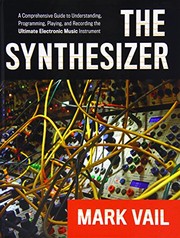
Bridges synthesis technology and musical application, covering sequencing, tuning systems, and performance—critical for turning Eurorack patches into composed, intentional music.
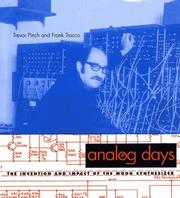
Explores the cultural and technical history of the Moog synthesizer, providing deep insight into why modular architecture was designed as it was and how artists exploited its logic creatively.
Advanced Sound Design & DIY Module Building
ExpertMaster advanced patching paradigms—FM, waveshaping, physical modeling, feedback—and gain the technical knowledge to design, modify, or build your own Eurorack modules.
▸ Study plan for this stage
Pace: 10–12 weeks, ~40–50 pages/day (mix of dense technical content and hands-on experimentation)
- FM synthesis theory and implementation: modulation indices, carrier-to-modulator ratios, and harmonic complexity control
- Waveshaping and distortion as sound design tools: transfer functions, soft clipping, and harmonic generation
- Physical modeling principles: mass-spring systems, modal synthesis, and plucked/struck string simulation
- Feedback patching architectures: self-modulation, chaotic oscillators, and stability management
- Eurorack module design fundamentals: signal flow, voltage standards, component selection, and PCB layout
- DIY oscillator and filter design: VCO topology, resonance control, and tuning stability
- Practical circuit analysis and modification: reading schematics, identifying signal paths, and troubleshooting
- Integrating advanced techniques into cohesive patches: layering FM, waveshaping, and feedback for complex timbres
- How do carrier and modulator frequency ratios determine the harmonic content in FM synthesis, and how would you design an FM patch to produce a specific timbre?
- What is a transfer function in waveshaping, and how do soft clipping circuits differ from hard clipping in terms of harmonic generation?
- Explain the difference between modal synthesis and physical modeling; what are the advantages of each approach for recreating acoustic instruments?
- How do you stabilize a feedback patch to avoid runaway oscillation while maintaining musical expressiveness?
- What are the key voltage standards and signal flow considerations when designing a Eurorack module, and how do you ensure compatibility with existing systems?
- Walk through the design of a simple VCO: what determines its frequency range, tuning stability, and waveform quality?
- Recreate the FM bell and electric piano patches from Designing Sound using a software modular environment (Max/MSP, Pure Data, or VCV Rack); document how modulation index changes affect timbre
- Build a waveshaping patch using a sine oscillator and a distortion unit; systematically vary the input amplitude and measure/record the resulting harmonic content
- Design and simulate a simple plucked-string physical model using delay lines and filters; compare the output to a recorded acoustic guitar note
- Construct a self-modulating feedback patch where an oscillator modulates its own frequency; explore stability boundaries and create three distinct sonic characters
- Study and annotate the schematic of a classic Eurorack VCO (e.g., from Make: Analog Synthesizers); identify the core oscillator circuit, exponential converter, and output stage
- Modify an existing module design (or simulate one): change a capacitor or resistor value and predict/measure the effect on frequency response or tuning
- Create a hybrid patch combining FM, waveshaping, and feedback; document the signal flow and explain how each technique contributes to the final sound
- Build or simulate a simple envelope-controlled waveshaper; use it to modulate timbre over time in a musical context
Next up: This stage equips you with both the theoretical foundation and hands-on skills to understand and manipulate advanced synthesis techniques at the circuit level, preparing you to either specialize in module design, explore generative/algorithmic synthesis, or integrate these techniques into a complete, personalized instrument design.

A rigorous, technique-heavy guide to procedural audio and synthesis from first principles; essential for understanding how to construct any sound from scratch using oscillators and modulation chains.
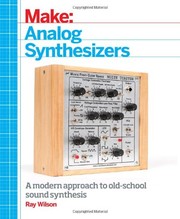
The go-to practical guide for building analog synthesizer circuits, covering VCOs, VCFs, VCAs, and envelope generators at the component level—the foundation for DIY Eurorack module design.

A deep, theory-meets-practice textbook covering FM synthesis, granular techniques, and spectral processing; provides the advanced analytical framework to push modular patches into unexplored sonic territory.
Discussion
Keep reading
Paths that share books, cover the same subject, or open a related topic.