The Best Books to Learn Electric Guitar, in Order
This curriculum takes a complete beginner from holding a pick and fretting their first chord all the way to crafting expressive solos with a personal tone. Each stage builds directly on the last — first establishing physical fundamentals and basic music literacy, then expanding harmonic and scale knowledge, and finally developing the ear, style, and improvisational voice that define a true electric guitarist.
Foundations: First Sounds & Core Technique
BeginnerHold the guitar correctly, tune it, read chord diagrams and basic tablature, play essential open chords and simple riffs, and develop clean fretting and picking habits from day one.
▸ Study plan for this stage
Pace: 4–5 weeks, ~20–30 minutes daily (mix of reading and active practice)
- Proper guitar posture and hand positioning for both sitting and standing
- How to tune a guitar by ear and with a tuner, understanding string names (E–A–D–G–B–E)
- Reading chord diagrams: interpreting dots, X's, O's, and fret numbers
- Reading basic tablature notation and relating it to the fretboard
- Playing open major and minor chords (A, D, E, Am, Dm, Em) with clean, ringing tone
- Developing consistent picking technique: downstrokes, upstrokes, and alternating patterns
- Building finger strength and dexterity through daily technical exercises
- Playing simple riffs and chord progressions to apply foundational skills musically
- How should you hold the guitar, and what are the key differences between sitting and standing positions?
- What are the six open strings on a standard guitar, and how do you tune them?
- How do you read a chord diagram, and what do the symbols (dots, X's, O's, numbers) mean?
- What is tablature, and how does it relate to standard notation and the fretboard?
- Can you play the open chords A, D, E, Am, Dm, and Em cleanly without buzzing or muting strings?
- What are the fundamentals of good picking technique, and why does hand position matter?
- Practice holding the guitar in both sitting and standing positions for 5 minutes daily until it feels natural
- Tune the guitar using a tuner and by ear daily; practice identifying when strings are sharp or flat
- Work through the chord diagrams in Hal Leonard Method: finger each open chord, then strum cleanly 10 times per chord
- Play simple two-chord progressions (e.g., E–A, D–A, Em–Am) switching cleanly between chords
- Use Guitar Aerobics daily exercises to build finger strength: practice the suggested daily workouts for your level
- Read and play simple tablature riffs from the Hal Leonard Method; focus on accuracy over speed
- Record yourself playing open chords and listen for buzzing, muted strings, or unclear tone; adjust hand position accordingly
- Practice downstroke and upstroke picking patterns on a single string for 10 minutes daily to develop muscle memory
Next up: Once you can cleanly play open chords, switch between them smoothly, and understand how to read both chord diagrams and tablature, you'll be ready to learn barre chords, power chords, and more complex rhythmic patterns that expand your harmonic and technical vocabulary.
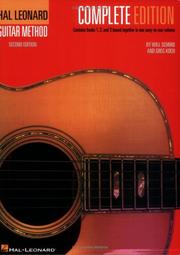
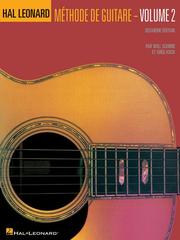
The single most widely used beginner guitar method in the world — it covers posture, reading tab and notation, open chords, and basic picking in a carefully sequenced, no-gaps progression. Starting here ensures no foundational holes.
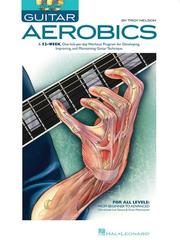
Introduces a daily one-exercise-per-day practice routine covering picking, hammer-ons, pull-offs, bends, and slides. Reading this second locks in the physical technique habits that the method book introduces, before bad habits can form.
Chords & the Fretboard: Building the Harmonic Map
BeginnerMaster open and barre chords, understand how chords are constructed from intervals, and begin to see the entire fretboard as a logical, navigable system rather than a collection of memorized dots.
▸ Study plan for this stage
Pace: 6–8 weeks, ~40–50 pages/week with daily 20–30 minute practice sessions. Start with "Fretboard Logic SE" (weeks 1–4), then transition to "The Guitar Handbook" (weeks 5–8) for reinforcement and deeper harmonic context.
- The chromatic scale as the foundation: all notes on the fretboard derive from the 12 chromatic pitches, repeating across octaves
- Interval relationships: understanding major 3rds, perfect 5ths, minor 3rds, and how they stack to form chord qualities (major, minor, dominant, etc.)
- Open chord construction: how open position chords (E, A, D, G, B, E shapes) are built from root, 3rd, and 5th intervals
- Barre chord mechanics: how the barre chord shapes (E-form and A-form) transpose across the fretboard using the same interval relationships
- The fretboard as a logical map: recognizing that chord shapes repeat in predictable patterns, and that understanding intervals reveals these patterns
- Chord voicings and inversions: why the same chord can be played multiple ways and how this relates to which note is lowest
- Harmonic function: how chords relate to a key center and why certain chord progressions sound natural (from The Guitar Handbook)
- Explain how the interval of a perfect 5th and a major 3rd combine to create a major chord, and identify these intervals on the fretboard in at least two positions
- Play an open E major chord, then transpose it to F major using a barre chord—what is the interval relationship that allows this transposition to work?
- Given a root note anywhere on the fretboard, construct a major chord using at least two different voicings (e.g., root position and an inversion)
- Describe the difference between an E-form and A-form barre chord, and explain why both shapes contain the same chord quality despite looking different
- Play a simple chord progression (e.g., I–IV–V–I in a major key) and explain why these chords sound harmonically related
- Identify the root, 3rd, and 5th in three different chord voicings on the fretboard and explain how rearranging these notes creates different voicings of the same chord
- Map the chromatic scale across all six strings in first position (frets 1–12), then identify the same notes in different octaves to internalize the repeating pattern
- Practice building major and minor triads from any root note on the fretboard using the interval formula (root + major/minor 3rd + perfect 5th); do this for at least 10 different root notes
- Master all open position chords (E, A, D, G, B, E major and minor) and practice switching between them smoothly; record yourself to identify timing issues
- Learn E-form barre chords (F, G, A, B, C major) and A-form barre chords (F, G, A, B, C major) as separate shapes, then play the same chord in both forms to hear the voicing difference
- Play common progressions (I–IV–V, I–vi–IV–V, ii–V–I) in three different keys using open and barre chords, focusing on smooth transitions
- Create a visual fretboard map: mark the root notes of a chosen key across the entire fretboard, then identify where major and minor chord shapes can be built from those roots
Next up: This stage establishes the harmonic vocabulary and fretboard literacy needed to understand melody, scales, and improvisation—you now see chords as logical constructs rather than shapes, which makes learning lead guitar techniques and modal playing in the next stage intuitive rather than rote.
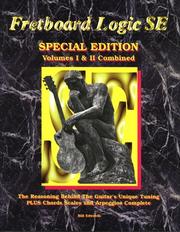
Reveals the repeating geometric logic of the guitar neck — CAGED system, chord families, and scale patterns — giving the learner a mental map that makes every future concept easier to place and remember.
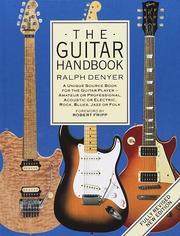
A comprehensive, beautifully illustrated reference covering chord theory, rhythm playing, and electric guitar tone and gear. Reading it here reinforces the CAGED framework with real musical context and introduces the equipment side of the electric guitar world.
Scales, Lead Playing & Music Theory
IntermediateLearn the pentatonic and major/minor scale systems across the whole neck, understand how scales relate to chords, and begin constructing melodic phrases and licks for lead playing.
▸ Study plan for this stage
Pace: 4–5 weeks, ~40–50 pages/day (alternating between scale patterns and theory application)
- Pentatonic scale shapes (minor and major) and their positions across the entire fretboard
- Major and natural minor scale construction and their modal derivatives
- The relationship between scales and chord tones—how to target chord tones in melodic phrases
- Interval recognition and naming within scale patterns
- Connecting scale shapes to create fluid, position-independent playing across the neck
- Building simple licks and melodic phrases using scale tones and chord tone targeting
- Understanding how different scales work over different chord progressions
- Can you play the pentatonic minor scale in all five positions and move fluidly between them?
- How do the notes of a major scale differ from a natural minor scale, and how does this affect the mood of a phrase?
- Given a chord (e.g., Cm7), which scale tones are chord tones and which are passing tones, and how would you use this distinction in a lick?
- What is the interval relationship between the root and the third, fifth, and seventh of a scale, and why does this matter for lead playing?
- Can you construct a simple melodic phrase over a given chord progression that targets chord tones on strong beats?
- How do the five pentatonic positions relate to the major scale, and why is understanding both systems essential for versatile lead playing?
- Play all five pentatonic minor positions in one key (e.g., A minor) without stopping, focusing on smooth transitions between positions
- Map out the major and natural minor scales in one key across the entire fretboard, highlighting root notes and chord tones
- Create a simple 8-bar lick using pentatonic shapes over a backing track in a minor key, emphasizing the root and fifth on downbeats
- Identify and label all intervals (major 3rd, perfect 5th, minor 7th, etc.) within a major scale pattern
- Play a chord progression (e.g., Am–F–C–G) and construct a phrase that targets the root, third, and fifth of each chord as it changes
- Transcribe a simple lead guitar phrase from a song and identify which scale(s) and positions the guitarist used
- Practice bending and vibrato on chord tones within pentatonic shapes to develop expressive lead playing
- Build a 12-bar blues lick using pentatonic minor, then rewrite it using the major pentatonic to hear the tonal difference
Next up: With a solid grasp of scale systems and the ability to target chord tones, you'll be ready to explore advanced techniques—bending, sliding, and phrasing—that transform raw scale knowledge into expressive, musical lead playing.

A focused, practical reference for every essential scale pattern — pentatonic, blues, major, minor, modes — laid out clearly in multiple positions. Use it as both a study guide and an ongoing reference throughout this stage.
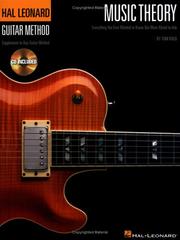
Translates music theory (intervals, keys, chord-scale relationships, modes) directly onto the guitar neck without requiring piano knowledge. This is the theory backbone that makes scale choices in soloing feel intentional rather than accidental.
Mastery: Style, Improvisation & Creative Voice
ExpertInternalize the language of blues, rock, and beyond; improvise fluently over chord changes; study the masters analytically; and develop a personal musical identity on the electric guitar.
▸ Study plan for this stage
Pace: 8–10 weeks, ~40–50 pages/week with daily practice integration; allocate 3–4 weeks for "The Advancing Guitarist" (deeper study with transcription work) and 2–3 weeks for "Zen Guitar" (reflective reading with mindfulness practice)
- Harmonic vocabulary and chord-scale relationships: understanding how to navigate and improvise over complex progressions using Goodrick's systematic approach to intervals and extensions
- Transcription and analysis of master guitarists: learning to decode phrasing, timing, and technique from recordings to internalize stylistic language
- Fretboard visualization and mental mapping: developing the ability to hear and visualize musical ideas across the entire neck without relying on muscle memory alone
- Improvisation frameworks: using Goodrick's exercises to build fluency over blues, rock, and jazz changes with intentional phrasing and dynamics
- The mind-body connection in playing: Sudo's philosophy of Zen guitar as a path to transcending technical limitation and accessing authentic musical voice
- Mindful practice and presence: cultivating awareness during practice to eliminate tension, reduce self-judgment, and play with spontaneity and flow
- Personal voice development: integrating technical mastery with individual expression to move beyond imitation toward authentic creative identity
- How do you use chord-scale relationships and harmonic extensions (as outlined in Goodrick) to improvise with intentionality and avoid aimless noodling?
- What specific techniques and phrasing choices do you observe in transcriptions of master guitarists, and how can you adapt them to your own playing without copying?
- How does Goodrick's concept of fretboard visualization help you think musically rather than mechanically, and what exercises cement this skill?
- What does Sudo mean by 'Zen guitar' and how does the philosophy of presence and non-attachment apply to developing your personal musical voice?
- How can you practice with mindfulness (as Sudo describes) to reduce tension, increase flow, and access spontaneous creativity during improvisation?
- How do you balance technical mastery from Goodrick's systematic approach with the intuitive, ego-free playing that Sudo advocates?
- Transcribe and notate 3–5 solos from master guitarists in your chosen style (blues, rock, or jazz); analyze the harmonic choices, phrasing, and rhythmic placement relative to chord changes
- Work through Goodrick's harmonic exercises: practice playing chord-scale relationships over backing tracks, focusing on hearing extensions (9ths, 11ths, 13ths) and resolving them musically
- Create a 'fretboard map' exercise: visualize a single melodic phrase in multiple positions across the neck without looking; record yourself and listen for consistency in tone and phrasing
- Improvise over a 12-bar blues or jazz standard using only 3–5 target notes per chord change; focus on space, phrasing, and intentionality rather than speed or quantity of notes
- Practice Sudo's 'beginner's mind' meditation before playing sessions: sit quietly for 5–10 minutes, then play without judgment or goal; record and reflect on the difference in your playing
- Analyze a master guitarist's solo by transcribing it, then reharmonize or recontextualize it over different chord progressions to understand the underlying logic and adapt it creatively
Next up: This stage equips you with both the technical vocabulary (from Goodrick) and the philosophical framework (from Sudo) to move into the next level—whether that's specialized study in a particular genre, ensemble playing, composition, or teaching—by establishing that mastery is not about perfection but about the integration of skill, presence, and authentic voice.

A landmark book on musical thinking — it challenges the player to move beyond patterns and positions into genuine musical expression and creativity. Essential reading for anyone who wants to stop playing exercises and start making music.

Addresses the mental and philosophical side of becoming a musician — practice mindset, patience, finding your voice, and sustaining lifelong growth. The perfect capstone that reframes everything learned so far as a journey rather than a destination.
Discussion
Keep reading
Paths that share books, cover the same subject, or open a related topic.