DJing and electronic music: the best books to learn mixing and production
This curriculum takes a complete beginner from zero knowledge of DJing and electronic music all the way through professional-level mixing technique and music production. The stages build deliberately: first you learn how music and DJing work conceptually, then you get hands-on with decks and mixing, and finally you go deep into sound design and track construction so you can both perform and create original electronic music.
Foundations: Music, Sound & the DJ World
BeginnerUnderstand how electronic music is structured, how DJing works conceptually, and build the vocabulary needed to talk about rhythm, tempo, and gear before touching any equipment.
▸ Study plan for this stage
Pace: 4–5 weeks, ~25–30 pages/day. Start with "How Music Works" (2–3 weeks), then move to "Last Night a DJ Saved My Life" (2–3 weeks). Allow 2–3 days between books to consolidate vocabulary and concepts.
- How sound is produced, perceived, and organized into music (from Byrne's exploration of acoustics and listening)
- The role of rhythm, repetition, and groove as foundational elements of electronic music (Byrne's analysis + Brewster's DJ culture context)
- DJ culture history and the social/technical origins of DJing (Brewster's narrative of turntables, mixing, and club culture)
- The concept of the mix: how DJs transition between tracks and create continuous sound (Brewster's core focus)
- Tempo, BPM, and beat-matching as technical vocabulary for synchronizing music (essential for both understanding and future practice)
- Equipment basics: turntables, mixers, and their role in DJ performance (Brewster's technical sections)
- The relationship between producer intent, DJ interpretation, and audience experience (both books' themes)
- How does David Byrne explain the way humans perceive and organize sound into music, and why does this matter for understanding electronic music?
- What is the historical origin of DJing, and how did turntables become instruments rather than just playback devices (according to Brewster)?
- Explain the concept of beat-matching and why it became central to DJ practice. What problem does it solve?
- What is a 'mix' in DJ terms, and how does it differ from simply playing one song after another?
- Describe the basic components of a DJ setup (turntables, mixer, headphones) and what each does during a performance.
- How do rhythm and repetition function differently in electronic/dance music compared to other genres, based on what you've read?
- Listen actively to 3–4 electronic tracks (house, techno, or disco) while reading Brewster, and identify the BPM, the kick drum pattern, and any breakdowns or builds. Write down what you notice.
- Create a glossary of 20+ terms from both books (e.g., beat-matching, crossfader, groove, four-on-the-floor, mixing, turntablism). Define each in your own words and note which book introduced it.
- Watch 2–3 short DJ performance videos (5–10 minutes each) while referencing Brewster's descriptions of mixing technique. Pause and note when you see beat-matching, EQ adjustments, or transitions.
- Analyze the structure of one electronic track: identify the intro, breakdown, build, and outro. Explain how a DJ might use this structure in a mix (reference Brewster's examples).
- Interview or find a podcast with a DJ (or watch a DJ interview) and listen for terminology from your glossary. Note how professionals use the language you've learned.
- Create a simple timeline of DJ culture history based on Brewster's narrative, marking key innovations (e.g., Jamaican sound systems, New York hip-hop DJs, Chicago house, Detroit techno).
Next up: This stage establishes the conceptual and historical foundation—you now understand *why* DJing exists, *how* it works in theory, and *what* to listen for—preparing you to move into hands-on technical skills like beatmatching, mixing, and equipment operation in the next stage.

A deeply accessible exploration of how music is created, perceived, and shaped by context — gives the beginner a rich mental model of sound and music before diving into technical specifics.

The definitive history of the DJ, tracing the culture from its roots to modern club music — essential for understanding why DJing matters and the traditions you are entering.
Electronic Music Theory & Production Thinking
IntermediateUnderstand the theory behind electronic music — rhythm, harmony, arrangement, and song structure — so you can analyse tracks critically and begin thinking like a producer.
▸ Study plan for this stage
Pace: 8–10 weeks, ~40–50 pages/day (alternating between both books; 2–3 weeks per book with overlap for synthesis)
- Frequency, harmonics, and the acoustic foundations of electronic sound—how oscillators and waveforms create the raw material for music
- Envelope shaping (ADSR) and modulation as the primary tools for sculpting timbre and creating expressive, dynamic sounds
- Rhythm and timing in electronic music—tempo, quantization, swing, and polyrhythmic layering as structural elements
- Harmonic theory applied to synthesis—intervals, chord voicing, and how to build harmonic depth with multiple oscillators and filters
- Arrangement and song structure in electronic music—building tension, managing frequency balance, and creating narrative arc without traditional instrumentation
- The synthesizer as a compositional instrument—understanding signal flow, patch design, and how architecture shapes sonic possibilities
- Critical listening and analysis—deconstructing existing electronic tracks to understand production choices and design intent
- How do oscillators, waveforms, and harmonics form the foundation of electronic sound, and why does waveform choice matter for timbre?
- What is an ADSR envelope, and how do envelope modulation and LFO modulation differ in shaping a sound over time?
- How do filters (low-pass, high-pass, band-pass) and resonance affect frequency content, and why are they essential for subtractive synthesis?
- What are the key differences between rhythm structures in electronic music (quantization, swing, polyrhythms) and how do they create groove and tension?
- How do you build harmonic richness in electronic music using multiple oscillators, detuning, and layering, and what role does frequency balance play in arrangement?
- What is signal flow in a synthesizer, and how does understanding patch architecture help you design sounds intentionally?
- How can you analyse an existing electronic track to identify its core elements—bass, drums, harmonic layers, effects, and arrangement decisions?
- Create three simple subtractive synth patches from scratch (one pad, one bass, one lead) using 'Electronic Music and Sound Design' as reference, focusing on oscillator selection, filter cutoff, and envelope shaping
- Perform a detailed frequency analysis of two contrasting electronic tracks (e.g., minimal techno vs. ambient)—identify the fundamental frequencies, harmonic content, and how the mix uses the frequency spectrum
- Design and document a complete signal flow diagram for a synthesizer patch, labeling oscillators, filters, envelopes, LFOs, and effects, then explain how each stage shapes the final sound
- Compose an 8–16 bar harmonic progression using only synthesized tones (no samples), experimenting with detuning, layering, and filter modulation to create depth and movement
- Deconstruct a 2–3 minute electronic track by ear—identify the drum pattern, bass line, harmonic layers, effects (reverb, delay, distortion), and arrangement structure; write a brief analysis
- Experiment with rhythm and timing by creating three versions of the same 4-bar loop with different quantization, swing, and polyrhythmic elements; compare how each affects groove and tension
Next up: This stage equips you with the theoretical and sonic vocabulary to understand *how* electronic music works at the level of sound design and structure, preparing you to move into practical production workflows—DAW operation, mixing, mastering, and genre-specific production techniques.

A rigorous, widely-used academic text on synthesis, acoustics, and sound design theory — gives you the deep conceptual vocabulary that separates an informed DJ from a producer.
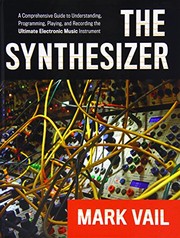
Covers every major synthesis method (subtractive, FM, wavetable, granular) in a clear, encyclopedic way — essential reading before you start building your own sounds.
In the Studio: DAW Workflow & Track Building
IntermediateTranslate your DJ and sound-design knowledge into a DAW, learn to arrange loops and samples into full tracks, and understand mixing-in-the-box fundamentals.
▸ Study plan for this stage
Pace: 6–8 weeks, ~25–30 pages/day with daily studio application
- Room acoustics and monitoring: how untreated rooms color your mix and how to assess your monitoring chain critically
- Gain staging and headroom: setting proper levels throughout the signal chain to avoid clipping and leave room for mastering
- EQ fundamentals: using subtractive EQ to fix problems before additive EQ, and understanding frequency ranges of instruments
- Compression and dynamic control: how compression shapes tone and sustain, and when to use it on individual tracks vs. the bus
- Spatial processing: using reverb, delay, and panning to create depth and separation in a mix without expensive outboard gear
- Mixing in context: referencing on multiple playback systems, using reference tracks, and trusting your ears over visual feedback
- Translating DJ workflow to DAW arrangement: building tension and release in a track using loops, samples, and automation
- Mix-down workflow: establishing a systematic approach to mixing that prevents decision fatigue and maintains objectivity
- How does room acoustics affect your mixing decisions, and what are practical ways to assess and improve your monitoring environment on a budget?
- What is proper gain staging, and why is leaving headroom before mastering critical to a professional-sounding final mix?
- When should you use subtractive EQ versus additive EQ, and how do you identify problematic frequencies in a track?
- How does compression change the character of a sound, and what are the differences between using it for tone-shaping versus dynamic control?
- How can you use reverb, delay, and panning to create depth and separation in a mix without relying on expensive hardware?
- Why is referencing on multiple playback systems and comparing against professional reference tracks essential to making translation-friendly mixes?
- Audit your studio space: measure room modes with a free tool (e.g., REW), identify problem frequencies, and plan one acoustic treatment (bass traps, absorption panels, or speaker placement adjustment)
- Gain-stage a 4–8 track arrangement from scratch: set input levels, establish a consistent headroom target (-6dB to -3dB on the master), and document your gain structure
- Take a finished DJ mix or loop-based sketch and apply subtractive EQ to 3–4 tracks to remove muddiness and harshness without adding color
- Compress a vocal, bass, and drum track individually using different ratios and attack/release times; A/B the results to hear how compression shapes tone versus just controlling dynamics
- Create a spatial mix using only reverb and delay on sends: place 3 instruments in a stereo field with different reverb sizes and pre-delay times to simulate depth
- Mix a 6–8 track arrangement on your primary monitors, then check the mix on headphones, a phone speaker, and a car stereo; document what translates and what doesn't
Next up: Mastering these in-the-box fundamentals—gain staging, EQ, compression, and spatial processing—equips you to produce polished, translation-friendly tracks that are ready for the final mastering stage, where you'll learn to optimize your mix for all playback systems and prepare it for release.

The canonical book on mixing in untreated rooms (bedrooms, home studios) — directly applicable to the beginner producer's real-world environment and covers EQ, compression, and balance in depth.
Advanced Sound Design & Creative Mastery
ExpertDevelop a signature sound, master advanced synthesis and effects processing, and understand mastering — completing the full loop from DJ set to finished, release-ready original track.
▸ Study plan for this stage
Pace: 8–10 weeks, ~40–50 pages/day (alternating focus: 4–5 weeks on Dance Music Manual, then 4–5 weeks on Mastering Audio, with 1–2 weeks overlap for integration)
- Advanced synthesis techniques: wavetable, granular, and FM synthesis for creating distinctive timbres and evolving textures
- Effects processing chains and modulation: layering reverb, delay, distortion, and dynamic effects to build depth and movement in sound design
- Frequency management and EQ mastery: surgical and creative EQ to carve space, enhance clarity, and develop a cohesive sonic identity across a mix
- Mastering fundamentals: loudness standards, metering, headroom, and the critical listening environment required for professional release-ready masters
- The mastering chain workflow: compression, EQ, limiting, and multiband processing applied at the master bus level to translate across all playback systems
- Psychoacoustics and perception: how human hearing responds to frequency, dynamics, and spatial cues—and how to exploit these principles in both sound design and mastering
- From DJ set to finished track: bridging the gap between live performance decisions and studio production for cohesive, release-ready originals
- Signature sound development: using synthesis, effects, and mixing/mastering choices as intentional creative tools to establish a recognizable artistic identity
- What are the key differences between wavetable, granular, and FM synthesis, and how would you choose one over the others to create a specific texture for a track?
- How do you construct a multi-stage effects chain (e.g., reverb → delay → distortion) to add depth and movement without muddying the mix?
- What is the relationship between headroom, loudness standards (LUFS), and the mastering limiter, and why is each critical for a professional master?
- How do you use surgical EQ during mastering to fix problems while using creative EQ in sound design to establish your signature sound?
- What role does the critical listening environment (room acoustics, monitoring setup) play in making reliable mastering decisions?
- How would you apply psychoacoustic principles—such as frequency masking or loudness perception—to enhance both individual sounds and the overall mix?
- Design three distinct synth patches using different synthesis methods (wavetable, granular, FM) and document how each approach shapes the character of the sound; compare them in a mix context
- Build a 4–5 stage effects processing chain on a drum loop or bass sound: start with reverb, add delay, layer in distortion, and use modulation (LFO, envelope) to create movement; A/B against the dry signal
- Take a finished mix and apply surgical EQ to address one frequency problem (e.g., mud at 200 Hz, harshness at 4 kHz) using narrow Q and small gain adjustments; document the before/after
- Set up a critical listening environment test: measure your monitoring setup's frequency response using a measurement mic or online tools; identify and address major peaks/dips
- Master a 3–5 minute original track using the mastering chain workflow: apply compression, EQ, multiband processing, and a limiter; measure loudness in LUFS and ensure headroom; compare to commercial reference tracks
- Create a 'signature sound' document: choose 2–3 synthesis techniques, 2–3 go-to effects, and a specific EQ/compression philosophy; apply these consistently to a 2–3 track mini-EP and evaluate cohesion
Next up: This stage equips you with the technical mastery and creative intentionality to produce release-ready originals with a distinctive voice; the next stage will likely focus on business, marketing, and distribution—turning your finished masters into a sustainable career or brand.
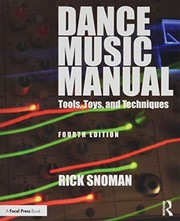
The most comprehensive single-volume reference for electronic music production, covering genre-specific sound design, drum programming, and arrangement for house, techno, drum & bass, and more — the capstone text for this curriculum.

The industry-standard book on audio mastering, written by a legendary mastering engineer — gives you the final piece needed to take a finished mix to a polished, release-ready master.
Discussion
Keep reading
Paths that share books, cover the same subject, or open a related topic.