Modular synthesis can feel like an ocean of cables with no shore. The gear is open-ended by design, which makes a reading order genuinely valuable: understand what each type of module does before you start patching, and the freedom becomes creative rather than paralyzing. This path builds from context, to hands-on patching, to the theory that lets you design any sound.
We start with the history and vocabulary, move into practical patching, then rise to sound design and even building your own gear.
Get the lay of the land
Begin with Synthesizer Evolution by Oli Freke, a visual history that maps the instruments and how they relate. Then Patch & tweak by Kim Bjørn is the modern bible of modular — beautifully illustrated, full of real patches and interviews. Its companion Patch & Tweak with Moog focuses that same approach on the Moog ecosystem.
Learn the building blocks
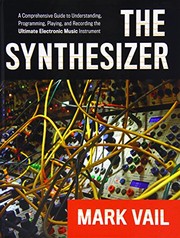
Welsh's Synthesizer Cookbook by Fred Welsh gives you a library of recipes for recreating real instrument sounds, which teaches synthesis by reverse-engineering. The synthesizer by Mark Vail is a deeper reference on how these instruments work and where they came from.
Understand the deep theory
To design sound rather than stumble on it, Analog days by Trevor Pinch provides the cultural and technical origin story, and Designing sound by Andy Farnell takes you into procedural audio and the physics of how sounds are constructed. Electronic Music and Sound Design by Alessandro Cipriani grounds you in the theory that underpins all of it.
Build your own
For the truly committed, Make : Analog Synthesizers by Ray Wilson teaches you to build synth circuits from scratch — the deepest possible understanding of what a module actually does.
Follow the full path and the modular ocean turns into a system you can navigate on purpose.
Follow the full reading path →
Ready to learn something deeply?
Build a reading path — free