Best Books to Learn Sound Design (in Order)
This curriculum builds from the core craft of capturing and shaping sound, through synthesis and Foley technique, and into the professional practice of designing immersive audio for film and games. Because the learner starts at an intermediate level, early stages sharpen foundational vocabulary and listening skills before moving into the deeply technical and creative territory of interactive and cinematic audio.
Listening, Recording & the Raw Material of Sound
IntermediateDevelop a trained ear, understand acoustic principles, and build a personal library of high-quality field recordings — the raw material every sound designer works from.
▸ Study plan for this stage
Pace: 6–8 weeks, ~25–30 pages/day with 2–3 dedicated recording/listening sessions per week
- Acoustic principles: frequency, amplitude, timbre, and how sound behaves in physical spaces
- Microphone types, polar patterns, and selection criteria for different recording scenarios
- Field recording techniques: placement, gain staging, monitoring, and capturing clean, usable sound
- Building and organizing a personal sound library with proper metadata and cataloging systems
- Critical listening skills: identifying sonic characteristics, layering, and spatial properties in professional recordings
- The relationship between raw recordings and post-production sound design workflow
- Practical recording gear setup and troubleshooting common field recording problems
- Ethical and legal considerations in recording and sound collection
- What are the key differences between omnidirectional, cardioid, and shotgun microphones, and when would you choose each for a specific recording scenario?
- How do frequency response, polar patterns, and microphone placement affect the quality and character of a field recording?
- What is proper gain staging, and why is it critical to capture usable raw material without distortion or excessive noise floor?
- How should you organize and catalog a personal sound library to make recordings easily searchable and retrievable during a sound design project?
- What acoustic principles explain how sound behaves in different spaces, and how does this knowledge inform your recording strategy?
- How do the raw recordings you capture in the field translate into the layered, processed sound design you hear in finished film and game audio?
- Record the same sound (e.g., footsteps, door slam, water) using three different microphone types and polar patterns; compare frequency content, proximity effect, and ambient noise capture
- Conduct a critical listening session with 5–10 professional sound effects from film or games; identify microphone type, recording environment, frequency range, and spatial characteristics
- Set up a field recording kit and record a 30-minute ambience from two contrasting locations (e.g., busy street vs. quiet forest); analyze gain levels, noise floor, and dynamic range
- Create a personal sound library taxonomy with at least 50 field recordings organized by category, location, microphone type, and metadata tags; document your cataloging system
- Perform a frequency analysis (using a spectrum analyzer or DAW) on three of your own recordings and compare them to professional reference recordings in the same category
- Record a complex sound event (e.g., a scene with multiple layers: footsteps, clothing rustle, breathing, environment) using proper mic placement and gain staging; evaluate the usability of each layer
Next up: This stage equips you with a trained ear, solid recording fundamentals, and a curated library of raw material—the essential foundation for the next stage, where you'll learn to manipulate, layer, and process these recordings into finished sound design using editing and synthesis techniques.
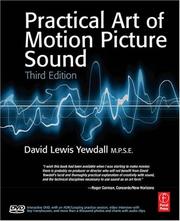
A comprehensive industry-standard reference for how sound is captured, organized, and used in film production — gives the learner the professional vocabulary and workflow context needed before diving into any specialization.

The definitive guide to field recording and building a sound effects library; covers microphone choice, location technique, and cataloguing — essential groundwork before synthesis or Foley.
Synthesis & Sound Shaping
IntermediateUnderstand synthesis architectures (subtractive, FM, granular, sampling) and learn to design sounds from scratch rather than relying solely on recordings.
▸ Study plan for this stage
Pace: 8–10 weeks, ~40–50 pages/day (Farnell first: 3–4 weeks; Roads second: 5–6 weeks)
- Subtractive synthesis: oscillators, filters, envelopes, and LFOs as the foundation for sculpting timbral character
- FM synthesis: modulation indices, carrier/modulator ratios, and how harmonic complexity emerges from frequency relationships
- Granular synthesis: grain duration, density, pitch, and envelope as tools for creating evolving textures and microsound
- Sampling and wavetable synthesis: resampling, time-stretching, pitch-shifting, and layering as alternatives to pure oscillator-based synthesis
- Sound design workflow: from concept to implementation—analyzing reference sounds, choosing synthesis methods, and iterating toward a target
- Real-time parameter control: using envelopes, LFOs, and modulation to add movement and responsiveness to static waveforms
- Practical synthesis in Pd (Pure Data): patching oscillators, filters, and control structures to build working sound generators
- How do oscillator type, filter cutoff, resonance, and envelope interact in subtractive synthesis to shape a sound's character?
- What is the relationship between carrier frequency, modulator frequency, and modulation index in FM synthesis, and how does changing each parameter affect the resulting spectrum?
- How do grain duration, density, and pitch affect the perceptual quality of a granular synthesis output, and when would you choose granular synthesis over subtractive?
- What are the advantages and limitations of sampling-based synthesis compared to oscillator-based synthesis for recreating acoustic instruments?
- How would you design a synthesized footstep, wind gust, or mechanical click from scratch using subtractive or granular synthesis?
- What role do LFOs and envelope generators play in adding movement and responsiveness to a sound, and how do you modulate different parameters to achieve specific effects?
- Build a subtractive synth patch in Pd (following Farnell's examples): oscillator → filter → envelope, then add an LFO to modulate filter cutoff and observe timbral changes
- Recreate a simple FM bell or electric piano sound by tuning carrier/modulator ratios and adjusting modulation index; document how ratio changes affect harmonic content
- Design a granular texture using grain duration (10–100 ms), density (grains/second), and pitch variation; experiment with different source materials (sine, noise, recorded samples)
- Analyze a reference sound (e.g., a synthesizer pad, a mechanical sound, a vocal texture) and write a synthesis strategy: which method (subtractive, FM, granular, sampling) best approximates it and why
- Implement a time-varying sound using nested envelopes: e.g., a plucked string with fast attack, slow decay, and a secondary envelope modulating filter cutoff over time
- Create a simple sound-design patch that responds to user input (MIDI or slider control): map parameters (pitch, filter, grain density) to real-time controls and listen for musicality
Next up: This stage equips you with the technical vocabulary and hands-on synthesis skills to understand how sounds are constructed algorithmically, preparing you to apply these methods strategically in the context of interactive audio systems, spatial design, and adaptive sound for games and film.

The canonical text on procedural audio and synthesis for sound designers; teaches how to model real-world sounds mathematically and in Pure Data — a paradigm shift from sample-based thinking.
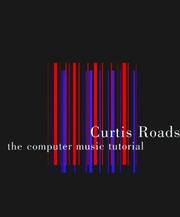
A deep technical reference covering every major synthesis technique; read after Farnell to solidify the underlying theory and expand the designer's synthesis vocabulary.
Foley, Dialogue & the Craft of Film Sound
IntermediateMaster the art of Foley performance and recording, understand dialogue editing, and learn how all sound layers are assembled to serve a film narrative.
▸ Study plan for this stage
Pace: 8–10 weeks, ~40–50 pages/day (alternating between books; approximately 4–5 weeks per book)
- Foley as a performance art: understanding how Foley artists use their bodies, props, and recording spaces to recreate and enhance diegetic sound
- The Foley recording workflow: microphone placement, room acoustics, synchronization to picture, and layering techniques
- Dialogue editing fundamentals: cleaning dialogue tracks, managing room tone, handling overlaps, and maintaining intelligibility across scenes
- Sound design as narrative storytelling: how sound choices (Foley, dialogue, effects) communicate character, emotion, and story information
- Spatial audio and mixing principles: creating depth, perspective, and immersion through panning, EQ, and dynamic processing
- Synchronization and timing: matching sound events to picture with precision and understanding the psychology of audio-visual synchronization
- The sound assembly process: how Foley, dialogue, and effects tracks are organized, edited, and prepared for final mix
- Practical problem-solving in sound design: addressing technical challenges, working within budget/time constraints, and making creative choices that serve the film
- What are the key differences between Foley performance and sound effects library usage, and when is each approach most appropriate for a film?
- Describe the complete Foley recording workflow from pre-production planning through final delivery, including equipment, room considerations, and synchronization methods.
- How do you approach dialogue editing to maintain consistency, clarity, and emotional authenticity across a scene with multiple takes and overlapping dialogue?
- Explain how sound design choices (specific Foley textures, dialogue processing, spatial placement) can reinforce character development or narrative themes in a film.
- What are the primary technical and creative considerations when assembling multiple sound layers (dialogue, Foley, effects, ambience) to create a cohesive soundscape?
- How does understanding the psychology of audio-visual synchronization inform your choices about timing, rhythm, and emphasis in Foley and dialogue editing?
- Record a 30-second Foley sequence: select a short film scene (or create one), identify all diegetic sounds needed, gather appropriate props, record multiple takes with attention to microphone placement and room acoustics, then sync and layer your recordings to picture.
- Conduct a Foley analysis: watch a film scene (5–10 minutes) with sound on, then with sound off; document every Foley sound you hear, identify the likely source/technique, and discuss how each choice serves the narrative or character.
- Edit a dialogue scene: obtain or record a scene with multiple dialogue takes, overlaps, or room tone issues; clean and edit the tracks to ensure clarity and emotional consistency, managing crossfades and room tone blending.
- Create a sound design document: select a short scene from a film or script and write a detailed sound design plan that specifies Foley elements, dialogue processing, effects, and spatial placement, with justifications for each choice based on narrative intent.
- Experiment with microphone placement: record the same Foley action (e.g., footsteps, fabric movement) using different microphone positions and distances; compare the results and document how placement affects tone, proximity, and usability.
- Assemble a multi-layer sound mix: take a scene with dialogue, Foley, and effects tracks; organize and edit them, apply basic EQ and panning to create spatial depth and clarity, and prepare them for a final mix session.
Next up: This stage equips you with the hands-on skills and conceptual understanding to execute professional-quality Foley and dialogue work; the next stage will deepen your knowledge of advanced mixing, automation, and how to use processing and spatial techniques to create emotionally resonant, immersive soundscapes that elevate the entire film.

The only book dedicated entirely to Foley artistry; covers performance, props, studio technique, and the Foley artist's creative role — essential before studying the full mix.
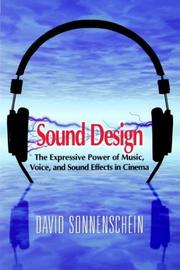
Bridges psychoacoustics, narrative theory, and practical sound design for film; builds the conceptual language for why certain sounds create emotion, preparing the learner for advanced cinematic work.
Immersive & Interactive Audio for Games
ExpertUnderstand the unique demands of interactive audio — dynamic music systems, adaptive sound, middleware implementation — and design audio that responds to player agency.
▸ Study plan for this stage
Pace: 6–8 weeks, ~40–50 pages/day with 2–3 days per week for hands-on implementation
- Interactive audio architecture: how game engines trigger, layer, and mix sounds in real-time based on player input and game state
- Dynamic music systems: vertical re-orchestration, horizontal re-sequencing, and adaptive composition techniques that respond to gameplay intensity and player decisions
- Middleware platforms (FMOD, Wwise): signal flow, event-based triggering, parameter mapping, and integration workflows with game engines
- Adaptive sound design: creating audio assets and systems that morph based on environmental context, NPC behavior, and emergent gameplay
- Player agency and audio feedback: designing audio cues that communicate game state, afford player actions, and reinforce narrative agency
- Procedural and generative audio: algorithmic approaches to creating variation and preventing audio fatigue in long play sessions
- Spatial audio and immersion: 3D positioning, attenuation, and environmental acoustics that deepen player presence in interactive worlds
- Audio implementation workflows: asset preparation, optimization, debugging, and iteration cycles specific to game production pipelines
- How do vertical and horizontal re-orchestration differ in dynamic music systems, and when would you use each approach in a game context?
- Describe the signal flow from a player action (e.g., jumping, taking damage) to audio playback in a middleware-integrated game engine. What are the key decision points?
- What is the relationship between player agency and audio design? How can sound reinforce the player's sense of control and consequence?
- Compare and contrast adaptive audio with traditional linear audio design. What technical and creative challenges emerge when audio must respond to unpredictable player behavior?
- How do you approach audio optimization and middleware parameter mapping to avoid audio overload or muddiness in complex interactive scenes?
- What role does spatial audio play in creating immersion, and how does it differ from stereo or surround mixing for film?
- Map out a dynamic music system for a hypothetical game scenario (e.g., exploration → combat → victory). Define vertical layers (instrumentation) and horizontal sequences (melodic/rhythmic variations) that respond to intensity parameters.
- Implement a simple adaptive footstep system in a middleware platform (FMOD or Wwise): create parameter-driven variations based on surface type, player speed, and fatigue state. Test with a game engine integration.
- Analyze a game audio example (e.g., from a title discussed in the books or a AAA game) and reverse-engineer its middleware structure: identify trigger points, parameter mappings, and mixing decisions.
- Design and prototype an interactive audio feedback system for a single player action (e.g., weapon fire, spell casting, dialogue choice). Include multiple audio layers that respond to game state variables.
- Create a spatial audio scene in a game engine: position multiple sound sources in 3D space, apply distance attenuation and environmental reverb, and test how player movement and camera rotation affect the soundscape.
- Document a complete audio implementation workflow for a short game prototype: from asset creation and middleware setup through engine integration, parameter testing, and iteration based on gameplay feedback.
Next up: This stage equips you to design and implement audio systems that respond intelligently to player behavior; the next stage will likely deepen your understanding of narrative audio, procedural generation at scale, or specialized domains (VR audio, live-service game audio) where these interactive foundations become essential.
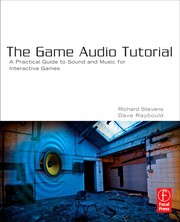
A hands-on, project-based introduction to game audio implementation using industry tools; bridges the gap between film sound craft and the interactive, state-driven logic of games.

Provides the theoretical and historical framework for interactive audio, covering adaptive music, dynamic sound design, and player psychology — deepens understanding of why game audio works differently from linear media.
Mastering the Mix & Professional Practice
ExpertIntegrate all previous skills — recording, synthesis, Foley, interactive audio — into polished, spatially immersive final mixes for both film and games, and understand the professional pipeline end-to-end.
▸ Study plan for this stage
Pace: 8–10 weeks, ~25–30 pages/day, with 2–3 dedicated mixing sessions per week
- Psychoacoustics and perception: how the human ear and brain process frequency, loudness, space, and time in a mix
- The critical listening environment: room acoustics, monitoring setup, and ear training to develop reliable mixing judgment
- Frequency management and spectral balance: identifying and resolving masking, phase issues, and tonal conflicts across the mix
- Spatial imaging and depth: panning, reverb, delay, and automation techniques to create immersive 3D soundscapes
- Mixing workflow and decision-making: systematic approaches to gain staging, compression, EQ, and effects that prioritize clarity and musicality
- Translating mixes across playback systems: ensuring mixes hold up on headphones, small speakers, cinema systems, and game engine implementations
- Mixing for interactive and adaptive audio: techniques specific to game mixes where stems and dynamic content must remain flexible
- Professional standards and technical documentation: loudness metering (LUFS), metadata, delivery specs, and communication with post-production teams
- How does psychoacoustic perception shape mixing decisions, and what are the practical implications of frequency masking and loudness adaptation?
- What are the essential characteristics of a critical listening environment, and how do you train your ears to make reliable mixing judgments?
- How do you systematically approach frequency management to resolve tonal conflicts and maintain spectral balance across a complex mix?
- What techniques create convincing spatial depth and immersion in a mix, and how do they differ between film and interactive game contexts?
- How do you structure a mixing workflow that balances technical precision with creative intuition, and when should you rely on metering vs. listening?
- What are the key differences in mixing strategy when preparing stems and adaptive audio for games versus final stereo/surround mixes for film?
- Set up and calibrate your monitoring environment: measure SPL at your mix position, treat reflections, and establish a reference curve; document your setup and compare mixes on at least three different playback systems (headphones, car, cinema or game engine)
- Perform ear-training exercises from the book: frequency identification drills, loudness comparison tests, and critical listening sessions on professional mixes to develop perceptual consistency
- Remix a provided multitrack (or one from your previous stage work) focusing solely on frequency management: identify masking issues, resolve phase problems, and achieve spectral balance without touching dynamics or effects
- Create a spatial mix of a complex scene (dialogue, Foley, music, ambience) using only panning and reverb/delay; then add compression and EQ; document how each stage changes the perceived depth and clarity
- Mix the same source material three times using different mixing workflows (e.g., gain-staging first vs. EQ-first vs. effects-first) and compare results to understand how workflow influences decision-making
- Prepare a game audio mix with adaptive stems: create a dialogue stem, music stem, and Foley/ambience stem that remain flexible for dynamic mixing in-engine; document stem levels, EQ, and compression choices
Next up: This stage equips you with the perceptual and technical foundation to make informed, translatable mixing decisions across any playback context; the next stage will likely focus on specialization (e.g., advanced game audio implementation, immersive formats like Atmos, or client-facing production workflows) or real-world project execution under professional constraints.

A cult classic among professional mixers that teaches deep perceptual listening and intuitive decision-making at the mix stage — the ideal capstone for a designer who now has all the technical tools and needs to develop artistic judgment.
Discussion
Keep reading
Paths that share books, cover the same subject, or open a related topic.