Salary negotiation: the best books to ask for more and get it
This curriculum takes a beginner from zero negotiation confidence to advanced compensation strategy in four progressive stages. It starts by building the psychological foundation and mindset needed to negotiate at all, then layers in market research and leverage, then moves into proven scripts and tactical frameworks, and finally zooms out to total compensation and long-term career wealth — so each stage makes the next one land harder and faster.
Foundations: Mindset & the Art of Asking
BeginnerOvercome the fear of negotiating, understand why most people leave money on the table, and build the core belief that asking is both normal and necessary.
▸ Study plan for this stage
Pace: 4–5 weeks, ~40–50 pages/day. Week 1–2: "Ask for It" (340 pages); Week 3–4: "Never Split the Difference" (400 pages); Week 5: Review and integration exercises.
- The gender wage gap and how it stems from negotiation avoidance, not discrimination alone—most people (especially women) don't ask
- The 'ask gap': why leaving money on the table is a choice, not inevitable, and how small negotiation wins compound over a lifetime
- Negotiation is a normal, expected part of business—the other party expects you to ask and respects you for doing so
- Tactical empathy and perspective-taking: understanding the other side's constraints, fears, and motivations before making demands
- Anchoring and framing: how the first number, tone, and narrative shape the entire negotiation outcome
- Labeling emotions and building rapport: defusing tension by naming what the other person feels, creating psychological safety
- The power of silence and strategic patience: letting the other person fill pauses, revealing information and desperation
- Overcoming internal barriers: reframing asking as professional, necessary, and mutually beneficial rather than greedy or confrontational
- Why do most people leave money on the table, and what role does the 'ask gap' play in long-term earnings inequality?
- How does Babcock's research show that negotiation outcomes are shaped by mindset and behavior, not just market conditions?
- What is tactical empathy, and how does understanding the other party's perspective change your negotiation strategy?
- How does anchoring work in negotiation, and why does the first number matter so much?
- What are the key techniques from 'Never Split the Difference' for building rapport and defusing defensiveness?
- How can you use silence and labeling emotions as negotiation tools, and what makes them effective?
- Conduct a personal 'ask audit': List 3–5 situations in the past year where you didn't negotiate (salary, rates, deadlines, scope). For each, estimate the financial or opportunity cost and identify the internal barrier that stopped you.
- Practice tactical empathy: Choose one upcoming negotiation (real or hypothetical). Write a one-page analysis of the other party's position, constraints, fears, and what they likely want—before you make your pitch.
- Anchor-setting roleplay: With a partner or mirror, practice stating your opening ask with confidence. Record yourself and review for tone, hesitation, and conviction. Repeat until you sound assured.
- Silence exercise: In a low-stakes conversation (friend, colleague), ask a question and then stay silent for 10+ seconds without filling the gap. Notice what the other person reveals and how it shifts the dynamic.
- Emotion-labeling practice: Identify 3 emotions you fear in a negotiation (rejection, anger, disappointment). Write out how you'd label them in the moment ('It seems like you're concerned about budget constraints') and practice saying them aloud.
- Negotiation simulation: Conduct a full mock negotiation (salary, freelance rate, or project scope) using both books' frameworks. Record or write notes on what anchors you used, how you built rapport, and where silence or labeling shifted the conversation.
Next up: By mastering the psychological foundations and tactical tools in this stage, you'll be ready to move into advanced strategy—learning how to structure multi-issue negotiations, handle objections, and close deals while maintaining long-term relationships.

A beginner-friendly, research-backed guide specifically for people who feel uncomfortable asking for more — it dismantles the psychological barriers to negotiation before any tactics are introduced.
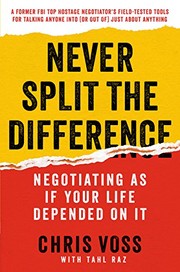
Written by an FBI hostage negotiator, this book reframes negotiation as empathy-driven conversation rather than confrontation, giving beginners an intuitive and memorable mental model to build on.
Know Your Worth: Leverage & Market Value
BeginnerLearn how to research your market value, understand what creates leverage in a job offer or raise conversation, and enter any negotiation with data instead of guesses.
▸ Study plan for this stage
Pace: 4–5 weeks, ~25–30 pages/day, with 2–3 days per week dedicated to research and reflection exercises
- Market value research methods: using salary surveys, industry benchmarks, and job postings to establish your baseline worth
- The leverage equation: how timing, alternatives, and information asymmetry create negotiating power
- Chapman's '1000 a minute' framework: understanding the financial impact of small percentage increases over a career
- Power dynamics in negotiation: recognizing when you have leverage and how to use it without overplaying your hand
- Preparation as leverage: how thorough research and documentation shift the balance in your favor
- Anchoring and counter-anchoring: how first numbers shape negotiation outcomes and how to respond strategically
- Non-salary leverage: understanding benefits, flexibility, title, and other value drivers beyond base pay
- What are the three primary sources Chapman and Dawson recommend for researching your market value, and how do you synthesize conflicting data?
- How does Chapman's '1000 a minute' concept apply to your own career, and what does this reveal about the true cost of accepting a low offer?
- What specific leverage points does Dawson identify in salary negotiations, and which ones apply to your current situation?
- Describe the difference between having leverage and using leverage effectively—what mistakes do negotiators make in Dawson's case studies?
- What is anchoring, and why does Dawson emphasize that the first number mentioned often determines the negotiation range?
- How would you prepare a data-backed counter-offer using the research methods outlined in both books?
- Conduct a personal market value audit: use at least three sources (Glassdoor, PayScale, Bureau of Labor Statistics, industry surveys) to establish your salary range for your target role, location, and experience level. Document your findings in a spreadsheet.
- Calculate your personal '1000 a minute' figure: determine what a 5%, 10%, and 15% salary increase means over 5 and 10 years, accounting for compounding and career growth. Reflect on how this changes your negotiation mindset.
- Analyze a real job posting: identify all the leverage points embedded in it (urgency language, benefits mentioned, reporting structure, growth potential). Write a one-page assessment of your negotiating position if you were the candidate.
- Role-play a salary negotiation with a peer or mentor: practice responding to a low initial offer using Dawson's counter-anchoring techniques. Record or document your approach and identify where you held firm vs. conceded.
- Create a leverage inventory: list your unique strengths, alternatives (other offers, job security), timeline flexibility, and non-salary priorities. Rate each as high, medium, or low leverage and explain why.
- Develop a negotiation script: write out your opening statement, your response to a low offer, and your walk-away point, grounding each in the research and frameworks from both books.
Next up: This stage equips you with the data and confidence to enter negotiations from a position of strength; the next stage will teach you the communication tactics and psychological strategies to deploy that leverage effectively in real-time conversations.
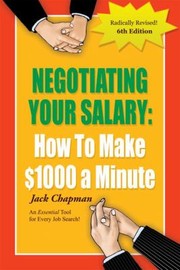
One of the most focused salary-specific books available — it teaches the critical skill of letting the employer name a number first and how to anchor and respond strategically.

Bridges market research and leverage by explaining the power dynamics at play in hiring, so readers understand not just what to say but why the employer behaves the way they do.
Scripts & Tactics: Offers, Raises, and Counteroffers
IntermediateHave ready-to-use scripts and step-by-step frameworks for negotiating a job offer, asking for a raise, and handling pushback — turning strategy into confident, practiced language.
▸ Study plan for this stage
Pace: 4–5 weeks, ~40–50 pages/day (mix of reading and active script work)
- Preparation and information gathering as the foundation for any negotiation conversation
- Building rapport and understanding the other party's interests, constraints, and decision-making process
- Anchoring and framing: how to present your value and set expectations early in the conversation
- Tactical scripts for opening offers, counteroffers, and raise requests with confidence and clarity
- Handling objections and pushback using collaborative problem-solving rather than confrontation
- The power of silence and strategic pauses in negotiations—knowing when to listen and let the other side respond
- Creating multiple options and win-win scenarios to move beyond positional bargaining
- Documenting agreements and following up in writing to prevent misunderstandings
- What are the three most important pieces of information you need to gather before entering a salary negotiation, and why does Diamond emphasize preparation?
- How does Doody's framework for evaluating a job offer differ from simply accepting or rejecting the first number presented?
- What is the purpose of anchoring in a negotiation, and how do you do it responsibly when discussing salary?
- Walk through a complete script for asking for a raise: what do you say in the opening, how do you present your case, and how do you respond if the manager says 'no'?
- How should you handle an objection like 'We don't have budget for that' or 'You're new and need to prove yourself first'?
- Why is silence and active listening a tactical advantage, and when should you use it during a negotiation conversation?
- Record yourself delivering a salary negotiation opening (offer discussion or raise request) using one of Doody's scripts, then listen back and refine your tone, pace, and confidence.
- Research and document the market rate for your target role in your location and industry; create a one-page summary of data sources and your justified range (low, target, high).
- Write out a full negotiation script for three scenarios: (1) responding to a low initial offer, (2) asking for a raise, (3) handling a 'no' and pivoting to alternative benefits.
- Conduct a mock negotiation with a peer or mentor using Diamond's framework: prepare your interests and theirs, practice active listening, and test out silence and pauses.
- Analyze a real job offer letter or salary discussion you've experienced (or a hypothetical one); identify what information was missing and what questions you should have asked upfront.
- Create a personal 'negotiation playbook' document with your best scripts, common objections you anticipate, and your planned responses—keep it handy for real conversations.
Next up: This stage equips you with battle-tested language and tactical moves; the next stage will likely deepen your ability to navigate complex multi-party negotiations, long-term compensation strategy, and equity/benefits discussions where scripts alone are not enough.

Teaches a practical, people-first negotiation framework used at Wharton — its real-world scripts and scenarios translate directly to salary conversations and handling 'no' gracefully.

The most tactically complete salary negotiation book available — it provides word-for-word email and verbal scripts for every stage: offer negotiation, raise requests, and promotion conversations.
Advanced: Total Compensation, Equity & Long-Term Wealth
ExpertNegotiate beyond base salary to master equity, bonuses, benefits, and total compensation packages — and connect negotiation outcomes to long-term financial independence.
▸ Study plan for this stage
Pace: 6–8 weeks, ~40–50 pages/day (approximately 2–3 hours of focused reading per day)
- Bargaining styles and power dynamics: Understanding your natural negotiation style (assertive, accommodating, analytical, or flexible) and how to adapt it to different compensation scenarios
- Preparation and information asymmetry: Researching market rates, company financials, and your own BATNA (Best Alternative to Negotiated Agreement) to shift power in your favor
- Separating people from problems: Using principled negotiation to focus on interests rather than positions, especially when discussing equity, bonuses, and non-monetary benefits
- Expanding the pie before dividing it: Identifying creative trade-offs (equity vesting schedules, signing bonuses, remote work, professional development budgets) to create mutual gain
- Anchoring and framing: Using strategic opening offers and reframing compensation discussions to establish favorable reference points for total package value
- Multi-dimensional compensation strategy: Negotiating base salary, equity grants, bonus structures, benefits, and perks as an integrated whole rather than isolated components
- Long-term wealth building through negotiation: Connecting equity negotiations (stock options, RSUs, restricted stock) to compounding returns and financial independence timelines
- Emotional intelligence and relationship preservation: Maintaining trust and rapport while negotiating aggressively, especially important for ongoing employment relationships
- What is your natural bargaining style according to Shell's framework, and how can you intentionally shift your approach when negotiating total compensation packages?
- How do you research and establish your BATNA before entering a salary negotiation, and why is information asymmetry critical to your bargaining power?
- What is the difference between positional bargaining and principled negotiation, and how does the latter help you negotiate equity and benefits more effectively?
- How can you expand the negotiation pie by identifying creative trade-offs beyond base salary (e.g., equity vesting, signing bonuses, flexible work arrangements)?
- How do anchoring effects and framing influence compensation negotiations, and what strategies can you use to set favorable anchors?
- How should you evaluate and prioritize different components of a total compensation package (base, equity, bonus, benefits) based on your long-term financial goals?
- Conduct a personal bargaining style assessment: Take Shell's framework and honestly evaluate your default negotiation style. Then role-play a compensation negotiation with a friend or mentor using a deliberately different style to build flexibility.
- Build a comprehensive BATNA: Research 5–10 comparable job offers (real or realistic) in your target role/industry. Document salary ranges, equity packages, benefits, and growth opportunities. Write a 1-page summary of your best alternative and how it anchors your negotiation floor.
- Create a total compensation comparison matrix: For 3 different job offers (real or hypothetical), break down base salary, equity (type, vesting, strike price), bonus structure, health benefits, PTO, professional development budget, and other perks. Calculate the total 4-year value of each package to compare apples-to-apples.
- Practice principled negotiation in writing: Take a past salary negotiation (or a hypothetical scenario) and rewrite the conversation using Fisher's framework—identify underlying interests, separate people from problems, and generate options for mutual gain before committing to positions.
- Develop a multi-round negotiation strategy: Map out your opening ask, walk-away point, and 3–4 trade-off scenarios for a target role. For each scenario, specify what you'd concede (e.g., lower base salary) and what you'd gain (e.g., higher equity or signing bonus) to practice expanding the pie.
- Simulate equity negotiation scenarios: For a realistic equity grant (e.g., 0.5% of a Series B startup or 100 RSUs at a public company), calculate the 4-year vesting value under different growth scenarios. Then practice negotiating the vesting schedule, cliff, and acceleration clauses with a partner.
Next up: This stage equips you with the tactical and strategic frameworks to negotiate complex, multi-dimensional compensation packages and connect those outcomes to long-term wealth—preparing you to apply these advanced principles to specific career transitions, startup equity decisions, or executive-level negotiations in the next stage.
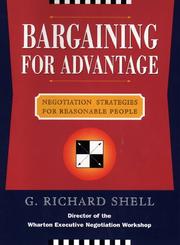
A Wharton professor's rigorous framework for high-stakes negotiation — at this stage it deepens the reader's understanding of strategy, ethics, and leverage in complex multi-issue deals like executive compensation.
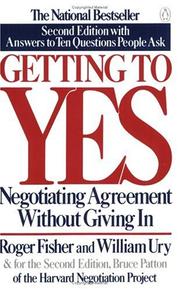
The canonical text on principled negotiation — read last so its abstract frameworks are grounded by all the salary-specific experience built in prior stages, enabling the reader to handle any novel compensation scenario with confidence.
Discussion
Keep reading
Paths that share books, cover the same subject, or open a related topic.