How to learn Negotiation
This curriculum takes you from the core psychology and principles of negotiation all the way through advanced strategic, cross-cultural, and high-stakes techniques. Each stage builds on the last — you'll first internalize the foundational mindset, then develop tactical skill, and finally master the nuanced, context-specific craft that separates good negotiators from great ones.
Foundations: The Core Mindset
BeginnerUnderstand the fundamental principles of negotiation — interests vs. positions, mutual gain, and the psychology of agreement — and build a working vocabulary for everything that follows.
▸ Study plan for this stage
Pace: 6–8 weeks total: Weeks 1–3 for "Getting to Yes" (~25–30 pages/day, ~3–4 sessions/week); Weeks 4–7 for "Negotiation Genius" (~30–35 pages/day, ~3–4 sessions/week); Week 8 reserved for review, reflection journaling, and completing exercises.
- Positions vs. Interests: Fisher's foundational distinction — what people say they want (positions) versus why they want it (interests) — is the engine of principled negotiation in 'Getting to Yes'.
- BATNA (Best Alternative to a Negotiated Agreement): Understanding your walk-away option and how it determines your real leverage, introduced in 'Getting to Yes' and stress-tested in 'Negotiation Genius'.
- Principled Negotiation (Negotiating on the Merits): Fisher's four-pillar framework — separate people from the problem, focus on interests not positions, invent options for mutual gain, insist on objective criteria.
- Mutual Gain & Expanding the Pie: The shift from zero-sum/distributive thinking to integrative negotiation, where creative option generation creates value for both sides before dividing it.
- The Psychology of Agreement: Malhotra's treatment in 'Negotiation Genius' of cognitive biases (anchoring, framing, reactive devaluation) that distort judgment at the table.
- Claiming vs. Creating Value: Malhotra's distinction between strategies that grow the total value available versus those that capture a share — and knowing when to use each.
- Negotiation Preparation Framework: Malhotra's systematic pre-negotiation analysis — mapping all parties, their interests, BATNAs, and reservation prices — before a single word is spoken.
- Objective Criteria & Legitimacy: Using independent standards (market value, precedent, expert opinion) to depersonalize disagreement and anchor proposals in 'Getting to Yes'.
- After reading 'Getting to Yes', can you clearly explain the difference between a position and an interest, and give a real-life example from your own experience where confusing the two caused a breakdown?
- What are the four principles of principled negotiation from 'Getting to Yes', and how does each one address a specific failure mode of positional bargaining?
- How does Fisher define BATNA, and how does Malhotra in 'Negotiation Genius' expand on its strategic use — including the concept of improving your BATNA before negotiations begin?
- According to Malhotra in 'Negotiation Genius', what cognitive biases most commonly derail negotiators, and what concrete tactics does he recommend to counter each one?
- What is the difference between 'creating value' and 'claiming value' as Malhotra frames it, and why must a skilled negotiator be competent at both rather than choosing one approach?
- How would you use objective criteria (from 'Getting to Yes') alongside Malhotra's preparation framework to structure a salary negotiation or a vendor contract discussion?
- Interest-Mapping Drill: Take a recent or upcoming negotiation (salary, rent, a purchase). Write your stated position, then dig down three 'why' levels to uncover your true underlying interests. Do the same for the other party. Compare how the landscape changes.
- BATNA Audit: For the same negotiation, write out your BATNA in one sentence. Then list two concrete actions you could take this week to strengthen it. Repeat for the other side's likely BATNA. Use Fisher's and Malhotra's frameworks side by side.
- Option Generation Brainstorm: Using the 'invent options for mutual gain' principle from 'Getting to Yes', set a timer for 10 minutes and generate at least 15 possible deal structures for a real scenario — without evaluating any of them. Then apply Malhotra's value-creation lens to rank the top three.
- Bias Spotting Journal: Over two weeks, keep a log of real negotiations or conflicts you observe (news, workplace, personal). For each, identify at least one cognitive bias from 'Negotiation Genius' (anchoring, framing effect, reactive devaluation, etc.) that appears to be influencing behavior.
- Objective Criteria Research: Pick a negotiation topic (used car price, freelance rate, apartment rent). Spend 30 minutes finding at least three independent, legitimate sources of objective criteria you could cite at the table, as Fisher recommends. Write a one-paragraph 'legitimacy brief'.
- Role-Play Debrief: Conduct a 15-minute mock negotiation with a friend or colleague over something low-stakes. Afterward, use Malhotra's preparation checklist to score how well you mapped interests, managed biases, and created vs. claimed value. Write a one-page after-action review.
Next up: Mastering the core mindset of interests, BATNA, and mutual gain from these two books gives the reader a stable conceptual vocabulary and psychological grounding, making them ready to tackle more advanced tactical and situational negotiation strategies — such as multi-party dynamics, hardball tactics, and high-stakes contexts — in the next stage.
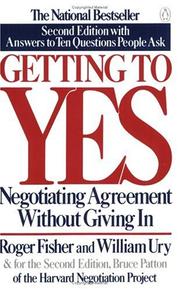
The single most important starting point in negotiation literature. It introduces principled negotiation, the concept of separating people from problems, and BATNA — vocabulary every subsequent book assumes you know.
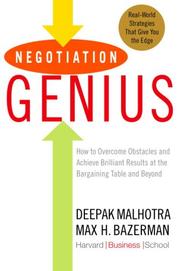
Builds directly on Fisher's framework by adding behavioral science and real-world case studies, showing how smart preparation and systematic thinking turn principles into reliable practice.
Human Dynamics: Emotion, Empathy & Persuasion
BeginnerMaster the human side of negotiation — how to listen, build rapport, manage emotions, and use empathy as a strategic tool rather than a weakness.
▸ Study plan for this stage
Pace: 5–6 weeks total: Weeks 1–3 for "Never Split the Difference" (~30 pages/day, reading in focused 30–45 min sessions), Weeks 4–6 for "Influence" (~25 pages/day, pausing after each of Cialdini's 7 principles to reflect and take notes).
- Tactical Empathy (Voss): Deliberately identifying and articulating the counterpart's feelings and perspective to build trust and lower defenses
- Mirroring & Labeling (Voss): Using repetition of key words and emotion-naming ('It seems like…') to keep the other side talking and feeling heard
- Calibrated Questions (Voss): Open-ended 'How' and 'What' questions that give the counterpart a sense of control while steering the conversation toward your goals
- The Accusation Audit (Voss): Proactively naming the negatives the other side might be thinking to defuse them before they become obstacles
- The Late-Night FM DJ Voice & Tone Management (Voss): Using deliberate vocal pacing and tone to project calm authority and reduce emotional escalation
- Cialdini's 7 Principles of Influence: Reciprocity, Commitment & Consistency, Social Proof, Authority, Liking, Scarcity, and Unity — the psychological levers that drive human decision-making
- Rapport as Strategy (both books): Understanding that liking, trust, and connection are not soft niceties but measurable drivers of negotiation outcomes
- Emotion as Information, Not Obstacle (both books): Reframing emotions — your own and your counterpart's — as data points to be read and responded to, not suppressed
- After reading Never Split the Difference, can you explain the difference between 'tactical empathy' and simply being nice — and why Voss argues empathy is a power move, not a concession?
- What is a 'calibrated question,' and how does it differ from a closed yes/no question? Give two examples you could use in a real negotiation scenario.
- How does Cialdini's principle of Reciprocity show up in everyday negotiations, and how can you use it ethically without being manipulative?
- Which of Cialdini's 7 principles do you consider most powerful in a negotiation context, and why? How would you defend against it being used on you?
- How do Voss's 'labeling' technique and Cialdini's 'Liking' principle work together to build rapport? Where do they overlap and where do they differ?
- What is an 'accusation audit,' and in what type of high-stakes conversation would you deploy it first?
- The Mirror Drill: In your next 3 conversations (work, social, or family), practice mirroring — repeat the last 1–3 words the other person said as a gentle question. Journal what happened: Did they elaborate? Did the tone shift?
- Label an Emotion Daily: Once per day for two weeks, use a Voss-style label ('It seems like…' / 'It sounds like…' / 'It looks like…') in a real conversation. Note whether the other person confirmed, corrected, or opened up.
- Calibrated Question Swap: Write down 5 closed or aggressive questions you might ask in a negotiation (e.g., 'Can you lower the price?'). Rewrite each as a calibrated 'How' or 'What' question. Practice saying them aloud.
- Influence Principle Spotting: For one full week after finishing Cialdini, keep a log of every advertisement, sales interaction, or persuasion attempt you encounter. Identify which of the 7 principles is being used and how.
- Accusation Audit Rehearsal: Think of a difficult upcoming conversation (a raise request, a complaint, a tough ask). Write a full accusation audit — list every negative thing the other party might be thinking about you or your request. Then practice opening the conversation with those labels.
- Rapport-Building Experiment: In two similar low-stakes negotiations (e.g., haggling, requesting a favor), deliberately apply Cialdini's 'Liking' principle in one (find genuine common ground, mirror body language, use their name) and go in neutral in the other. Compare the outcomes.
Next up: By mastering how emotions, empathy, and psychological triggers shape human behavior, the reader is now equipped to move beyond the 'why people say yes' into the structural mechanics of negotiation — frameworks, strategy, and deal architecture — where these human dynamics are applied within formal processes and higher-stakes contexts.
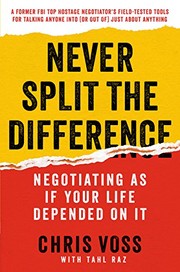
A former FBI hostage negotiator reframes negotiation as an emotional, not purely rational, exercise. Tactical empathy, mirroring, and calibrated questions are introduced here and complement the rational framework of Stage 1.
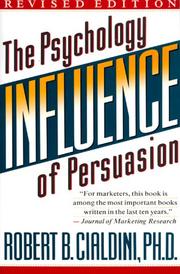
Explains the six universal principles of persuasion that underpin why people say yes. Reading this after Voss gives you the scientific 'why' behind the tactics you've just learned.
Strategy & Structure: Deals, Tactics & Leverage
IntermediateMove beyond individual conversations to understand the architecture of deals — how to structure offers, use leverage, counter hardball tactics, and negotiate in multi-party or high-stakes settings.
▸ Study plan for this stage
Pace: 8–10 weeks total: Weeks 1–4 on "Getting More" (~30–35 pages/day, 5 days/week); Weeks 5–10 on "The Mind and Heart of the Negotiator" (~25–30 pages/day, 5 days/week), which is denser and more framework-heavy — allow extra time for note-taking and reflection.
- Diamond's 12 negotiation tools, especially finding and valuing what the other party truly wants beyond their stated position
- The role of emotions, perceptions, and framing in shaping deal outcomes (Getting More's human-centered model vs. purely rational models)
- Deal architecture: how to structure offers, packages, and trades to create and claim value simultaneously
- Leverage — understanding your BATNA and the other party's BATNA, and how to strengthen yours while weakening theirs (Thompson's analytical framework)
- Hardball tactics and counter-tactics: recognizing anchoring, extreme demands, good cop/bad cop, and deliberate deception, and responding strategically rather than reactively
- Multi-party and coalition negotiations: how alliances shift, how to manage multiple stakeholders, and how to avoid being isolated
- Integrative vs. distributive bargaining: knowing when to expand the pie and when to claim your share, and how Thompson's research distinguishes the two
- The psychology of concessions: timing, sizing, and sequencing of moves to signal strength without giving away value
- According to Diamond, why do standard 'win-win' frameworks often fail in real-world negotiations, and what does 'getting more' actually mean in practice?
- How does Thompson define BATNA, reservation price, and ZOPA, and how do these three concepts interact to determine the range of possible deals?
- What specific counter-moves does the combined reading suggest when a counterpart uses an extreme anchor or a take-it-or-leave-it ultimatum?
- How should a negotiator approach a multi-party deal differently from a two-party deal, drawing on Thompson's coalition and multi-party chapters?
- In what situations does Diamond argue that appealing to the other party's standards and norms is more effective than appealing to their interests — and why?
- How do Thompson's research findings on post-settlement settlements and contingent contracts offer a structural solution when parties cannot agree on a single outcome?
- BATNA Stress-Test: For a real or realistic negotiation you face (salary, contract, purchase), map out your BATNA, reservation price, and estimated ZOPA using Thompson's framework — then deliberately brainstorm three actions to improve your BATNA before the negotiation begins.
- Tactic Spotting Journal: Over two weeks, log every negotiation interaction (retail, workplace, personal) and label the tactics used by both sides using Diamond's 12 tools and Thompson's hardball taxonomy — note which tactics you failed to recognize in the moment.
- Package-Deal Design: Take a stalled or upcoming negotiation and redesign your offer as a multi-issue package (price, timing, terms, extras) rather than a single-issue ask, using Thompson's integrative bargaining principles to create at least two tradeable variables.
- Hardball Role-Play: With a partner, run a 15-minute negotiation where one side is instructed to use extreme anchoring and good cop/bad cop — debrief using Diamond's and Thompson's counter-tactic guidance, then switch roles.
- Multi-Party Simulation: Organize a 3–4 person negotiation scenario (e.g., dividing a project budget or planning a group trip with conflicting preferences) and practice coalition-building and agenda-setting as described in Thompson's multi-party chapters.
- Standards & Norms Research: Before a real upcoming negotiation, spend 30 minutes researching the standards, precedents, and norms the other party publicly commits to (company values, industry benchmarks, past statements) — prepare at least three norm-based arguments per Diamond's approach and test them in the actual conversation.
Next up: By mastering deal structure, leverage mechanics, and tactical counter-moves through Diamond and Thompson, the reader has the strategic vocabulary and analytical toolkit needed to tackle the next stage's focus on specialized, high-complexity negotiation contexts — such as cross-cultural dynamics, organizational negotiations, and ethically charged scenarios — where these same frameworks must be adap

Challenges and enriches earlier frameworks by emphasizing goals over positions and showing how to find hidden value in any negotiation, from boardrooms to everyday life.

A rigorous, research-backed deep dive into negotiation strategy, covering distributive and integrative bargaining, coalitions, and multi-party dynamics — essential for intermediate learners ready for complexity.
Advanced Craft: Context, Culture & Complexity
ExpertApply negotiation mastery to high-stakes, cross-cultural, and ethically complex situations — and develop the self-awareness to continuously improve as a negotiator.
▸ Study plan for this stage
Pace: 6–8 weeks total: Weeks 1–4 on "Bargaining with the Devil" (~25–30 pages/day, including reflection pauses after each case study); Weeks 5–8 on "Kiss, Bow, or Shake Hands" (~20–25 pages/day, reading thematically by region and pausing to map cultural dimensions to your own negotiation contexts).
- The Devil's Temptation — Mnookin's central framework for deciding WHEN to negotiate vs. when refusal is the wiser or more ethical choice, using a structured cost-benefit analysis that weighs interests, alternatives, and moral constraints
- Cognitive and emotional traps — how tribalism, demonization, dehumanization, and the desire for justice can cloud judgment and push negotiators toward irrational refusal or capitulation in high-stakes conflicts
- Case-based moral reasoning — learning to extract transferable principles from extreme historical cases (Churchill vs. Hitler, Nelson Mandela, the Sonderkommando) and apply them to everyday high-stakes negotiations
- Principled pragmatism — Mnookin's synthesis of interests-based negotiation with ethical boundaries, recognizing that engaging with a 'devil' can sometimes be the most moral choice and sometimes the most dangerous one
- Cultural dimensions of negotiation — Morrison's taxonomy of how national culture shapes communication style (high-context vs. low-context), attitudes toward time (monochronic vs. polychronic), hierarchy, relationship-building, and deal-making rituals
- Protocol, etiquette, and trust-building across cultures — the practical signals (greetings, business card exchange, gift-giving, dining customs) that establish or destroy credibility before substantive negotiation even begins
- Adapting negotiation strategy by region — understanding that what constitutes 'good faith,' 'directness,' or 'a fair process' varies dramatically across cultures and requires deliberate preparation rather than assumption
- Integrating ethics and cultural intelligence — synthesizing Mnookin's ethical decision-making framework with Morrison's cultural fluency to navigate negotiations that are simultaneously high-stakes, cross-cultural, and morally complex
- According to Mnookin, what are the four primary traps that push negotiators toward refusing to engage, and how can a negotiator diagnose which trap is operating in a given situation?
- Walk through Mnookin's decision framework: what specific factors must be weighed before deciding whether to negotiate with a 'devil,' and how did at least two of his historical case studies illustrate different outcomes of that analysis?
- How does Mnookin distinguish between a negotiation that compromises your ethics and one that merely makes you uncomfortable — and why does that distinction matter for high-stakes decisions?
- Using Morrison's framework, how would you adapt your opening moves, relationship-building timeline, and closing style when negotiating with a counterpart from a high-context, polychronic culture (e.g., Japan or Saudi Arabia) versus a low-context, monochronic one (e.g., Germany or the United States)?
- What are three specific ways that misreading cultural protocol (as catalogued in 'Kiss, Bow, or Shake Hands') can permanently damage trust before substantive issues are even raised — and how can preparation mitigate each risk?
- How do the lessons from both books combine to inform your approach to a single scenario: a high-stakes business negotiation with a counterpart whose cultural background is unfamiliar and whose past conduct raises ethical concerns?
- The Devil's Audit: Identify a real or hypothetical negotiation in your life where you have been tempted to refuse engagement entirely. Apply Mnookin's framework explicitly — list the interests at stake, the alternatives to negotiation, the moral constraints, and the traps potentially influencing you — then write a one-page decision memo justifying whether to negotiate or walk away.
- Case Reconstruction: Choose one of Mnookin's historical cases (e.g., Nelson Mandela negotiating with the apartheid government). Rewrite the key decision point from the perspective of the opposing party, then identify where each side's cognitive traps were most dangerous and what a 'principled pragmatist' move would have looked like at that moment.
- Cultural Preparation Dossier: Select a country from 'Kiss, Bow, or Shake Hands' that is relevant to your professional context. Using Morrison's categories, build a one-page negotiation prep sheet covering: greeting protocol, communication style, attitude toward time and hierarchy, taboo topics, and at least two deal-making norms you would adapt to.
- Cross-Cultural Role Play: Partner with a colleague and simulate a 10-minute negotiation where one person plays a negotiator from a high-context culture and the other from a low-context culture (using Morrison's profiles as your guide). Debrief afterward: where did mismatches in directness, silence, or relationship-building create friction?
- Ethics + Culture Stress Test: Design a negotiation scenario that combines a morally ambiguous counterpart (Mnookin's 'devil') with a significant cultural gap (Morrison's framework). Write a two-page strategy memo that addresses both dimensions simultaneously — how do you build trust across the cultural divide while maintaining your ethical boundaries?
- Negotiator Self-Assessment Journal: After completing both books, write a reflective entry answering: Which of Mnookin's cognitive traps am I most personally susceptible to? Which cultural assumptions do I carry into negotiations without realizing it? What is one concrete habit I will change as a result of this stage?
Next up: Mastering when to negotiate, how to navigate moral complexity, and how to adapt across cultures establishes the judgment and self-awareness needed to tackle the next frontier: systemic and organizational negotiation, where the stakes, stakeholders, and structural constraints multiply further.

Harvard Law professor Mnookin tackles the hardest question: when should you negotiate with a difficult or even adversarial counterpart? Forces you to think about ethics, strategy, and long-term consequences at a deep level.
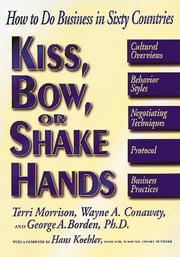
An authoritative guide to cultural norms and negotiation styles across 60+ countries. At this advanced stage, understanding how culture reshapes every principle you've learned is the final critical layer.
Discussion
Keep reading
Paths that share books, cover the same subject, or open a related topic.